Viral Loop Campaigns on Meta: Designing Ads That Get Shared
Learn how to design viral loop campaigns on Meta that get shared organically. Build self-amplifying ad systems with referral mechanics and share triggers.
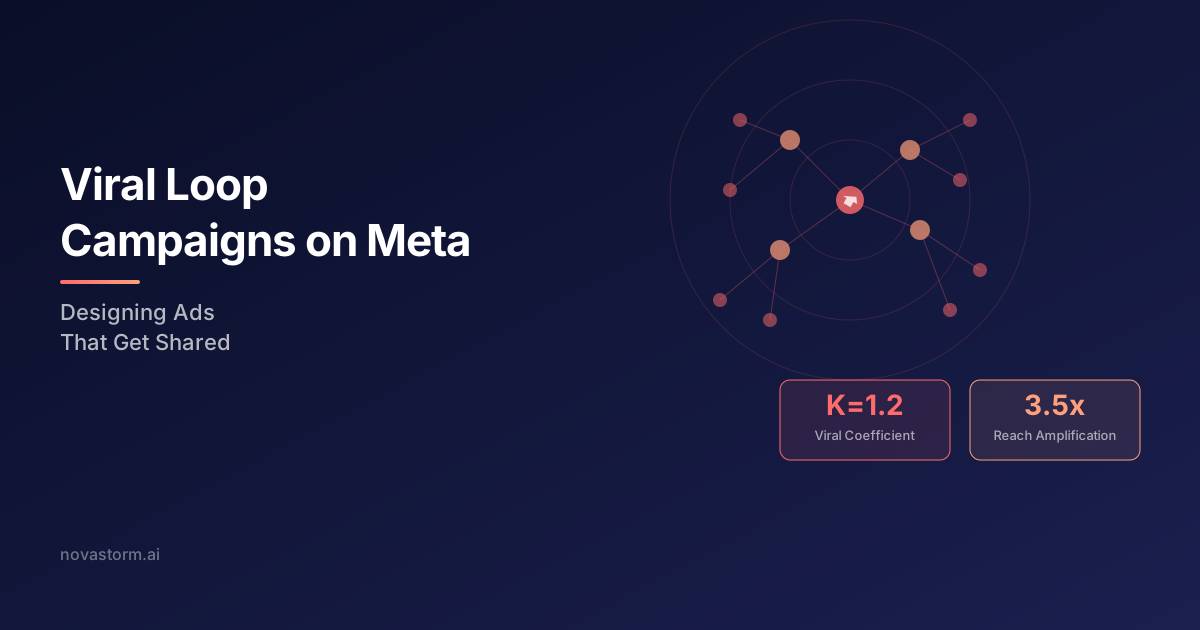
Viral loop campaigns on Meta represent the holy grail of paid social advertising: ads that pay for themselves by generating organic shares, tags, and saves that extend reach far beyond your initial budget. When a single ad impression triggers two or more additional impressions through user sharing, you have created a self-amplifying system that compounds returns on every dollar spent.
Understanding Viral Loop Campaigns on Meta
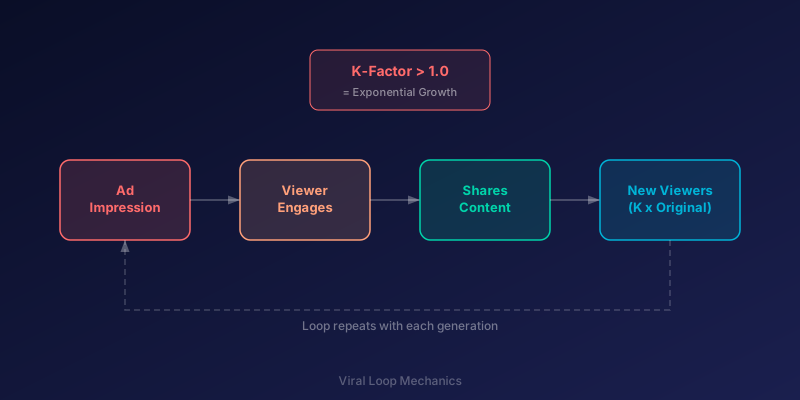
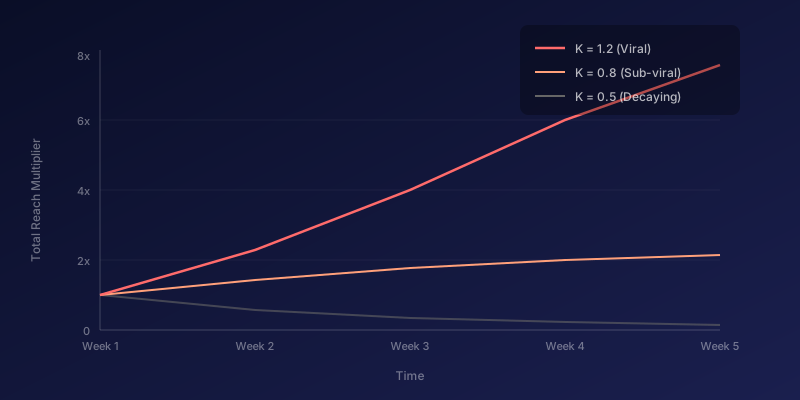
A viral loop is a mechanism where each user who interacts with your ad brings in one or more additional users. The viral coefficient, often called the K-factor, measures this. If K equals 1.2, every ten people who see your ad generate twelve additional viewers through shares. Below one, the loop decays. Above one, it compounds. The goal of viral loop design on Meta is to push that coefficient as high as possible.
Meta's platform is uniquely suited for viral campaigns because sharing is native to the experience. Users share posts to Stories, tag friends in comments, send content via Messenger, and save posts for later. Each of these actions extends your reach at zero incremental cost.
| Sharing Action | Reach Multiplier | User Intent | Best Format |
|---|---|---|---|
| Share to Feed | High (public) | Endorsement | Carousel, Video |
| Share to Story | Medium (followers) | Entertainment | Reels, Static |
| Tag in Comments | Low (targeted) | Relevance to friend | Any |
| Send via Messenger | Low (1:1) | High personal relevance | Video, Link |
| Save Post | None (personal) | Future reference | Infographic, Guide |
The Anatomy of a Shareable Ad
Not every ad is share-worthy. Shareable ads trigger specific emotional responses: surprise, amusement, identity validation, or social utility. They make the sharer look good, feel helpful, or appear informed. The content must serve the sharer's social currency more than your brand's promotional goals.
The most shared ad formats on Meta follow predictable patterns. Content that reveals a surprising statistic, challenges conventional wisdom, or provides an immediately useful tool generates the highest share rates. Pure promotional content almost never gets shared because it offers no social value to the person doing the sharing.
- Social currency: Does sharing this make the person look smart, funny, or informed?
- Practical value: Can the recipient immediately use this information or tool?
- Emotional trigger: Does it provoke surprise, amusement, outrage, or inspiration?
- Identity signal: Does sharing this reinforce how the person sees themselves?
- Conversation starter: Does it give friends something to discuss or debate?
Designing the Viral Trigger in Your Creative
The viral trigger is the specific element in your ad that compels someone to share. It must be visible within the first second for static ads and within the first three seconds for video. If the trigger is buried in the middle of your content, most viewers will scroll past before ever reaching it.
Effective viral triggers include bold claims backed by data, interactive elements like polls or quizzes, relatable situations that make people think of a specific friend, and transformation reveals that show dramatic before-and-after results. The trigger should be so compelling that the viewer's first instinct is to tag someone or hit share.
Add explicit share CTAs that feel natural. Instead of 'Share this ad,' try 'Tag a friend who needs to see this' or 'Send this to someone who still does X the hard way.' Specific, relatable prompts outperform generic sharing requests by three to five times.
Building the Loop: From Share to Conversion
A viral loop without conversion is just entertainment. The challenge is designing the post-share experience so that new viewers who arrive via organic sharing are funneled into your acquisition pipeline. This requires alignment between the shared content, the landing experience, and the conversion offer.
When someone shares your ad, the recipient sees it in a different context: a friend's recommendation rather than a brand's promotion. This context shift dramatically increases trust and click-through rates. Your landing page must capitalize on this trust by reinforcing the social proof element. Show how many people have already signed up, display testimonials, or reference the sharing mechanic itself.
Stop wasting ad budget
NovaStorm AI cuts Meta Ads CPA by 40% on average. Start free.
- Create a share-worthy ad with an embedded viral trigger.
- Include a clear CTA that leads to a dedicated landing page.
- On the landing page, reinforce social proof from the viral spread.
- Offer an incentive that encourages the new visitor to share as well.
- Track the referral chain to measure your viral coefficient.
- Optimize the weakest link in the chain based on drop-off data.
Measuring Viral Performance Beyond Standard Metrics
Standard Meta Ads metrics like CTR, CPC, and ROAS only tell part of the story for viral campaigns. You need to track additional metrics that capture the amplification effect.
| Metric | Formula | Target | Why It Matters |
|---|---|---|---|
| K-Factor | Shares per viewer x conversion rate of shared views | >0.5 | Measures viral amplification |
| Earned Media Value | Organic impressions x estimated CPM | Track trend | Quantifies free reach |
| Share Rate | Shares / Impressions | >1% | Indicates share-worthiness |
| Amplification Ratio | Total reach / Paid reach | >1.5x | Shows organic lift |
| Cost Per Viral Acquisition | Spend / (Paid + Organic conversions) | Track trend | True acquisition cost |
Monitor these metrics at the ad level, not just the campaign level. Individual creative variants will have wildly different viral coefficients. A single high-K-factor ad can outperform ten standard ads combined when the loop compounds over time.
Common Viral Loop Pitfalls to Avoid
The pursuit of virality can lead marketers astray. The most common mistake is optimizing purely for shares at the expense of brand relevance. An ad that goes viral but attracts the wrong audience generates vanity metrics without revenue. Every viral element must connect back to your product and target customer.
Another pitfall is the clickbait trap. Misleading hooks generate shares initially but destroy trust when the content does not deliver on its promise. The resulting negative comments and reactions can actually decrease your ad's distribution as Meta's algorithm detects negative sentiment.
Never sacrifice brand integrity for virality. An ad that misrepresents your product may generate shares but will produce low-quality leads and high refund rates. The viral loop should amplify your genuine value proposition, not a fabricated one.
Scaling Viral Campaigns Without Breaking the Loop
When you find a viral winner, the temptation is to pour budget into it immediately. But viral dynamics are fragile. Increasing spend too quickly can flood the same audience segments and collapse the K-factor as recipients see the same content from multiple friends.
Instead, scale viral campaigns by expanding to new audience segments rather than deepening penetration in existing ones. Use lookalike audiences based on people who shared your ad, not just those who clicked or converted. These share-based lookalikes are more likely to continue the viral chain.
Refresh creative regularly. Even the most viral ad has a shelf life. When share rates begin to decline, introduce new variations that maintain the core viral trigger but present it in a fresh format. This keeps the loop alive while preventing fatigue.
Viral loop campaigns on Meta require patience, precise measurement, and a deep understanding of what makes people share. When executed correctly, they transform your paid media budget from a linear expense into an exponential growth engine.
Novastorm AI automates Meta Ads routine — from monitoring to optimization. Learn more at novastorm.ai
Disclaimer: This article was generated with the assistance of AI and reviewed by the NovaStorm AI team. While we strive for accuracy, we recommend verifying specific data points and consulting official sources (linked where available) for critical business decisions.
Ready to automate your Meta Ads?
NovaStorm AI takes full responsibility for your campaigns — from monitoring to optimization.
Get Started FreeRelated Articles
Conversion Campaigns vs Traffic Campaigns: Which to Choose on Meta
Compare conversion campaigns vs traffic campaigns on Meta. Learn which objective delivers better ROI, when to use each, and how to transition between them.

North Star Metric for Meta Ads: Choosing the Right Optimization Goal
Define your North Star Metric for Meta Ads to align every campaign toward a single meaningful goal. Stop optimizing for vanity metrics and start driving growth.
Daily vs Lifetime Budgets in Meta Ads: Which Strategy Wins
Compare daily vs lifetime budgets in Meta Ads. Learn when each strategy works best, the pros and cons, and how to choose the right approach for your campaigns.