North Star Metric for Meta Ads: Choosing the Right Optimization Goal
Define your North Star Metric for Meta Ads to align every campaign toward a single meaningful goal. Stop optimizing for vanity metrics and start driving growth.

Every high-growth company has a North Star Metric — a single measurement that captures the core value delivered to customers while predicting long-term revenue growth. Yet most Meta Ads accounts operate without one, chasing a scattered mix of ROAS, CPA, CTR, and CPM without a unifying compass.
Defining your North Star Metric for Meta Ads transforms how you make decisions. Instead of debating whether to optimize for clicks or conversions, you align every campaign, ad set, and creative toward a single goal that matters most to your business.
What Makes a True North Star Metric for Meta Ads
A North Star Metric is not simply your most important KPI. It must satisfy three criteria: it reflects the value customers receive from your product, it correlates with long-term revenue growth, and it is measurable within your Meta Ads ecosystem.
ROAS alone fails as a North Star Metric because it does not capture customer quality. A 5x ROAS driven by one-time discount buyers is less valuable than a 3x ROAS driven by subscribers who stay for 12 months. Your North Star Metric Meta Ads strategy must account for downstream value, not just immediate return.
The best North Star Metrics combine acquisition efficiency with customer quality. Examples include Cost per Qualified Lead, Cost per First Repeat Purchase, or Revenue per New Customer at 90 Days.
The North Star Metric Selection Framework
Choosing the wrong North Star Metric is worse than having none at all. It misaligns your team and sends Meta's algorithm chasing the wrong signal. Use this framework to identify the right metric for your business model.
| Business Model | Recommended North Star Metric | Why It Works |
|---|---|---|
| E-commerce (single purchase) | Cost per New Customer + 60-Day LTV | Captures acquisition cost and repeat behavior |
| E-commerce (subscription) | Cost per Active Subscriber at Month 3 | Filters for retention quality |
| SaaS / App | Cost per Activated User | Focuses on users who reach value moment |
| Lead Generation | Cost per Sales-Qualified Lead | Eliminates junk leads from optimization |
| Marketplace | Cost per First Transaction (both sides) | Measures true platform engagement |
| Content / Media | Cost per Engaged Subscriber | Values attention depth over sign-up count |
Aligning Meta Ads Campaign Structure to Your North Star
Once you have defined your North Star Metric Meta Ads strategy, restructure your campaigns to feed it. This means choosing campaign objectives, optimization events, and attribution windows that align with your North Star rather than defaulting to standard purchase optimization.
For example, if your North Star is Cost per Active Subscriber at Month 3, optimizing for initial sign-ups may attract the wrong audience. Instead, you might optimize for a custom event that fires when a subscriber completes their third month, even if this means a longer learning phase and higher initial costs.
- Define your North Star Metric based on the framework above
- Create a custom conversion event in Meta Events Manager that maps to your North Star
- Set your campaign optimization event to this custom conversion
- Extend your attribution window to capture the full North Star timeframe
- Build a dashboard that tracks North Star performance alongside standard metrics
- Establish a weekly review cadence focused on North Star trends
Input Metrics: The Supporting Cast
Your North Star Metric does not operate in isolation. It sits atop a hierarchy of input metrics — leading indicators that predict whether your North Star will improve or decline. These input metrics guide your day-to-day optimization decisions.
Stop wasting ad budget
NovaStorm AI cuts Meta Ads CPA by 40% on average. Start free.
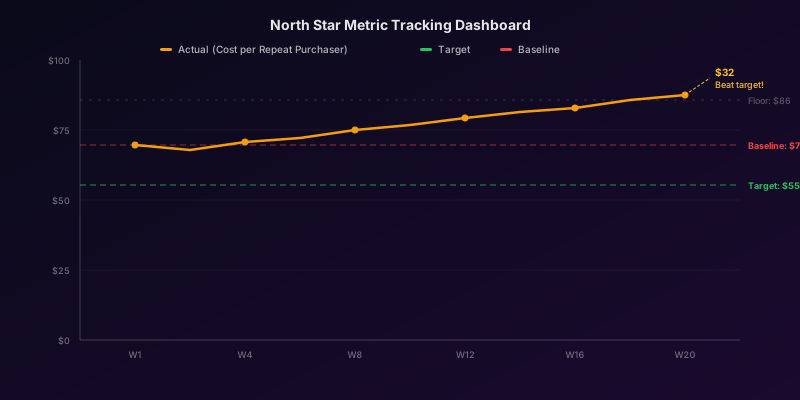
Think of input metrics as the levers you pull to move your North Star. If your North Star is Cost per Repeat Purchaser, your input metrics might include first-purchase CPA, email opt-in rate, post-purchase engagement rate, and time to second purchase. Each input metric maps to a specific campaign or creative optimization.

Limit yourself to 3-5 input metrics that directly influence your North Star. More than that creates analysis paralysis and diffuses focus across too many optimization targets.
Common North Star Metric Mistakes in Meta Ads
The most common mistake is choosing a North Star Metric Meta Ads goal that is too far removed from the ad platform to optimize effectively. If your North Star is 12-month LTV, Meta's algorithm cannot learn from a signal that takes a year to materialize. Bridge this gap by finding a proxy event that correlates strongly with your true North Star and occurs within a reasonable timeframe.
- Do not choose ROAS as your North Star — it ignores customer quality and lifetime value
- Avoid metrics that take longer than 90 days to measure — the feedback loop is too slow
- Never use vanity metrics like impressions or reach as your North Star
- Do not change your North Star Metric quarterly — consistency enables trend analysis
- Avoid selecting a North Star that only one team can influence — it must be cross-functional
Setting North Star Metric Targets
Your North Star Metric needs a target to be actionable. Set targets using historical data as a baseline and competitive benchmarks as aspiration. A good North Star target is ambitious but achievable — pushing your team to optimize aggressively without encouraging shortcuts that sacrifice quality.
| Target Type | How to Set It | Review Cadence |
|---|---|---|
| Baseline | Average of last 90 days | Set once, update quarterly |
| Improvement Target | 10-20% better than baseline | Monthly check-in |
| Stretch Target | 30-50% better than baseline | Quarterly review |
| Floor | Worst acceptable performance | Weekly monitoring |
Evolving Your North Star as Your Business Grows
Your North Star Metric Meta Ads strategy should evolve as your business matures, but changes should be deliberate and infrequent. Early-stage companies might focus on Cost per New Customer. Growth-stage companies shift to Cost per Retained Customer. Mature companies optimize for Customer Lifetime Value or Net Revenue Retention.
When you do change your North Star, maintain a transition period where you track both the old and new metrics simultaneously. This ensures continuity and helps your team calibrate to the new measurement without losing sight of historical performance.
The power of the North Star Metric approach lies in its simplicity. One metric. One direction. Every campaign, every creative test, every budget decision evaluated against a single standard. This clarity cuts through the noise of Meta's increasingly complex platform and keeps your advertising focused on what truly drives business growth.
Novastorm AI automates Meta Ads routine — from monitoring to optimization. Learn more at novastorm.ai
Disclaimer: This article was generated with the assistance of AI and reviewed by the NovaStorm AI team. While we strive for accuracy, we recommend verifying specific data points and consulting official sources (linked where available) for critical business decisions.
Ready to automate your Meta Ads?
NovaStorm AI takes full responsibility for your campaigns — from monitoring to optimization.
Get Started FreeRelated Articles
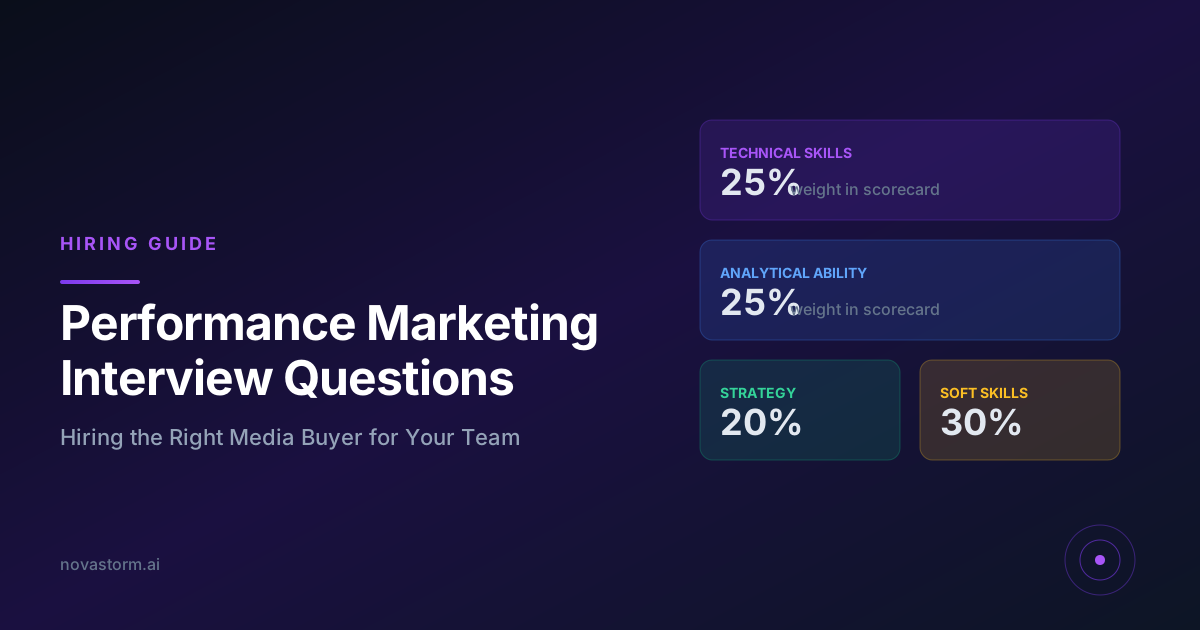
Performance Marketing Interview Questions: Hiring the Right Buyer
Discover the best performance marketing interview questions to hire top media buyers. Covers technical skills, platform knowledge, and strategic thinking.
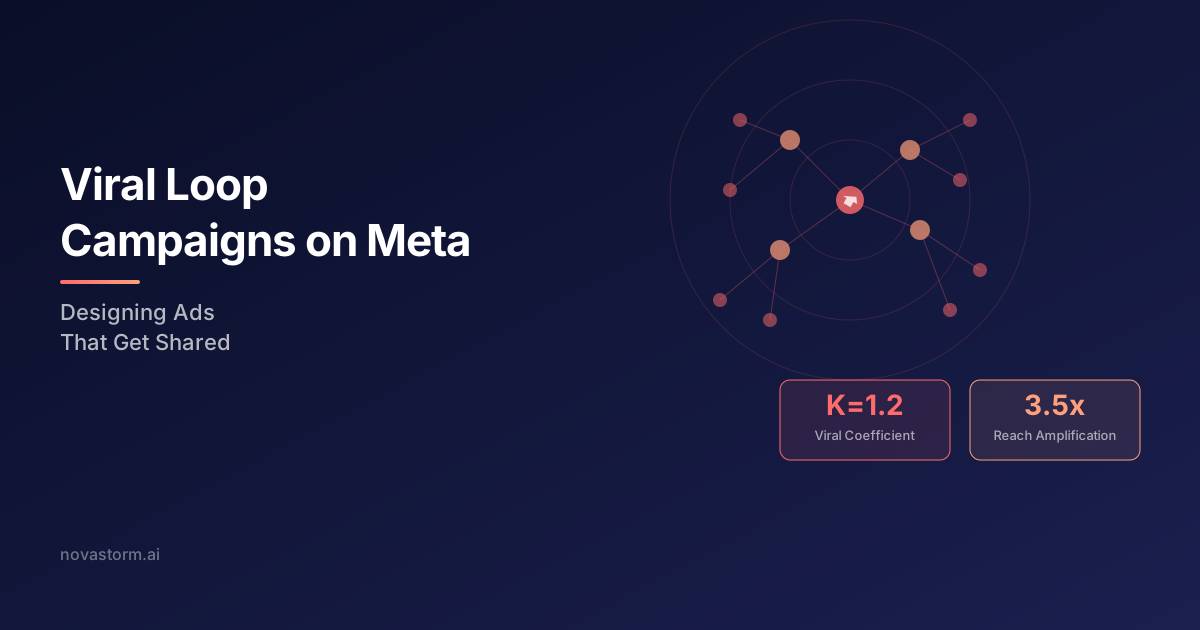
Viral Loop Campaigns on Meta: Designing Ads That Get Shared
Learn how to design viral loop campaigns on Meta that get shared organically. Build self-amplifying ad systems with referral mechanics and share triggers.
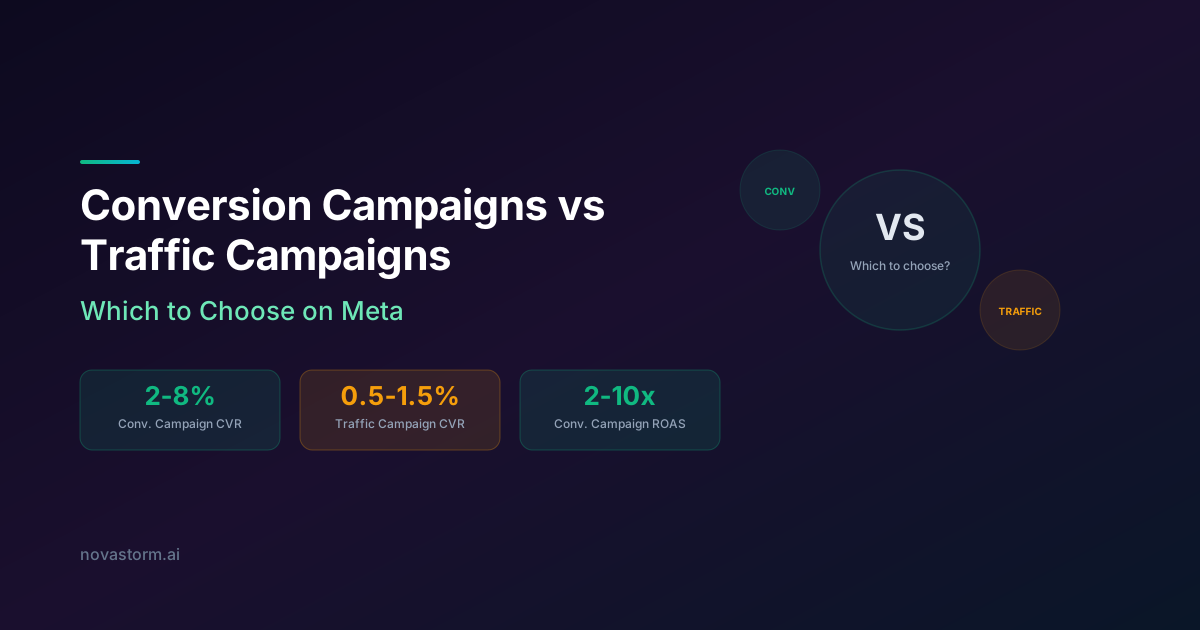
Conversion Campaigns vs Traffic Campaigns: Which to Choose on Meta
Compare conversion campaigns vs traffic campaigns on Meta. Learn which objective delivers better ROI, when to use each, and how to transition between them.