Conversion Campaigns vs Traffic Campaigns: Which to Choose on Meta
Compare conversion campaigns vs traffic campaigns on Meta. Learn which objective delivers better ROI, when to use each, and how to transition between them.
The decision between conversion campaigns vs traffic campaigns is one of the most consequential choices a Meta advertiser makes. It determines who sees your ads, what actions they are likely to take, and ultimately whether your advertising budget generates revenue or merely generates clicks. Despite this importance, many advertisers get this decision wrong — often because they focus on surface-level metrics rather than downstream business outcomes.
This guide breaks down the fundamental differences between conversion campaigns vs traffic campaigns on Meta, provides a clear decision framework, and explains the scenarios where each objective delivers the best return on investment.
The Fundamental Difference: What the Algorithm Optimizes For
The campaign objective you select tells Meta's algorithm what outcome to optimize for. This is not a minor setting — it fundamentally changes which users within your target audience see your ads. Meta maintains predictive scores for every user across multiple behavioral dimensions. Traffic campaigns surface your ads to users with high click propensity. Conversion campaigns surface your ads to users with high purchase or conversion propensity.
These are different populations. A person who clicks on many ads is not necessarily a person who buys after clicking. Research consistently shows that high-click users tend to be less commercially valuable than users who click selectively but convert at higher rates. This is the core insight behind the conversion campaigns vs traffic campaigns debate.
Meta's conversion algorithm uses over 10,000 signals to predict purchase behavior, including past purchase history across the platform, browsing patterns, device type, time of day, and thousands of behavioral indicators that traffic optimization does not leverage.
Head-to-Head Comparison: Conversion vs Traffic Campaigns
| Metric | Traffic Campaigns | Conversion Campaigns |
|---|---|---|
| Cost per click | $0.10-$0.40 (lower) | $0.50-$2.00 (higher) |
| Cost per conversion | $15-$50+ (higher) | $5-$25 (lower) |
| Click-through rate | 1.5-3.5% | 0.8-2.0% |
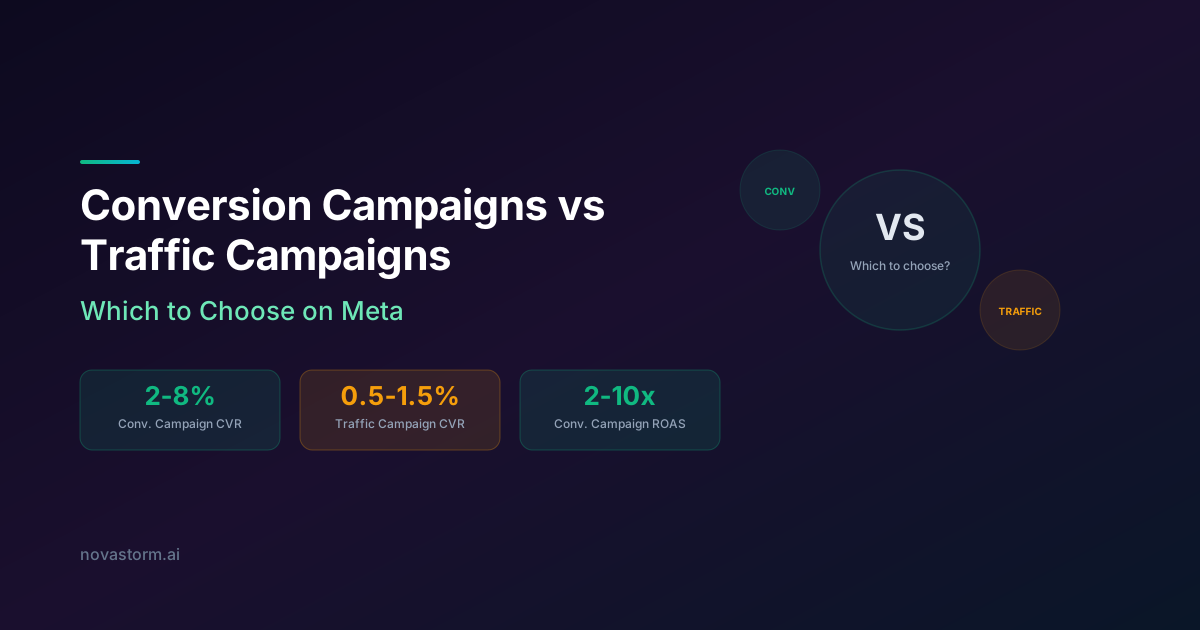
| Conversion rate | 0.5-1.5% | 2-8% |
| Traffic quality | Mixed, many bouncers | High intent visitors |
| ROAS | Typically negative | 2-10x common |
| Learning phase | Faster (clicks are common) | Slower (needs 50 events/week) |
| Audience targeting | Click-prone users | Conversion-prone users |
| Best for | Content, awareness, pixel warming | Sales, leads, signups |
The table reveals the paradox that catches many advertisers: traffic campaigns appear cheaper on a per-click basis but are actually more expensive on a per-conversion basis. A $0.15 click that never converts costs infinitely more than a $1.50 click that generates a $50 purchase.
The Decision Framework: Choosing Between Conversion and Traffic
The decision between conversion campaigns vs traffic campaigns should be driven by your primary business objective and your current data maturity. Here is a practical framework.
Choose Conversion Campaigns When
- Your primary goal is sales, leads, registrations, or any measurable action
- You have a Pixel or Conversions API properly configured with conversion events
- You receive at least 50 conversion events per week (or can set a broader conversion event that meets this threshold)
- Your product or service has a clear conversion path on your website or app
- You can measure ROAS or cost per acquisition as your success metric
Choose Traffic Campaigns When
- Your goal is content distribution with no conversion event on the destination
- You are building initial Pixel data on a new ad account (fewer than 50 events per week)
- You need to drive visitors for landing page or content testing purposes
- You are building website visitor audiences for future retargeting
- Your destination is a third-party site where you cannot install tracking
Stop wasting ad budget
NovaStorm AI cuts Meta Ads CPA by 40% on average. Start free.
Why Traffic Campaigns Fail for Revenue Goals
Understanding why traffic campaigns underperform for revenue goals requires examining how Meta's auction system works. When you select the traffic objective, the algorithm enters you into the auction competing for clicks. It finds users who are predicted to click — not users predicted to buy.
These users often exhibit high click rates across many ads but low follow-through rates. They are window shoppers in the algorithmic sense. Your ad competes for their attention against every other traffic campaign, and the resulting visitor has no specific purchase intent signal.
Conversion campaigns enter a different auction. They compete for users with purchase intent signals, and Meta's algorithm filters for users whose behavioral patterns indicate genuine commercial intent. The CPC is higher because these users are more valuable — and every other advertiser running conversion campaigns is competing for the same high-value audience.
Running traffic campaigns to 'save money' on clicks while expecting conversion results is one of the most common and costly Meta advertising mistakes. The lower CPC is a vanity metric that masks poor downstream performance.
The Transition Strategy: Traffic to Conversions
For new advertisers or new ad accounts, a phased approach often works best. Start with traffic campaigns to build Pixel data and website visitor audiences, then transition to conversion campaigns once you have sufficient conversion signal.
- Phase 1 (Week 1-2): Run traffic campaigns optimized for landing page views to build Pixel audience data
- Phase 2 (Week 2-3): Launch conversion campaigns alongside traffic, optimizing for the broadest relevant conversion event (e.g., add-to-cart rather than purchase)
- Phase 3 (Week 3-4): As conversion volume increases, shift budget from traffic to conversion campaigns (70/30 then 90/10)
- Phase 4 (Week 4+): Run conversion campaigns as primary with traffic campaigns reserved for content distribution only
This transition does not need to be abrupt. Run both campaign types simultaneously during the transition period and compare performance side by side. In nearly every case, the conversion campaign will outperform on revenue metrics even while the traffic campaign shows lower CPCs.
Monitoring and Optimization Across Campaign Types
Evaluating conversion campaigns vs traffic campaigns requires different KPI frameworks. Traffic campaigns should be measured on engagement metrics: cost per landing page view, bounce rate, time on site, and pages per session. Conversion campaigns should be measured on business metrics: cost per conversion, ROAS, conversion rate, and customer acquisition cost.
Comparing these campaign types on click metrics alone always makes traffic campaigns look better. Comparing on conversion metrics always makes conversion campaigns look better. The correct comparison is against your business objective: if you need revenue, measure revenue performance. If you need awareness, measure awareness metrics.
Automated monitoring becomes critical when running both campaign types simultaneously. AI-powered tools can track performance across both objectives, alert you when conversion campaigns need creative refresh, flag budget waste in traffic campaigns, and recommend when to shift spend between objectives based on real-time performance data.
The conversion campaigns vs traffic campaigns decision is not permanent. Your optimal campaign mix evolves as your business grows, your Pixel matures, and your audience relationships deepen. Regular reassessment ensures your budget allocation matches your current stage and objectives.
Novastorm AI automates Meta Ads routine — from monitoring to optimization. Learn more at novastorm.ai
Disclaimer: This article was generated with the assistance of AI and reviewed by the NovaStorm AI team. While we strive for accuracy, we recommend verifying specific data points and consulting official sources (linked where available) for critical business decisions.
Ready to automate your Meta Ads?
NovaStorm AI takes full responsibility for your campaigns — from monitoring to optimization.
Get Started FreeRelated Articles
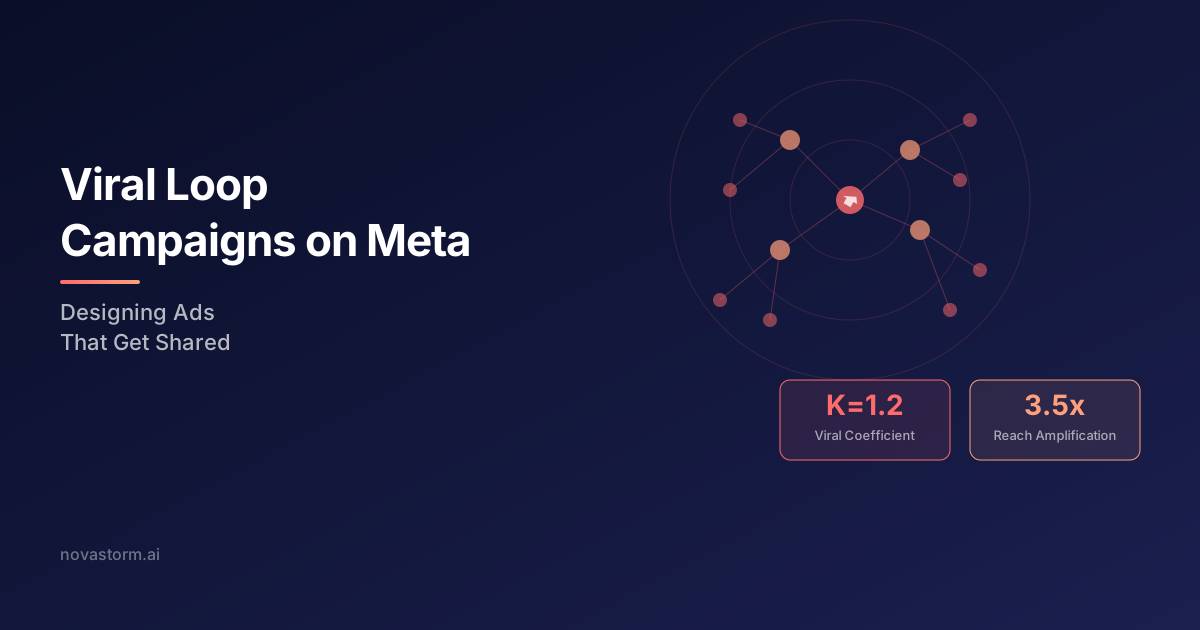
Viral Loop Campaigns on Meta: Designing Ads That Get Shared
Learn how to design viral loop campaigns on Meta that get shared organically. Build self-amplifying ad systems with referral mechanics and share triggers.
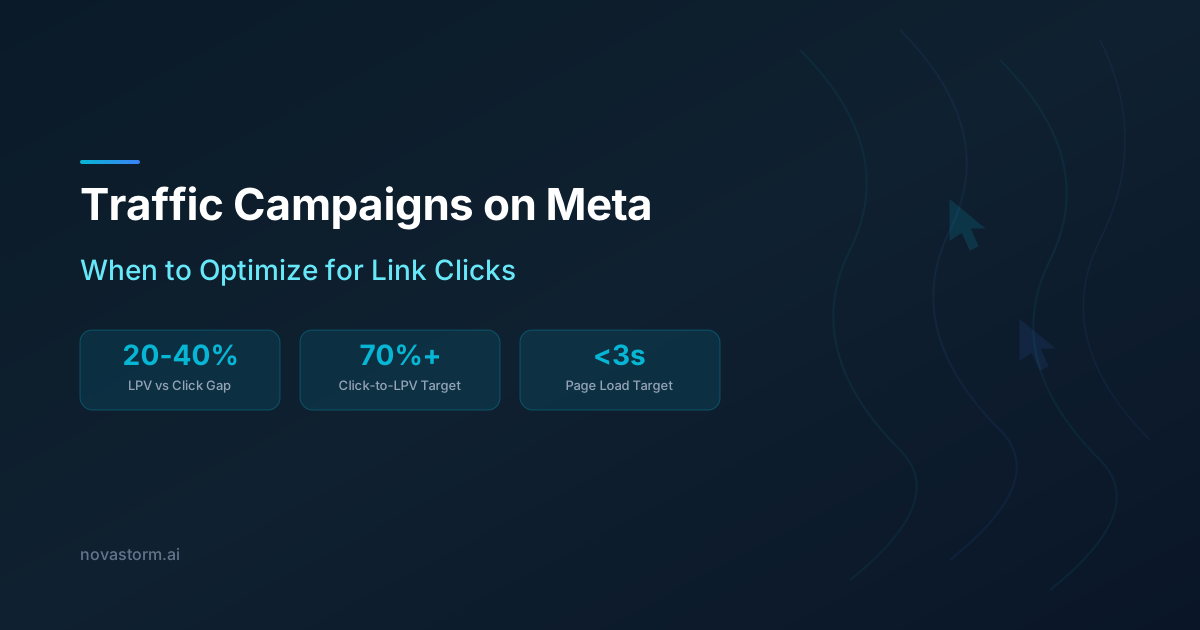
Traffic Campaigns on Meta: When to Optimize for Link Clicks
Learn when traffic campaigns on Meta are the right choice, how to optimize for link clicks vs landing page views, and avoid common pitfalls that waste budget.

North Star Metric for Meta Ads: Choosing the Right Optimization Goal
Define your North Star Metric for Meta Ads to align every campaign toward a single meaningful goal. Stop optimizing for vanity metrics and start driving growth.