Traffic Campaigns on Meta: When to Optimize for Link Clicks
Learn when traffic campaigns on Meta are the right choice, how to optimize for link clicks vs landing page views, and avoid common pitfalls that waste budget.
Traffic campaigns on Meta are one of the most misused campaign objectives in digital advertising. Many advertisers default to traffic campaigns when their actual goal is conversions, leading to wasted budgets and misleading metrics. Understanding when traffic campaigns on Meta are genuinely the right choice — and how to optimize them properly — separates strategic media buyers from those simply chasing cheap clicks.
The traffic objective tells Meta's algorithm to find people most likely to click your ad and visit your destination. This sounds straightforward, but the implications are nuanced. The algorithm optimizes for click behavior, not purchase behavior. The people most likely to click are not necessarily the people most likely to buy.
Understanding Traffic Campaign Optimization Options
When you select the traffic objective, Meta offers several optimization sub-options that significantly affect who sees your ads and what they do after clicking. Choosing the wrong optimization can mean the difference between valuable visitors and worthless bot-like traffic.
| Optimization Type | What It Optimizes For | Best Use Case |
|---|---|---|
| Link Clicks | Users likely to click the ad | Maximum click volume at lowest CPC |
| Landing Page Views | Users likely to load the page | Quality traffic that actually arrives |
| Daily Unique Reach | Showing to max unique users | Broad awareness with traffic component |
| Impressions | Maximum ad impressions | Brand visibility, not clicks |
Link click optimization often includes accidental clicks, bot clicks, and users who bounce before the page loads. Landing page view optimization filters for users who actually wait for your page to render, delivering significantly higher quality traffic at a modestly higher CPC.
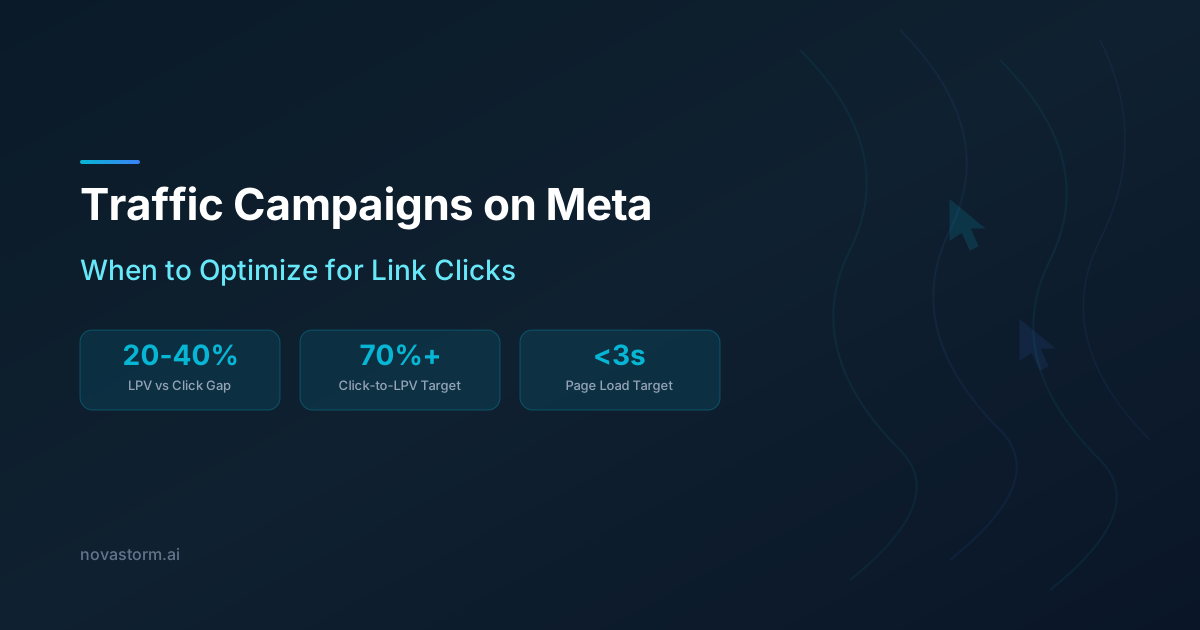
For most advertisers running traffic campaigns on Meta, landing page view optimization is the superior choice. The cost per landing page view is typically 20-40% higher than cost per link click, but the traffic quality improvement far exceeds this premium. You pay slightly more per visitor but each visitor is substantially more likely to engage with your content.
When Traffic Campaigns on Meta Are the Right Choice
Traffic campaigns serve specific strategic purposes that other objectives cannot fulfill as efficiently. The key is matching the campaign objective to your actual business goal rather than defaulting to traffic because it appears cheaper.
- Content distribution: Driving readers to blog posts, articles, or educational content where no conversion event exists
- Pixel warming: Building Pixel audiences before launching conversion campaigns, especially for new ad accounts with no event history
- Landing page testing: Driving sufficient traffic to test page variations before committing conversion budget
- Event promotion: Sending visitors to event pages, webinar registrations, or informational destinations
- Retargeting pool building: Creating website visitor audiences for subsequent retargeting campaigns
- SEO amplification: Driving social traffic signals to newly published content
Notice what is not on this list: generating sales, leads, or app installs. If your end goal involves a conversion event, traffic campaigns on Meta are almost always the wrong choice. Conversion campaigns outperform traffic campaigns for conversion-oriented goals even when the latter appears cheaper on a cost-per-click basis.
Setting Up Traffic Campaigns for Maximum Efficiency
When traffic campaigns are strategically appropriate, proper setup maximizes the quality and value of visitors you receive. Start with landing page view optimization unless you have a specific reason to use link clicks. This single decision eliminates the majority of low-quality traffic issues.
Audience Strategy for Traffic Campaigns
Traffic campaigns use the same audience targeting options as other objectives, but the algorithm interprets them differently. It identifies click-prone users within your target audience, which can skew delivery toward less valuable segments if your audience is too broad.
Define your audiences more precisely for traffic campaigns than you would for conversion campaigns. The conversion algorithm has a strong downstream signal (purchases, leads) that naturally filters for quality. The traffic algorithm lacks this signal, so you need to compensate with tighter audience definitions.
Creative Best Practices for Click Quality
Stop wasting ad budget
NovaStorm AI cuts Meta Ads CPA by 40% on average. Start free.
Your creative directly influences who clicks and what they expect when they arrive. Clickbait-style creative generates high CTR but terrible on-site engagement. Informative, expectation-setting creative generates lower CTR but dramatically better visitor quality.
- Match ad creative closely to landing page content to reduce bounce rates
- Use descriptive headlines that set clear expectations about destination content
- Avoid engagement-bait tactics that attract clicks without genuine interest
- Include content previews in carousel format for article promotion
- Test different CTAs — 'Read More' attracts different users than 'Learn More'
Key Metrics for Evaluating Traffic Campaign Performance
Cost per click is the most visible metric but the least informative for evaluating traffic campaigns on Meta. A $0.10 CPC that delivers visitors who bounce in 2 seconds is worse than a $0.50 CPC that delivers visitors who read your entire article and join your email list.
| Metric | What It Reveals | Good Benchmark |
|---|---|---|
| Cost per Landing Page View | True cost of delivered visitors | $0.15-$1.00 depending on market |
| Bounce Rate | Traffic quality indicator | Below 60% for content pages |
| Time on Page | Engagement depth | 1+ minutes for articles |
| Pages per Session | Browse behavior | 1.5+ pages per session |
| Click-to-LPV Ratio | Delivery quality | Above 70% |
| New User % | Audience reach | Depends on campaign goal |
Connect your analytics platform (Google Analytics 4 or similar) to evaluate post-click behavior. Meta's in-platform metrics tell you about ad performance; analytics tells you about visitor quality. Both views are necessary for accurate traffic campaign assessment.
Common Pitfalls That Waste Traffic Campaign Budgets
The most expensive mistake with traffic campaigns on Meta is using them as a substitute for conversion campaigns. Advertisers see the lower CPC and assume they are getting a better deal. In reality, the algorithm is finding the cheapest clicks, not the most valuable visitors.
Another frequent error is neglecting frequency management. Traffic campaigns can quickly over-serve to the same users, especially with small audiences. Set frequency caps or monitor frequency manually, and rotate creative assets every 2-3 weeks to prevent ad fatigue.
If you are running traffic campaigns to build retargeting audiences, exclude users who have already visited your site. There is no point in paying to re-acquire visitors who are already in your retargeting pool.
Slow landing pages kill traffic campaign efficiency. If your page takes more than 3 seconds to load on mobile, a significant percentage of clicks never convert into landing page views. You are paying for clicks that never result in actual visitors. Optimize page speed before scaling traffic spend.
When to Graduate from Traffic to Conversion Campaigns
Traffic campaigns on Meta often serve as a stepping stone to conversion campaigns. Once you have accumulated enough Pixel data — typically 50 or more conversion events per week — the conversion algorithm has sufficient signal to optimize effectively. At that point, transition your budget from traffic to conversions.
The graduation timeline varies by business. High-traffic sites may accumulate enough conversion data within days. Newer businesses might need 2-4 weeks of traffic campaigns to build their Pixel audience. Monitor your Events Manager for conversion event volume and make the switch when the threshold is met.
Traffic campaigns remain valuable even after you are running conversion campaigns, but their role shifts to supporting activities: content distribution, audience building, and testing. They should never consume the majority of your Meta advertising budget once conversion campaigns are operational.
Novastorm AI automates Meta Ads routine — from monitoring to optimization. Learn more at novastorm.ai
Disclaimer: This article was generated with the assistance of AI and reviewed by the NovaStorm AI team. While we strive for accuracy, we recommend verifying specific data points and consulting official sources (linked where available) for critical business decisions.
Ready to automate your Meta Ads?
NovaStorm AI takes full responsibility for your campaigns — from monitoring to optimization.
Get Started FreeRelated Articles
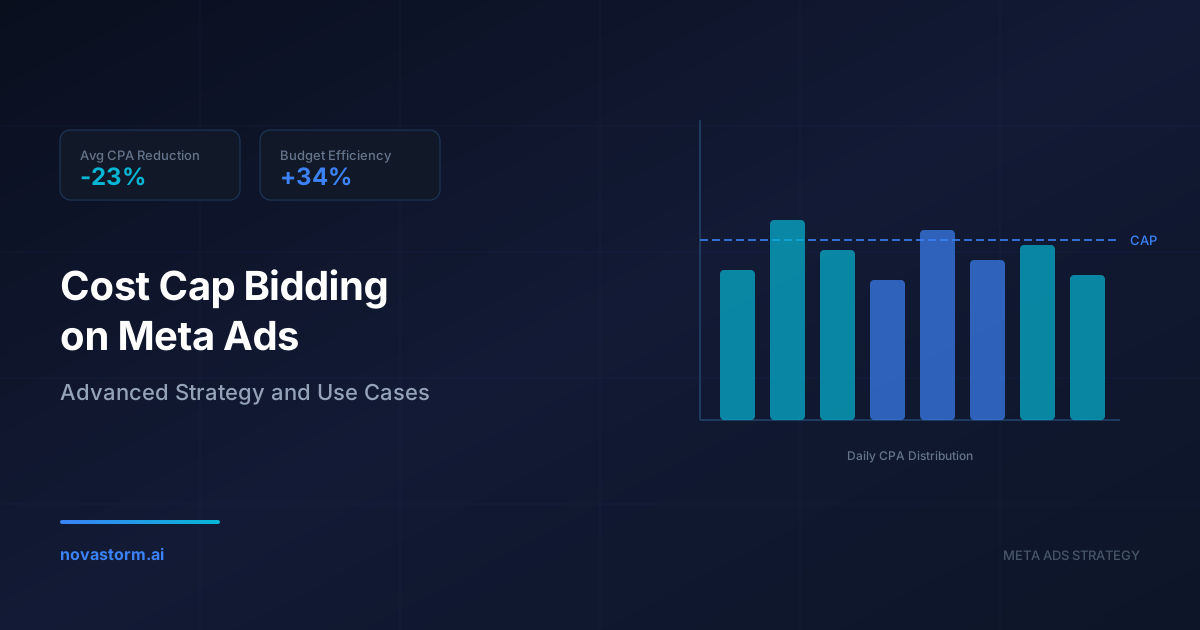
Cost Cap Bidding on Meta Ads: Advanced Strategy and Use Cases
Master cost cap bidding on Meta Ads with advanced strategies, real-world use cases, and optimization techniques to control CPA while maximizing conversions.
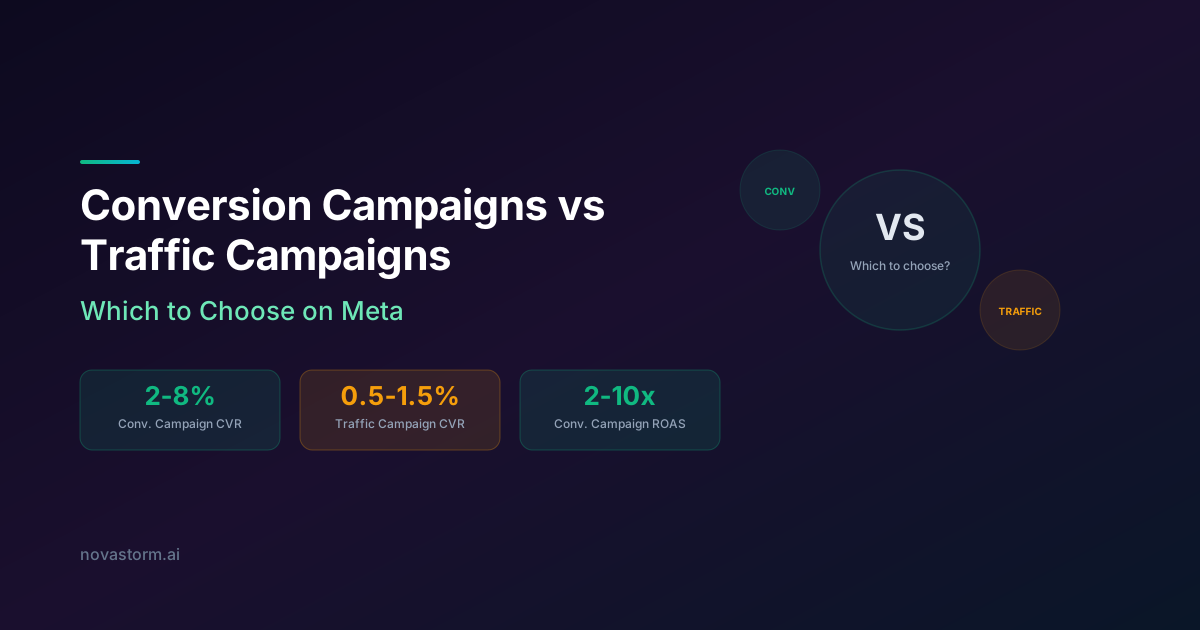
Conversion Campaigns vs Traffic Campaigns: Which to Choose on Meta
Compare conversion campaigns vs traffic campaigns on Meta. Learn which objective delivers better ROI, when to use each, and how to transition between them.
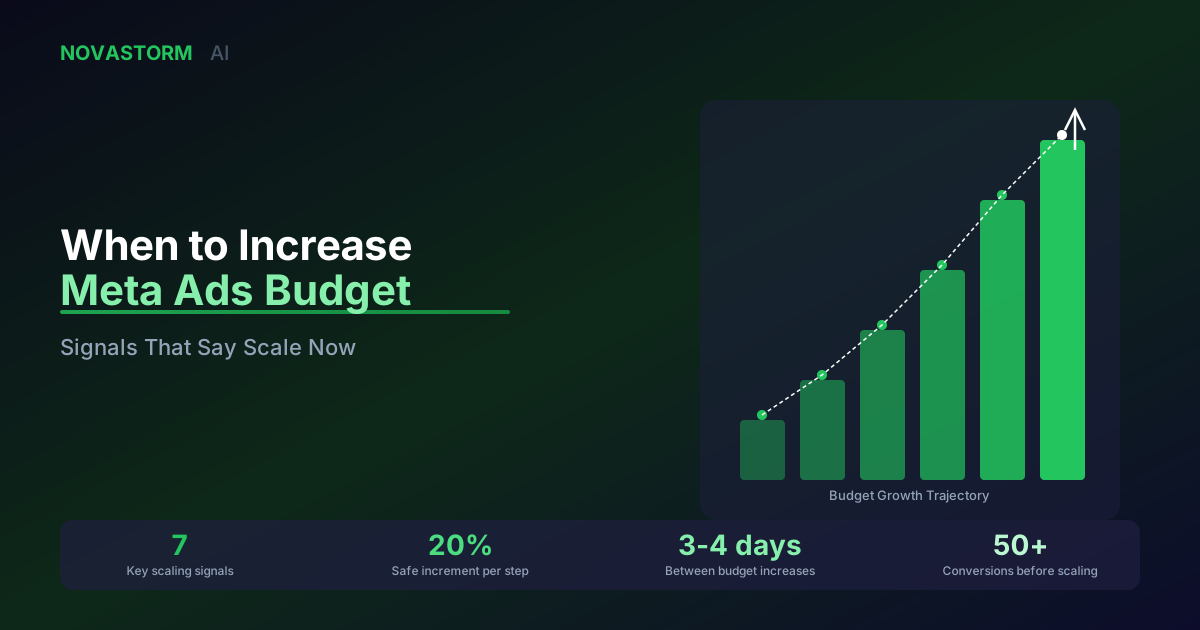
When to Increase Meta Ads Budget: Signals That Say Scale Now
Know exactly when to increase your Meta Ads budget. Learn the 7 key signals that indicate your campaigns are ready to scale spending profitably.