Cost Cap Bidding on Meta Ads: Advanced Strategy and Use Cases
Master cost cap bidding on Meta Ads with advanced strategies, real-world use cases, and optimization techniques to control CPA while maximizing conversions.
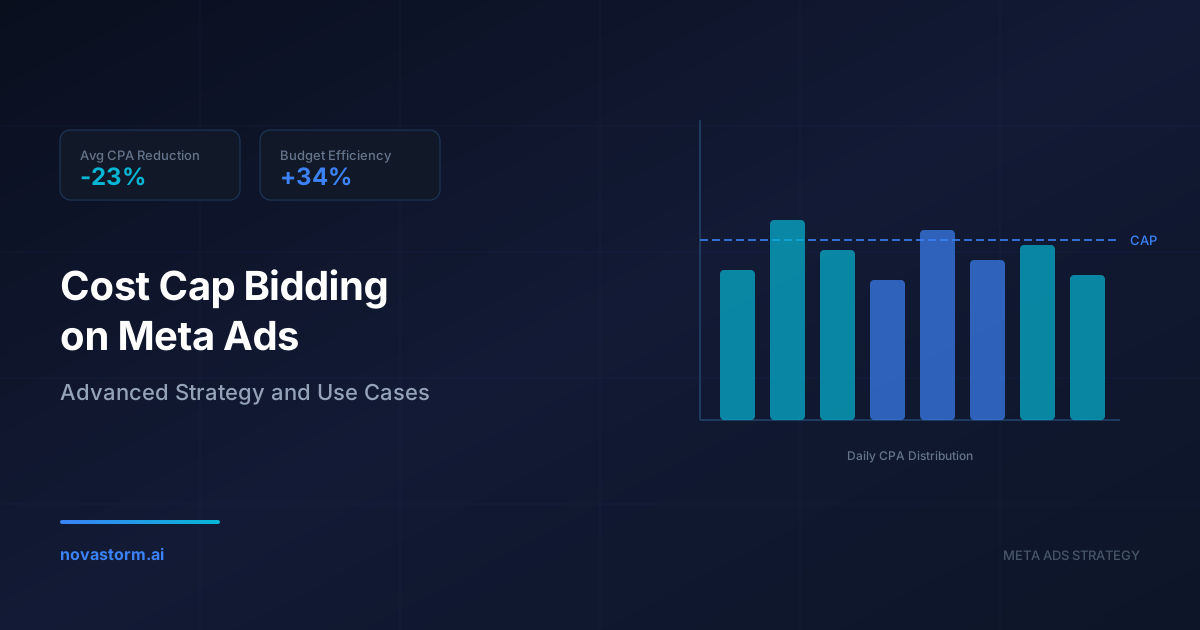
Cost cap bidding on Meta Ads remains one of the most powerful tools in a performance marketer's arsenal. Unlike lowest-cost bidding, which simply chases the cheapest conversions available, cost cap bidding lets you define a target cost-per-action and instructs Meta's algorithm to optimize delivery around that threshold. The result is a more predictable, scalable approach to paid acquisition.
Yet many advertisers misuse cost cap bidding on Meta Ads by setting it too aggressively or abandoning it too quickly. This guide breaks down the mechanics, advanced strategies, and real-world use cases that separate profitable campaigns from wasted spend.
How Cost Cap Bidding Works Under the Hood
When you enable cost cap bidding on Meta Ads, you tell the algorithm: 'I want conversions, but my average cost per result should stay at or below this amount.' Meta then enters each auction with a dynamic bid calibrated to achieve that average over time.
The key word is average. Cost cap does not guarantee every single conversion lands at your target price. Some conversions will cost more, some less. The algorithm balances high-value and low-cost opportunities to hit the mean you specified.
Cost cap bidding on Meta Ads uses a learning algorithm that requires roughly 50 conversion events per week to stabilize. Below that threshold, delivery may be erratic or stall entirely.
Cost Cap vs. Lowest Cost: When to Choose Each
The choice between cost cap and lowest cost is not about which is 'better.' It is about what your campaign economics demand. Lowest cost is ideal for exploration phases when you have no CPA benchmark. Cost cap bidding on Meta Ads is ideal when you know your break-even CPA and need to enforce it at scale.
| Factor | Lowest Cost | Cost Cap |
|---|---|---|
| CPA Control | None — Meta spends freely | Enforced average CPA target |
| Spend Velocity | Fast — uses full budget quickly | Slower — may underspend if cap is tight |
| Scale Potential | High volume, unpredictable CPA | Controlled volume at target CPA |
| Learning Phase | Exits quickly with volume | Needs 50+ events/week minimum |
| Best For | Testing new audiences | Scaling proven campaigns |
Setting the Right Cost Cap: The Data-Driven Approach
The most common mistake advertisers make is setting their cost cap based on aspiration rather than data. Your cost cap should reflect your actual average CPA from the last 7-14 days of stable performance, not the CPA you wish you had.
- Pull your average CPA from the last 14 days of stable delivery.
- Add a 10-20% buffer above that average to give the algorithm room.
- Monitor for 3-5 days before making adjustments.
- Decrease the cap by no more than 10% per adjustment cycle.
- If delivery stalls, raise the cap by 15-20% and let it restabilize.
This methodical approach prevents the stop-start delivery pattern that kills cost cap campaigns. The algorithm needs headroom to find efficient impressions, and overly aggressive caps choke that process.
Advanced Use Cases for Cost Cap Bidding on Meta Ads
Beyond basic CPA control, experienced advertisers deploy cost cap in several sophisticated scenarios that maximize its value.
Scaling Without CPA Inflation
When you increase budget on a lowest-cost campaign, CPA almost always rises because you exhaust the cheapest opportunities first. Cost cap bidding on Meta Ads mitigates this by refusing to chase expensive impressions as budget grows. You can increase daily budget by 20-30% and the algorithm will simply find more opportunities within your CPA target rather than inflating costs.
Stop wasting ad budget
NovaStorm AI cuts Meta Ads CPA by 40% on average. Start free.
Multi-Product Portfolio Management
If you sell products with different margins, cost cap lets you assign different CPA targets per product line. A high-margin product can tolerate a $50 cost cap, while a low-margin product gets a $15 cap. This ensures each campaign contributes positively to overall ROAS without manual bid babysitting.
Seasonal Budget Protection
During high-competition periods like Black Friday or Q4, auction prices spike. Cost cap bidding on Meta Ads acts as a guardrail, automatically reducing delivery when prices exceed your profitability threshold rather than spending your budget at inflated CPAs.
Diagnosing and Fixing Common Cost Cap Problems
Cost cap campaigns fail for predictable reasons. Here is a diagnostic framework for the most common issues.
| Symptom | Likely Cause | Fix |
|---|---|---|
| Zero or minimal delivery | Cost cap set too low for the audience | Raise cap by 20% or broaden audience |
| Delivery spikes then stops | Learning phase failure — not enough events | Increase budget or use a higher-funnel event |
| CPA consistently above cap | Audience saturation or creative fatigue | Refresh creatives, expand targeting |
| Erratic daily CPA swings | Insufficient conversion volume | Consolidate ad sets or raise budget |
| Budget never fully spent | Cap is slightly below market rate | Increase cap by 10-15% increments |
Cost Cap Bidding in a Full-Funnel Strategy
Smart advertisers do not use cost cap in isolation. They layer it into a full-funnel structure where top-of-funnel campaigns use lowest cost to maximize reach, mid-funnel campaigns use cost cap to control engagement costs, and bottom-funnel campaigns use cost cap bidding on Meta Ads with tight CPA targets to protect profitability.
This approach lets each funnel stage operate with the bidding strategy best suited to its objective. The top of funnel feeds the bottom, and cost cap ensures the bottom converts profitably.
Pair cost cap campaigns with Advantage+ placements. Letting Meta choose placements while you control CPA often yields 15-25% more conversions than restricting to feed-only delivery.
Monitoring and Iterating on Cost Cap Performance
Once your cost cap campaigns are running, monitoring cadence matters. Daily CPA fluctuations are normal and should not trigger panic changes. Evaluate performance on a rolling 7-day window, and only adjust the cap when the 7-day average deviates more than 15% from your target.
- Review 7-day rolling CPA every Monday and Thursday.
- Track delivery rate (actual spend vs. daily budget) as an early warning signal.
- Monitor frequency — rising frequency often precedes CPA increases.
- Compare cost cap performance against a lowest-cost control campaign.
- Document every cap adjustment with the date, old cap, new cap, and reasoning.
Automation platforms like Novastorm AI can handle this monitoring continuously, flagging anomalies and suggesting cap adjustments based on real-time data rather than manual spot checks. This eliminates the risk of delayed responses to market shifts.
Cost cap bidding on Meta Ads is not a set-and-forget strategy. It is a disciplined framework that rewards patient, data-driven advertisers with predictable unit economics and scalable growth. Master the mechanics, respect the learning phase, and iterate based on rolling averages — and you will outperform the majority of advertisers still guessing their way through Meta's auction.
Novastorm AI automates Meta Ads routine — from monitoring to optimization. Learn more at novastorm.ai
Disclaimer: This article was generated with the assistance of AI and reviewed by the NovaStorm AI team. While we strive for accuracy, we recommend verifying specific data points and consulting official sources (linked where available) for critical business decisions.
Ready to automate your Meta Ads?
NovaStorm AI takes full responsibility for your campaigns — from monitoring to optimization.
Get Started FreeRelated Articles
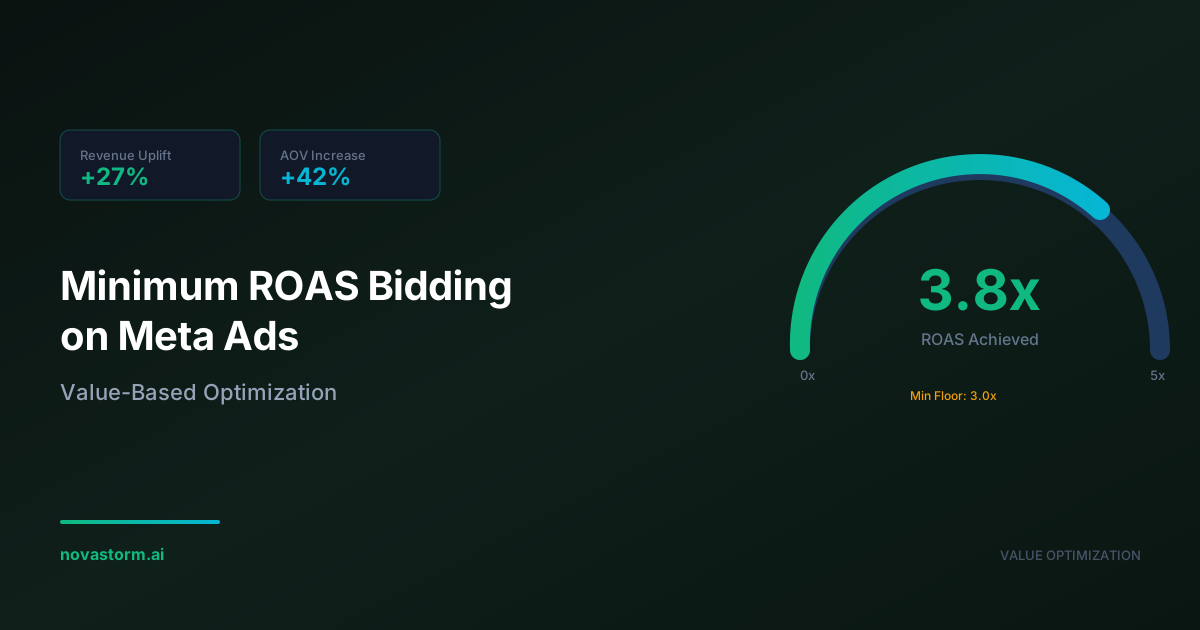
Minimum ROAS Bidding on Meta Ads: Value-Based Optimization
Master minimum ROAS bidding on Meta Ads to optimize for revenue, not just conversions. Setup guide, best practices, and advanced value-based strategies.
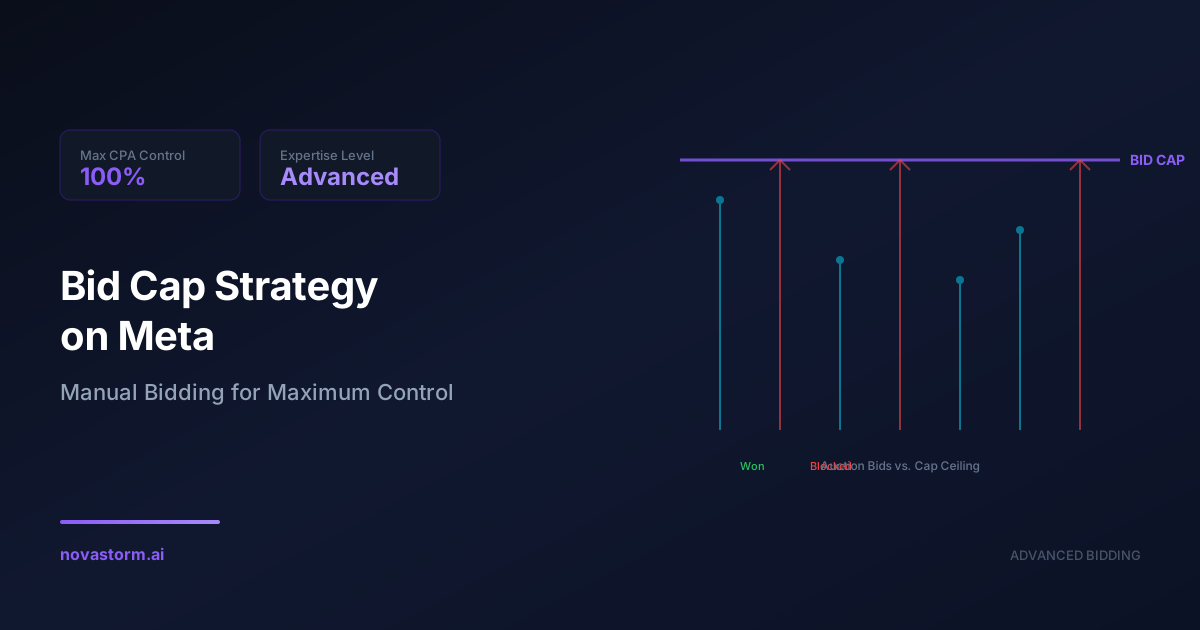
Bid Cap Strategy on Meta: Manual Bidding for Maximum Control
Learn how to use bid cap strategy on Meta for maximum auction control. Advanced techniques for setting manual bids, avoiding delivery issues, and scaling.

Traffic Campaigns on Meta: When to Optimize for Link Clicks
Learn when traffic campaigns on Meta are the right choice, how to optimize for link clicks vs landing page views, and avoid common pitfalls that waste budget.