Bid Cap Strategy on Meta: Manual Bidding for Maximum Control
Learn how to use bid cap strategy on Meta for maximum auction control. Advanced techniques for setting manual bids, avoiding delivery issues, and scaling.
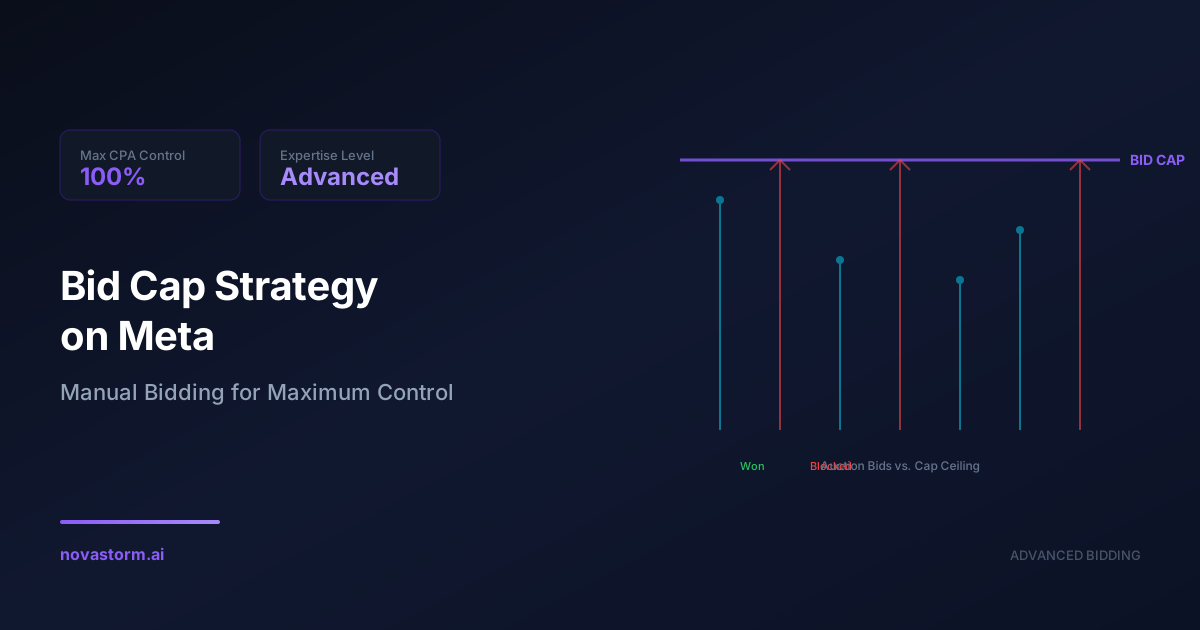
Bid cap strategy on Meta gives advertisers something no other bidding approach offers: a hard ceiling on what you will pay per auction. While cost cap controls average CPA and lowest cost hands everything to the algorithm, bid cap sets an explicit maximum bid for every single impression opportunity. For advertisers who understand their unit economics deeply, this level of control is invaluable.
However, bid cap is also the most unforgiving bid strategy on Meta. Set it too low and you get zero delivery. Set it too high and you lose the control advantage. This guide covers the mechanics, when to deploy bid cap strategy on Meta, and how to avoid the common pitfalls that cause campaigns to fail.
What Makes Bid Cap Different from Other Strategies
The fundamental distinction is simple. Cost cap controls your average cost per result. Bid cap strategy on Meta controls the maximum bid in every single auction. This means you will never pay more than your specified amount for any individual conversion opportunity.
This hard ceiling has profound implications. In a cost cap campaign, Meta might bid $60 on one auction and $10 on another to achieve a $30 average. With bid cap set at $30, Meta will never bid above $30 on any auction. You forfeit those expensive but potentially high-converting opportunities in exchange for absolute cost certainty.
| Characteristic | Bid Cap | Cost Cap | Lowest Cost |
|---|---|---|---|
| Control Level | Maximum per auction | Average per result | None |
| Delivery Risk | High — may underdeliver | Moderate | Low |
| CPA Predictability | Very high ceiling | High average | Unpredictable |
| Budget Utilization | Often underspends | Usually spends most | Spends full budget |
| Expertise Required | Advanced | Intermediate | Beginner |
| Scale Difficulty | Hard | Moderate | Easy |
When Bid Cap Strategy on Meta Is the Right Choice
Bid cap is not a general-purpose strategy. It excels in specific scenarios where absolute cost control outweighs volume.
- Lead generation with fixed revenue per lead — you know exactly what each lead is worth and cannot exceed that value.
- E-commerce with thin margins — even one over-priced conversion can wipe out profit on the order.
- Competitive auctions where you want to cap exposure — bid cap prevents auction fever during peak periods.
- App install campaigns with strict LTV models — when your Day 7 ROAS must exceed a threshold, bid cap ensures acquisition costs stay below the maximum allowable.
- Regulated industries with compliance-driven CPA limits — when exceeding a cost threshold triggers compliance issues.
How to Calculate Your Bid Cap
Setting the right bid cap requires working backward from your unit economics. The formula is straightforward, but the inputs must be precise.
Bid Cap Formula: Maximum Acceptable CPA x Expected Conversion Rate = Your Bid Cap. For example, if your max CPA is $40 and your landing page converts at 5%, your bid cap should be around $2.00 per click equivalent.
In practice, most advertisers using bid cap strategy on Meta start with their historical CPA data. Pull your median CPA (not average — median removes outlier distortion) from the last 30 days and use that as your initial bid cap. This gives the algorithm enough room to find conversions while protecting against overspend.
The Delivery Challenge and How to Solve It
The biggest problem with bid cap strategy on Meta is delivery stalls. Because the algorithm cannot exceed your bid, it may simply opt out of most auctions, resulting in minimal or zero spend. Here is a systematic approach to diagnosing and fixing delivery issues.
| Delivery Issue | Diagnosis | Solution |
|---|---|---|
| Zero spend | Bid is below market clearing price | Raise bid by 25-50% and monitor |
| Spend is 10-30% of budget | Bid is competitive but too selective | Raise bid by 10-15% or broaden audience |
| Spend fluctuates wildly daily | Bid is at market edge — wins some days, loses others | Raise bid by 5-10% for consistency |
| Full spend but poor CPA | Bid is too high for the audience quality | Lower bid or improve audience targeting |
| Initial spend then decline | Creative fatigue reducing relevance score | Refresh creatives to restore auction competitiveness |
Stop wasting ad budget
NovaStorm AI cuts Meta Ads CPA by 40% on average. Start free.
A practical tactic is the 'bid ladder' approach. Launch three identical ad sets with bids at 80%, 100%, and 120% of your target CPA. After 5-7 days, the performance data reveals the optimal bid level for your specific audience and creative combination.
Bid Cap and Audience Segmentation
One of the most sophisticated applications of bid cap strategy on Meta is differential bidding across audience segments. Different audiences have different conversion probabilities and different competitive landscapes. A single bid cap across all audiences leaves money on the table.
For example, your retargeting audience might convert at 8% while your prospecting audience converts at 1.5%. Setting the same bid cap for both means you are either overbidding on retargeting or underbidding on prospecting. Segment your campaigns and assign bid caps based on each audience's historical conversion rate and value.
- Segment audiences by funnel stage: prospecting, engagement retargeting, conversion retargeting.
- Calculate the expected value per impression for each segment using historical data.
- Set bid caps proportional to expected value — higher bids for higher-intent audiences.
- Monitor each segment independently on a 7-day rolling basis.
- Adjust bids per segment without cross-contaminating performance data.
Scaling Bid Cap Campaigns Without Breaking Them
Scaling bid cap campaigns is inherently harder than scaling lowest-cost or cost cap campaigns. The fixed ceiling limits the algorithm's ability to find new users as you increase budget. Here are proven approaches to scaling with bid cap strategy on Meta.
Horizontal scaling works better than vertical scaling for bid cap. Instead of increasing budget on a single ad set, duplicate the ad set with different audience segments, each with its own calibrated bid cap. This expands reach without forcing the algorithm to compete harder within a single auction pool.
When scaling bid cap campaigns, increase budget by no more than 15% per day. Larger jumps force the ad set back into learning phase, which is especially punishing for bid cap where the algorithm has less flexibility.
Creative diversification is equally important. Bid cap campaigns are more sensitive to creative performance because the fixed bid means the algorithm relies heavily on relevance score and estimated action rates to win auctions. Fresh, high-performing creatives effectively raise your competitiveness without increasing your bid.
Monitoring Bid Cap Performance with Automation
Manual monitoring of bid cap campaigns is time-intensive because small market shifts can cause sudden delivery changes. A bid that works on Monday may underspend on Tuesday when competition increases. This is where automation becomes essential.
Platforms like Novastorm AI continuously monitor bid cap campaign delivery rates, flagging when spend drops below expected thresholds. Automated alerts for delivery anomalies, CPA drift, and creative fatigue let you respond to market changes in hours rather than days.
Bid cap strategy on Meta rewards advertisers who combine deep unit economics knowledge with disciplined execution. It is not the right choice for every campaign, but for scenarios requiring absolute cost control, no other strategy provides the same level of certainty. Master the bid ladder approach, segment your audiences appropriately, and scale horizontally — and bid cap becomes a precision tool for profitable growth.
Novastorm AI automates Meta Ads routine — from monitoring to optimization. Learn more at novastorm.ai
Disclaimer: This article was generated with the assistance of AI and reviewed by the NovaStorm AI team. While we strive for accuracy, we recommend verifying specific data points and consulting official sources (linked where available) for critical business decisions.
Ready to automate your Meta Ads?
NovaStorm AI takes full responsibility for your campaigns — from monitoring to optimization.
Get Started FreeRelated Articles
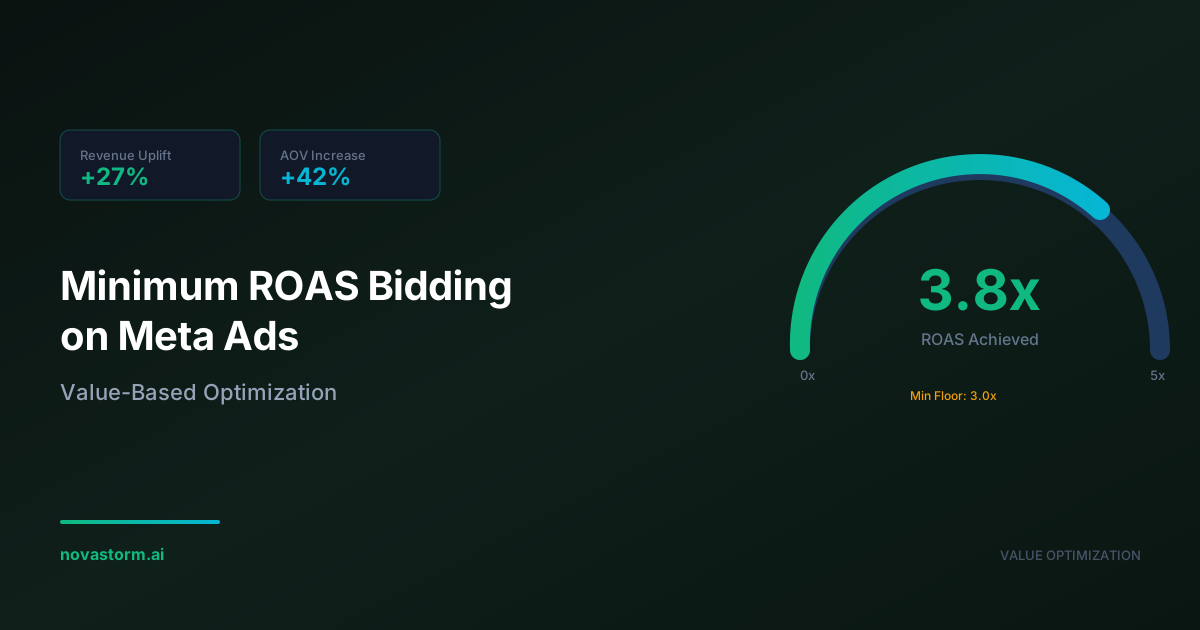
Minimum ROAS Bidding on Meta Ads: Value-Based Optimization
Master minimum ROAS bidding on Meta Ads to optimize for revenue, not just conversions. Setup guide, best practices, and advanced value-based strategies.
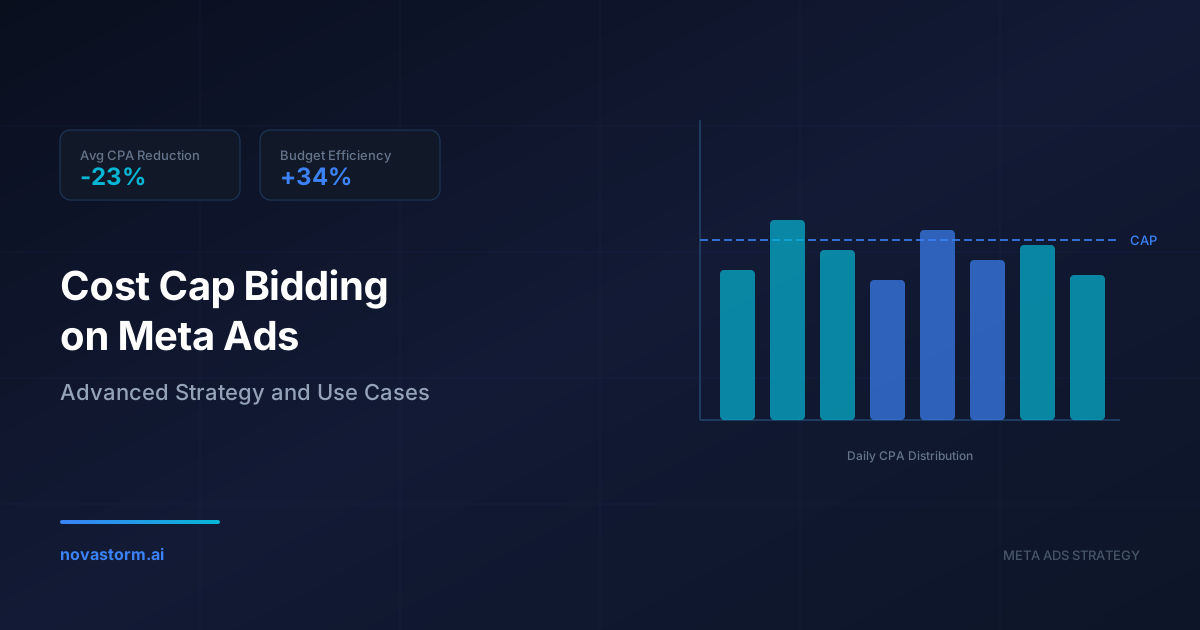
Cost Cap Bidding on Meta Ads: Advanced Strategy and Use Cases
Master cost cap bidding on Meta Ads with advanced strategies, real-world use cases, and optimization techniques to control CPA while maximizing conversions.
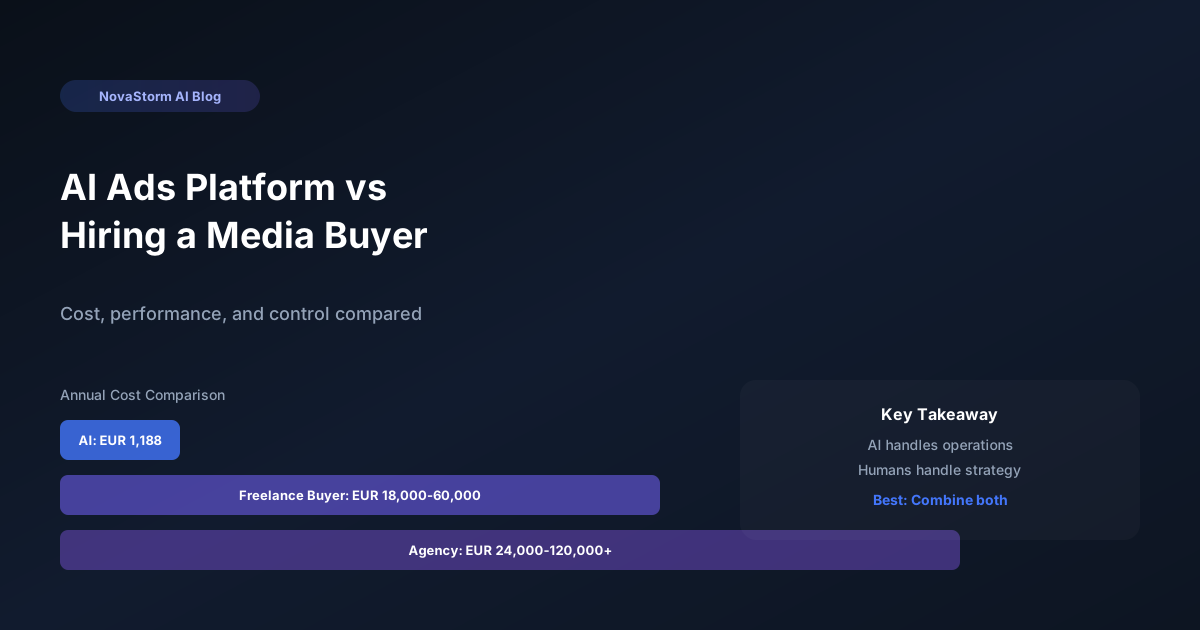
AI Ads Platform vs Hiring a Media Buyer: Cost, Performance, and Control Compared
Should you hire a media buyer or use an AI platform for Meta Ads? Comparing costs, performance, control, and scalability to help you decide.