Value-Based Optimization in Meta Ads: Maximize Revenue Not Just Conversions
Master value-based optimization in Meta Ads to maximize revenue instead of just counting conversions. Learn VBO setup, data thresholds, and ROAS improvements.
Value-based optimization in Meta Ads represents a fundamental shift in how the platform allocates your budget. Instead of treating all conversions equally, VBO teaches the algorithm to prioritize users who are likely to spend more. A $200 purchase and a $20 purchase are not the same, and your optimization strategy should reflect that difference.
What Value-Based Optimization in Meta Ads Actually Does
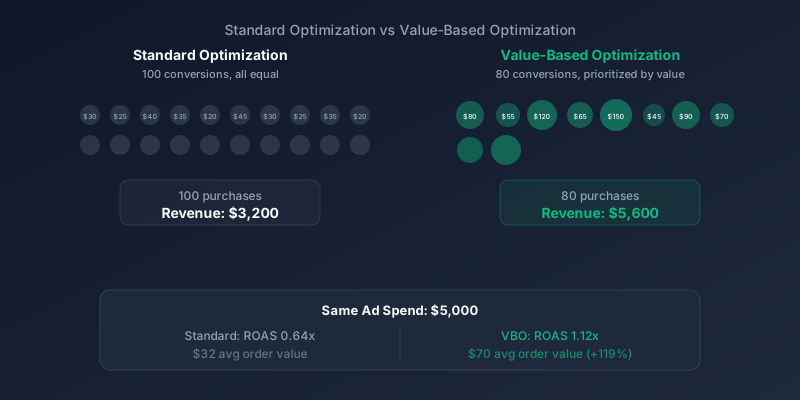
Standard conversion optimization tells Meta to find people who are likely to convert. Period. The algorithm does not care whether someone buys your cheapest product or your most expensive bundle. It counts all purchases equally and optimizes to get the highest volume of conversions for your budget.
Value-based optimization adds a critical dimension. It tells Meta not just to find buyers, but to find high-value buyers. When you pass purchase values to Meta through your pixel or Conversions API, the algorithm learns which user characteristics correlate with higher spending. Over time, it shifts your ad delivery toward users who resemble your highest-value customers, even if that means fewer total conversions.
Think of it this way: standard optimization asks 'Who will buy?' while value-based optimization asks 'Who will spend the most?' The difference in outcomes compounds over time, especially for businesses with wide price ranges.
Setup Requirements for VBO
VBO requires that you pass accurate purchase values to Meta. This means your pixel or Conversions API must include the value parameter with every purchase event. If your tracking only fires a generic purchase event without a dollar amount, VBO cannot function. The setup is straightforward for most e-commerce platforms, as standard integrations with Shopify, WooCommerce, and Magento automatically include purchase values.
- Verify your pixel fires the Purchase event with the correct value and currency parameters
- Ensure Conversions API is sending the same purchase events server-side for redundancy
- Check that values match your actual revenue, not inflated or rounded numbers
- Confirm you have the correct currency code matching your ad account currency
- Test the implementation using the Events Manager test tool before launching VBO campaigns
Minimum Data Thresholds
VBO needs data to learn from. Meta officially recommends a minimum of 50 purchase events per week to use standard conversion optimization effectively. For VBO, the bar is higher in practice. You need enough purchases with sufficient value variation for the algorithm to identify patterns. If 90% of your purchases are the same price, VBO has nothing to differentiate.
The ideal scenario is at least 100 purchases per week with a meaningful spread in order values. A business selling products ranging from $30 to $300 gives VBO clear signals to work with. A subscription business where everyone pays $9.99 per month gains almost nothing from VBO because there is no value variation to optimize against.
| Data Scenario | VBO Viability | Recommendation |
|---|---|---|
| Under 30 purchases/week | Not viable | Use standard purchase optimization |
| 30-50 purchases/week, varied values | Possible but unstable | Test VBO in a separate campaign |
| 50-100 purchases/week, varied values | Good | Run VBO as primary strategy |
| 100+ purchases/week, varied values | Excellent | VBO should be default optimization |
| Any volume, uniform values | Not beneficial | VBO adds no advantage |
VBO vs Standard Conversion Optimization
In head-to-head tests, VBO consistently delivers higher ROAS than standard purchase optimization, but often with fewer total conversions. This trade-off is intentional. VBO sacrifices conversion volume to prioritize revenue. You might get 80 purchases instead of 100, but those 80 purchases might generate 40% more total revenue.
The key metric to watch is not CPA or conversion volume but total revenue and ROAS. A campaign with a $50 CPA generating $150 average order value delivers a 3x ROAS. A VBO campaign with a $60 CPA but a $220 average order value delivers a 3.67x ROAS. The higher CPA is irrelevant when the revenue per customer is substantially higher.
Stop wasting ad budget
NovaStorm AI cuts Meta Ads CPA by 40% on average. Start free.
ROAS Improvements from VBO
Across industries, advertisers who switch from standard conversion optimization to VBO typically see ROAS improvements of 15-40%. The improvement is most dramatic for businesses with wide price ranges, such as fashion retailers with items from $25 to $500, or electronics stores with accessories and high-ticket items in the same catalog.
Run VBO and standard optimization in parallel for at least two weeks before making a decision. Use Meta's built-in A/B test tool to get statistically valid results. Compare on total revenue generated, not just CPA or conversion count.
Catalog-Based VBO
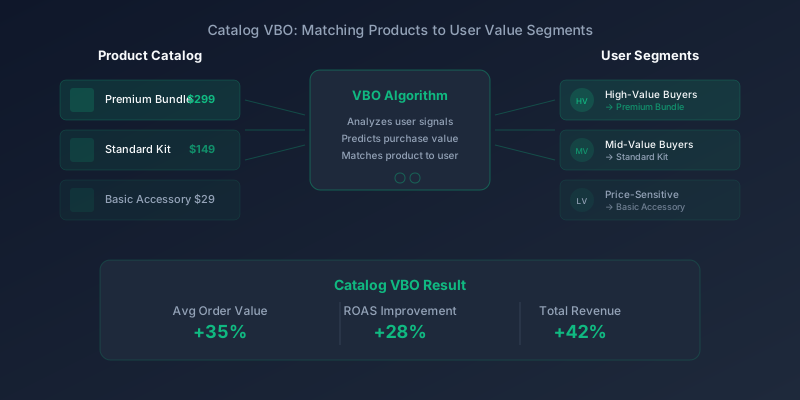
For e-commerce advertisers running dynamic product ads, catalog-based VBO is particularly powerful. The algorithm not only finds high-value users but also determines which products to show them based on predicted purchase value. This means high-ticket items get shown to users who are more likely to buy expensive products, while budget items are reserved for price-sensitive segments.
To enable catalog VBO, ensure your product catalog includes accurate pricing and that your pixel sends individual product values. The more granular your data, the better VBO performs. If your catalog has thousands of SKUs with varied pricing, catalog VBO can dramatically improve your dynamic retargeting performance.
When VBO Fails
VBO is not a magic solution. It fails in predictable scenarios. If your purchase data is inaccurate, VBO learns from bad signals and optimizes in the wrong direction. If your value range is too narrow, there is nothing to optimize. If your volume is too low, VBO cannot gather enough data to learn effectively and may perform worse than standard optimization.
- Inaccurate or missing purchase values lead to poor optimization
- Uniform pricing across products eliminates VBO advantage
- Low conversion volume prevents the algorithm from learning
- Frequent price changes or promotions can confuse VBO signals
- New ad accounts without historical purchase data need time to calibrate
If you launch VBO and see performance decline after the learning phase, do not panic. First verify your tracking is accurate. Then check whether your conversion volume meets the minimum threshold. If both are solid but VBO still underperforms, it may simply mean your customer base does not have enough value differentiation for VBO to add meaningful improvements. In that case, return to standard optimization without guilt.
Sources & Further Reading: Meta Business Help Center — Value Optimization — official guide to VBO setup. Meta Business Help Center — Advantage+ Catalog Ads — dynamic product ads with value optimization. AdEspresso — Facebook Value Optimization Guide — independent testing and benchmarks.
Getting Started with VBO
Start by auditing your purchase tracking. Confirm values are passing correctly and consistently. Then analyze your order value distribution. If you have meaningful variation and sufficient volume, create a new campaign with VBO optimization and run it alongside your existing conversion campaigns. Give it at least 50 conversions before evaluating performance. The potential upside, getting more revenue from the same ad spend, makes this one of the highest-impact optimizations available on the platform.
Novastorm AI automates Meta Ads routine — from monitoring to optimization. Learn more at novastorm.ai
Disclaimer: This article was generated with the assistance of AI and reviewed by the NovaStorm AI team. While we strive for accuracy, we recommend verifying specific data points and consulting official sources (linked where available) for critical business decisions.
Ready to automate your Meta Ads?
NovaStorm AI takes full responsibility for your campaigns — from monitoring to optimization.
Get Started FreeRelated Articles
Instagram Shopping Ads: Product Tagging Best Practices
Learn product tagging best practices for Instagram Shopping Ads. Discover catalog requirements, creative optimization, and strategies to boost conversion rates from tagged products.
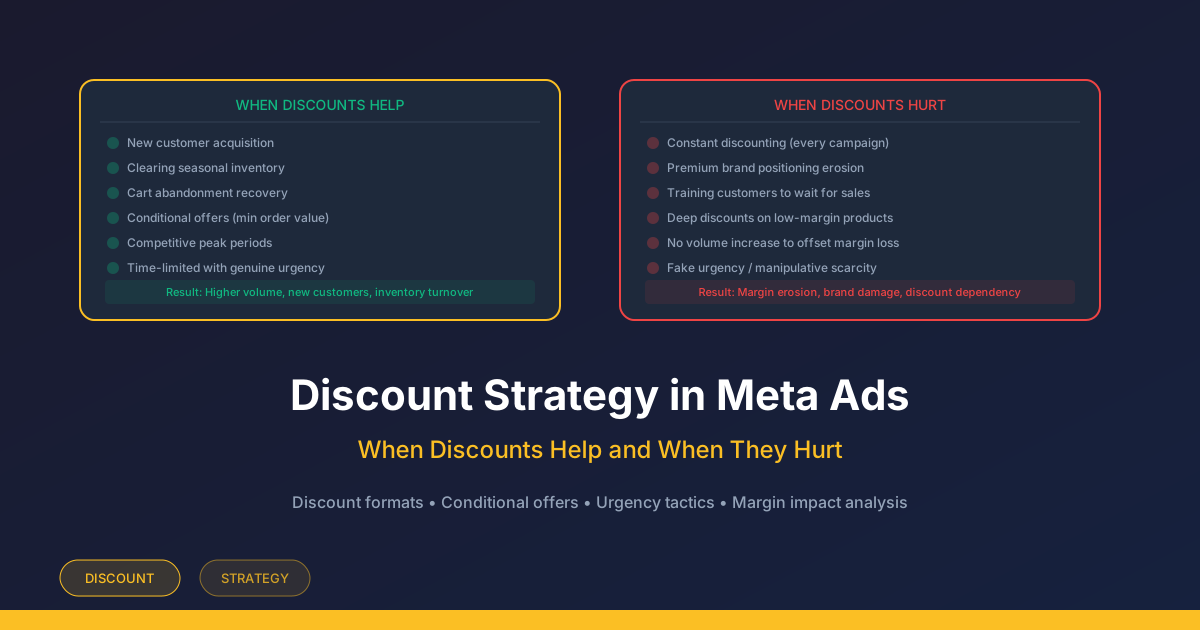
Discount Strategy in Meta Ads: When Discounts Help and When They Hurt
Learn when discounts boost Meta Ads performance and when they erode margins. Percentage vs dollar off, conditional offers, urgency tactics, and premium positioning.
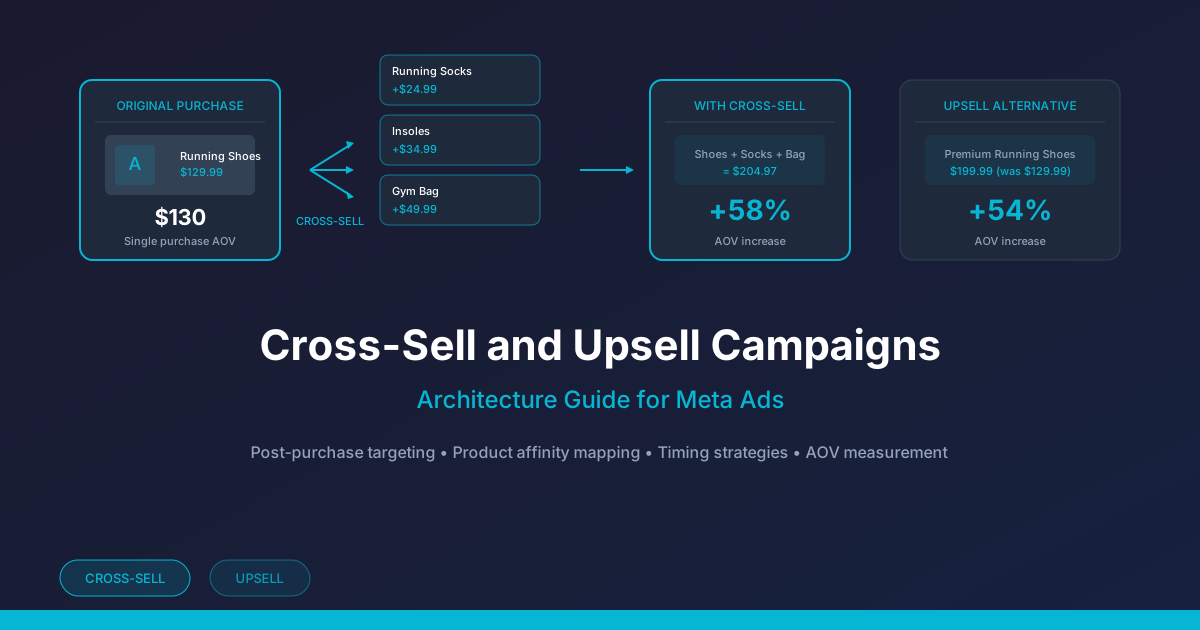
Cross-Sell and Upsell Campaigns on Meta: Architecture Guide
Build effective cross-sell and upsell campaigns on Meta. Learn post-purchase audience setup, product affinity mapping, timing strategies, and AOV impact measurement.