Cross-Sell and Upsell Campaigns on Meta: Architecture Guide
Build effective cross-sell and upsell campaigns on Meta. Learn post-purchase audience setup, product affinity mapping, timing strategies, and AOV impact measurement.
Why Cross-Sell and Upsell Campaigns Unlock Hidden Revenue
Cross-sell and upsell campaigns on Meta represent one of the most efficient ways to increase revenue from your existing customer base. Acquiring a new customer costs five to seven times more than selling to an existing one, yet most advertisers allocate the vast majority of their Meta budget to acquisition and neglect the customers they have already won. Post-purchase campaigns that suggest complementary products or premium upgrades turn one-time buyers into multi-product customers, increasing average order value and lifetime value simultaneously.
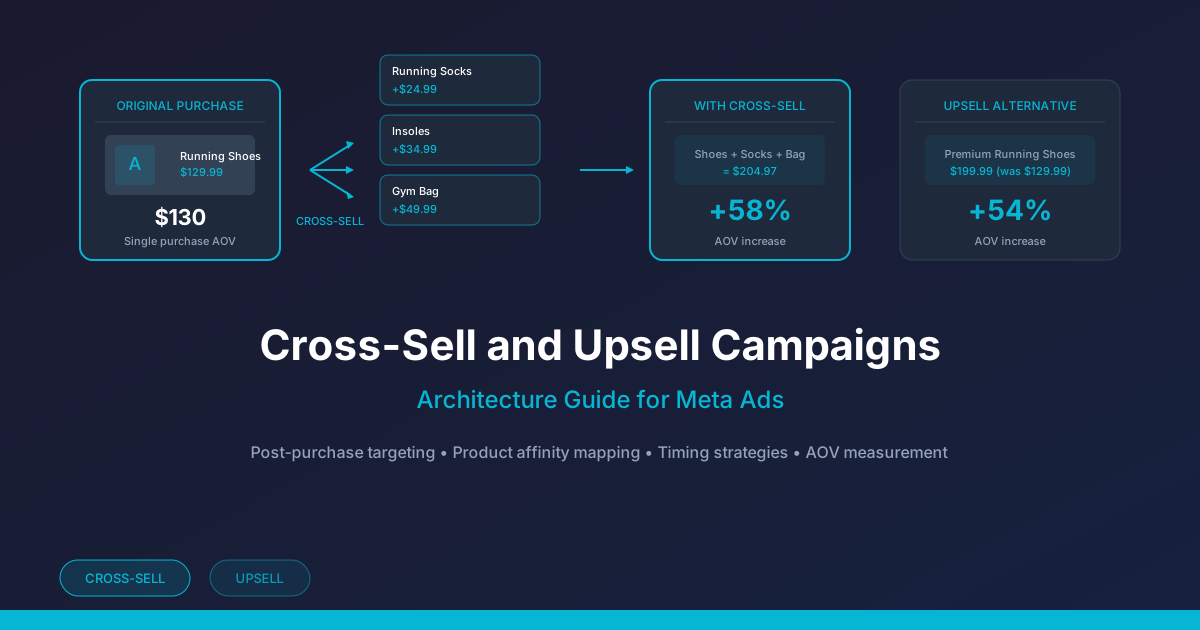
The distinction between cross-selling and upselling is important for campaign architecture. Cross-selling recommends complementary or related products. If a customer bought running shoes, a cross-sell ad might suggest running socks, insoles, or a gym bag. Upselling encourages the customer to upgrade to a higher-value version of what they already purchased or to add premium features. Both strategies work on Meta, but they require different audience setups, creative approaches, and timing.
| Strategy | Definition | Example | Typical AOV Impact |
|---|---|---|---|
| Cross-sell | Recommend complementary products | Bought laptop → Suggest laptop bag, mouse, monitor | +15-30% |
| Upsell | Suggest premium version or add-ons | Bought basic plan → Suggest premium plan | +20-40% |
| Bundle | Package related items at a discount | Bought shampoo → Suggest hair care bundle | +25-50% |
| Replenishment | Remind to reorder consumable products | Bought protein powder → Remind in 30 days | +10-20% |
Post-Purchase Audience Setup on Meta
The foundation of effective cross-sell and upsell campaigns is precise audience targeting. You need to reach people who have purchased specific products and exclude those who have already bought the product you are recommending. This requires careful custom audience configuration in Meta Ads Manager.
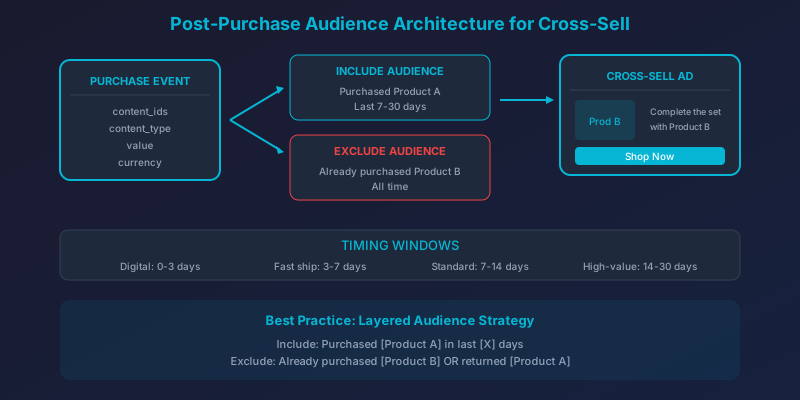
Create custom audiences based on purchase events from your Meta Pixel or Conversions API. The most effective segmentation uses the content_ids parameter from your Purchase event to identify exactly which products a customer bought. This allows you to build audiences like 'Purchased product A but not product B,' which is the foundation of targeted cross-sell campaigns.
- Set up Purchase event tracking with content_ids, content_type, and value parameters via Pixel and CAPI.
- Create custom audiences for each major product category or individual products with high cross-sell potential.
- Set audience windows based on your typical repeat purchase timeline (7, 14, 30, 60 days post-purchase).
- Build exclusion audiences for customers who already own the cross-sell product to avoid irrelevant ads.
- Layer audiences with recency to prioritize recent buyers who are more likely to make an additional purchase.
- Test different audience windows to find the optimal timing for each product combination.
Product Affinity Mapping
Product affinity mapping identifies which products are most frequently purchased together or in sequence. This data-driven approach ensures your cross-sell recommendations are based on actual customer behavior rather than assumptions about what might go well together.
To build a product affinity map, analyze your order data for customers who made multiple purchases. Look for patterns: which products are most commonly bought together in a single order, and which products are most commonly bought in sequence across multiple orders. The products with the strongest affinity scores become your cross-sell pairs.
Start with your top 20 best-selling products and map the top 3 cross-sell products for each based on actual purchase data. This focused approach covers the majority of your cross-sell opportunity without requiring analysis of every product combination.
Creative Approach for Post-Purchase Ads
Cross-sell and upsell creative should acknowledge the customer's existing purchase and position the recommended product as a natural complement. The tone is different from acquisition ads. You are speaking to someone who already trusts your brand enough to have bought from you. The creative should feel like a helpful recommendation, not another sales pitch.
Stop wasting ad budget
NovaStorm AI cuts Meta Ads CPA by 40% on average. Start free.
- Reference the previous purchase: 'You loved our running shoes. Complete the set with performance socks.'
- Show products together: Visual creative showing the original and cross-sell products used together.
- Use social proof from similar customers: 'Customers who bought X also loved Y.'
- Offer an exclusive post-purchase discount to incentivize the additional purchase.
- For upsells, emphasize the incremental benefits of upgrading rather than reintroducing the product category.
Timing After Purchase: When to Show Cross-Sell Ads
Timing is critical for post-purchase campaigns. Show the ad too soon and the customer feels bombarded. Wait too long and the purchase excitement has faded. The optimal window depends on your product type, delivery timeline, and the nature of the cross-sell.
| Product Type | Cross-Sell Window | Rationale |
|---|---|---|
| Digital products | 0-3 days | No delivery wait; customer is actively using the product |
| Fast shipping (1-3 days) | 3-7 days | After delivery and initial product experience |
| Standard shipping (5-10 days) | 7-14 days | After delivery and first use |
| Consumables / replenishment | 50-80% of typical usage cycle | Before the customer runs out |
| High-consideration items | 14-30 days | After extended use confirms satisfaction |
Catalog-Based Cross-Sell with DPA
For e-commerce businesses with large catalogs, Dynamic Product Ads can automate cross-sell recommendations. By creating product sets that group complementary items and using custom audiences of purchasers, you can let Meta's algorithm determine the best cross-sell product for each individual customer.
The setup involves creating product sets in your catalog that define cross-sell relationships. For example, a product set called 'Accessories for Laptops' would include cases, mice, keyboards, and stands. You then target this product set at customers who purchased laptops, and Meta's DPA system shows the most relevant accessory to each individual buyer.
Measuring AOV Impact and Campaign Performance
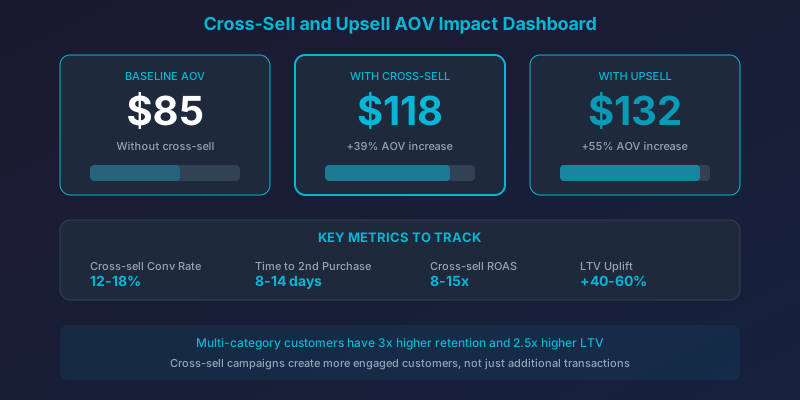
The primary metric for cross-sell and upsell campaigns is the incremental revenue generated per customer. This goes beyond standard ROAS calculation because you are measuring the additional value created from an existing customer relationship.
- Incremental AOV: Compare average order value for customers exposed to cross-sell ads versus those who were not.
- Cross-sell conversion rate: Percentage of targeted customers who make an additional purchase.
- Time to second purchase: How quickly cross-sell ads accelerate repeat buying behavior.
- Blended LTV: Track lifetime value of customers who received cross-sell treatment versus a holdout group.
- Margin-adjusted ROAS: Calculate return based on margin of cross-sell products, not just revenue.
The true value of cross-sell campaigns extends beyond the immediate additional purchase. Customers who buy multiple product categories have significantly higher retention rates and lifetime value. A successful cross-sell campaign does not just generate one extra sale but creates a more engaged, more valuable customer.
Building a cross-sell and upsell program on Meta requires thoughtful audience architecture, data-driven product recommendations, and creative that acknowledges the existing customer relationship. The effort is worth it. These campaigns typically deliver ROAS two to three times higher than acquisition campaigns because you are selling to people who already trust your brand. Start with your best-selling products, map the strongest cross-sell pairs, and build from there.
Novastorm AI automates Meta Ads routine — from monitoring to optimization. Learn more at novastorm.ai
Disclaimer: This article was generated with the assistance of AI and reviewed by the NovaStorm AI team. While we strive for accuracy, we recommend verifying specific data points and consulting official sources (linked where available) for critical business decisions.
Ready to automate your Meta Ads?
NovaStorm AI takes full responsibility for your campaigns — from monitoring to optimization.
Get Started FreeRelated Articles
Instagram Shopping Ads: Product Tagging Best Practices
Learn product tagging best practices for Instagram Shopping Ads. Discover catalog requirements, creative optimization, and strategies to boost conversion rates from tagged products.
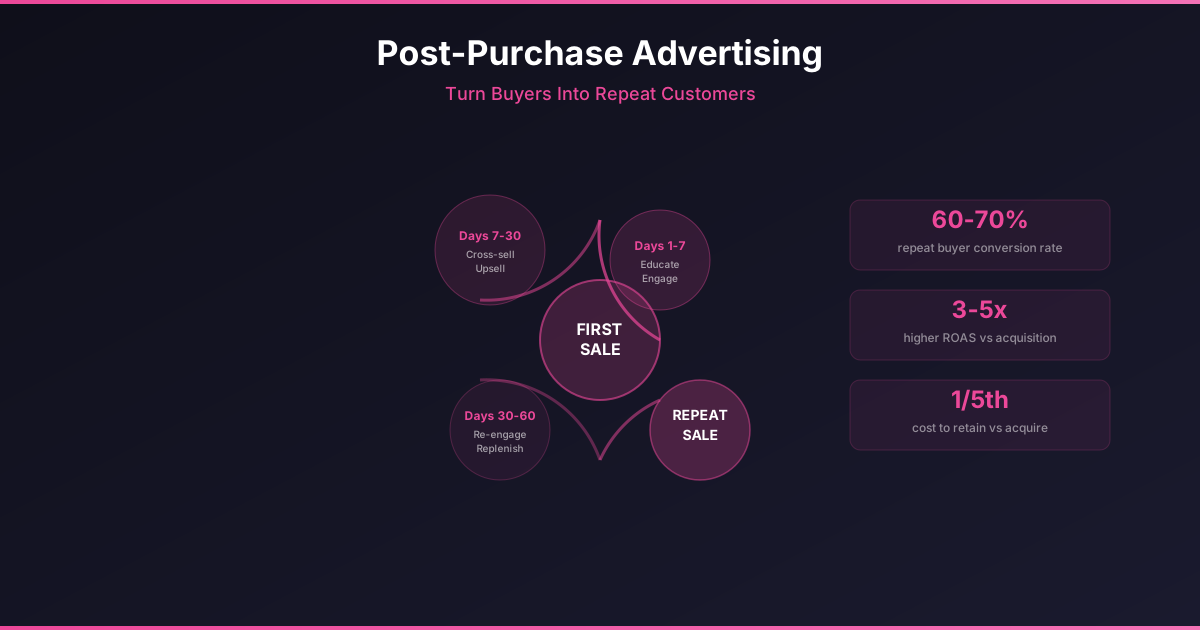
Post-Purchase Advertising: Turn Buyers Into Repeat Customers on Meta
Discover how post-purchase advertising on Meta turns one-time buyers into repeat customers. Includes timing strategies, cross-sell tactics, and retention vs acquisition spend analysis.
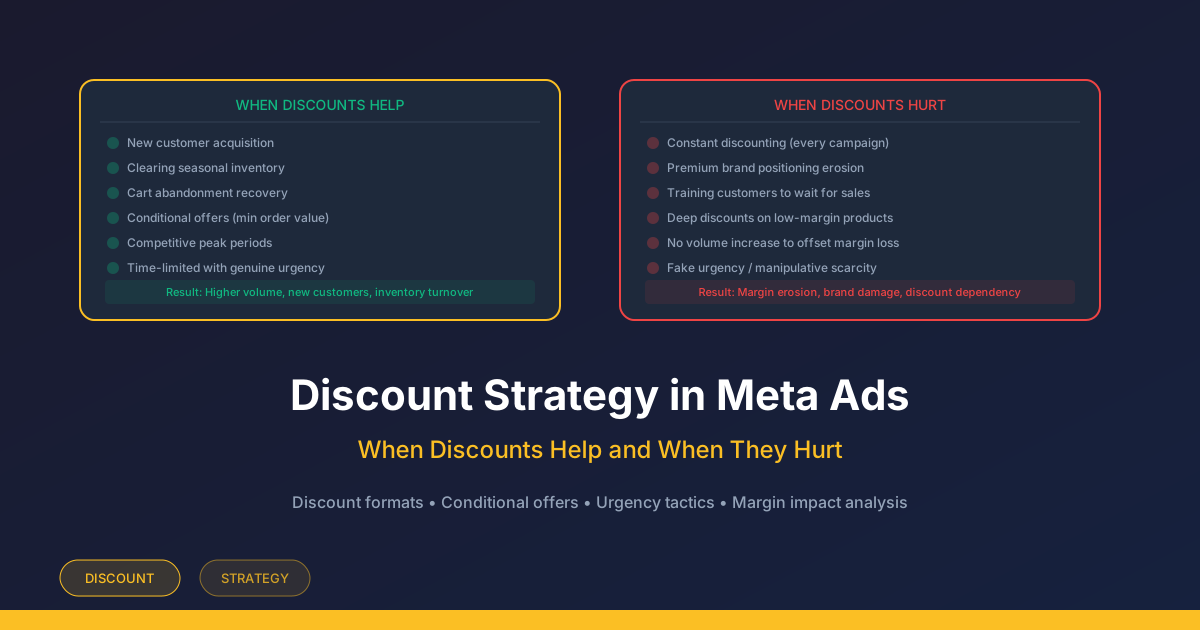
Discount Strategy in Meta Ads: When Discounts Help and When They Hurt
Learn when discounts boost Meta Ads performance and when they erode margins. Percentage vs dollar off, conditional offers, urgency tactics, and premium positioning.