Post-Purchase Advertising: Turn Buyers Into Repeat Customers on Meta
Discover how post-purchase advertising on Meta turns one-time buyers into repeat customers. Includes timing strategies, cross-sell tactics, and retention vs acquisition spend analysis.
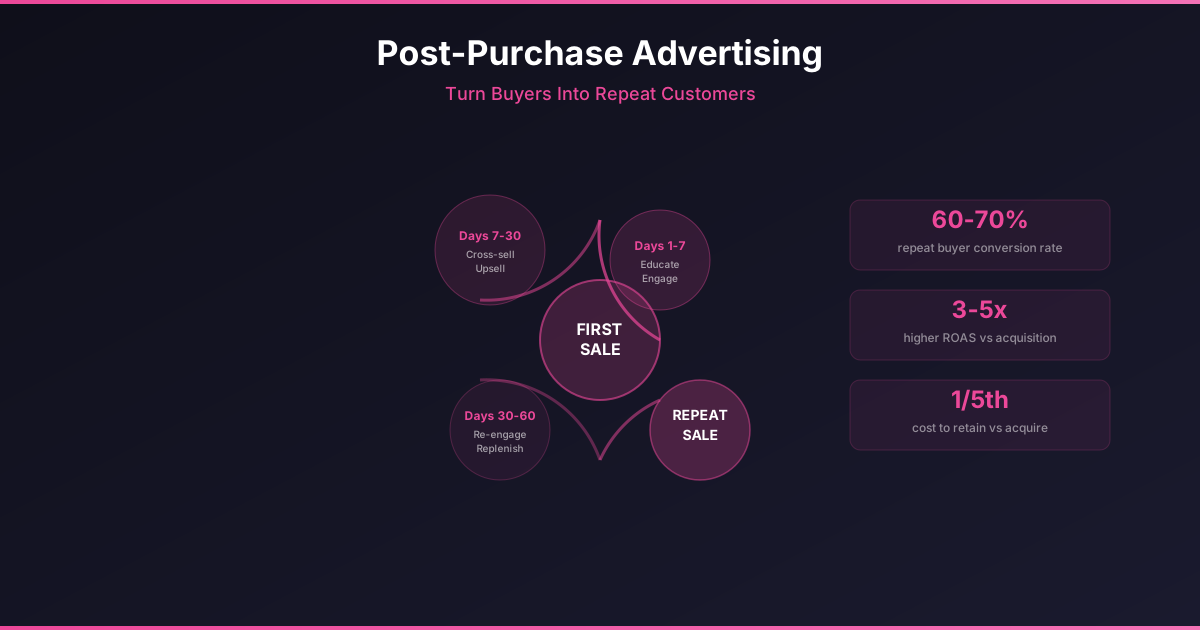
Post-purchase advertising is the most underutilized strategy in Meta Ads. While most advertisers obsess over acquiring new customers, the most profitable growth comes from the customers you already have. Existing buyers are 60-70% more likely to convert on a repeat purchase compared to new prospects, and they cost a fraction to reach. By building a deliberate post-purchase advertising system on Meta, you turn each first sale into a relationship that generates revenue for months and years to come.
The Post-Purchase Funnel
The post-purchase funnel begins the moment a customer completes their first transaction. Most brands go silent at this point, maybe sending an order confirmation and shipping notification email. But the first 60 days after purchase represent a golden window of heightened brand affinity, product interest, and willingness to engage. Your post-purchase advertising strategy must map to this timeline.
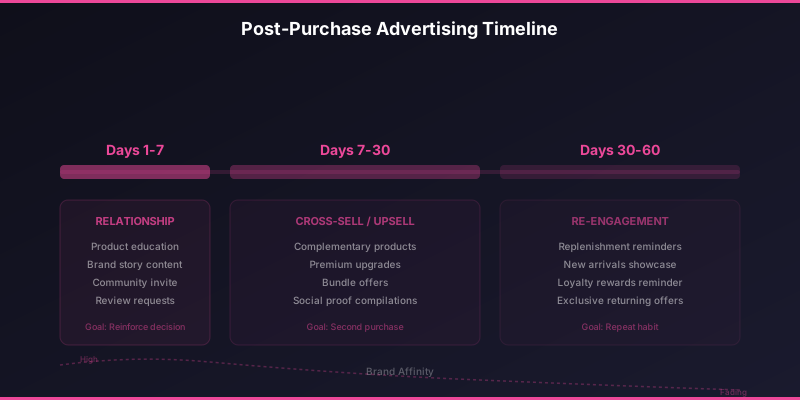
The funnel has three distinct phases, each requiring different messaging, creative, and objectives. Understanding these phases and their timing is essential to maximizing customer lifetime value through Meta Ads.
Phase 1: Days 1-7 After Purchase
The first week after purchase is the peak of post-purchase engagement. The customer is excited about their order, waiting for delivery, and most receptive to your brand. This is not the time to push another sale. Instead, focus on reinforcing the purchase decision and building the relationship.
- Product education ads: Show the customer how to get the most from what they just bought. Tutorial videos, setup guides, and usage tips.
- Brand story content: Deepen the relationship with behind-the-scenes content, founder stories, or mission-driven messaging.
- Community invitation ads: Invite buyers to join your community, follow your social accounts, or sign up for a loyalty program.
- Review request ads: After the estimated delivery date, show a gentle prompt to leave a review. This generates UGC while reinforcing satisfaction.
Phase 2: Days 7-30 After Purchase
By the second week, the customer has received and used your product. This is the optimal window for cross-selling and upselling. The customer has experienced your brand quality firsthand, reducing the perceived risk of a second purchase.
- Cross-sell ads: Recommend complementary products. If they bought running shoes, show them running socks, insoles, or a running watch.
- Upsell ads: Present premium versions or upgrades of what they bought. Larger sizes, bundles, or subscription options.
- Accessory ads: Simple add-on products that enhance the original purchase. These tend to have very high conversion rates due to low price points and clear relevance.
- Social proof compilations: Show reviews and UGC from other buyers of the same product, reinforcing that they made a good choice while featuring related products.
Phase 3: Days 30-60 After Purchase
The 30-60 day window is about re-engagement and repeat purchase. Brand affinity is still elevated but starts to fade. Your advertising needs to provide a clear reason to come back.
- Replenishment reminders: For consumable products, time your ads to when the product is likely running low.
- New arrival ads: Show the customer what is new since their last purchase. Fresh inventory creates a reason to browse again.
- Loyalty rewards ads: If you have a loyalty program, remind them of their points balance or available rewards.
- Exclusive offer ads: Provide a returning-customer-only discount or early access to new products. Exclusivity drives action.
Cross-Sell and Upsell Ad Strategies
Cross-selling and upselling are the workhorses of post-purchase advertising. When done well, they feel helpful rather than pushy. The key is relevance: the recommendation must logically connect to what the customer already bought.
Stop wasting ad budget
NovaStorm AI cuts Meta Ads CPA by 40% on average. Start free.
| Strategy | Timing | Creative Approach | Expected Conv Rate |
|---|---|---|---|
| Cross-sell (complementary) | 7-21 days | "Complete the set" messaging | 8-15% |
| Upsell (premium) | 14-30 days | "Upgrade your experience" messaging | 3-6% |
| Bundle offers | 7-14 days | "Save X% when you add" messaging | 5-10% |
| Replenishment | 30-60 days | "Time for a refill" messaging | 12-20% |
Use Meta's dynamic product ads with custom audience exclusions to show cross-sell recommendations automatically. Create a product set for each primary product that contains its complementary items, then target recent buyers of the primary product.
Review and UGC Collection Through Ads
Post-purchase ads are uniquely effective at generating reviews and user-generated content. A simple video ad asking recent buyers to share their experience, with a direct link to your review platform, consistently outperforms email review requests because it reaches customers where they are already spending time.
The UGC you collect through these efforts becomes fuel for your acquisition campaigns. This creates a virtuous cycle: new customer ads featuring real buyer content generate more new customers, who then generate more UGC through your post-purchase ads.
Loyalty Program Promotion
If you run a loyalty or rewards program, post-purchase advertising is the highest-converting channel for enrollment. Customers who just completed a purchase are in a spending mindset and most receptive to learning about rewards that make future purchases more valuable.
Create dedicated ads that explain your loyalty program benefits, show the customer how many points they earned from their recent purchase, and highlight what rewards they can unlock with their next order. These ads work best 3-7 days after purchase when excitement is high.
Retention vs Acquisition: The Budget Split
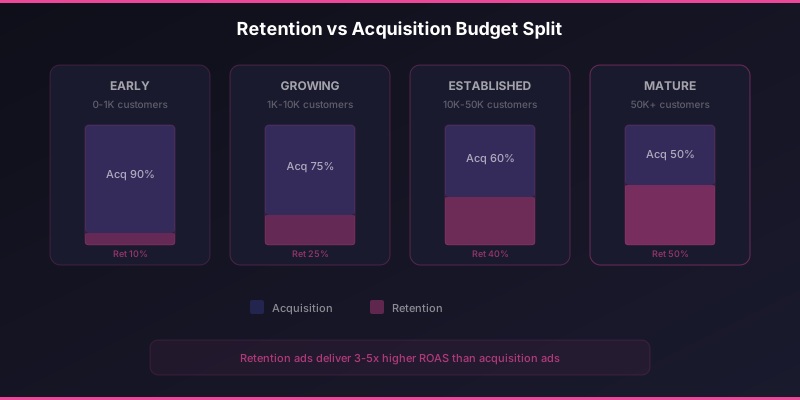
The appropriate allocation between retention (post-purchase) and acquisition advertising depends on your business maturity. New brands with small customer bases should invest primarily in acquisition. Established brands with thousands of existing customers are often leaving significant money on the table by not investing enough in retention.
| Business Stage | Acquisition % | Retention % | Rationale |
|---|---|---|---|
| Early (0-1K customers) | 90% | 10% | Need customer base first |
| Growing (1K-10K) | 75% | 25% | Enough base for meaningful retention |
| Established (10K-50K) | 60% | 40% | Retention ROI often exceeds acquisition |
| Mature (50K+) | 50% | 50% | Equal investment for compounding LTV |
Retention advertising typically delivers 3-5x higher ROAS than acquisition advertising because you are targeting people who have already demonstrated willingness to buy. Even a modest 10-15% retention budget allocation can meaningfully improve your blended ROAS.
Post-purchase advertising transforms your Meta Ads strategy from a one-time transaction model to a lifetime value model. By mapping your advertising to the natural post-purchase journey, using appropriate creative at each phase, and allocating meaningful budget to retention, you build a compounding revenue engine where each new customer becomes more valuable over time. The sale is not the finish line. It is the starting line.
Novastorm AI automates Meta Ads routine — from monitoring to optimization. Learn more at novastorm.ai
Disclaimer: This article was generated with the assistance of AI and reviewed by the NovaStorm AI team. While we strive for accuracy, we recommend verifying specific data points and consulting official sources (linked where available) for critical business decisions.
Ready to automate your Meta Ads?
NovaStorm AI takes full responsibility for your campaigns — from monitoring to optimization.
Get Started FreeRelated Articles
Meta Ads for App Install Campaigns: Complete Strategy Guide
Complete guide to Meta Ads app install campaigns covering SDK setup, deep linking, creative strategies, cost per install benchmarks, and retention optimization.
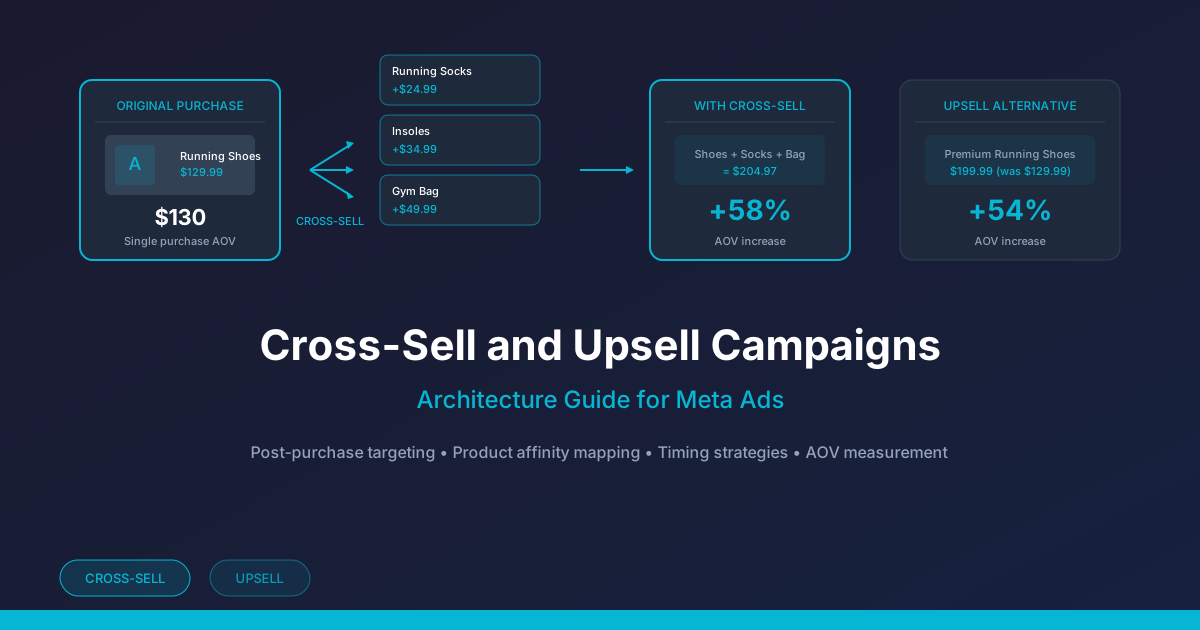
Cross-Sell and Upsell Campaigns on Meta: Architecture Guide
Build effective cross-sell and upsell campaigns on Meta. Learn post-purchase audience setup, product affinity mapping, timing strategies, and AOV impact measurement.
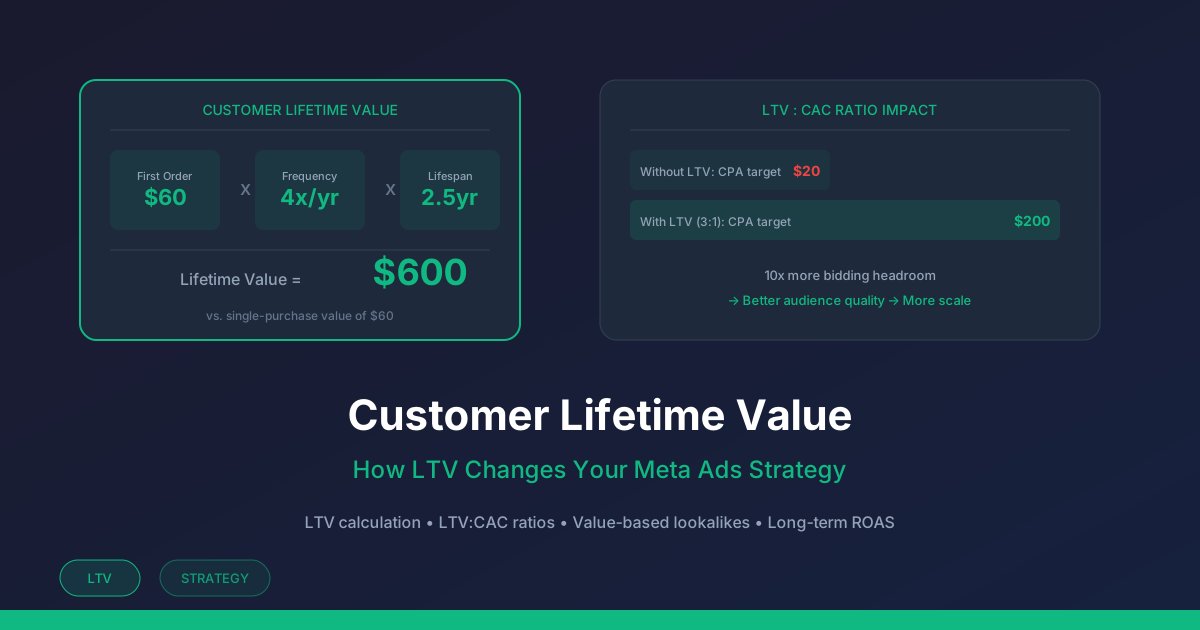
Customer Lifetime Value: How LTV Changes Your Meta Ads Strategy
Discover how customer lifetime value transforms your Meta Ads approach. Learn LTV calculation, LTV:CAC ratios, value-based lookalikes, and long-term ROAS strategy.