Meta Ads for App Install Campaigns: Complete Strategy Guide
Complete guide to Meta Ads app install campaigns covering SDK setup, deep linking, creative strategies, cost per install benchmarks, and retention optimization.
Why Meta Ads App Install Campaigns Remain the Top Channel
Meta Ads app install campaigns continue to be the most effective paid channel for driving mobile app downloads at scale. With over three billion monthly active users across Facebook, Instagram, and the Audience Network, Meta offers unmatched reach combined with sophisticated targeting and optimization algorithms specifically designed for app install objectives. Whether you are launching a new app or scaling an established one, understanding the mechanics of Meta's app install ecosystem is essential for achieving efficient cost per install and strong post-install retention.
The app install landscape has evolved significantly in recent years. Privacy changes like Apple's App Tracking Transparency have shifted how attribution works, making first-party data and proper SDK implementation more important than ever. But the fundamentals remain: reach the right users, show them compelling creative, make the install path frictionless, and optimize for events that matter beyond the initial download.
SDK Setup: The Foundation of Everything
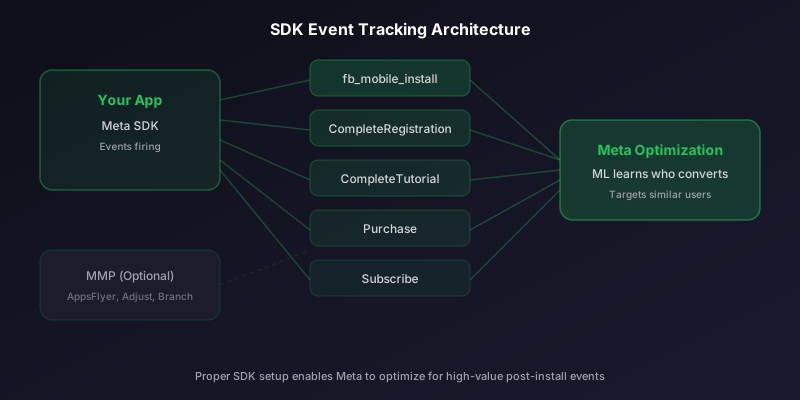
Before you spend a single dollar on app install ads, your SDK implementation must be bulletproof. The Meta SDK is what connects in-app user behavior back to Meta's optimization engine. Without it, Meta cannot learn who your best users are or optimize delivery toward people most likely to engage after installing.
- Install the latest version of the Meta SDK for iOS and Android.
- Configure standard events: install, registration, tutorial completion, first purchase, subscription start.
- Set up custom events for app-specific actions that indicate high-value users.
- Verify events are firing correctly using the Events Manager diagnostics tool.
- Implement Aggregated Event Measurement (AEM) for iOS to maintain optimization despite ATT limitations.
- Connect your Mobile Measurement Partner (MMP) if you use one, ensuring deduplication with Meta's SDK.
A misconfigured SDK is the number one reason app install campaigns underperform. If events are not firing or are firing incorrectly, Meta optimizes blindly. Audit your SDK implementation quarterly, especially after app updates.
Choosing the Right Optimization Event
Meta allows you to optimize app install campaigns for the install event itself or for deeper in-app events like purchases or registrations. This choice fundamentally shapes who Meta targets and how much you pay.
Optimizing for installs casts the widest net and typically yields the lowest cost per install. However, these installs often include a significant percentage of low-quality users who install and never open the app again. Optimizing for app events like purchases narrows the audience to users predicted to complete that action, resulting in higher cost per install but dramatically better user quality.
| Optimization Event | CPI Range | User Quality | Best For |
|---|---|---|---|
| App Install | $0.50-3.00 | Mixed | New apps needing volume |
| Registration | $2.00-8.00 | Medium | Apps with signup flow |
| Tutorial Complete | $3.00-10.00 | Medium-High | Gaming apps |
| First Purchase | $5.00-25.00 | High | E-commerce apps |
| Subscription Start | $10.00-50.00 | Highest | SaaS and subscription apps |
Start with install optimization to build initial data, then shift to app event optimization once you have at least 50 of the target event per week. This gives Meta enough signal to predict effectively.
Deep Linking for Seamless Onboarding
Deep linking ensures users land in the right place after installing your app. Without deep links, a user who clicks an ad featuring a specific product arrives at your app's generic home screen after installation, creating friction and reducing conversion. With deferred deep links, that same user is taken directly to the product they were interested in after the install completes.
Implement deferred deep links for all your app install campaigns. Use Meta's App Links standard or a deep linking provider like Branch or AppsFlyer. Test the entire flow regularly, because app store redirects and OS updates frequently break deep link implementations without warning.
Creative Strategy for App Installs
App install creative must accomplish three things in rapid succession: capture attention, communicate the app's value, and motivate the user to take the significant step of downloading and installing software on their device. This is a higher friction action than clicking a website link, so your creative needs to work harder.
Video Creative
Stop wasting ad budget
NovaStorm AI cuts Meta Ads CPA by 40% on average. Start free.
Video consistently outperforms static images for app installs because it can demonstrate the app experience. Show the app in use. Let users see the interface, the core interaction loop, and the benefit they will get. Keep videos under 15 seconds for feed placements and under 6 seconds for Stories and Reels. Front-load the value proposition in the first two seconds.
Playable Ads
For gaming apps, playable ads let users experience a mini version of the game before installing. These formats typically have higher cost per impression but significantly lower cost per quality install because they pre-qualify users. Only people who enjoy the gameplay will proceed to install, resulting in better retention.
Social Proof and Ratings
Include your app store rating, download count, or testimonials in the creative. Users are more willing to install an app that others have validated. An ad showing four and a half stars with over one hundred thousand reviews removes doubt about quality.
Cost Per Install Benchmarks
Cost per install varies enormously by app category, geography, and time of year. The following benchmarks provide a rough guide, but your actual CPIs will depend on your creative quality, targeting precision, and competitive landscape.
| App Category | iOS CPI | Android CPI |
|---|---|---|
| Gaming (Casual) | $1.50-4.00 | $0.50-2.00 |
| Gaming (Midcore/Hardcore) | $3.00-8.00 | $1.50-5.00 |
| E-commerce | $2.00-5.00 | $1.00-3.00 |
| Finance/Fintech | $5.00-15.00 | $3.00-10.00 |
| Health and Fitness | $2.50-6.00 | $1.50-4.00 |
| Social/Entertainment | $1.00-3.00 | $0.50-2.00 |
| SaaS/Productivity | $4.00-12.00 | $2.00-8.00 |
Retention Optimization
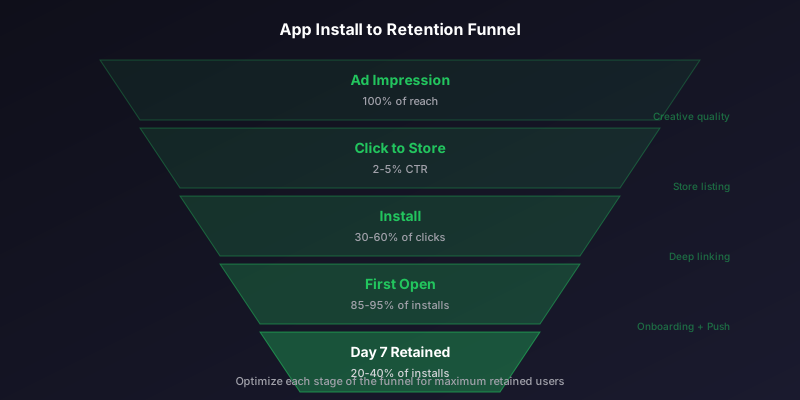
An install that churns on day one is not worth the budget that acquired it. Retention optimization starts before the user even opens the app and continues through the critical first seven days.
- Pre-install: Set expectations accurately in your creative. Misleading ads generate installs but destroy retention.
- First open: Deliver immediate value. Minimize onboarding friction. Avoid requiring registration before the user experiences the app.
- Day 1: Send a push notification with a compelling reason to return. Personalize based on the in-app action they took.
- Day 3: If the user has not returned, use Meta app engagement ads to re-engage them with new content or features.
- Day 7: Users who survive to day seven have dramatically higher lifetime value. Focus retention efforts on getting users past this threshold.
Optimizing for Post-Install Events
The most sophisticated app advertisers do not optimize for installs at all. They optimize for post-install events that correlate with lifetime value. A gaming company might optimize for reaching level ten, which their data shows predicts long-term retention and monetization. An e-commerce app might optimize for the first purchase, knowing that buyers are five times more likely to make a second purchase than non-buyers.
To make this work, you need a clear understanding of which post-install events predict lifetime value in your app. Analyze your existing user base to find the actions that separate high-LTV users from churned users. Then configure those events in your SDK and tell Meta to optimize for them.
The shift from install optimization to value optimization often increases cost per install by two to three times but improves return on ad spend by five times or more. A $5 install that generates $50 in revenue is far more valuable than a $1 install that generates nothing.
Building a Sustainable App Growth Strategy
Long-term app growth on Meta requires a layered campaign structure. Run broad install campaigns to drive volume and feed the algorithm data. Layer in app event optimization campaigns to acquire high-value users. Add re-engagement campaigns to bring back lapsed users. And continuously test creative to prevent fatigue and maintain efficiency. This layered approach ensures you are acquiring, retaining, and re-engaging users across the entire lifecycle.
Novastorm AI automates Meta Ads routine — from monitoring to optimization. Learn more at novastorm.ai
Disclaimer: This article was generated with the assistance of AI and reviewed by the NovaStorm AI team. While we strive for accuracy, we recommend verifying specific data points and consulting official sources (linked where available) for critical business decisions.
Ready to automate your Meta Ads?
NovaStorm AI takes full responsibility for your campaigns — from monitoring to optimization.
Get Started FreeRelated Articles
Post-Purchase Advertising: Turn Buyers Into Repeat Customers on Meta
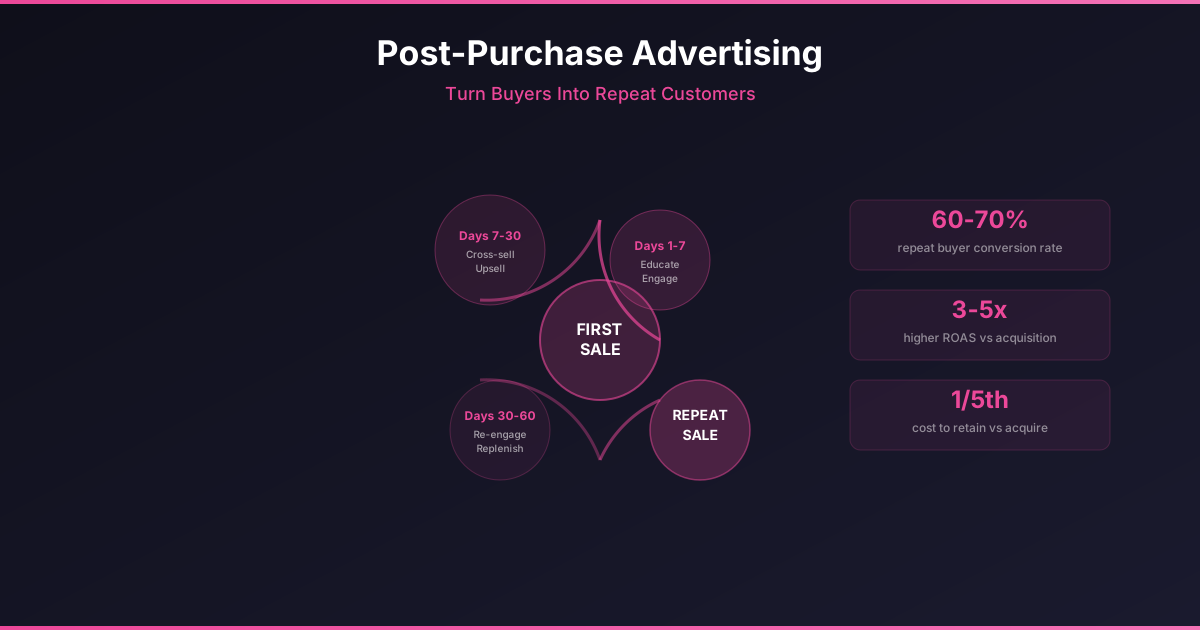
Discover how post-purchase advertising on Meta turns one-time buyers into repeat customers. Includes timing strategies, cross-sell tactics, and retention vs acquisition spend analysis.
The Psychology of Color in Meta Ad Creative
Explore the psychology of color in Meta Ad creative. Learn how color associations, contrast, CTA button colors, and cultural meanings impact ad performance.
Managing Multiple Ad Accounts: Agency Best Practices
Agency best practices for managing multiple Meta Ad accounts including Business Manager setup, naming conventions, team permissions, cross-account reporting, and client onboarding.