The Psychology of Color in Meta Ad Creative
Explore the psychology of color in Meta Ad creative. Learn how color associations, contrast, CTA button colors, and cultural meanings impact ad performance.
Why the Psychology of Color Meta Ad Creative Decisions Matter
The psychology of color in Meta Ad creative is not about picking your favorite hue. It is about understanding how color influences perception, emotion, and action in the fraction of a second a user decides whether to engage with your ad or scroll past it. Research consistently shows that color accounts for up to 90% of snap judgments about products, and in the feed-scrolling environment of Meta platforms, those judgments happen faster than anywhere else. Every color choice in your ad, from background to text to CTA button, sends a signal that either aligns with your message or contradicts it.
This does not mean there is a magic color that guarantees clicks. Color psychology is contextual. The same color can evoke trust in one industry and alarm in another. What matters is the strategic alignment between your color choices, your brand identity, your audience's expectations, and the action you want them to take.
Core Color Associations in Advertising
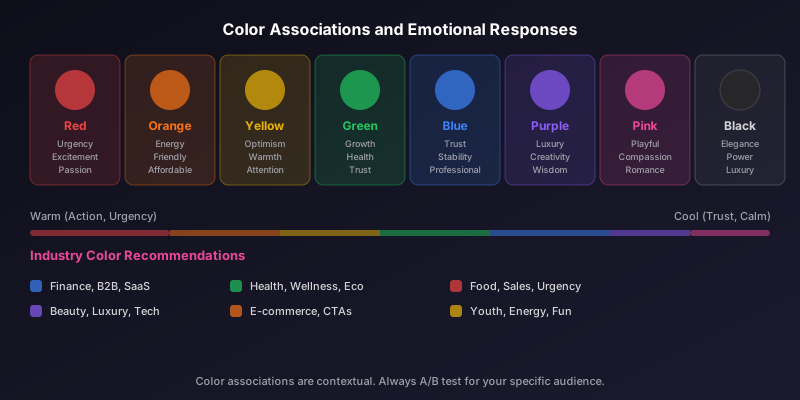
While color associations are culturally influenced and not universal, there are strong patterns in Western advertising contexts that Meta advertisers should understand.
| Color | Primary Associations | Common Uses in Ads |
|---|---|---|
| Red | Urgency, excitement, passion, danger | Sale announcements, limited-time offers, food and beverage |
| Blue | Trust, stability, professionalism, calm | Finance, tech, healthcare, B2B services |
| Green | Growth, health, nature, wealth | Sustainability, wellness, finance, organic products |
| Yellow | Optimism, warmth, attention, caution | Attention grabbers, youth brands, energy |
| Orange | Energy, enthusiasm, friendly, affordable | Call-to-action buttons, subscription offers, fun brands |
| Purple | Luxury, creativity, wisdom, royalty | Premium products, beauty, innovative tech |
| Black | Sophistication, power, elegance, authority | Luxury brands, fashion, premium positioning |
| White | Cleanliness, simplicity, purity, space | Minimalist brands, health, tech products |
Brand Consistency in Color
Before experimenting with color psychology tactics, establish a consistent color palette for your ads. Brand recognition depends on repeated visual patterns, and color is one of the most powerful memory triggers. Research suggests that consistent brand presentation across platforms increases revenue by up to 23 percent.
Your ad creative should use your brand colors as the foundation. This does not mean every ad is monotone. It means your brand colors anchor the design while accent colors guide attention to specific elements like headlines or CTAs. When users see your ads repeatedly in the feed, the consistent color palette builds recognition even before they read the text.
Contrast for Thumb-Stopping Creative
In the Meta feed, your ad competes against organic content, other ads, and the natural scrolling momentum of the user's thumb. Color contrast is your primary weapon for stopping that scroll. High contrast between your ad and the typical feed content makes your ad pop visually.
- Meta's feed has a white or light gray background in light mode and dark background in dark mode. Design for both.
- Avoid pale, muted colors that blend into the feed. Bold, saturated colors stand out more.
- Use contrast between your background and foreground elements. Dark text on a light background or light text on a dark background.
- Place your key message or product in a color that contrasts with the surrounding elements.
- Test bright accent colors against neutral backgrounds to draw the eye to your CTA or key visual.
Run your ad creative through a squint test. Blur your eyes and look at the ad as if from a distance. If the key elements still stand out, your contrast is working. If everything blends together, you need more color differentiation.
Color in CTA Buttons
The color of your call-to-action button is one of the most tested elements in digital advertising. While there is no universally best color for CTAs, the data consistently shows that the CTA button should be the highest-contrast element in the ad. It should visually separate from everything else, signaling to the user exactly where to click.
Stop wasting ad budget
NovaStorm AI cuts Meta Ads CPA by 40% on average. Start free.
Orange and green CTA buttons frequently outperform other colors in A/B tests, not because of inherent psychological properties but because they tend to contrast well against most backgrounds. The key insight is not the specific color but the contrast ratio. A red button on a red-themed ad will disappear. That same red button on a white or blue background will command attention.
A/B Testing Colors Effectively
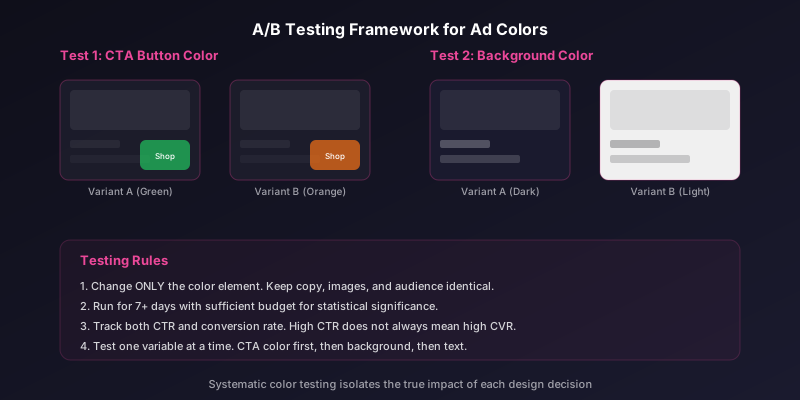
Color testing in Meta Ads requires discipline. The most common mistake is changing multiple elements at once, making it impossible to isolate the impact of color. When testing color, change only the color element while keeping everything else identical: same copy, same image composition, same audience, same placement.
- Start with your CTA button color. This is the highest-impact, easiest-to-isolate test.
- Test background colors next. Compare how the same creative performs with two or three different background treatments.
- Test text color and overlay treatments. Try light text on dark backgrounds versus dark text on light backgrounds.
- Run each test for at least 7 days with sufficient budget to reach statistical significance.
- Track both CTR and conversion rate. A color might increase clicks but decrease conversions if it attracts the wrong audience.
Cultural Color Meanings
If you advertise internationally, color associations shift significantly across cultures. What works in the United States may not work in other markets.
- White symbolizes purity in Western cultures but is associated with mourning in several East Asian cultures.
- Red signifies luck and prosperity in China but can signal danger or debt in Western markets.
- Green represents nature and health in the West but can have religious connotations in some Middle Eastern markets.
- Yellow is associated with courage in Japan, while in some Latin American cultures it is connected to mourning.
- Purple is linked to luxury in Western markets but can represent mourning in parts of South America.
If you are running campaigns across multiple countries, do not assume your color palette will resonate everywhere. Create market-specific creative variations when color associations differ significantly. What works in the US may actively harm performance in Japan or Brazil.
Accessibility Considerations
Approximately 8 percent of men and 0.5 percent of women have some form of color vision deficiency. Designing ads that rely solely on color to convey information excludes these users. Ensure your ads communicate their message through shape, text, and layout in addition to color.
Use sufficient contrast ratios between text and backgrounds. The Web Content Accessibility Guidelines recommend a minimum contrast ratio of 4.5 to 1 for normal text and 3 to 1 for large text. Tools like WebAIM's contrast checker can verify your color combinations meet these standards.
Accessible design is not just ethical, it is profitable. Ads that are clear and readable to all users perform better across the board. High contrast and clear visual hierarchy benefit every viewer, not just those with color vision deficiency.
Putting Color Strategy Into Practice
Color is one element of a complex creative system, and it works best when aligned with every other element. Start with your brand colors as the foundation. Use contrast to create hierarchy and draw attention to your CTA. Test systematically rather than guessing. Account for cultural differences in international campaigns. And never sacrifice readability for aesthetic color choices. When color works with your message rather than against it, it becomes a silent persuader that increases engagement without the viewer ever consciously noticing.
Novastorm AI automates Meta Ads routine — from monitoring to optimization. Learn more at novastorm.ai
Disclaimer: This article was generated with the assistance of AI and reviewed by the NovaStorm AI team. While we strive for accuracy, we recommend verifying specific data points and consulting official sources (linked where available) for critical business decisions.
Ready to automate your Meta Ads?
NovaStorm AI takes full responsibility for your campaigns — from monitoring to optimization.
Get Started FreeRelated Articles

Creative Velocity: Why Producing More Ads Wins on Meta
Learn why creative velocity is the top growth lever in Meta Ads. Discover frameworks for producing 10-20 ads per month, testing pipelines, and creative operations workflows.
A/B Testing Meta Ads: The Scientific Approach to Better Results
Learn how to A/B test Meta Ads with a scientific approach. Discover what to test first, how to calculate sample size, and how to reach statistical significance for better ad results.
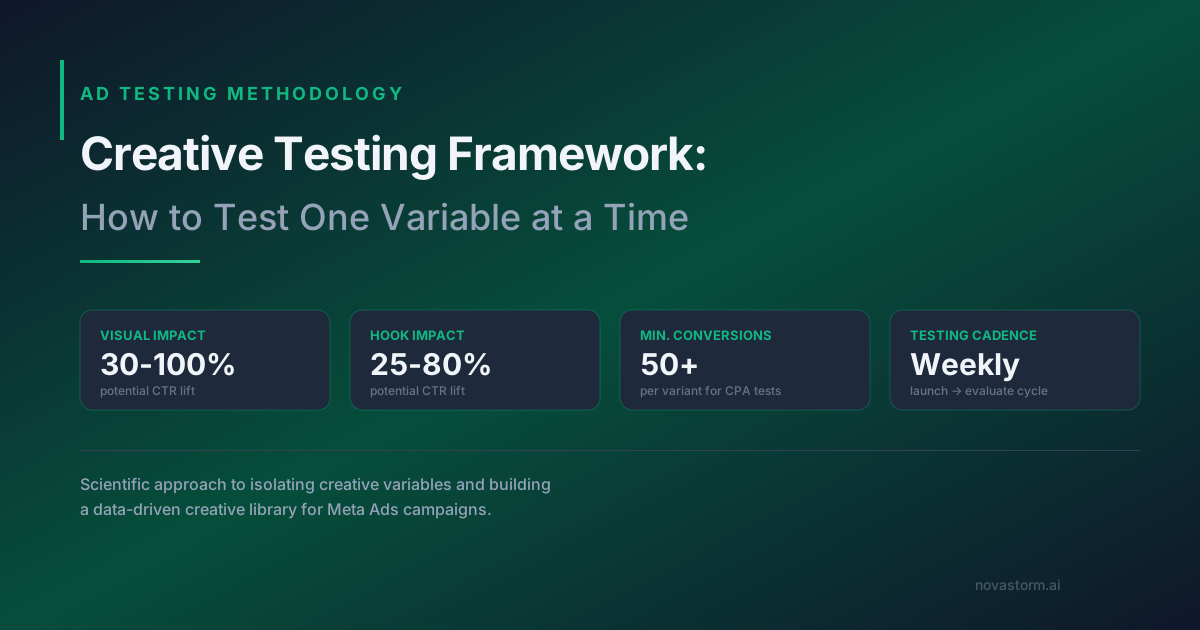
Creative Testing Framework: How to Test One Variable at a Time
Build a scientific creative testing framework for Meta Ads. Learn to isolate variables, reach statistical significance, and build a winning creative library.