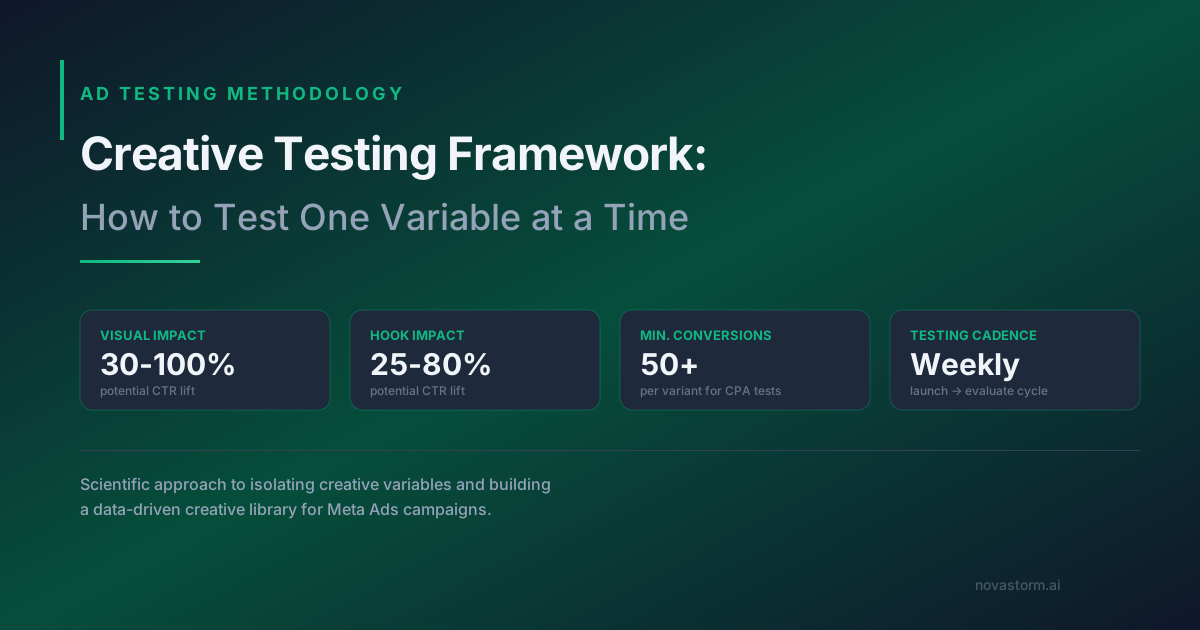
Creative Testing Framework: How to Test One Variable at a Time
Build a scientific creative testing framework for Meta Ads. Learn to isolate variables, reach statistical significance, and build a winning creative library.
Why a Creative Testing Framework Separates Amateurs from Professionals
A creative testing framework is the single most important system a media buyer can build. Without it, every creative decision is a guess. With it, you accumulate compounding knowledge about what works for your audience, turning ad spend into a data asset that grows more valuable over time.
The problem most advertisers face is not a lack of creative ideas. It is that they test multiple changes at once, making it impossible to know what actually moved the needle. If you change the image, headline, and CTA simultaneously and performance improves, which change deserves credit?
The Scientific Method Applied to Meta Ad Creative
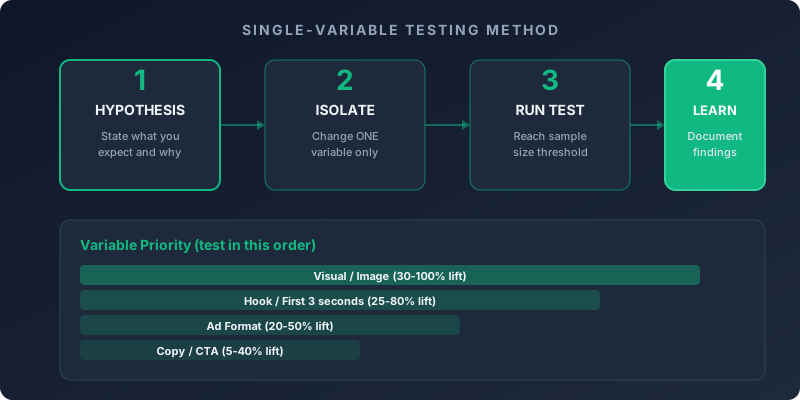
Great creative testing mirrors the scientific method: form a hypothesis, isolate one variable, run the experiment, measure results, and document findings. This approach seems obvious, but fewer than 10% of advertisers follow it consistently.
- Hypothesis: State what you expect and why (e.g., 'A question-based headline will increase CTR because it creates curiosity')
- Variable: Identify exactly one element to change
- Control: Keep everything else identical between test and control
- Sample: Ensure enough impressions for statistical confidence
- Measurement: Define the primary metric before the test starts
- Documentation: Record the result regardless of outcome
The discipline of single-variable testing feels slow at first. You might think testing five variables at once is five times faster. But multivariate tests produce ambiguous results that lead to wrong conclusions. Single-variable tests produce clean data that compounds into reliable knowledge.
Which Creative Variables to Test First for Maximum Impact
Not all variables are created equal. Some have outsized impact on performance while others barely move metrics. Prioritize your testing roadmap based on expected impact, starting with the elements that influence whether someone stops scrolling and engages.
| Variable | Impact Level | Test Priority | Expected Lift |
|---|---|---|---|
| Visual / Image | Very High | 1st | 30-100% |
| Hook (first 3 seconds or line) | Very High | 2nd | 25-80% |
| Ad Format (static/video/carousel) | High | 3rd | 20-50% |
| Primary Text / Copy | Medium-High | 4th | 15-40% |
| Call to Action Button | Medium | 5th | 5-20% |
| Headline | Medium | 6th | 5-15% |
| Color Palette | Low-Medium | 7th | 3-10% |
| Description Text | Low | 8th | 1-5% |
Start with visuals. The image or video thumbnail is the first thing users process, often subconsciously. A new visual concept can double your click-through rate overnight. Once you find winning visuals, move to hooks, then copy, then CTAs.
Always test the highest-impact variables first. You can spend weeks optimizing CTA button text for a 5% lift when a single visual test could deliver 50% improvement.
Sample Size and Statistical Significance for Ad Tests
The most common mistake in creative testing is calling winners too early. If you declare a winner after 200 impressions, you are reading noise, not signal. Statistical significance requires sufficient data to be confident the difference is real.
For Meta ads, aim for a minimum of 1,000 impressions per variant for CTR-based decisions and at least 50 conversions per variant for CPA or ROAS-based decisions. The larger the expected difference, the smaller the sample you need. The smaller the expected difference, the larger the sample required.
| Metric | Min. Per Variant | Confidence Level | Typical Duration |
|---|---|---|---|
| CTR test | 1,000-3,000 impressions | 90% | 2-4 days |
| CPC test | 500-1,000 clicks | 90% | 3-7 days |
| CPA test | 50-100 conversions | 95% | 7-14 days |
| ROAS test | 100+ conversions | 95% | 14-21 days |
Stop wasting ad budget
NovaStorm AI cuts Meta Ads CPA by 40% on average. Start free.
Do not peek at results daily and make decisions based on incomplete data. Set your minimum sample size before launch and do not evaluate until you reach it. Early peeking leads to false positives and wasted budget.
How to Set Up a Testing Cadence That Scales
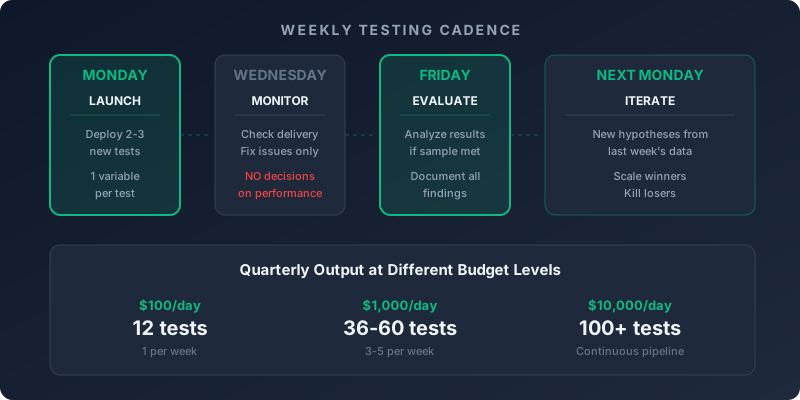
Consistency matters more than volume. A weekly testing cadence where you launch 2-3 new creative tests every Monday and evaluate results every Friday builds momentum. Over a quarter, that gives you 24-36 clean data points about what works.
Structure your cadence around your budget. If you spend $100/day, you can realistically test one variable per week. At $1,000/day, you can run 3-5 simultaneous tests. At $10,000/day, you should have a dedicated testing budget line running continuously.
- Monday: Launch new creative tests with isolated variables
- Wednesday: Mid-week check for delivery issues (not for performance decisions)
- Friday: Evaluate completed tests that hit sample thresholds
- Friday: Document results in the creative testing log
- Monday: Use insights from last week to inform new hypotheses
Documenting Test Results to Build a Creative Library
The real value of structured testing is not any single winning ad. It is the accumulated knowledge base you build over months and years. Every test, whether it produces a winner or a loser, teaches you something about your audience.
Create a simple spreadsheet with these columns: test date, hypothesis, variable tested, control description, variant description, primary metric, result, confidence level, and key takeaway. Review this log monthly to identify patterns.
After 50 documented tests, you will start seeing patterns that no competitor can replicate. This creative library becomes your unfair advantage because it is built on your specific audience data, not generic best practices.
Categorize your findings into themes. You might discover that your audience responds better to real photography than illustrations, prefers question-based headlines over statement headlines, or converts more from fear-based messaging than aspiration-based messaging. These patterns inform every future creative brief.
Common Creative Testing Mistakes to Avoid
Even experienced media buyers fall into testing traps. The most damaging is testing too many variables at once. When you change the image, copy, and CTA simultaneously, a positive result tells you nothing useful. A negative result is equally uninformative.
- Testing multiple variables simultaneously instead of isolating one
- Calling winners before reaching statistical significance
- Not having a clear hypothesis before launching the test
- Ignoring losing tests instead of documenting the learning
- Testing trivial variables while ignoring high-impact ones
- Failing to account for external factors like seasonality or day of week
- Reusing the same audience for every test, causing audience fatigue
Another common error is audience contamination. If you test two ad variants against different audiences, you cannot isolate the creative variable. Always use the same audience targeting for both control and variant. Meta's A/B test feature helps ensure clean audience splits.
The creative testing framework outlined here is simple by design. Complexity kills consistency. Start with one test per week, document everything, and build from there. Within three months, you will have a data-driven creative engine that makes every dollar of ad spend work harder than the last.
Novastorm AI automates Meta Ads routine — from monitoring to optimization. Learn more at novastorm.ai
Disclaimer: This article was generated with the assistance of AI and reviewed by the NovaStorm AI team. While we strive for accuracy, we recommend verifying specific data points and consulting official sources (linked where available) for critical business decisions.
Ready to automate your Meta Ads?
NovaStorm AI takes full responsibility for your campaigns — from monitoring to optimization.
Get Started FreeRelated Articles
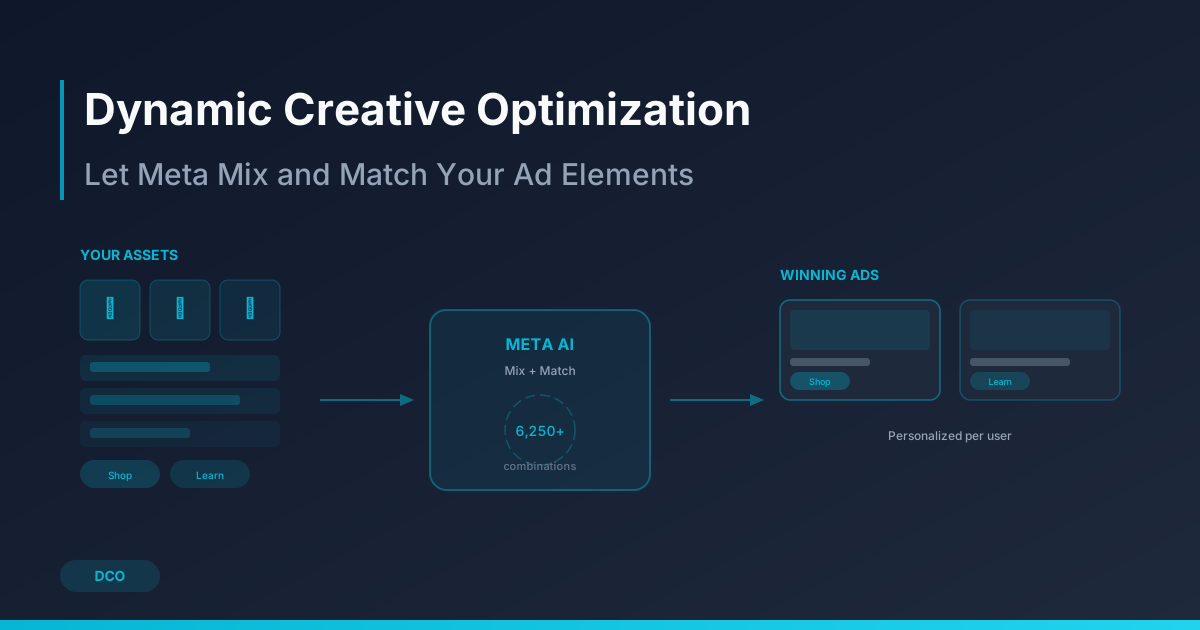
Dynamic Creative Optimization: Let Meta Mix and Match Your Ad Elements
Master Dynamic Creative Optimization (DCO) in Meta Ads. Learn how DCO works, which elements to vary, when it outperforms manual testing, and how to set it up correctly.
Dark Posts Explained: What They Are and Why Every Advertiser Uses Them
Dark posts explained in full detail. Learn what unpublished posts are, how they power A/B testing, accumulate social proof, and why every Meta advertiser relies on them.
The Psychology of Color in Meta Ad Creative
Explore the psychology of color in Meta Ad creative. Learn how color associations, contrast, CTA button colors, and cultural meanings impact ad performance.