Dynamic Creative Optimization: Let Meta Mix and Match Your Ad Elements
Master Dynamic Creative Optimization (DCO) in Meta Ads. Learn how DCO works, which elements to vary, when it outperforms manual testing, and how to set it up correctly.
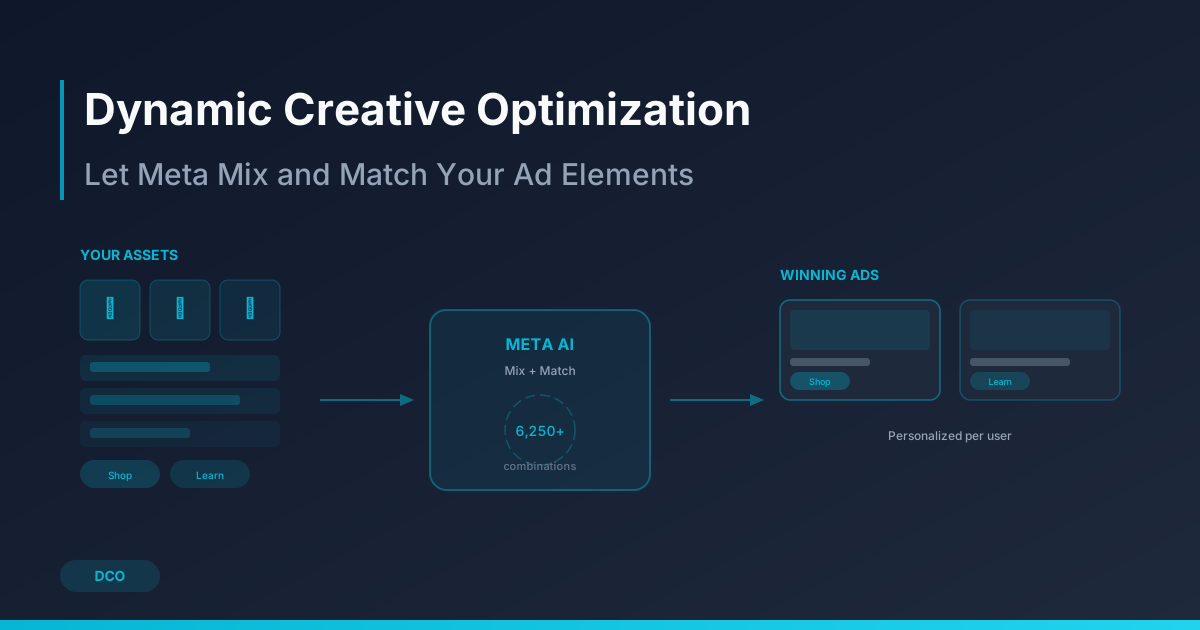
Dynamic creative optimization is Meta's built-in system for automatically testing different combinations of ad elements — images, videos, headlines, descriptions, and CTAs — to find the best-performing variations for each audience segment. Instead of manually creating dozens of ad variants, you provide the building blocks and let the algorithm assemble them into winning combinations.
How Dynamic Creative Optimization Works
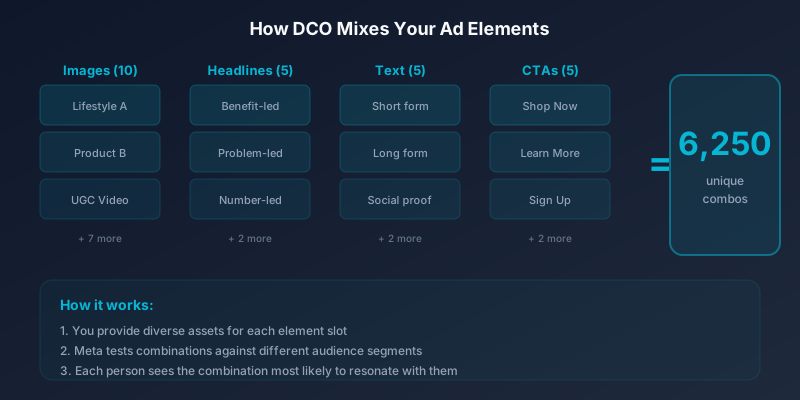
When you enable dynamic creative at the ad set level, you can upload multiple versions of each ad element. Meta then mixes and matches these elements — showing different combinations to different people based on what is most likely to resonate with each individual.
The algorithm considers each person's past behavior, preferences, and engagement patterns to determine which combination to show. Someone who typically watches videos might see your video asset, while another user who prefers carousel browsing might see a different format entirely.
| Element | Max Variations | What to Vary |
|---|---|---|
| Images/Videos | Up to 10 | Different angles, formats, subjects |
| Primary Text | Up to 5 | Length, tone, benefit focus |
| Headlines | Up to 5 | Different value propositions |
| Descriptions | Up to 5 | Supporting details, urgency |
| CTA Buttons | Up to 5 | Shop Now, Learn More, Sign Up, etc. |
The math is impressive: 10 images, 5 headlines, 5 primary texts, 5 descriptions, and 5 CTAs create up to 6,250 unique combinations. No human could manually test even a fraction of that.
Asset Requirements: What to Provide
The quality and diversity of your assets determine how well DCO performs. Providing five versions of the same headline with minor word changes gives the algorithm nothing to work with. Each variant should represent a meaningfully different approach.
Image and Video Best Practices
- Include a mix of formats: lifestyle imagery, product close-ups, user-generated content, and graphic designs.
- Provide at least one video and one static image to test format preference.
- Use both square (1:1) and vertical (9:16) versions for cross-placement optimization.
- Avoid images that are too similar — the algorithm needs contrast to learn.
Copy Variations to Include
- One short-form text (1-2 sentences) and one long-form text (3-5 sentences).
- Vary between benefit-driven, problem-driven, and social-proof-driven angles.
- Test different tones: professional, conversational, urgent, and educational.
- Include at least one headline that leads with a number or specific claim.
Analyzing Dynamic Creative Performance
Meta provides a breakdown view for dynamic creative ads. Navigate to the ad level, click the ad name, and you will see performance data for each individual asset. This shows you which images, headlines, and text variations are driving the best results.
Stop wasting ad budget
NovaStorm AI cuts Meta Ads CPA by 40% on average. Start free.
Pay attention to the distribution of impressions across assets. If one image receives 80 percent of impressions, the algorithm has determined it is significantly better. If distribution is relatively even, the assets are performing similarly and the creative diversity is not adding much value.
DCO reporting shows element-level performance, but it cannot show you the performance of specific combinations. You know which headline performs best overall, but not which headline plus image combination is the winner. For combination-level insights, you need manual testing.
DCO vs Manual Creative Variations
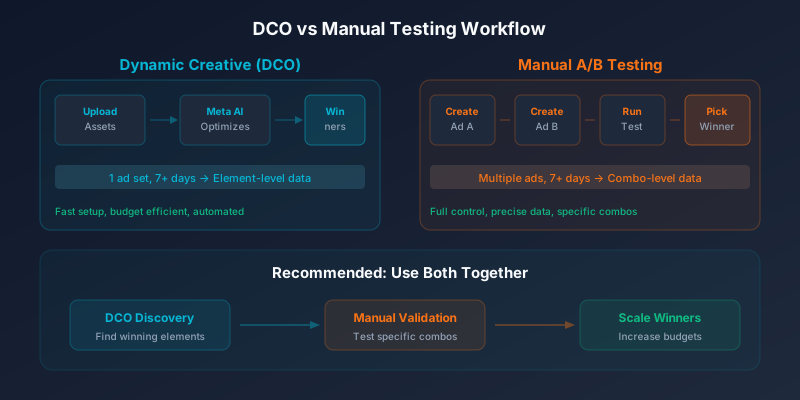
Dynamic creative and manual ad variations serve different purposes. DCO is ideal for broad exploration — when you want to test many elements quickly with limited budget. Manual variations give you precise control over specific combinations and cleaner data for analysis.
| Factor | DCO | Manual Variations |
|---|---|---|
| Testing Speed | Fast — tests many combinations automatically | Slow — each combination needs its own ad |
| Budget Efficiency | High — concentrates spend on winners | Lower — budget split evenly across variants |
| Data Granularity | Element-level only | Full combination-level data |
| Setup Time | Quick — one ad with multiple assets | Longer — create each ad individually |
| Creative Control | Limited — cannot control pairings | Full — you choose every combination |
When DCO Fails
DCO is not a universal solution. It underperforms when your creative elements are too similar, when your audience is too small for the algorithm to learn effectively, or when specific creative combinations need to stay together for message coherence.
- Small audiences under 100,000 — not enough data for meaningful optimization.
- Story-driven ads where the headline and image must be paired specifically.
- Highly regulated industries where each ad combination needs compliance review.
- When you need to know exact winning combinations, not just winning elements.
- Creative that relies on a specific narrative arc across text and visuals.
Setup Guide: Enabling Dynamic Creative
- Create a new campaign or edit an existing one.
- At the ad set level, toggle on Dynamic Creative.
- In the ad setup, upload multiple assets for each element slot.
- Ensure each asset is distinct — avoid near-duplicates.
- Set your budget and let the campaign run for at least 7 days before drawing conclusions.
- Review the asset breakdown report to identify top performers.
- Graduate the winning elements into dedicated manual ads for scaling.
Think of DCO as your creative discovery engine. Use it to find winning elements, then graduate those elements into manual ads where you control the exact combinations for scaling.
Dynamic creative optimization saves time and finds patterns human testers would miss. It works best as a discovery tool — feeding the algorithm a diverse set of assets and letting it find what resonates. Combine DCO with strategic manual testing for the most complete creative optimization program.
Novastorm AI automates Meta Ads routine — from monitoring to optimization. Learn more at novastorm.ai
Disclaimer: This article was generated with the assistance of AI and reviewed by the NovaStorm AI team. While we strive for accuracy, we recommend verifying specific data points and consulting official sources (linked where available) for critical business decisions.
Ready to automate your Meta Ads?
NovaStorm AI takes full responsibility for your campaigns — from monitoring to optimization.
Get Started FreeRelated Articles
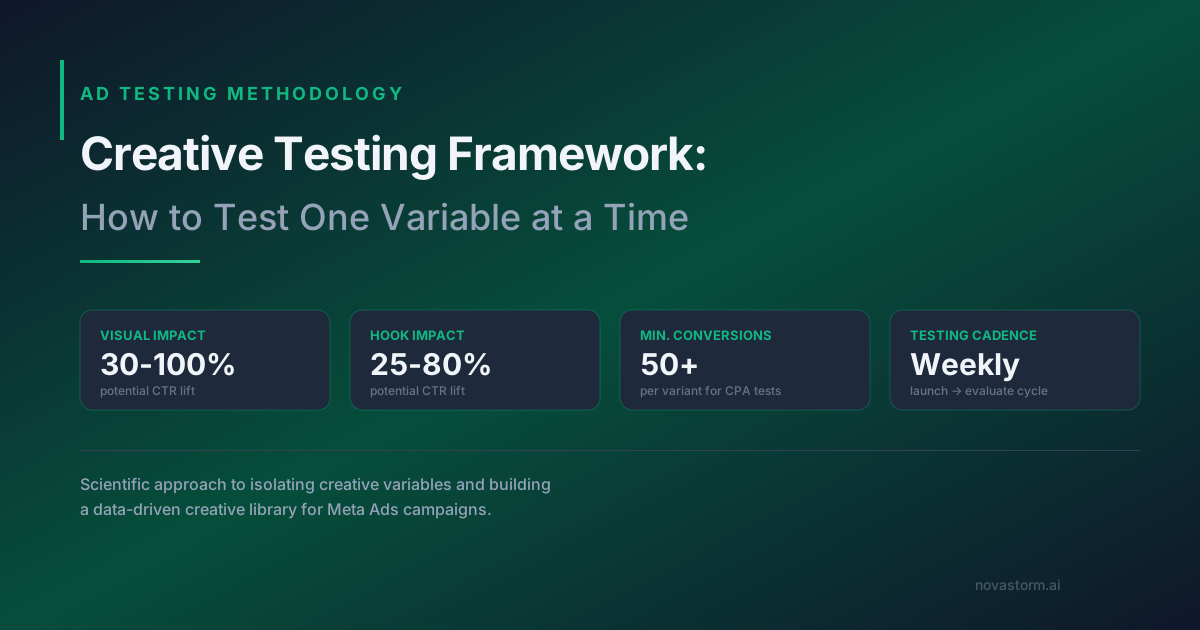
Creative Testing Framework: How to Test One Variable at a Time
Build a scientific creative testing framework for Meta Ads. Learn to isolate variables, reach statistical significance, and build a winning creative library.
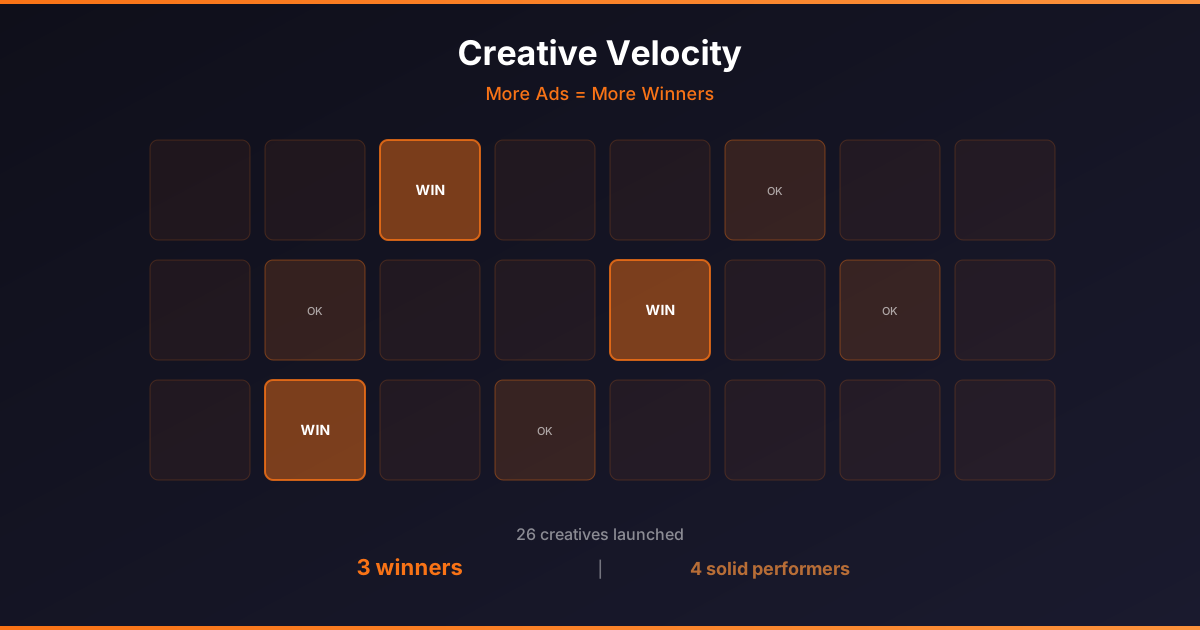
Creative Velocity: Why Producing More Ads Wins on Meta
Learn why creative velocity is the top growth lever in Meta Ads. Discover frameworks for producing 10-20 ads per month, testing pipelines, and creative operations workflows.
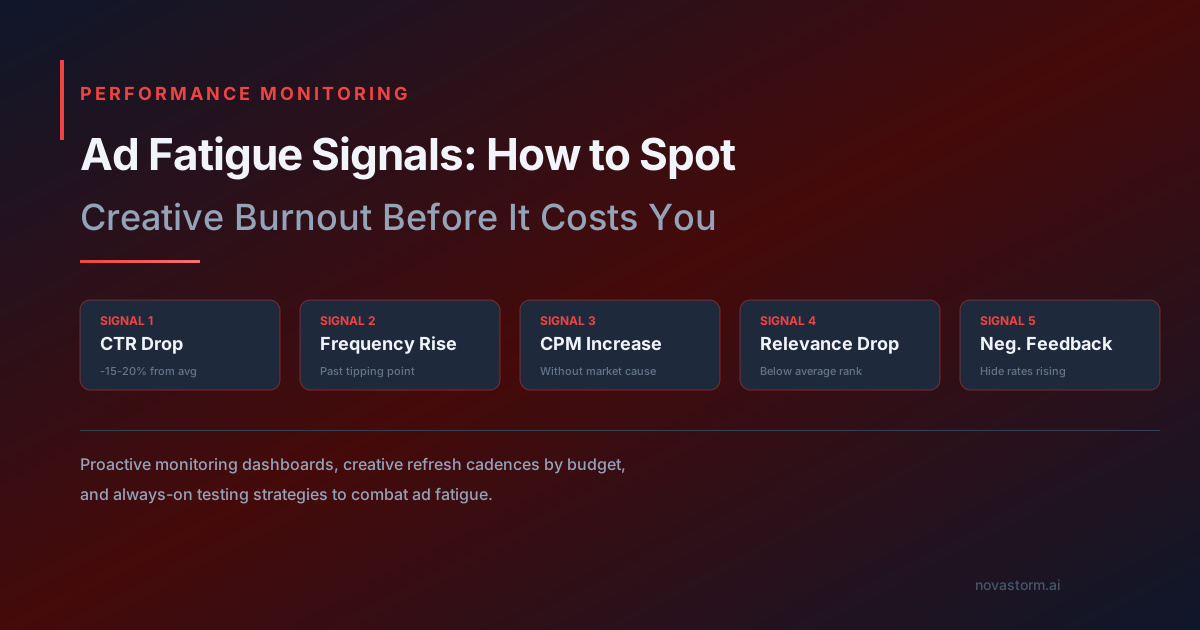
Ad Fatigue Signals: How to Spot Creative Burnout Before It Costs You
Learn the 5 early warning signs of ad fatigue on Meta. Set up monitoring dashboards, plan creative refresh cadences, and implement rotation strategies.