Ad Fatigue Signals: How to Spot Creative Burnout Before It Costs You
Learn the 5 early warning signs of ad fatigue on Meta. Set up monitoring dashboards, plan creative refresh cadences, and implement rotation strategies.
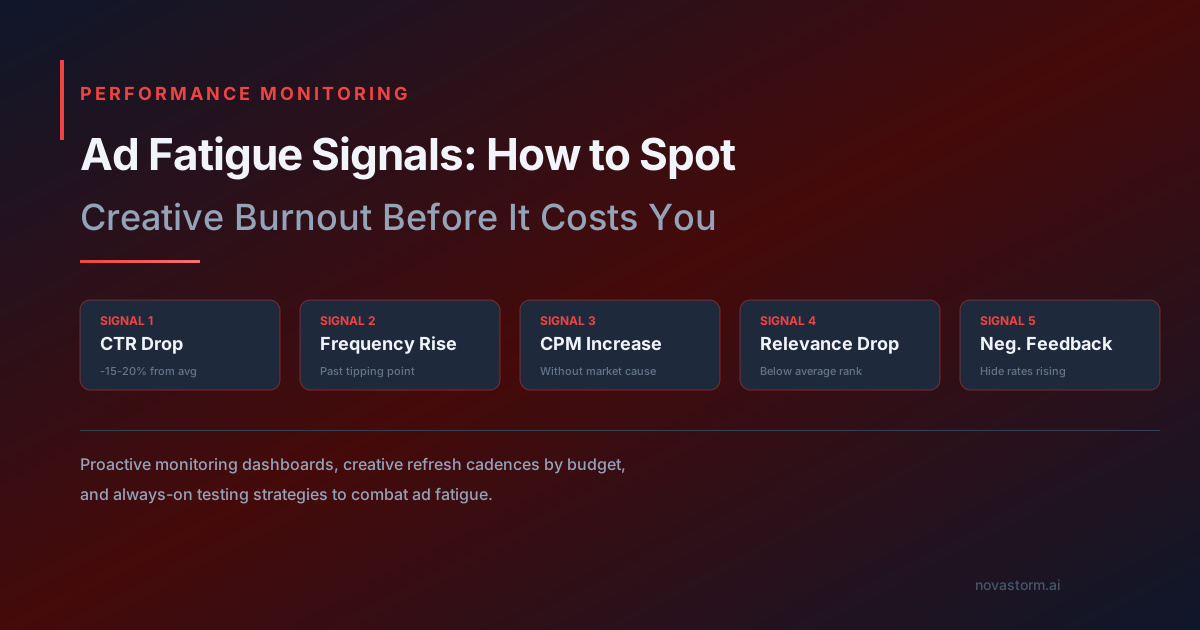
Five Early Ad Fatigue Signals Every Media Buyer Must Watch
Ad fatigue signals appear days before your campaign metrics visibly collapse. The difference between catching these signals early and reacting too late can be thousands of dollars in wasted spend. Most advertisers notice ad fatigue only after CPA has already spiked 50% or more. By then, the damage is done.
Understanding and monitoring these five early warning signs gives you a critical head start. When you spot the pattern forming, you can refresh creative before the algorithm starts penalizing your ad delivery.
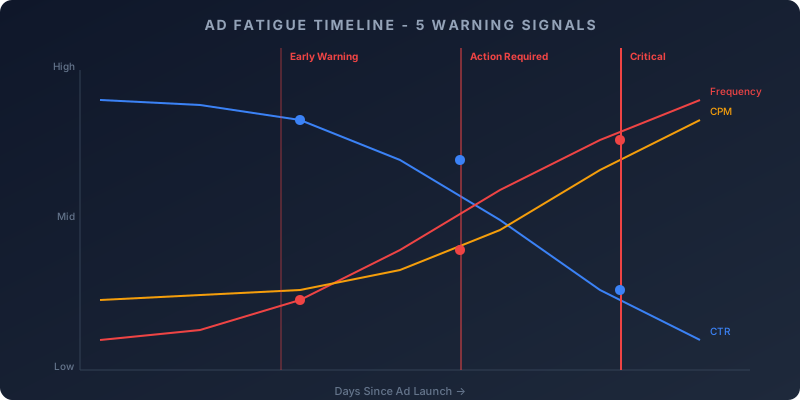
Signal One: CTR Drops Below Your Baseline Average
Click-through rate is the earliest and most reliable fatigue indicator. When an ad starts losing its appeal, users stop clicking before any other metric shifts. A CTR decline of 15-20% from your rolling 7-day average is the first red flag.
Track CTR daily and compare it to both the ad's historical average and the account-wide benchmark for that campaign type. A single day dip could be noise. Three consecutive days of declining CTR is a pattern that demands attention.
Do not wait for CTR to halve before acting. A consistent 15-20% decline over 3-5 days means fatigue is setting in. Start preparing replacement creative immediately.
Signal Two: Frequency Climbs Past the Tipping Point
Frequency measures how many times the average person in your audience has seen your ad. Low frequency means fresh exposure. High frequency means you are showing the same ad to the same people repeatedly. The tipping point varies by funnel stage.
| Campaign Type | Safe Frequency | Warning Zone | Fatigue Zone |
|---|---|---|---|
| Prospecting (cold) | 1.0-2.0 | 2.0-3.0 | 3.0+ |
| Consideration | 1.5-3.0 | 3.0-5.0 | 5.0+ |
| Retargeting | 2.0-5.0 | 5.0-8.0 | 8.0+ |
| Brand Awareness | 2.0-4.0 | 4.0-6.0 | 6.0+ |
Cold audiences fatigue fastest because they have no prior relationship with your brand. Showing the same ad to a stranger three times feels intrusive. Retargeting audiences tolerate higher frequency because they already recognize you. But even warm audiences burn out eventually.
Signal Three: CPM Increases Without Market Changes
When CPM rises without an obvious external cause (like holiday competition or a major event), it often means Meta's algorithm is struggling to deliver your ad efficiently. The system detects that users are not responding to your creative and charges more to force impressions.
Monitor CPM alongside CTR. If CPM rises while CTR falls, fatigue is almost certainly the cause. If CPM rises while CTR remains stable, the increase is likely market-driven rather than creative-driven. This distinction matters because the remedy is different for each.
Signal Four: Quality Ranking and Relevance Scores Decline
Meta provides three diagnostic metrics: Quality Ranking, Engagement Rate Ranking, and Conversion Rate Ranking. When these drop from "Above Average" or "Average" to "Below Average," the algorithm is telling you that your ad is losing competitiveness.
These rankings update with a delay, so they confirm fatigue rather than predict it. Use them as confirmation when you see CTR and frequency signals. If all three signals align, creative refresh is urgent.
Signal Five: Negative Feedback and Hide Rates Increase
Stop wasting ad budget
NovaStorm AI cuts Meta Ads CPA by 40% on average. Start free.
When users hide your ad, report it, or leave negative reactions, Meta takes notice. High negative feedback rates directly reduce your ad's delivery potential and increase costs. This signal often appears after frequency crosses the fatigue zone.
You can check negative feedback in the Performance and Clicks column customization. Any negative feedback rate above 1% is concerning. Above 3% means the ad should be paused immediately. The algorithm will punish continued delivery of high-negative-feedback ads across your entire ad account.
How to Build an Ad Fatigue Monitoring Dashboard
Reactive monitoring is not enough. You need a proactive system that surfaces fatigue signals before you notice performance drops in your reporting. Build a simple dashboard that tracks five metrics per active ad.
- CTR: Plot daily CTR with a 7-day rolling average trendline
- Frequency: Track daily frequency with threshold alerts at your safe zone limit
- CPM: Monitor daily CPM against a 14-day rolling average
- Quality Rankings: Check weekly for any drops from Average or Above
- Negative Feedback Rate: Set an alert for any ad exceeding 1%
Set automated alerts for when any ad's CTR drops 20% below its rolling average or when frequency exceeds your campaign-type threshold. Early alerts save thousands in wasted spend.
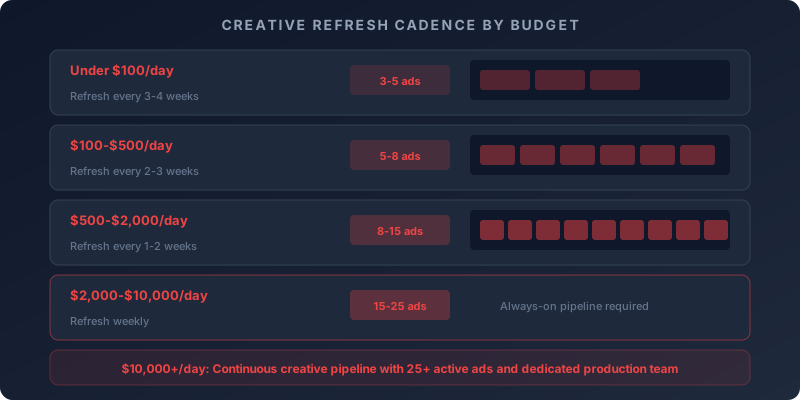
Creative Refresh Cadence Based on Budget Level
How often you need to refresh creative depends directly on your budget. Higher spend burns through audience faster, requiring more frequent creative rotation. Use these guidelines as starting points and adjust based on your actual fatigue signals.
| Daily Spend | Audience Size | Refresh Cadence | Active Creatives |
|---|---|---|---|
| Under $100 | 50K-200K | Every 3-4 weeks | 3-5 |
| $100-500 | 200K-1M | Every 2-3 weeks | 5-8 |
| $500-2,000 | 1M-5M | Every 1-2 weeks | 8-15 |
| $2,000-10,000 | 5M-20M | Weekly | 15-25 |
| $10,000+ | 20M+ | Continuous | 25+ |
The "Active Creatives" column is critical. Having enough creatives in rotation means no single ad bears the full weight of delivery. When one creative fatigues, the algorithm shifts budget to fresher options automatically, giving you time to produce replacements.
Rotation Strategies and Always-On Creative Testing
The ultimate defense against ad fatigue is an always-on testing system. Instead of waiting for fatigue to appear and scrambling to replace creative, you maintain a pipeline where new ads enter rotation weekly as old ads are retired.
- Maintain a creative backlog of 4-6 weeks of ready-to-launch ads
- Introduce 2-3 new creatives per week into active campaigns
- Retire any ad that shows 3+ days of declining CTR
- Rotate hooks and visuals first since they drive the largest share of impression impact
- Keep winning copy structures and test new visual treatments on top of them
- Archive retired ads for potential revival after a 4-6 week rest period
The rest period strategy is underused but effective. An ad that fatigued after heavy exposure can sometimes be relaunched 4-6 weeks later with renewed performance. The audience has forgotten it, and the creative feels fresh again. Track your retired ads and test reactivation periodically.
Ad fatigue is not a failure. It is a natural consequence of successful advertising. Every ad has a lifespan. The goal is not to prevent fatigue but to detect it early, respond quickly, and always have fresh creative ready to deploy.
Build your monitoring dashboard, set automated alerts for the five signals, maintain a creative pipeline, and adopt always-on testing. This system transforms ad fatigue from a costly surprise into a manageable, predictable part of your advertising operations.
Novastorm AI automates Meta Ads routine — from monitoring to optimization. Learn more at novastorm.ai
Disclaimer: This article was generated with the assistance of AI and reviewed by the NovaStorm AI team. While we strive for accuracy, we recommend verifying specific data points and consulting official sources (linked where available) for critical business decisions.
Ready to automate your Meta Ads?
NovaStorm AI takes full responsibility for your campaigns — from monitoring to optimization.
Get Started FreeRelated Articles
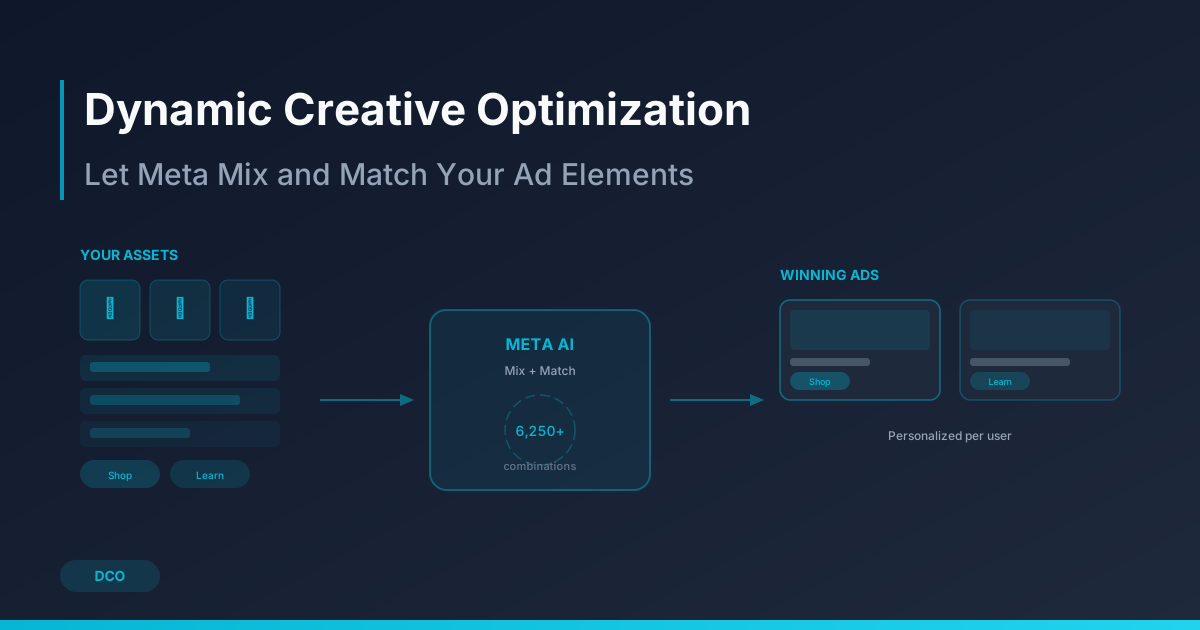
Dynamic Creative Optimization: Let Meta Mix and Match Your Ad Elements
Master Dynamic Creative Optimization (DCO) in Meta Ads. Learn how DCO works, which elements to vary, when it outperforms manual testing, and how to set it up correctly.
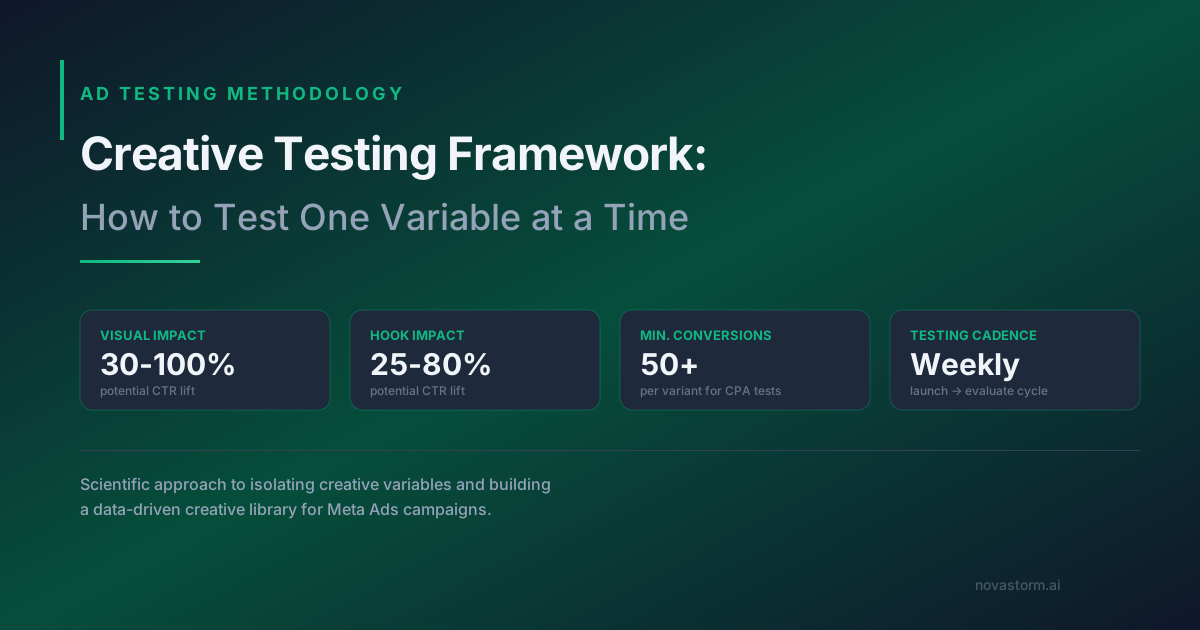
Creative Testing Framework: How to Test One Variable at a Time
Build a scientific creative testing framework for Meta Ads. Learn to isolate variables, reach statistical significance, and build a winning creative library.
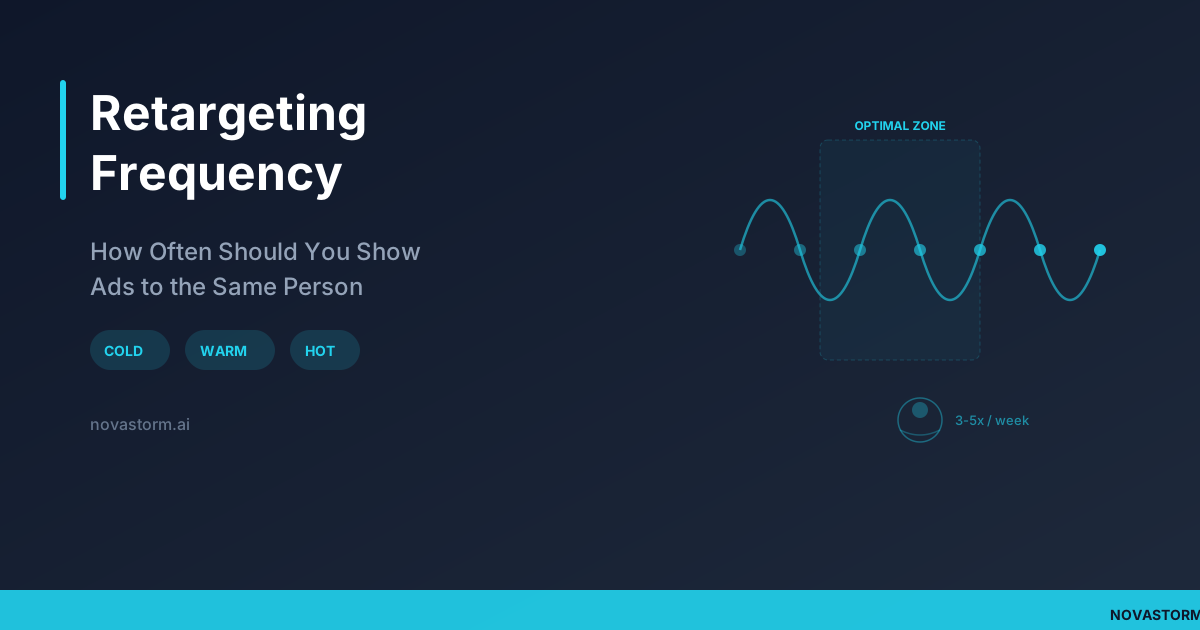
Retargeting Frequency: How Often Should You Show Ads to the Same Person
Find the optimal retargeting frequency for cold, warm, and hot audiences. Learn frequency cap strategies and when to stop showing ads to the same person.