Retargeting Frequency: How Often Should You Show Ads to the Same Person
Find the optimal retargeting frequency for cold, warm, and hot audiences. Learn frequency cap strategies and when to stop showing ads to the same person.
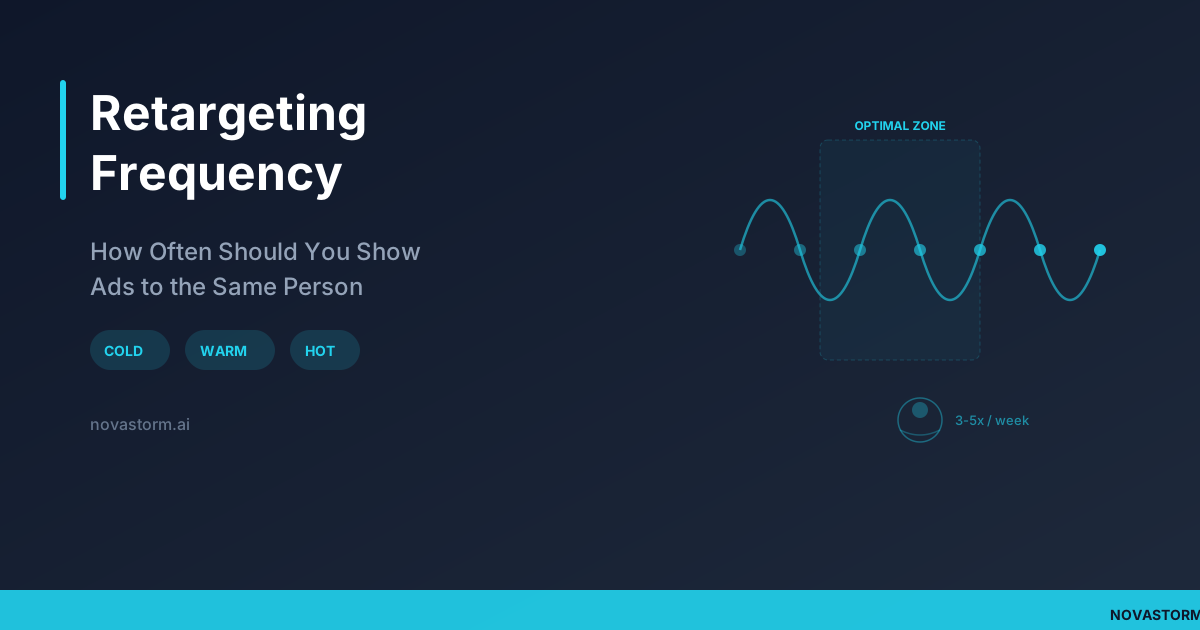
Retargeting frequency is one of the most misunderstood metrics in Meta advertising. Show your ads too few times and you never build enough familiarity to convert. Show them too many times and you create ad fatigue, negative sentiment, and wasted spend. The ideal frequency depends on how warm your audience is, what you are selling, and where the prospect sits in their decision-making process. This guide establishes clear frequency benchmarks based on audience temperature and provides actionable strategies for managing frequency across your retargeting campaigns.
What is the optimal retargeting frequency by audience temperature?
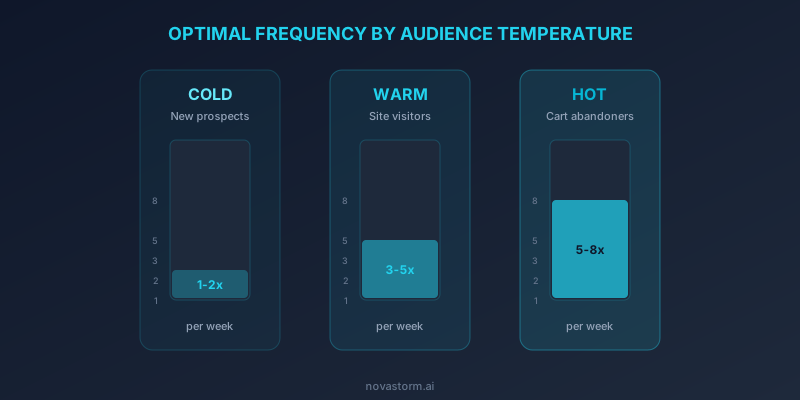
Audience temperature refers to how familiar someone is with your brand. Cold audiences have never interacted with you. Warm audiences have visited your site, engaged with content, or shown some interest. Hot audiences have added items to their cart, started checkout, or taken other high-intent actions.
For cold audiences in prospecting campaigns, frequency should stay between one and two impressions per week. These people did not ask to see your ads, and bombarding them erodes brand perception before it has a chance to form. At this stage, each impression should deliver a distinct message or creative to justify the repeated exposure.
Warm retargeting audiences can tolerate a higher frequency of three to five impressions per week. They have already shown interest, so repeated exposure reinforces their consideration rather than creating annoyance. The key is variety. Rotate creatives so that each impression adds new information or perspective rather than repeating the same message.
Hot audiences, those with demonstrated purchase intent, can receive five to eight impressions per week. These people are actively considering buying, and timely reminders can tip the decision. However, even hot audiences have a ceiling, and exceeding eight weekly impressions almost always produces negative returns.
How to set frequency caps in Meta Ads campaigns
Meta does not offer direct frequency capping for most campaign objectives. The Reach objective is the notable exception, allowing you to set a specific frequency cap per time period. For other objectives, you control frequency indirectly through budget management, audience size, and campaign duration.
To limit frequency in conversion campaigns, monitor the frequency metric daily and reduce budget when it exceeds your target threshold. For small retargeting audiences, this happens quickly. A 5,000-person retargeting audience with a 50-dollar daily budget will hit high frequency within days.
Another approach is to use exclusions strategically. Exclude people who have seen your ad more than a certain number of times by creating custom audiences based on video views or engagement. If someone watched 75 percent of your video ad three times without converting, move them to a different ad set with fresh creative rather than showing the same content again.
What is sequential frequency and how does it improve retargeting?
Sequential frequency is a strategy where each subsequent impression delivers a different message, building on the previous one like chapters in a story. Instead of showing the same ad five times, you show five different ads in a planned sequence.
The first impression might introduce the product. The second addresses a common objection. The third presents social proof. The fourth offers a comparison. The fifth delivers a direct call to action with urgency. Each impression serves a specific purpose in moving the prospect closer to conversion.
Implementing sequential frequency requires multiple ad sets targeting overlapping audiences with different creative, using custom audience exclusions to control the sequence. While more complex to set up and manage, sequential approaches typically outperform single-creative retargeting by 20 to 40 percent in conversion rate.
- Impression 1: Product introduction and value proposition
- Impression 2: Address the primary objection
- Impression 3: Social proof and testimonials
- Impression 4: Feature comparison or unique differentiator
- Impression 5: Limited-time offer or direct CTA
How does creative rotation prevent ad fatigue at high frequency?
Stop wasting ad budget
NovaStorm AI cuts Meta Ads CPA by 40% on average. Start free.
Creative rotation is the most practical tool for extending the productive life of your retargeting campaigns. When the same person sees the same ad repeatedly, their brain stops processing it. This phenomenon, known as banner blindness, means that impressions beyond a certain point are essentially invisible.
The antidote is to rotate multiple creatives within each retargeting audience. Use at least three to four distinct creatives per ad set, varying the visual style, messaging angle, and format. Include a mix of static images, carousels, and short videos to maintain novelty across impressions.
Monitor the frequency of individual ads, not just the ad set. An ad set frequency of four might seem acceptable, but if one creative is receiving three of those four impressions, that specific creative is fatigued. Meta's delivery algorithm naturally favors the best performer, which can inadvertently concentrate frequency on a single ad.
| Weekly Frequency | Recommended Unique Creatives | Rotation Strategy |
|---|---|---|
| 1-2 per week | 2-3 creatives | Automatic rotation |
| 3-5 per week | 4-5 creatives | Active rotation every 2 weeks |
| 5-8 per week | 6-8 creatives | Weekly rotation with fresh additions |
| 8+ per week | Reduce frequency | Audience is oversaturated |
When should you stop retargeting someone entirely?
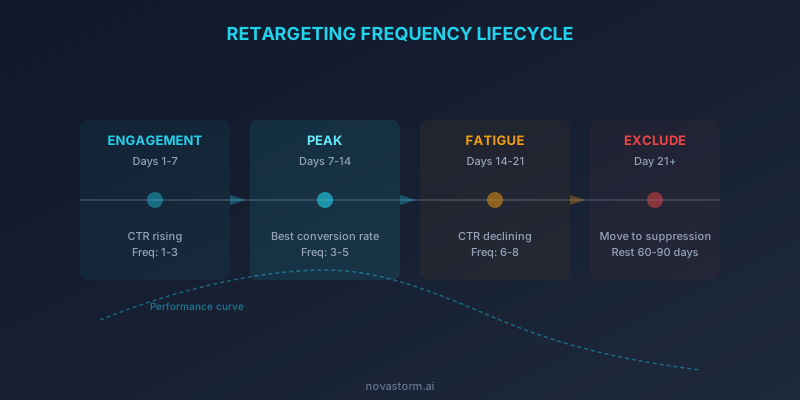
There is a point at which continued retargeting becomes counterproductive. If someone has seen your ads 15 to 20 times across multiple creatives over several weeks without converting, the message is clear. They are not going to buy right now, and additional impressions are wasted spend.
Set up exclusion rules based on cumulative exposure and time. Exclude anyone who has been in your retargeting audience for more than 30 days without converting. Move them to a suppression list and let them rest for 60 to 90 days before re-entering the retargeting funnel.
Some audiences will never convert regardless of frequency or creative quality. They may have visited your site by accident, compared your product and chosen a competitor, or simply changed their mind. Holding onto these non-converters inflates your retargeting audience size, drives up frequency for everyone, and distorts your performance metrics.
How does frequency affect ad costs and relevance score?
As frequency rises, two things happen simultaneously. First, click-through rate declines because people stop engaging with ads they have already seen. Second, cost per result increases because Meta's auction system penalizes ads with declining engagement. The algorithm interprets low engagement as a signal that the ad is not relevant to the audience.
Monitor the relationship between frequency and cost per result in your campaigns. Plot these two metrics on a chart and you will see a clear inflection point where costs begin to rise sharply. That inflection point is your practical frequency ceiling for that specific creative and audience combination.
For most retargeting campaigns, the inflection point occurs between four and six total impressions. Below that threshold, additional impressions improve conversion probability. Above it, each additional impression costs more and converts less. The exact number varies by industry, product price point, and creative quality, but the pattern is remarkably consistent.
Set up automated rules in Meta Ads Manager to send you a notification when any ad set frequency exceeds your target threshold. This early warning system prevents budget waste from frequency creep.
Retargeting frequency management is a balancing act between persistence and restraint. The goal is to stay present in the prospect's consideration set without becoming an annoyance. By matching frequency to audience temperature, rotating creatives aggressively, implementing sequential messaging, and knowing when to stop, you can extract maximum value from your retargeting audiences while protecting your brand reputation.
Novastorm AI automates Meta Ads routine — from monitoring to optimization. Learn more at novastorm.ai
Disclaimer: This article was generated with the assistance of AI and reviewed by the NovaStorm AI team. While we strive for accuracy, we recommend verifying specific data points and consulting official sources (linked where available) for critical business decisions.
Ready to automate your Meta Ads?
NovaStorm AI takes full responsibility for your campaigns — from monitoring to optimization.
Get Started FreeRelated Articles
Frequency in Meta Ads: When Repetition Helps and When It Kills
Understand frequency in Meta Ads and how it affects performance. Learn optimal frequency by funnel stage, cap strategies, and when repetition helps versus hurts.
Cross-Platform Retargeting: Meta + Google Unified Strategy
Build a unified cross-platform retargeting strategy combining Meta and Google Ads. Learn audience sync, sequential messaging, attribution, and budget allocation across platforms.
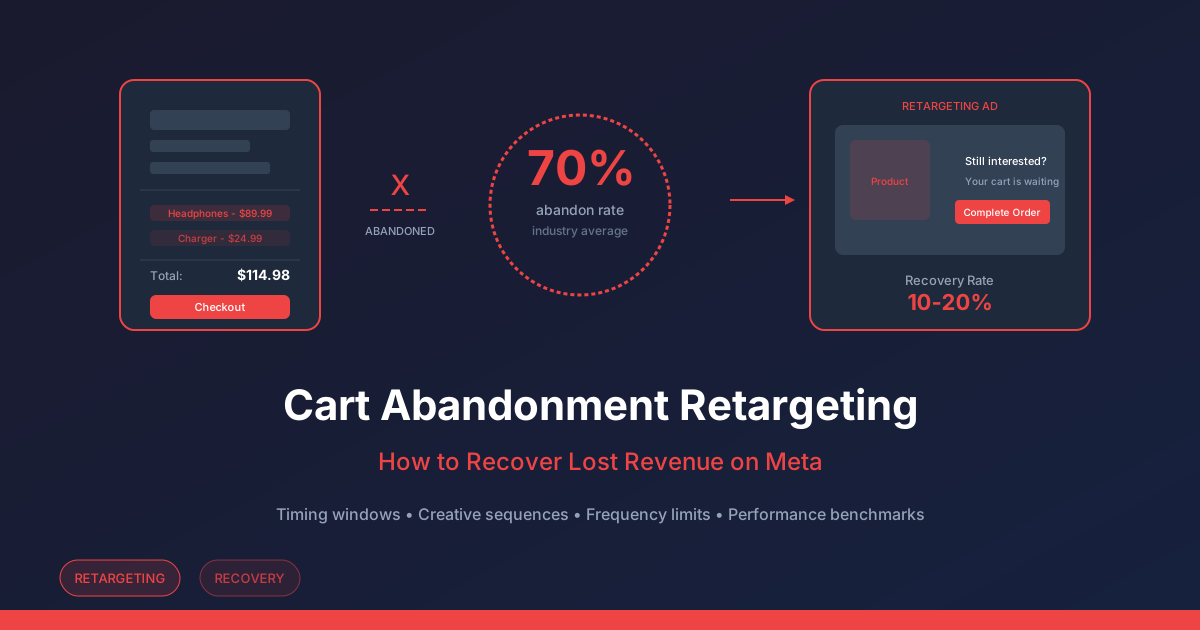
Cart Abandonment Retargeting: How to Recover Lost Revenue on Meta
Master cart abandonment retargeting on Meta. Learn optimal retargeting windows, creative strategies, frequency limits, and multi-touch sequences to recover lost revenue.