Cart Abandonment Retargeting: How to Recover Lost Revenue on Meta
Master cart abandonment retargeting on Meta. Learn optimal retargeting windows, creative strategies, frequency limits, and multi-touch sequences to recover lost revenue.
The Scale of Cart Abandonment and Why Retargeting Matters
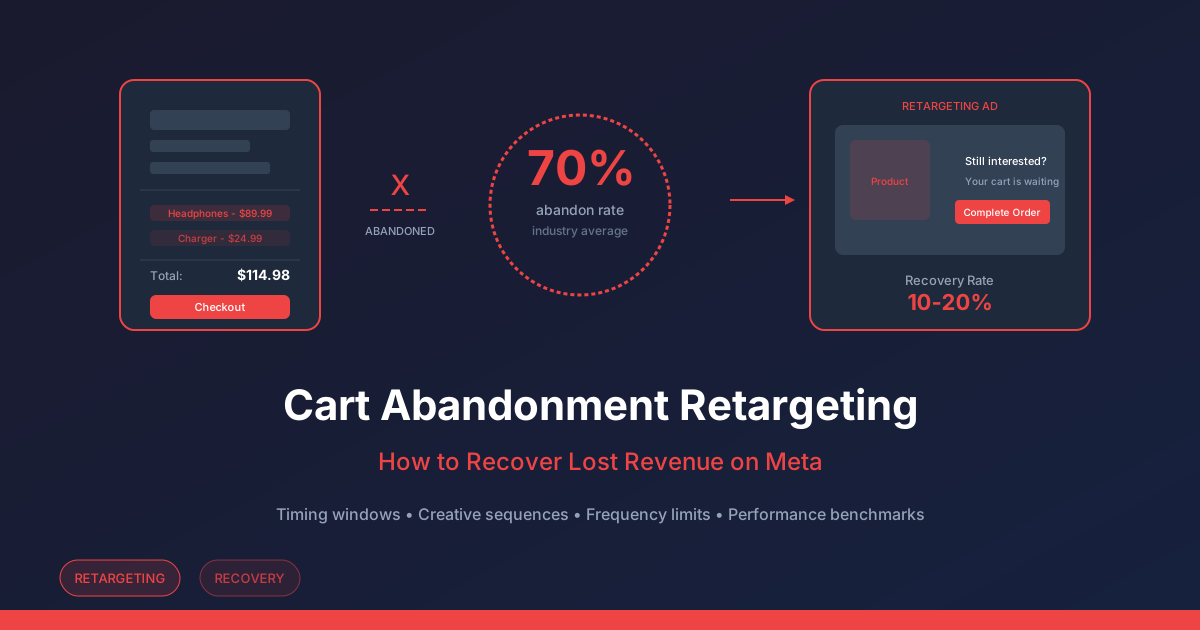
Cart abandonment retargeting is the single most reliable way to recover revenue that would otherwise walk out the digital door. The average online shopping cart abandonment rate hovers around 70%, meaning seven out of every ten shoppers who add products to their cart leave without completing the purchase. For e-commerce businesses, this represents an enormous pool of high-intent prospects who are just one well-timed ad away from converting. Meta's advertising platform offers the targeting precision and reach needed to bring these shoppers back effectively.
The economics are compelling. These are people who already visited your site, browsed your products, and took the deliberate action of adding something to their cart. Their purchase intent is significantly higher than cold audiences. Retargeting them costs a fraction of acquiring new customers, and the conversion rates are dramatically better. Most e-commerce brands see retargeting ROAS between 5x and 15x, compared to 2x to 5x for prospecting campaigns.
| Metric | Industry Average | Top Performers |
|---|---|---|
| Cart abandonment rate | 70.2% | 55-60% |
| Retargeting recovery rate | 8-12% | 15-20% |
| Add-to-cart retargeting CTR | 1.5-2.5% | 3-5% |
| Retargeting ROAS | 5-8x | 10-15x |
| Cost per recovered sale | $8-15 | $3-8 |
Cart Abandonment Retargeting: Optimal Timing Windows
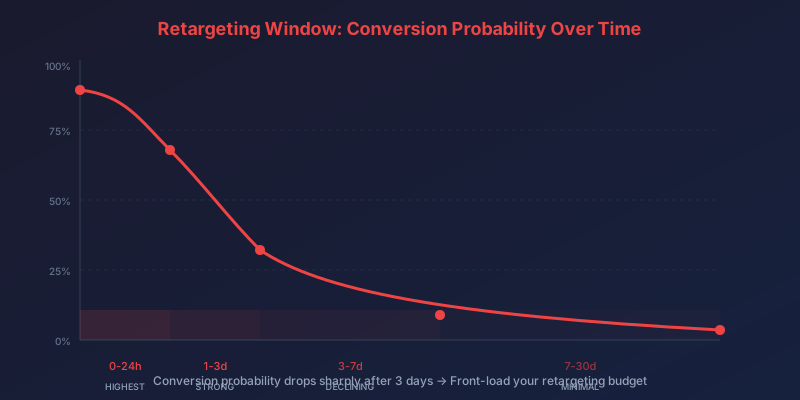
The timing of your retargeting ad is just as important as the ad itself. Research consistently shows that the optimal retargeting window for cart abandonment is within the first one to three days after the cart was abandoned. During this period, the purchase intent is still fresh, the product is still top of mind, and the shopper has not yet committed to an alternative.
The first 24 hours represent the highest-value window. Many shoppers abandon carts due to distractions, comparison shopping, or simply wanting to think it over. A gentle reminder during this period catches them while the desire is still active. After three days, conversion rates drop significantly. By day seven, you are essentially dealing with a different mindset, and the creative strategy needs to shift from reminder to re-engagement.
- 0-24 hours: Highest intent. Simple reminder ads work best. Show the exact product they abandoned.
- 1-3 days: Still strong intent. Consider adding social proof or urgency elements to the creative.
- 3-7 days: Declining intent. This is where an incentive like free shipping or a small discount can make the difference.
- 7-14 days: Low intent. Shift to broader retargeting with best sellers or category-level messaging.
- 14-30 days: Minimal intent. Move these users to a general brand awareness audience instead.
Creative Strategy: Reminder vs Incentive Approach
The creative strategy for cart abandonment retargeting generally falls into two categories: reminder-based and incentive-based. Each has its place, and the most effective campaigns use both in a sequenced approach.
Reminder-based creatives simply show the abandoned product with messaging like 'Still thinking about this?' or 'You left something behind.' These work best in the first one to three days because many shoppers simply got distracted. The key is showing the exact product image from your catalog, which is where DPA shines. A reminder ad does not erode your margins and trains customers that they do not need to wait for a discount.
Incentive-based creatives add a sweetener, whether it is a percentage discount, dollar amount off, free shipping, or a bonus gift. These should be reserved for shoppers who did not convert from the reminder ad, typically after three to seven days. Leading with incentives conditions shoppers to abandon carts intentionally, knowing a discount is coming. That is a cycle you want to avoid.
The Discount vs No-Discount Debate
Whether to use discounts in cart abandonment retargeting depends on your margins, brand positioning, and customer behavior patterns. Premium brands often avoid discounts entirely, instead emphasizing product quality, limited availability, or social proof. Budget-friendly brands may benefit from modest discounts because their customers are more price-sensitive.
If you decide to use discounts, keep them modest (5-10%) and conditional. Free shipping tends to perform as well as percentage discounts without the margin erosion. Test 'free shipping on your abandoned cart' against '10% off your cart' to find what works for your audience.
Stop wasting ad budget
NovaStorm AI cuts Meta Ads CPA by 40% on average. Start free.
Frequency Limits and Ad Fatigue Management
One of the fastest ways to turn a potential customer into an annoyed non-customer is over-exposing them to retargeting ads. Frequency management is essential. For cart abandonment specifically, aim for a frequency of three to five impressions per week per user. Going beyond this rarely improves conversion rates and often increases negative feedback, which hurts your ad account quality score.
Meta does not offer direct frequency capping in all campaign types, but you can manage frequency through audience exclusions, budget control, and campaign structure. Exclude purchasers from your retargeting audience so that once someone buys, they immediately stop seeing the ad. Use daily budgets rather than lifetime budgets for more consistent daily delivery. And break your retargeting into time-based segments so each audience window has its own controlled spend.
Monitor your frequency metric weekly. If your cart abandonment retargeting exceeds a frequency of 7 in a rolling seven-day window, you are likely experiencing diminishing returns and risking negative brand perception.
Building a Multi-Touch Retargeting Sequence
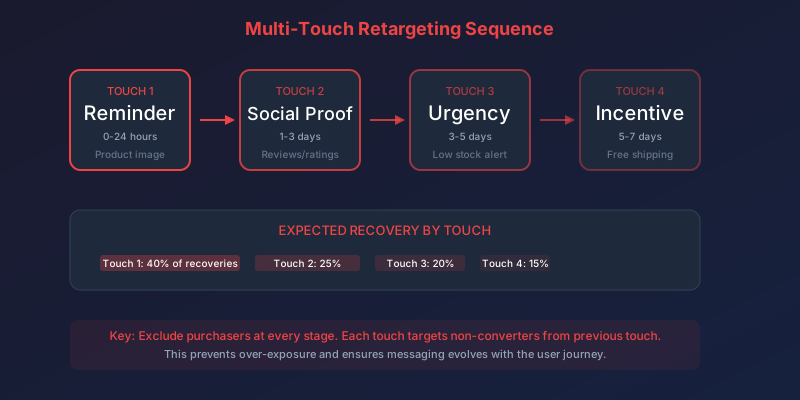
The most sophisticated cart abandonment strategies use a multi-touch sequence that evolves the messaging over time. Instead of showing the same ad repeatedly, you guide the user through a structured sequence that addresses different objections at each stage.
| Touch | Timing | Message Type | Creative Example |
|---|---|---|---|
| 1st | 0-24 hours | Product reminder | Your cart is waiting. Complete your order today. |
| 2nd | 1-3 days | Social proof | This product has 2,000+ five-star reviews. |
| 3rd | 3-5 days | Urgency | Low stock alert. Only a few left at this price. |
| 4th | 5-7 days | Incentive | Free shipping on your order. Expires in 48 hours. |
| 5th | 7-14 days | Alternative | Customers who viewed this also loved these items. |
Implementing this sequence requires creating separate ad sets for each timing window with appropriate audience exclusions. Each ad set targets cart abandoners within a specific time range and excludes anyone who has already purchased or entered the next stage of the sequence. This structure takes more effort to set up but significantly outperforms a single retargeting ad set.
Performance Benchmarks and Optimization
Knowing what good looks like is essential for evaluating your retargeting performance. Benchmarks vary by industry, but the following ranges provide useful targets for most e-commerce businesses running cart abandonment retargeting on Meta.
- Click-through rate: 1.5% to 3% is healthy. Below 1% signals creative fatigue or poor audience match.
- Conversion rate: 3% to 8% of clicks should convert. Cart abandoners have high intent, so low conversion often points to landing page issues.
- Cost per purchase: Should be 30-50% lower than your prospecting cost per purchase.
- Return on ad spend: Expect 5x to 12x ROAS. Anything below 4x warrants investigation.
- Recovery rate: A strong campaign recovers 10-15% of abandoned carts. Elite programs hit 20%.
To optimize performance over time, test creative variations every two to three weeks to combat ad fatigue. Rotate between product-focused imagery, lifestyle shots, and user-generated content. Test different copy angles including urgency, social proof, and benefit-driven messaging. And always test your incentive structure since even small changes like switching from percentage to dollar discounts can meaningfully impact conversion rates.
The real power of cart abandonment retargeting comes from systematic execution. One-off retargeting campaigns recover some revenue. A structured, sequenced, continuously optimized retargeting program becomes a reliable revenue engine that compounds over time.
Cart abandonment is inevitable, but lost revenue is not. By combining precise timing windows, thoughtful creative sequencing, disciplined frequency management, and continuous performance optimization, you can consistently recover a meaningful share of abandoned carts. The key is treating retargeting not as a single campaign but as an ongoing program that evolves with your audience's behavior and your own performance data.
Novastorm AI automates Meta Ads routine — from monitoring to optimization. Learn more at novastorm.ai
Disclaimer: This article was generated with the assistance of AI and reviewed by the NovaStorm AI team. While we strive for accuracy, we recommend verifying specific data points and consulting official sources (linked where available) for critical business decisions.
Ready to automate your Meta Ads?
NovaStorm AI takes full responsibility for your campaigns — from monitoring to optimization.
Get Started FreeRelated Articles

Discount Strategy in Meta Ads: When Discounts Help and When They Hurt
Learn when discounts boost Meta Ads performance and when they erode margins. Percentage vs dollar off, conditional offers, urgency tactics, and premium positioning.
Product Catalog Ads on Meta: DPA Setup Guide for E-commerce
Learn how to set up Dynamic Product Ads (DPA) on Meta for e-commerce. Complete guide to catalog setup, feed requirements, dynamic templates, and retargeting strategies.
Cross-Platform Retargeting: Meta + Google Unified Strategy
Build a unified cross-platform retargeting strategy combining Meta and Google Ads. Learn audience sync, sequential messaging, attribution, and budget allocation across platforms.