Cross-Platform Retargeting: Meta + Google Unified Strategy
Build a unified cross-platform retargeting strategy combining Meta and Google Ads. Learn audience sync, sequential messaging, attribution, and budget allocation across platforms.
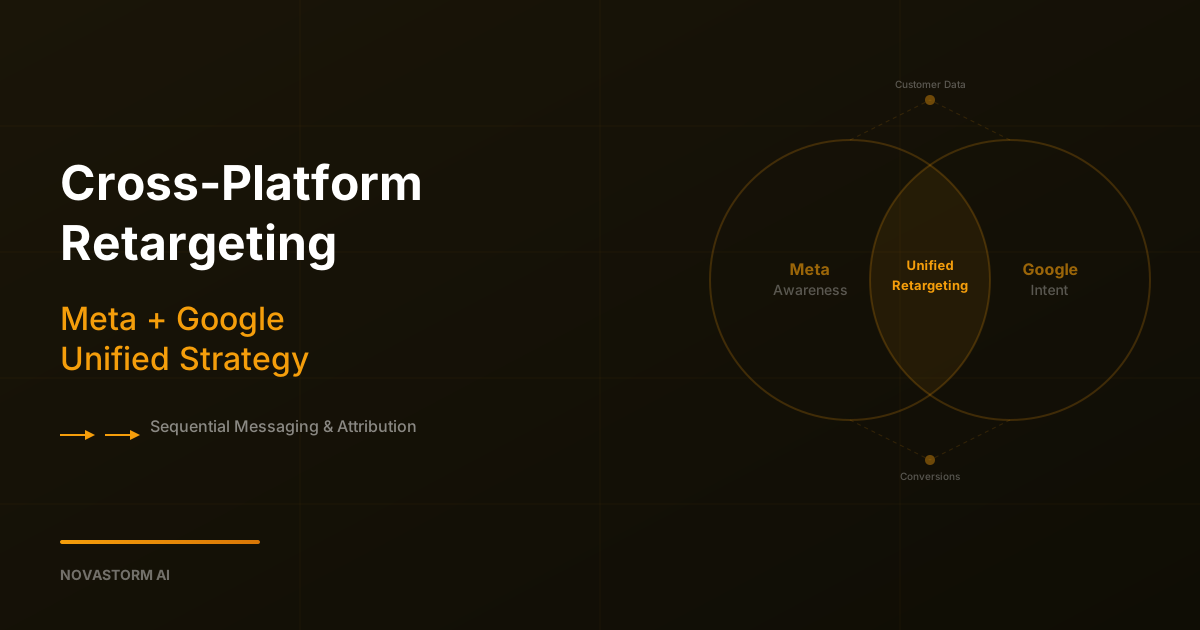
Cross-platform retargeting is no longer optional for advertisers who want to maximize their return on ad spend. Running Meta and Google campaigns in isolation creates fragmented customer experiences, duplicated spend, and blind spots in your attribution data. A unified strategy that coordinates messaging across both platforms follows the customer journey more naturally and captures conversions that either platform would miss on its own.
Why Cross-Platform Retargeting Outperforms Single-Platform Approaches
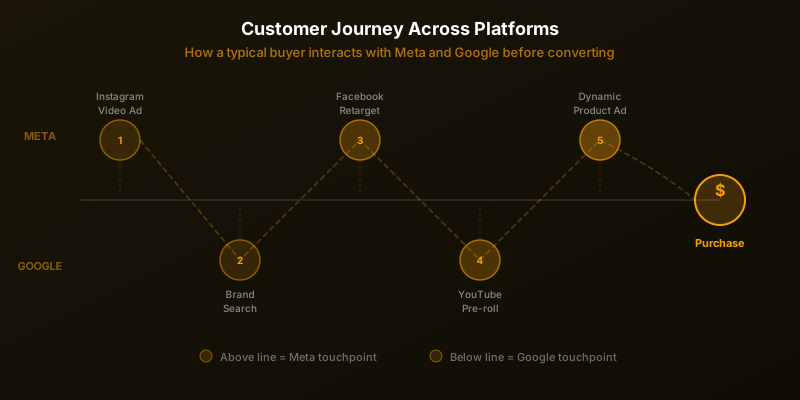
Your customers do not live on a single platform. They scroll Instagram in the morning, search Google at lunch, watch YouTube in the evening, and check Facebook before bed. A customer who discovers your product on Instagram may research it on Google, compare prices on shopping results, and finally convert after seeing a retargeting ad on the Display Network. Each platform captures a different moment in the decision process.
When you run platforms independently, you miss the connections between these touchpoints. Your Meta team might claim credit for awareness, your Google team claims the conversion, and neither understands the full journey. Worse, you may be showing the same introductory messaging to someone who has already visited your site three times, because each platform's retargeting pool operates independently.
Audience Sync Between Platforms
The foundation of cross-platform retargeting is audience synchronization. While you cannot share audience data directly between Meta and Google due to platform restrictions, you can build parallel audience structures using your first-party data as the common thread.
Building Parallel Audiences
- Export your CRM segments and upload them as customer lists to both Meta Custom Audiences and Google Customer Match
- Implement consistent UTM parameters across both platforms so you can identify traffic sources in your analytics
- Use your CDP or data warehouse to create unified customer profiles that track interactions across both platforms
- Build website visitor audiences on both platforms using the Meta Pixel and Google tag with matching lookback windows
- Create engagement-based audiences on each platform, such as video viewers on Meta and YouTube viewers on Google
Refresh your customer list uploads weekly. Stale lists lead to poor match rates and targeting people who have already converted. Automate this with your CRM or CDP to ensure consistency.
Sequential Messaging Across Platforms
The most powerful application of cross-platform retargeting is sequential messaging, where each ad builds on the previous interaction. Instead of showing the same ad repeatedly, you guide the customer through a narrative that addresses their evolving needs and objections at each stage.
| Stage | Meta Role | Google Role | Messaging Focus |
|---|---|---|---|
| Awareness | Video ads and carousel storytelling | YouTube pre-roll and Discovery ads | Brand introduction and value proposition |
| Consideration | Retarget video viewers with product features | Search ads on branded and category terms | Product benefits and social proof |
| Intent | Dynamic product ads for site visitors | Shopping ads and remarketing lists for search | Pricing, offers, and urgency |
| Conversion | Cart abandonment retargeting | Display remarketing with specific products | Final objection handling and incentives |
| Retention | Custom audience exclusion and upsell | Customer Match for cross-sell | Loyalty and repeat purchase messaging |
The key to making sequential messaging work is exclusion. When someone converts, exclude them from all retargeting campaigns on both platforms simultaneously. When someone moves from awareness to consideration, exclude them from awareness campaigns and enroll them in consideration campaigns. This requires discipline and consistent audience management.
Attribution Challenges and Solutions
Attribution is the biggest headache in cross-platform advertising. Meta and Google each have their own attribution models, and both tend to over-claim credit. Meta's default attribution window is seven days post-click and one day post-view. Google uses data-driven attribution across its properties. When a customer interacts with both platforms before converting, both will claim credit for the same sale.
The solution is not to trust either platform's numbers exclusively. Instead, build a unified view using a third-party analytics tool, your own data warehouse, or a marketing mix model. Compare each platform's reported conversions against your actual revenue to understand the true incremental impact of each channel.
Stop wasting ad budget
NovaStorm AI cuts Meta Ads CPA by 40% on average. Start free.
Run incrementality tests by turning off one platform's retargeting in specific geographic regions while keeping the other active. This reveals how much each platform truly contributes versus simply taking credit for conversions that would have happened anyway.
Budget Allocation Across Platforms
Allocating budget between Meta and Google retargeting requires understanding each platform's strengths. Meta excels at visual storytelling, emotional engagement, and reaching people during passive browsing. Google captures active intent through search and provides broad display reach for reminder-based retargeting.
Allocation Framework
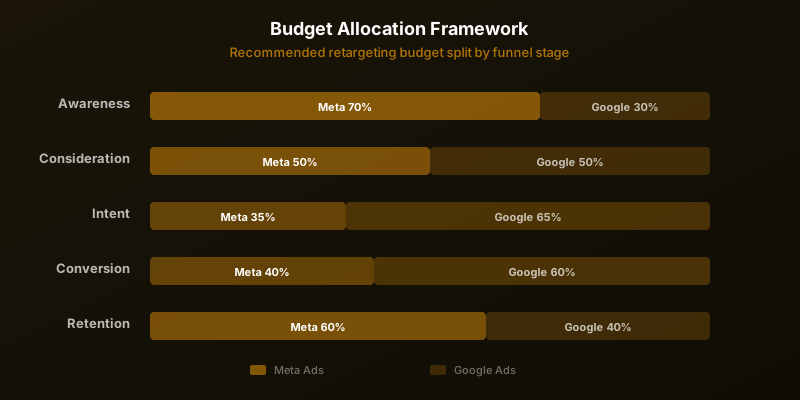
- Allocate 60 to 70 percent of awareness retargeting budget to Meta where visual formats drive engagement
- Split consideration retargeting evenly between platforms or lean toward whichever shows stronger engagement metrics
- Allocate 60 to 70 percent of intent and conversion retargeting to Google where search intent signals are strongest
- Reserve 10 to 15 percent of total retargeting budget for cross-platform tests and experiments
- Rebalance monthly based on actual incrementality data, not platform-reported ROAS
Unified Reporting and Customer Journey Mapping
To manage cross-platform retargeting effectively, you need a reporting framework that shows the full customer journey rather than siloed platform metrics. This typically involves combining data from both ad platforms with your website analytics and CRM data.
Start by mapping common customer paths. What percentage of your converters first interact with a Meta ad? How many touch Google search before converting? What is the average number of touchpoints across platforms before a purchase? These insights inform your audience structure, messaging strategy, and budget allocation.
Build a unified dashboard that shows key metrics side by side: reach, frequency, cost per thousand impressions, click-through rate, cost per acquisition, and return on ad spend for each platform and each funnel stage. Track overlap metrics like the percentage of converters who were exposed to ads on both platforms versus only one.
Practical Implementation Steps
Implementing a unified cross-platform strategy does not require a massive overhaul. Start with these practical steps and expand as you learn what works for your specific business.
- Audit your current retargeting campaigns on both platforms and identify audience overlaps and messaging gaps
- Standardize your UTM parameters and tracking conventions across all campaigns
- Upload consistent customer lists to both platforms and set up automated weekly refreshes
- Create a unified funnel map that assigns specific roles to each platform at each stage
- Implement exclusion audiences to prevent redundant messaging after conversion
- Build a cross-platform reporting dashboard using Google Analytics, Looker, or a similar tool
- Run a 30-day pilot with coordinated messaging and measure the impact on overall conversion rates
Do not try to perfectly synchronize every touchpoint from day one. Start with the highest-impact change, which is usually implementing proper exclusion audiences and coordinated retargeting windows. This alone can reduce wasted spend by 15 to 25 percent.
The advertisers who win in the current landscape are those who think about the customer journey holistically rather than optimizing each platform independently. By treating Meta and Google as complementary channels in a unified retargeting strategy, you create a more coherent experience for your customers and extract more value from every dollar of ad spend.
Novastorm AI automates Meta Ads routine — from monitoring to optimization. Learn more at novastorm.ai
Disclaimer: This article was generated with the assistance of AI and reviewed by the NovaStorm AI team. While we strive for accuracy, we recommend verifying specific data points and consulting official sources (linked where available) for critical business decisions.
Ready to automate your Meta Ads?
NovaStorm AI takes full responsibility for your campaigns — from monitoring to optimization.
Get Started FreeRelated Articles

Marketing Mix Modeling for Meta Ads: Beyond Last-Click Attribution
Discover how marketing mix modeling for Meta Ads reveals true channel impact beyond last-click attribution. Learn MMM methodology, implementation steps, and optimization strategies.
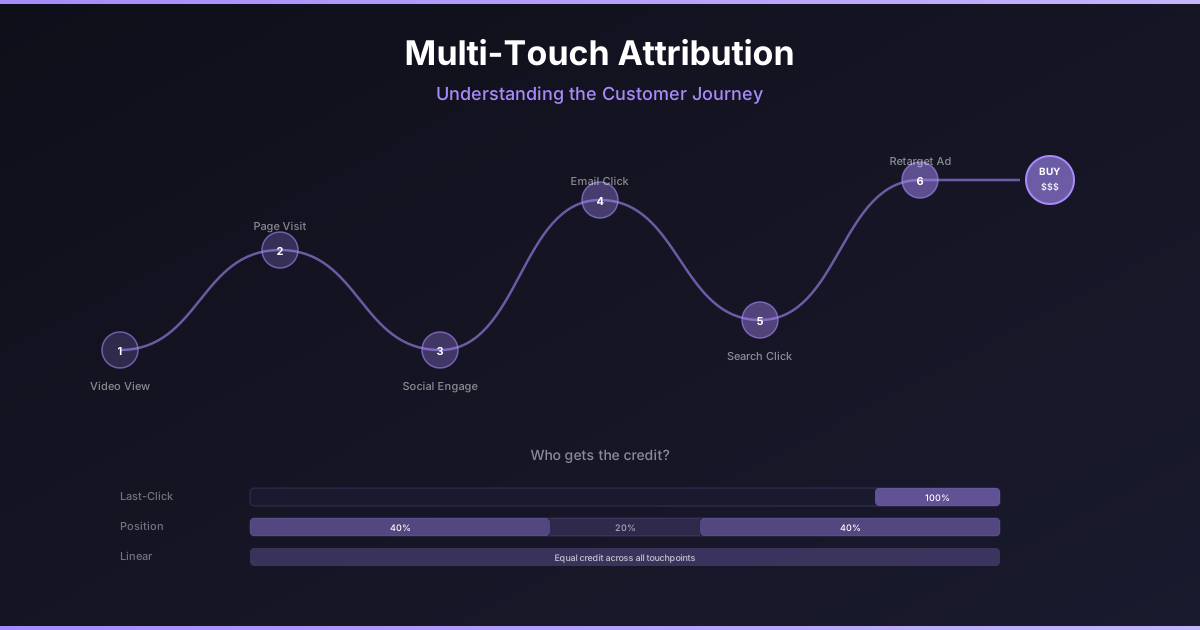
Multi-Touch Attribution: Understanding the Customer Journey in Meta Ads
Move beyond last-click attribution. Learn how multi-touch attribution models reveal the true impact of your Meta Ads across the entire customer journey.
Cart Abandonment Retargeting: How to Recover Lost Revenue on Meta
Master cart abandonment retargeting on Meta. Learn optimal retargeting windows, creative strategies, frequency limits, and multi-touch sequences to recover lost revenue.