Creative Velocity: Why Producing More Ads Wins on Meta
Learn why creative velocity is the top growth lever in Meta Ads. Discover frameworks for producing 10-20 ads per month, testing pipelines, and creative operations workflows.
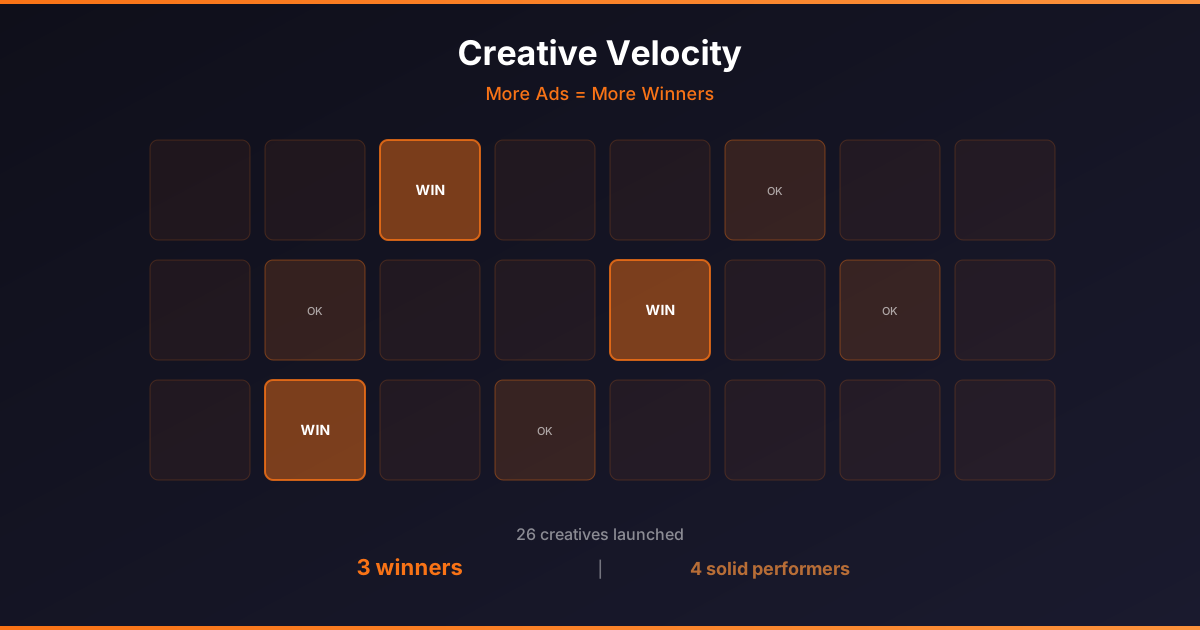
Creative velocity is the single most important competitive advantage in Meta Ads today. As Meta's algorithm takes over more targeting, bidding, and placement decisions, the creative itself has become the primary lever for performance. The advertisers who win are not those with the single best ad, but those who systematically produce, test, and iterate on a high volume of creative variations. Speed and volume beat perfection every time.
Creative Is the New Targeting
In the early days of Meta advertising, targeting was everything. You could micro-target audiences based on detailed interests, behaviors, and demographics. That era is over. With privacy changes, broad targeting recommendations, and Advantage+ campaigns, Meta's algorithm now decides who sees your ad. The creative determines who responds.
When you launch an ad, Meta's system shows it to a small sample of people. Based on engagement signals, it learns which audience segments respond best and allocates more impressions there. Different creatives attract different people. A lifestyle video attracts one audience segment. A product close-up with pricing attracts another. A UGC testimonial attracts yet another. Each creative is effectively its own targeting strategy.
This means that the number of distinct creatives you run directly correlates with the number of audience segments you can reach. More creative variety equals broader, more efficient reach.
The Volume vs Quality Debate
A common objection to creative velocity is that quality suffers when you produce more. This concern assumes a fixed creative bar where every ad needs to be a polished masterpiece. In reality, the definition of quality on Meta is simple: does the ad perform? And performance is unpredictable.
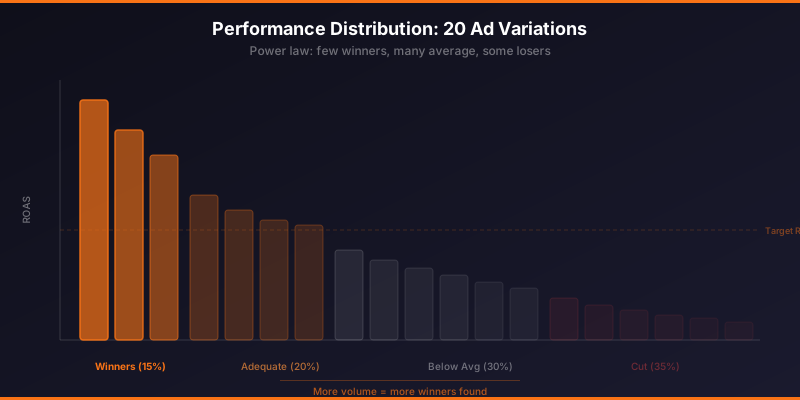
Data from thousands of ad accounts consistently shows that creative performance follows a power law distribution. Out of every 10 ads launched, 1-2 will be clear winners, 3-4 will perform adequately, and the rest will underperform. You cannot predict which ads will win before launching them. Even experienced creative directors are wrong more often than they are right about which concepts will perform best.
Given this reality, the math is clear. If your hit rate is 15-20%, producing 5 ads per month gives you 1 potential winner. Producing 20 ads per month gives you 3-4 winners. More shots on goal equals more goals.
The highest-performing ad accounts on Meta typically launch 15-25 new creative variations per month. This is not about producing 25 entirely different concepts. It is about creating variations: different hooks, different formats, different CTAs, and different angles for 3-5 core concepts.
Ideal Creative Velocity: 10-20 Ads Per Month
For most businesses spending between $5,000 and $50,000 per month on Meta, the target should be 10-20 new creative assets per month. This number balances production feasibility with testing volume. Below 10, you are not generating enough data to learn. Above 20, you risk spreading budget too thin across too many variants.
| Monthly Spend | Recommended Creatives/Month | Testing Budget Per Creative | Minimum Test Duration |
|---|---|---|---|
| $5K-$10K | 8-12 | $200-$400 | 5-7 days |
| $10K-$25K | 12-18 | $300-$600 | 5-7 days |
| $25K-$50K | 15-25 | $500-$1,000 | 5-7 days |
| $50K+ | 20-30+ | $1,000+ | 5-7 days |
Creative Velocity Frameworks for Speed
Producing 15+ ads per month sounds daunting, but it becomes manageable with the right frameworks. The key is working from a core concept outward, creating multiple variations from a single idea.
The 3x5 Method
Start with 3 distinct creative concepts per month. For each concept, produce 5 variations. Variations can include different hooks (first 3 seconds), different formats (video, static, carousel), different copy angles, different CTAs, or different visual treatments. Three concepts times five variations equals 15 unique ads from just three ideas.
Stop wasting ad budget
NovaStorm AI cuts Meta Ads CPA by 40% on average. Start free.
The Hook Multiplication Method
Take one winning video and create 5-7 versions with different opening hooks. The first 3 seconds of a video determine whether someone stops scrolling. Same body content, same CTA, but wildly different hooks. This is the fastest way to generate high-quality variations because the core content is already proven.
The Format Adaptation Method
Take one proven message and adapt it across all Meta formats: single image, carousel, short-form video (under 15 seconds), long-form video (30-60 seconds), Stories format, and Reels format. One message becomes six assets, each optimized for how people consume content in that specific placement.
AI-Assisted Creative Production
AI tools have dramatically accelerated creative production without proportionally increasing costs. The key is knowing where AI adds value and where human creativity remains essential.
- Ad copy generation: AI excels at producing multiple headline and body copy variations from a single brief. Generate 20 copy versions, test 10, scale the winners.
- Image variation: AI background generation and product compositing can create dozens of visual variations from a single product photo.
- Video editing: AI tools can automatically generate different cuts, add captions, resize for different placements, and swap background music.
- Script writing: AI can generate multiple script frameworks based on winning ad structures, which human creators then produce.
- Concept ideation: AI can analyze competitor ads and your own performance data to suggest new creative angles worth testing.
AI should accelerate your creative process, not replace your creative strategy. Use AI for variations and production speed. Keep human judgment for brand voice, strategic direction, and quality control. The best results come from human-directed, AI-accelerated workflows.
The Creative Testing Pipeline
Creative velocity without a structured testing pipeline is just chaos. You need a systematic process for launching, evaluating, and scaling creative.
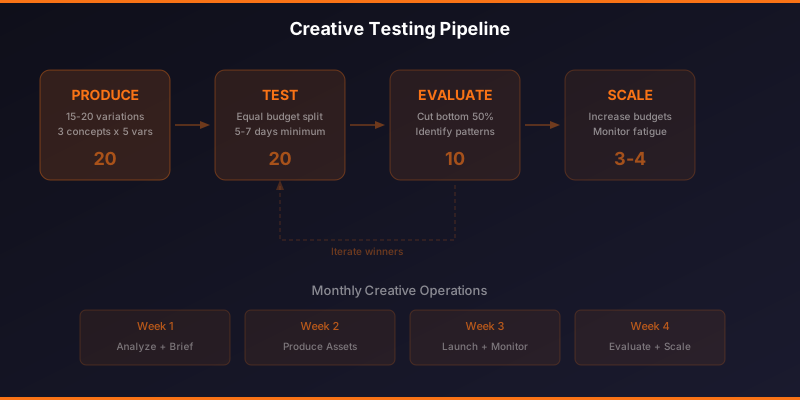
- Launch: New creatives enter a dedicated testing campaign or ad set with equal budget distribution. Each creative gets the same opportunity to prove itself.
- Evaluate: After 5-7 days and sufficient spend (minimum $200-300 per creative), evaluate performance against your primary KPI. Cut the bottom 50% of performers.
- Iterate: Take elements from top performers (hooks, messaging, visuals) and create new variations. This is where the compounding effect kicks in.
- Scale: Move proven winners into your main scaling campaigns with higher budgets. Monitor for creative fatigue (rising frequency, declining CTR).
- Retire: When a creative shows consistent decline over 7-14 days, pause it. Replace with fresh creative from your testing pipeline.
Creative Operations Workflow
Sustainable creative velocity requires an operational system, not just individual effort. Build a repeatable workflow that turns creative production into a predictable, scalable process.
- Week 1: Analyze previous month's performance data. Identify winning themes, hooks, and formats. Brief new concepts based on learnings.
- Week 2: Produce new creative assets. Shoot video, design statics, write copy variations. Aim to have all assets ready for review by end of week.
- Week 3: Launch new creatives into testing. Monitor early signals. Begin planning next month's concepts based on emerging trends.
- Week 4: Evaluate test results. Scale winners. Cut losers. Document learnings in a creative playbook that accumulates institutional knowledge.
Maintain a creative swipe file of your top 10 all-time performers. When you need inspiration for new concepts, start here. Winning themes can be revisited with fresh execution every 3-6 months.
Creative velocity is not about working harder or spending more on production. It is about building a system that reliably produces, tests, and iterates on creative at the speed Meta's algorithm demands. Start with the 3x5 framework, implement a structured testing pipeline, leverage AI for production speed, and build a monthly operational cadence. The advertisers who master creative velocity will consistently outperform those who rely on a few hero ads and hope for the best.
Novastorm AI automates Meta Ads routine — from monitoring to optimization. Learn more at novastorm.ai
Disclaimer: This article was generated with the assistance of AI and reviewed by the NovaStorm AI team. While we strive for accuracy, we recommend verifying specific data points and consulting official sources (linked where available) for critical business decisions.
Ready to automate your Meta Ads?
NovaStorm AI takes full responsibility for your campaigns — from monitoring to optimization.
Get Started FreeRelated Articles
The Psychology of Color in Meta Ad Creative
Explore the psychology of color in Meta Ad creative. Learn how color associations, contrast, CTA button colors, and cultural meanings impact ad performance.
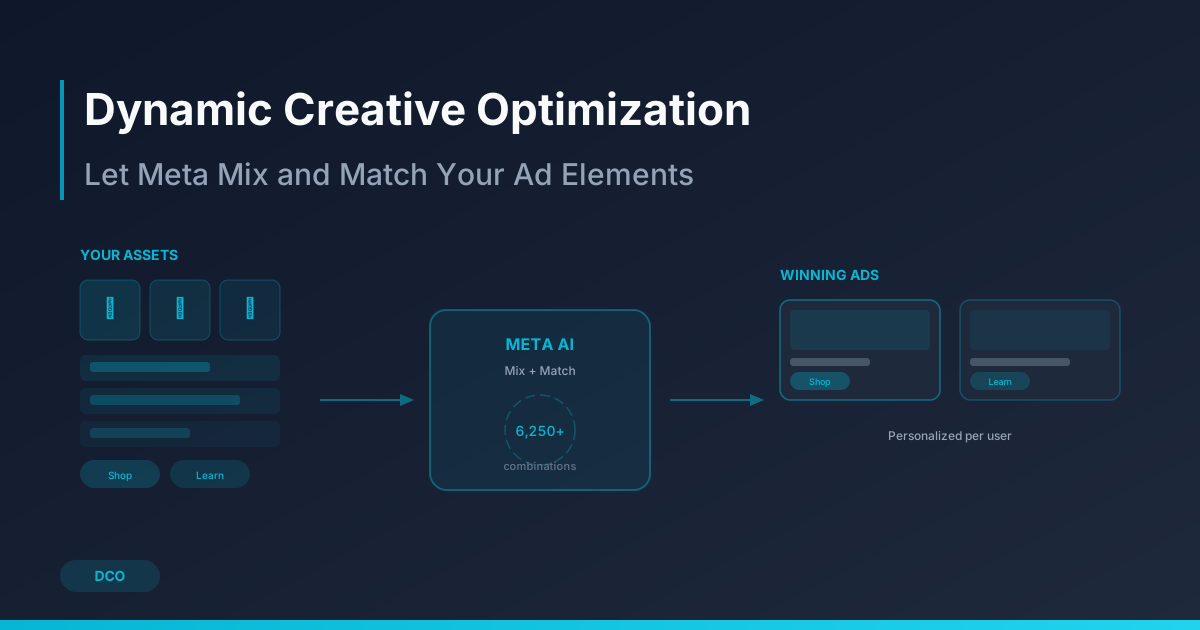
Dynamic Creative Optimization: Let Meta Mix and Match Your Ad Elements
Master Dynamic Creative Optimization (DCO) in Meta Ads. Learn how DCO works, which elements to vary, when it outperforms manual testing, and how to set it up correctly.
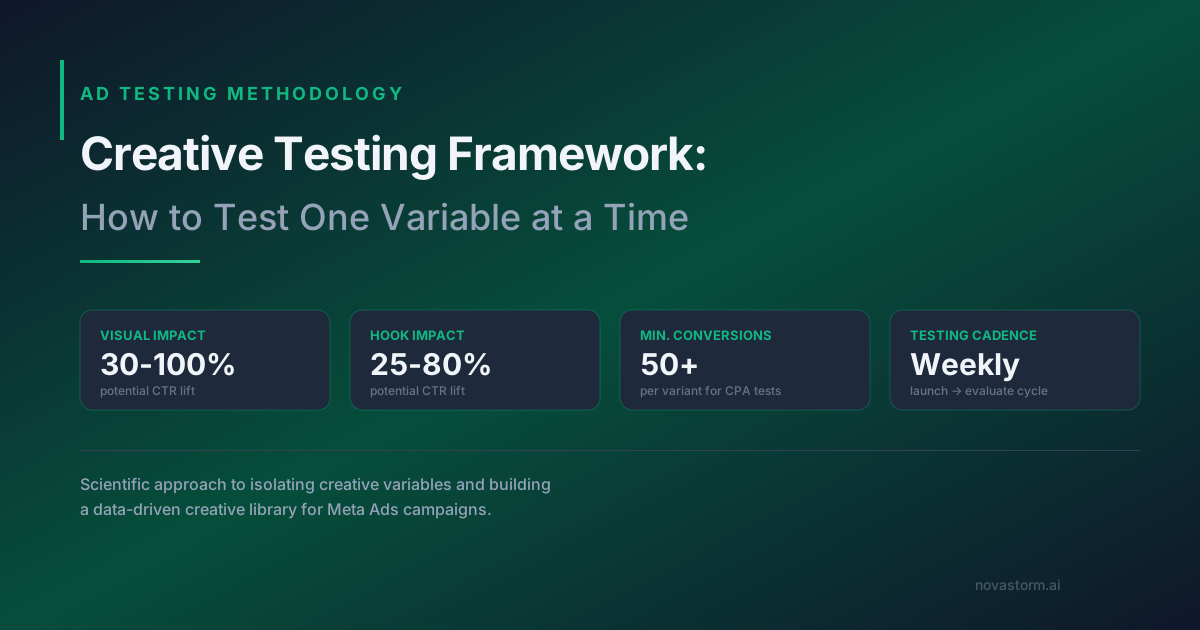
Creative Testing Framework: How to Test One Variable at a Time
Build a scientific creative testing framework for Meta Ads. Learn to isolate variables, reach statistical significance, and build a winning creative library.