A/B Testing Meta Ads: The Scientific Approach to Better Results
Learn how to A/B test Meta Ads with a scientific approach. Discover what to test first, how to calculate sample size, and how to reach statistical significance for better ad results.
A/B testing Meta Ads is the single most reliable way to improve campaign performance over time. Yet most advertisers either skip testing entirely or run tests so poorly that the results are meaningless. The difference between guessing and knowing lies in a structured, scientific approach — one that isolates variables, gathers enough data, and draws conclusions you can trust.
Why Most Ad Tests Fail Before They Start
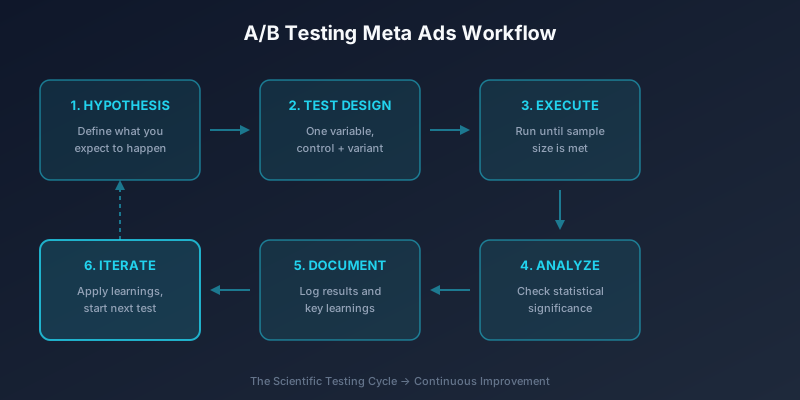
The biggest mistake in ad testing is changing too many things at once. When you swap the image, rewrite the headline, and adjust the audience simultaneously, you have no idea which change drove the result. A scientific test changes one variable at a time while keeping everything else constant. This is the control-and-variant model that separates real insights from noise.
The second most common error is ending tests too early. Advertisers see one variant outperforming another after 200 impressions and declare a winner. At that scale, random chance is doing most of the talking. You need sufficient sample size and statistical significance before making decisions — otherwise you are optimizing on randomness.
The Testing Hierarchy: What to A/B Test First in Meta Ads
Not all variables carry the same weight. Testing button color when your audience targeting is wrong is like rearranging deck chairs on the Titanic. Follow this hierarchy to maximize the impact of every test you run.
- Audience — who you reach matters more than anything else. Test broad vs. narrow, lookalikes vs. interest-based, and different custom audience seeds.
- Creative — images and video are the primary scroll-stoppers. Test formats (static vs. video vs. carousel), visual styles, and featured elements.
- Copy — headlines, primary text, and descriptions shape the click decision. Test length, tone, benefit framing, and problem-agitation approaches.
- Call to action — the CTA button and landing page destination influence the final conversion step. Test different CTA types and post-click experiences.
By working top-down, you ensure that each test addresses the variable with the largest potential impact. Once you lock in a winning audience, testing creative within that audience becomes far more meaningful.
Understanding Sample Size and Statistical Significance
Statistical significance tells you the probability that your test result is not due to chance. The industry standard threshold is 95 percent confidence, meaning there is only a 5 percent chance the observed difference is random. Some advertisers accept 90 percent for faster iteration, but going below that is risky.
Sample size depends on your baseline conversion rate and the minimum detectable effect you care about. If your current conversion rate is 2 percent and you want to detect a 20 percent relative improvement (moving to 2.4 percent), you will need roughly 15,000 visitors per variant. For higher conversion rates or larger expected improvements, the required sample shrinks.
| Baseline CVR | Minimum Detectable Effect | Sample Per Variant | Approximate Budget Needed |
|---|---|---|---|
| 1% | 30% relative lift | ~14,000 | Medium |
| 2% | 20% relative lift | ~15,000 | Medium-High |
| 5% | 15% relative lift | ~6,800 | Medium |
| 10% | 10% relative lift | ~7,500 | Medium |
Use free online sample size calculators to estimate how much traffic you need before starting any test. Running a test without knowing the required sample is the fastest way to waste budget on inconclusive results.
Meta's Built-In Split Testing Tool
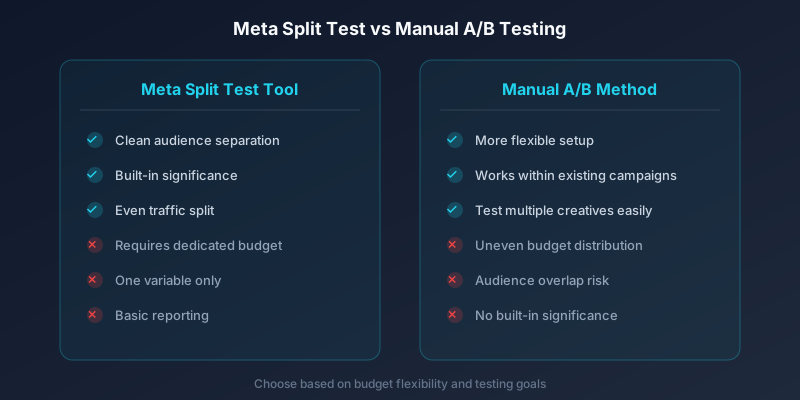
Meta offers a native A/B testing feature within Ads Manager. You can create a split test when setting up a new campaign or duplicate an existing campaign into an A/B test. Meta will evenly split your audience so each person only sees one variant, eliminating audience overlap contamination.
The platform allows you to test one variable at a time across campaigns: creative, audience, placement, or delivery optimization. Meta handles the traffic allocation and will declare a winner once it has enough data, using its own confidence model. The main advantage is clean audience separation — something that is difficult to replicate manually.
Stop wasting ad budget
NovaStorm AI cuts Meta Ads CPA by 40% on average. Start free.
Limitations of Meta's Tool
The built-in tool works at the campaign level, which means you need dedicated budget for the test. It also restricts you to one variable, which is correct methodology but can feel slow. The reporting is basic — you get a winner or loser, but deeper analysis requires exporting the data.
The Manual Testing Method
Many experienced advertisers prefer manual testing within a single campaign. The approach is straightforward: create one campaign, one ad set (to keep the audience constant), and place two or more ad variants inside that ad set. Meta will distribute spend across the ads, naturally favoring the one that performs better.
The downside of this approach is that Meta's algorithm will allocate spend unevenly, sometimes giving 80 percent of budget to one ad before the other has enough data. To mitigate this, some advertisers run each variant in its own ad set with identical targeting and equal budgets. This gives more control but risks audience overlap.
Manual Testing Best Practices
- Limit to 2-3 variants per test to avoid diluting budget.
- Set a clear primary metric before launching — CPA, ROAS, or CTR.
- Run tests for at least 7 days to capture weekly behavioral patterns.
- Do not edit ads mid-test — this resets the learning phase.
- Use UTM parameters to track performance in your own analytics.
Documenting and Applying Your Learnings
Testing without documentation is just expensive exploration. Every test should be logged with the hypothesis, variable tested, variants, dates, sample size, results, and confidence level. Over time, this testing log becomes one of your most valuable assets — a knowledge base of what works for your specific account.
Create a simple spreadsheet with columns for test name, date range, variable, control description, variant description, primary metric, result, and confidence. Review this log monthly to identify patterns. You may discover that your audience consistently responds better to benefit-driven headlines, or that video outperforms static in the feed but not in Stories.
The most successful ad accounts are not the ones that find one winning ad — they are the ones that build a systematic testing process that compounds learnings over months and years.
Common Testing Mistakes to Avoid
Sources & Further Reading: Meta Business Help Center — About A/B Testing — official guide to Meta's split testing tool. HubSpot — The Beginner's Guide to A/B Testing — statistical significance and methodology. Neil Patel — A/B Testing Facebook Ads — practical testing hierarchy and budget allocation.
- Testing too many variables at once and learning nothing actionable.
- Calling a winner before reaching statistical significance.
- Running tests with insufficient daily budget, causing excessively long test durations.
- Ignoring external factors like holidays, sales events, or competitor promotions.
- Never retesting — audience behavior changes over time, and old winners can become losers.
- Optimizing for proxy metrics (CTR) when you should be optimizing for business outcomes (CPA, ROAS).
A/B testing is not a one-time activity. It is a continuous process that sharpens every element of your advertising. The advertisers who commit to disciplined, scientific testing consistently outperform those who rely on intuition alone. Start with the testing hierarchy, ensure your sample sizes are adequate, document everything, and let the data guide your decisions.
Novastorm AI automates Meta Ads routine — from monitoring to optimization. Learn more at novastorm.ai
Disclaimer: This article was generated with the assistance of AI and reviewed by the NovaStorm AI team. While we strive for accuracy, we recommend verifying specific data points and consulting official sources (linked where available) for critical business decisions.
Ready to automate your Meta Ads?
NovaStorm AI takes full responsibility for your campaigns — from monitoring to optimization.
Get Started FreeRelated Articles
The Psychology of Color in Meta Ad Creative
Explore the psychology of color in Meta Ad creative. Learn how color associations, contrast, CTA button colors, and cultural meanings impact ad performance.
Predictive Analytics in Meta Ad Optimization
Discover how predictive analytics in Meta Ad optimization works, from predicted CTR and CVR to the machine learning feedback loop that determines ad delivery.
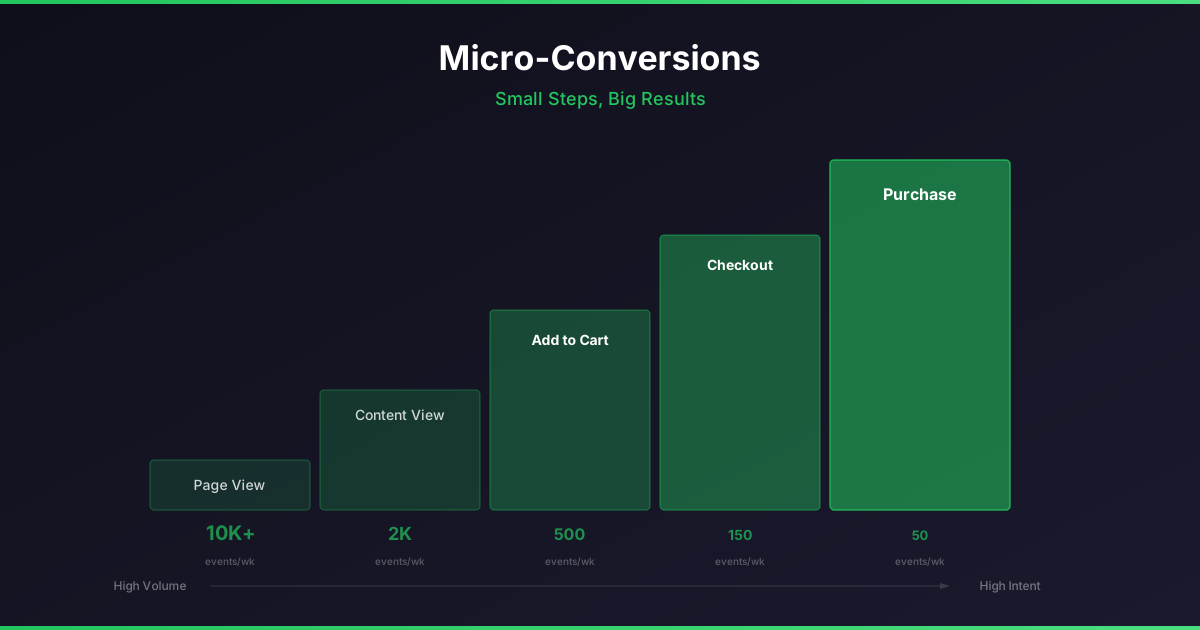
Micro-Conversions: Why Optimizing for Small Steps Beats Big Goals
Discover how optimizing for micro-conversions like add-to-cart and content views can improve your Meta Ads performance by giving the algorithm more data to work with.