Predictive Analytics in Meta Ad Optimization
Discover how predictive analytics in Meta Ad optimization works, from predicted CTR and CVR to the machine learning feedback loop that determines ad delivery.
How Predictive Analytics Meta Ad Optimization Actually Works
Predictive analytics Meta Ad optimization is the engine beneath every impression served on the platform. Every time Meta decides whether to show your ad to a specific person, it runs a prediction model that estimates the probability of that person taking the action you optimized for. This prediction happens billions of times per day and determines not just who sees your ad, but how much you pay and how broadly your campaign reaches. Understanding this system is not optional for serious advertisers. It is the foundation upon which all Meta Ads performance is built.
Unlike traditional advertising where you buy placement and hope the right people see it, Meta's auction system is fundamentally predictive. Your ad competes not just on bid amount but on predicted performance. An ad with a lower bid but higher predicted engagement can win the auction over a higher-bidding competitor. This means improving your predicted scores is often more valuable than increasing your budget.
The Core Prediction Models
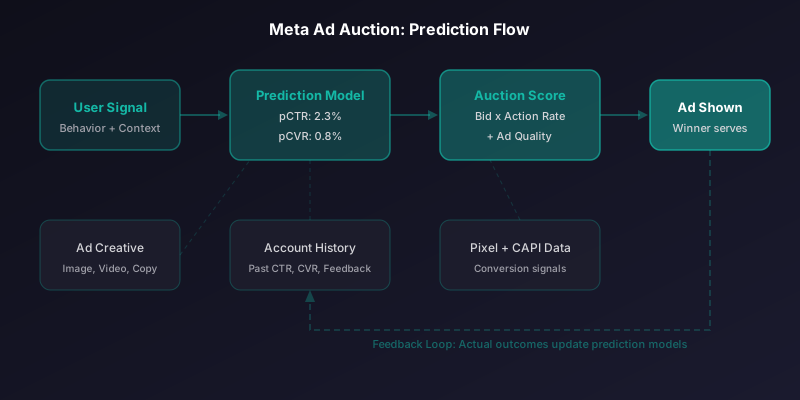
Meta runs two primary prediction models for every auction. The first is predicted click-through rate (pCTR), which estimates the likelihood that a specific user will click on your ad. The second is predicted conversion rate (pCVR), which estimates the likelihood that the user will complete the conversion event you are optimizing for, such as a purchase, lead form submission, or app install.
These predictions combine with your bid to determine your total value score in the auction. The formula is roughly: Total Value = Bid x Estimated Action Rate + Ad Quality. The estimated action rate is the output of these prediction models, and ad quality includes factors like feedback from users who have hidden or reported your ad.
What Feeds the Prediction Models
Meta's prediction models ingest an enormous range of signals. On the user side, the models consider past behavior on the platform, including pages liked, content engaged with, ads clicked, purchases made, and browsing patterns. On the advertiser side, the models evaluate your ad's creative elements, historical performance, landing page quality, and account history.
- User behavior history: past clicks, conversions, time spent on similar content
- Ad creative signals: image content, text sentiment, video watch patterns
- Account performance: historical CTR, conversion rates, negative feedback rates
- Contextual signals: time of day, device type, connection speed, placement
- Pixel and conversion data: how well your website converts visitors from Meta
How Predictions Affect Ad Delivery
When your ad has high predicted scores, Meta rewards you with broader delivery at lower costs. The platform wants to show ads that people will engage with, because engagement keeps users on the platform. An ad predicted to get clicks and conversions is a win for Meta, the user, and the advertiser.
Conversely, low predicted scores mean your ad gets throttled. You might see symptoms like high CPMs, limited delivery, or the dreaded learning limited status. These are not random outcomes. They are the direct result of Meta's prediction models estimating that your ad will underperform.
The learning phase exists because Meta needs approximately 50 conversion events per week per ad set to build reliable predictions. During this phase, delivery is volatile because the models are still calibrating. Exiting the learning phase successfully means the models are confident in their predictions for your ad.
Improving Your Predicted Scores
Since predicted scores directly impact delivery and cost, improving them should be a core part of your optimization strategy. Several levers are available to you.
Creative Quality
Creative is the single largest lever for improving predicted scores. Ads with clear visual hierarchy, strong opening hooks in video, readable text overlays, and compelling calls to action receive higher predicted engagement rates. Meta's models analyze creative content directly, including image recognition and text analysis, so what your ad looks like and says matters at the algorithmic level.
Stop wasting ad budget
NovaStorm AI cuts Meta Ads CPA by 40% on average. Start free.
Audience Alignment
Targeting an audience that is genuinely likely to want your product improves predicted conversion rates. If you are selling enterprise software to a consumer audience, even great creative cannot overcome the mismatch. The models will quickly learn that the people you are reaching are unlikely to convert, and your predicted scores will drop.
Conversion Signal Quality
The more accurate and abundant your conversion data, the better Meta's models can predict who will convert. Ensure your pixel is properly installed, your Conversions API is sending server-side events, and your event match quality score is above seven. Weak conversion signals lead to weak predictions.
The Machine Learning Feedback Loop
Meta's prediction system operates as a continuous feedback loop. It makes predictions, serves ads based on those predictions, observes the actual outcomes, and then updates its models. This creates a compounding effect. Ads that perform well in early delivery get better predictions, which leads to more delivery, which generates more data, which further refines the predictions.
This feedback loop also works in reverse. Ads that underperform early get worse predictions, less delivery, and fewer opportunities to recover. This is why the first 48 hours of a campaign are so critical. Poor initial performance can trap an ad in a negative prediction cycle that is difficult to escape.
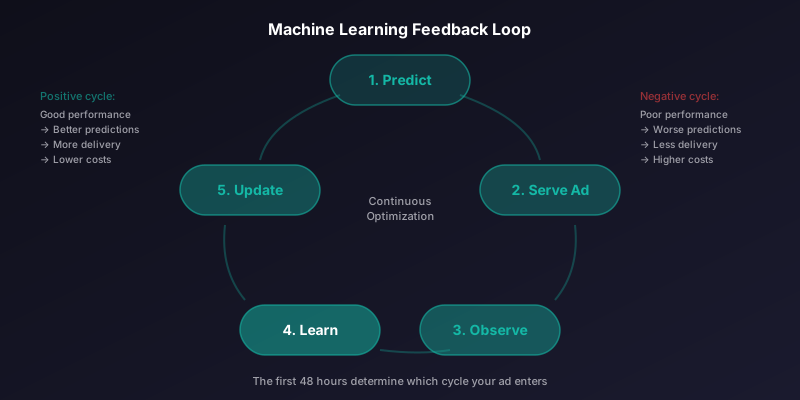
If an ad enters a negative prediction cycle, do not try to fix it in place. Duplicate the ad set with modifications to the creative or audience, giving the prediction models a fresh start. Editing an existing underperforming ad rarely resets the prediction scores effectively.
Creative Signals That Improve Predictions
Meta's models are sophisticated enough to extract signals directly from your creative content. Understanding what the models respond to can give you an edge.
| Signal | Impact on Predictions | How to Optimize |
|---|---|---|
| Video hook (first 3 seconds) | High impact on pCTR | Start with motion, faces, or unexpected visuals |
| Text overlay clarity | Medium impact on pCTR | Use large, readable fonts with high contrast |
| Product visibility | High impact on pCVR | Show the product clearly within first frame |
| Social proof elements | Medium impact on pCVR | Include ratings, reviews, or user counts |
| CTA button presence | Medium impact on pCVR | Use clear, action-oriented call to action |
| Negative feedback signals | High negative impact | Avoid misleading claims or clickbait |
Working With Predictions Rather Than Against Them
The most effective Meta advertisers treat the prediction system as a partner rather than a black box to outsmart. They feed the system clean data through proper pixel implementation and Conversions API. They give the models enough conversion volume to build confidence. They refresh creative frequently to prevent prediction decay from ad fatigue. And they structure campaigns to allow the models enough flexibility to find the best audiences and placements.
Avoid micro-managing campaigns in ways that limit prediction quality. Overly narrow audiences, constant budget changes, and frequent ad set pausing all disrupt the machine learning feedback loop. Give the system stability and let the predictions improve over time.
Predictive analytics is not a feature you can toggle on or off. It is the invisible infrastructure that determines the outcome of every dollar you spend on Meta. The advertisers who understand and align with this system consistently outperform those who treat Meta Ads as a simple bidding platform.
Novastorm AI automates Meta Ads routine — from monitoring to optimization. Learn more at novastorm.ai
Disclaimer: This article was generated with the assistance of AI and reviewed by the NovaStorm AI team. While we strive for accuracy, we recommend verifying specific data points and consulting official sources (linked where available) for critical business decisions.
Ready to automate your Meta Ads?
NovaStorm AI takes full responsibility for your campaigns — from monitoring to optimization.
Get Started FreeRelated Articles
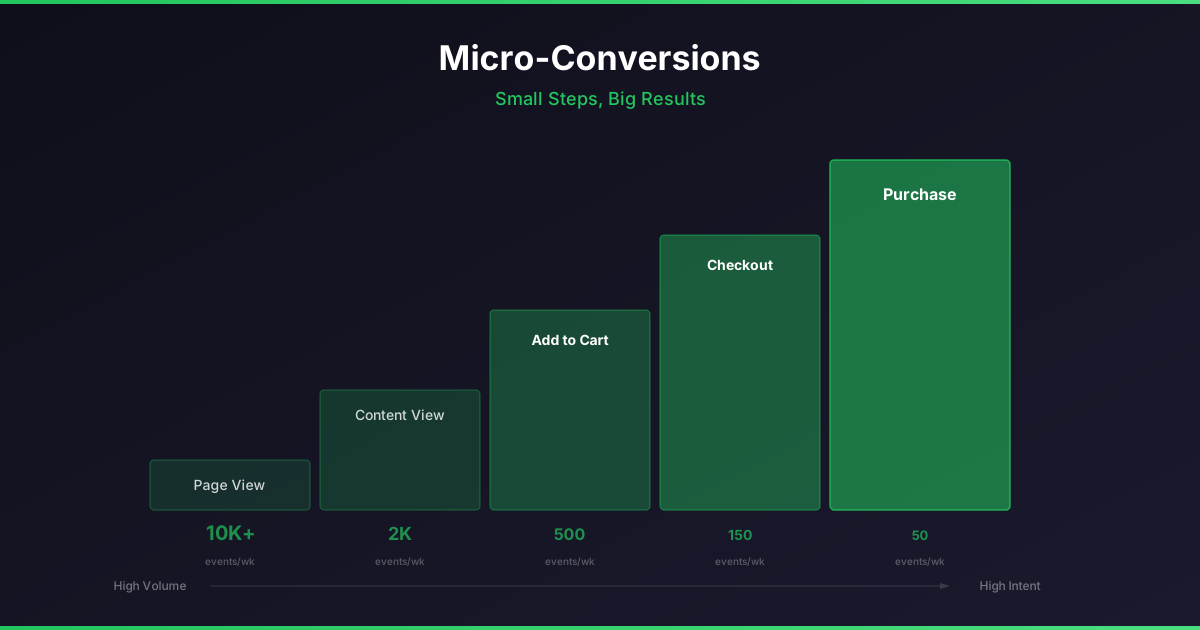
Micro-Conversions: Why Optimizing for Small Steps Beats Big Goals
Discover how optimizing for micro-conversions like add-to-cart and content views can improve your Meta Ads performance by giving the algorithm more data to work with.
A/B Testing Meta Ads: The Scientific Approach to Better Results
Learn how to A/B test Meta Ads with a scientific approach. Discover what to test first, how to calculate sample size, and how to reach statistical significance for better ad results.
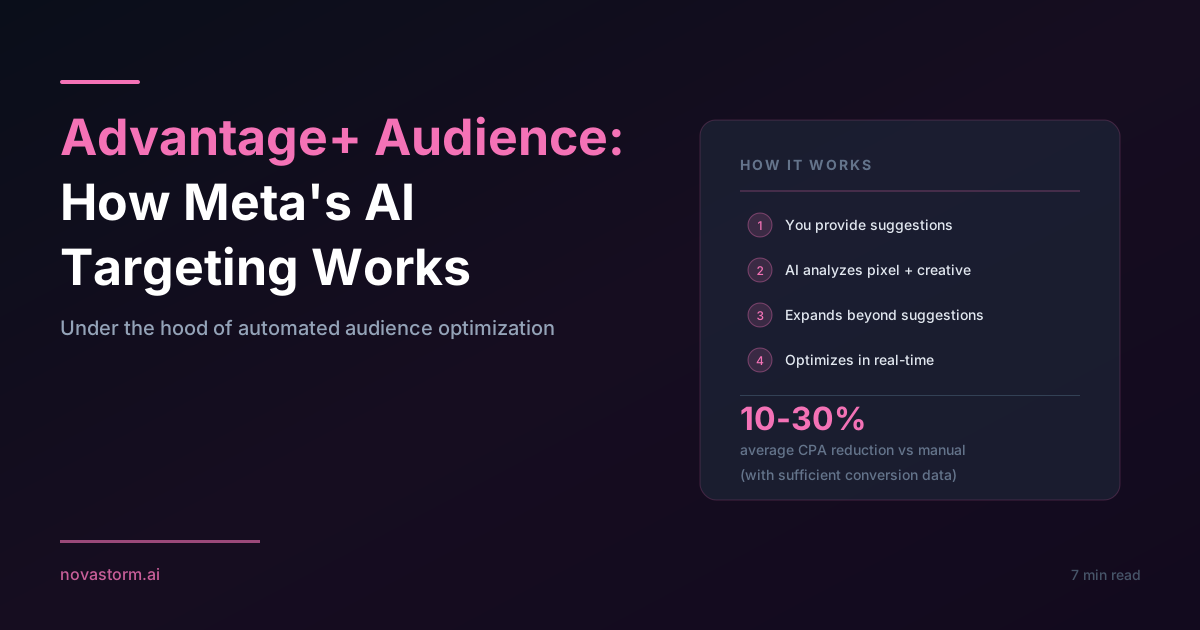
Advantage+ Audience: How Meta's AI Targeting Actually Works
Discover how Advantage+ Audience works under the hood. Learn when to use AI targeting vs traditional audiences and avoid common misconceptions about Meta AI.