Micro-Conversions: Why Optimizing for Small Steps Beats Big Goals
Discover how optimizing for micro-conversions like add-to-cart and content views can improve your Meta Ads performance by giving the algorithm more data to work with.
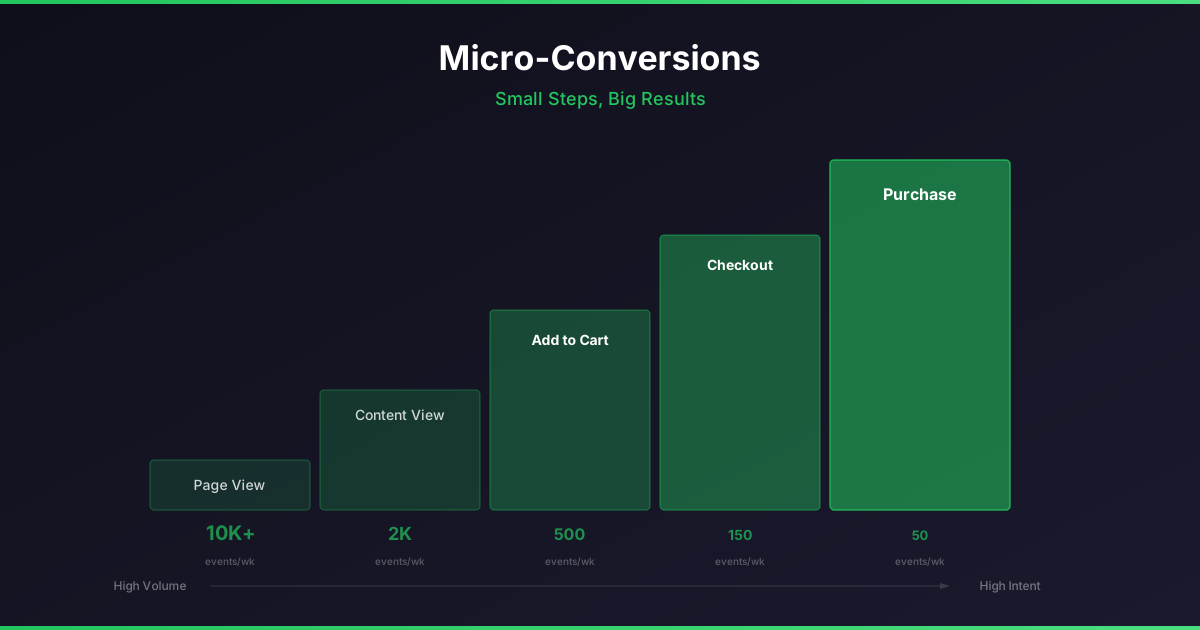
Micro-conversions are the hidden lever most Meta advertisers ignore. While everyone obsesses over purchases and leads, the smartest advertisers optimize for the small, frequent actions that happen along the way: page views, add-to-carts, content views, and email signups. These seemingly minor events give Meta's algorithm the data volume it desperately needs to find your ideal customers efficiently, and understanding when and how to use them can transform a struggling campaign into a profitable one.
What Are Micro-Conversions?
A micro-conversion is any measurable action a user takes that signals intent but falls short of your ultimate goal. If your primary conversion is a purchase, then every meaningful step before that purchase is a micro-conversion. These include viewing a product page, adding an item to the cart, initiating checkout, signing up for a newsletter, downloading a resource, or watching a product video to completion.
The key distinction is between macro-conversions (the final goal like a purchase or qualified lead) and micro-conversions (intermediate signals of intent). Both have value, but they serve different purposes in your advertising strategy.
The Conversion Ladder Concept
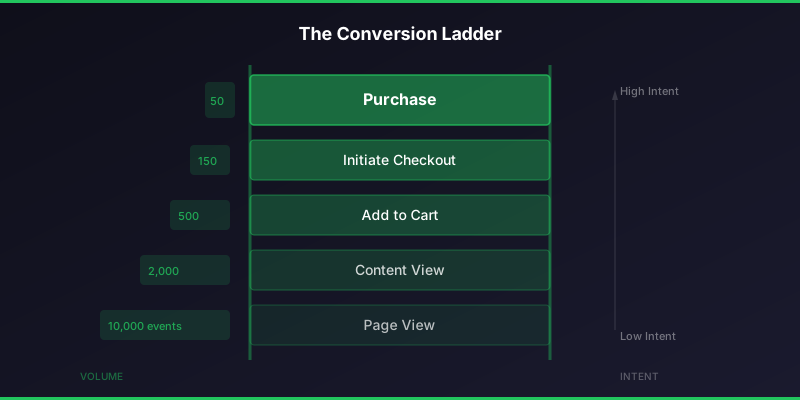
Think of the path to purchase as a ladder. Each rung represents a micro-conversion that moves the prospect closer to buying. The bottom rungs are low-commitment actions that many people take. The top rungs are high-commitment actions that few people take. Your job as an advertiser is to decide which rung to optimize for.
- Page View: The visitor landed on your site. Low intent but high volume.
- Content View: The visitor viewed a specific product or service page. Moderate intent.
- Add to Cart: The visitor placed an item in their cart. Strong intent signal.
- Initiate Checkout: The visitor started the checkout process. Very strong intent.
- Purchase: The visitor completed the transaction. The macro-conversion.
Each step up the ladder has fewer events but higher intent. This creates a fundamental tension in Meta Ads optimization: the algorithm needs data volume to learn, but the highest-value events happen the least frequently.
Why Optimizing for Add-to-Cart Often Beats Purchase
Meta's algorithm requires approximately 50 conversion events per week per ad set to exit the learning phase and optimize effectively. For many advertisers, especially those with higher price points or longer sales cycles, reaching 50 purchases per week per ad set is either impossible or prohibitively expensive.
This is where micro-conversions shine. If you get 10 purchases per week but 80 add-to-carts, optimizing for add-to-cart gives the algorithm 8 times more data. The algorithm can learn faster, find patterns sooner, and identify your ideal audience more precisely. The result is often better end-to-end performance even though you are technically optimizing for a lower-value action.
In testing across hundreds of ad accounts, campaigns optimized for add-to-cart frequently outperform purchase-optimized campaigns when weekly purchase volume falls below 30 events per ad set. The data volume advantage outweighs the precision of the purchase signal.
The Data Volume Advantage
Meta's machine learning models are hungry for data. When an ad set receives fewer than 50 conversions per week, it enters a perpetual learning phase where delivery is volatile, costs fluctuate wildly, and the algorithm never stabilizes. This is the death spiral many advertisers experience: low conversion volume leads to unstable delivery, which leads to poor performance, which leads to lower budgets, which leads to even lower conversion volume.
Micro-conversions break this cycle by flooding the algorithm with signal. More events mean faster learning, more stable delivery, and more consistent costs. The algorithm can test more audience segments, identify high-value pockets faster, and optimize delivery with greater confidence.
Stop wasting ad budget
NovaStorm AI cuts Meta Ads CPA by 40% on average. Start free.
| Optimization Event | Weekly Volume | Learning Status | CPA Stability |
|---|---|---|---|
| Purchase | 12 | Stuck in Learning | High variance |
| Initiate Checkout | 28 | Near Exit | Moderate variance |
| Add to Cart | 85 | Exited Learning | Stable |
| Content View | 340 | Well Optimized | Very stable |
When to Move Up the Ladder
Optimizing for micro-conversions is not a permanent strategy. It is a stepping stone. As your campaigns scale and generate more events, you should progressively move up the conversion ladder toward your macro-conversion. The process is methodical.
- Start by optimizing for the event where you can consistently hit 50+ events per week per ad set.
- Run this optimization for 2-3 weeks until performance stabilizes.
- Test moving up one rung on the ladder by duplicating the campaign with the higher-value event.
- Run both campaigns simultaneously for 2 weeks to compare blended performance.
- If the higher-value optimization performs comparably or better, shift budget to it.
- If not, stay at the current level and test again when volume increases.
Never jump multiple rungs at once. Going from content view optimization straight to purchase optimization skips critical learning. Move one step at a time and validate performance at each level.
Micro-Conversion Events to Track
Not all micro-conversions are created equal. The best micro-conversion events to track and optimize for share three qualities: they happen frequently enough to generate volume, they correlate with eventual purchases, and they can be reliably measured.
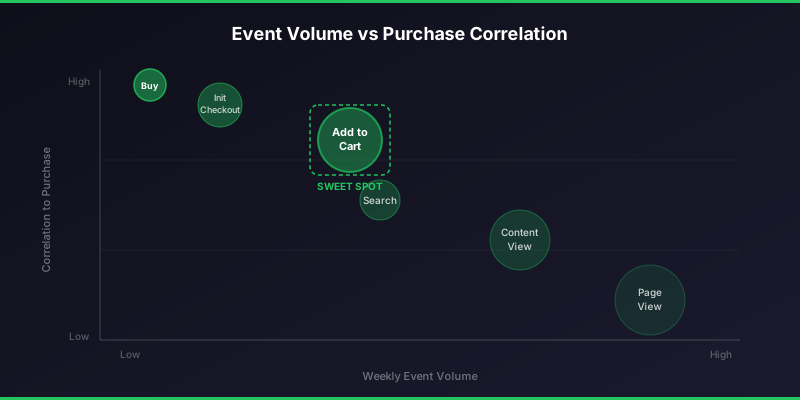
- ViewContent: Fired when a user views a specific product or content page. High volume, moderate correlation to purchase.
- AddToCart: Fired when a user adds a product to their cart. Strong purchase predictor with reasonable volume.
- InitiateCheckout: Fired when a user begins the checkout process. Very strong predictor but lower volume.
- AddToWishlist: Useful for longer consideration cycles. Indicates clear interest without purchase pressure.
- Lead: Form submissions, quiz completions, or account creations. Essential for service businesses.
- Search: On-site search queries signal active shopping intent. Often overlooked as an optimization event.
- CompleteRegistration: Account creation or email signup. Strong engagement signal for subscription models.
- CustomEvent (scroll depth, video views, time on page): Custom micro-conversions tailored to your specific user journey.
Choosing the Right Micro-Conversion
The ideal micro-conversion sits at the sweet spot between volume and intent. Too low on the ladder (like page views) and the signal is noisy, attracting users who will never buy. Too high (like initiate checkout) and you may not gain a meaningful volume advantage over optimizing for purchase directly.
For most e-commerce businesses, add-to-cart is the optimal micro-conversion. It strongly predicts purchase intent while occurring 3-8 times more frequently than purchases. For lead generation businesses, the equivalent is often a form start or a quiz completion rather than a full form submission.
Audit your pixel events weekly. Check the ratio between each micro-conversion and your macro-conversion. If add-to-cart to purchase ratio exceeds 10:1, there may be a checkout friction issue worth investigating separately.
Micro-conversions are not a workaround or a compromise. They are a sophisticated optimization strategy that works with Meta's algorithm rather than against it. By providing more data at meaningful intent thresholds, you enable faster learning, more stable delivery, and ultimately better end-to-end performance. Start where the data is, then climb the ladder as your campaigns mature.
Novastorm AI automates Meta Ads routine — from monitoring to optimization. Learn more at novastorm.ai
Disclaimer: This article was generated with the assistance of AI and reviewed by the NovaStorm AI team. While we strive for accuracy, we recommend verifying specific data points and consulting official sources (linked where available) for critical business decisions.
Ready to automate your Meta Ads?
NovaStorm AI takes full responsibility for your campaigns — from monitoring to optimization.
Get Started FreeRelated Articles
Predictive Analytics in Meta Ad Optimization
Discover how predictive analytics in Meta Ad optimization works, from predicted CTR and CVR to the machine learning feedback loop that determines ad delivery.
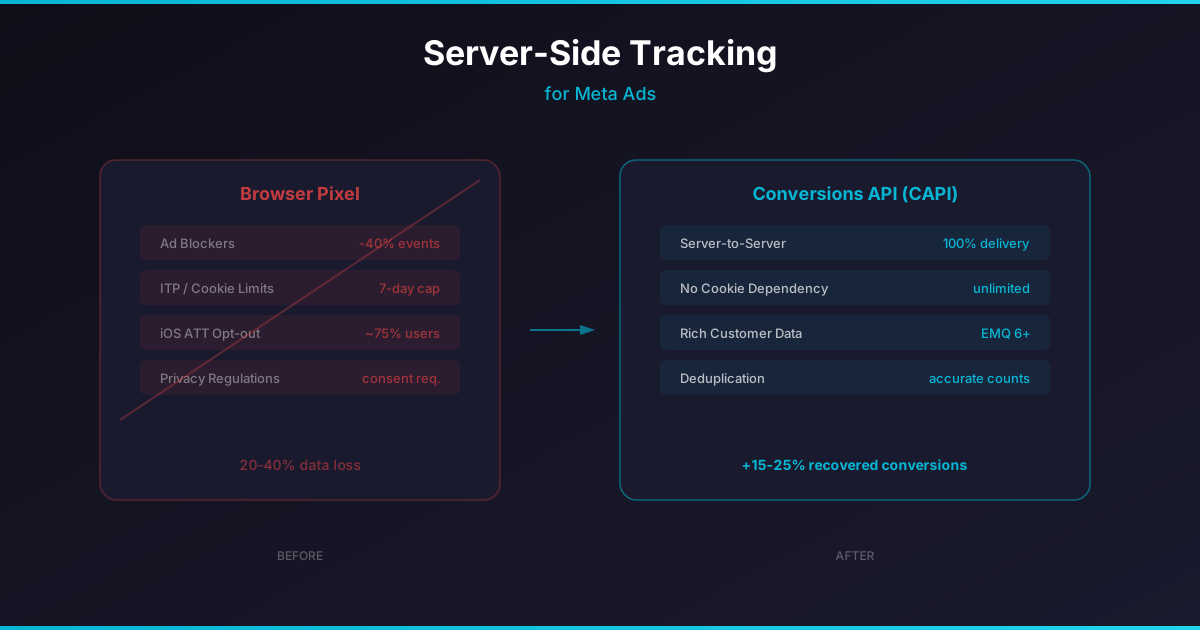
Server-Side Tracking for Meta Ads: Why It Matters More Than Ever
Browser tracking is dying. Learn how server-side tracking through Meta's Conversions API (CAPI) restores data accuracy, improves EMQ, and boosts ad performance.
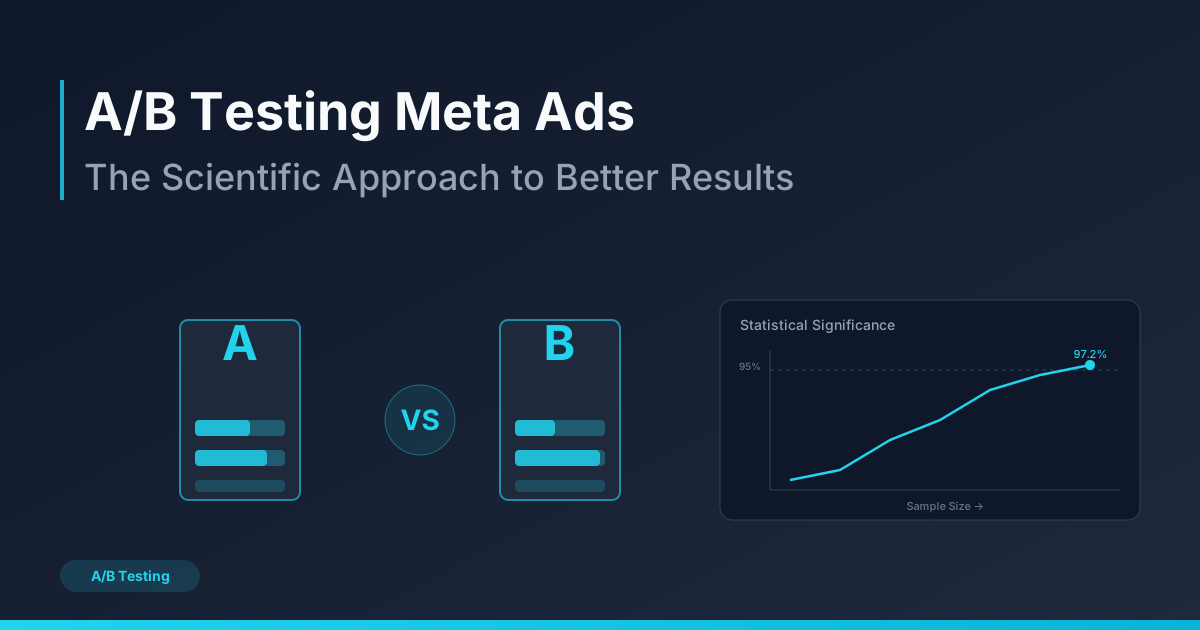
A/B Testing Meta Ads: The Scientific Approach to Better Results
Learn how to A/B test Meta Ads with a scientific approach. Discover what to test first, how to calculate sample size, and how to reach statistical significance for better ad results.