Server-Side Tracking for Meta Ads: Why It Matters More Than Ever
Browser tracking is dying. Learn how server-side tracking through Meta's Conversions API (CAPI) restores data accuracy, improves EMQ, and boosts ad performance.
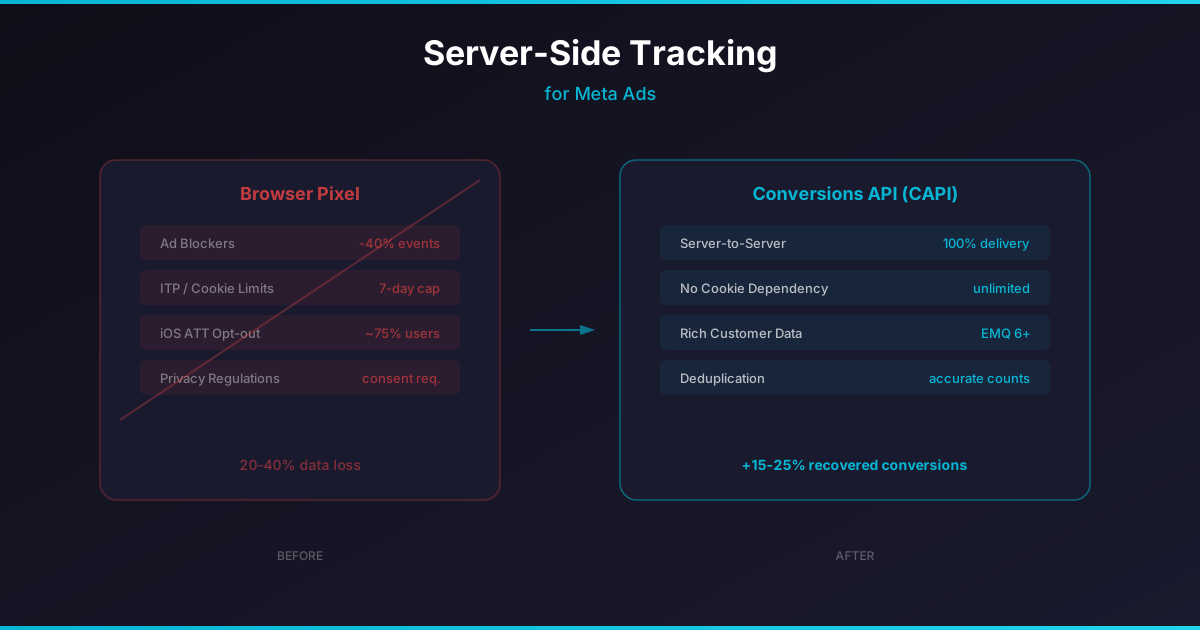
Server-side tracking for Meta Ads has shifted from a nice-to-have to an absolute necessity. As browser-based tracking erodes under the weight of privacy regulations, ad blockers, and platform restrictions, advertisers who rely solely on the Meta Pixel are flying increasingly blind. The Conversions API (CAPI) offers a direct, server-to-server connection that bypasses these limitations, restoring the data accuracy your campaigns need to optimize effectively.
Browser Tracking Limitations in 2026
The Meta Pixel, a JavaScript snippet that fires in the user's browser, was once the backbone of conversion tracking. It worked well in a world where cookies persisted, browsers cooperated, and users did not object. That world no longer exists.
- Safari's Intelligent Tracking Prevention (ITP) limits first-party cookies to 7 days and blocks third-party cookies entirely.
- Firefox Enhanced Tracking Protection blocks known trackers by default.
- Chrome has restricted third-party cookies and introduced the Privacy Sandbox with limited tracking capabilities.
- Ad blockers are used by over 40% of internet users globally, blocking pixel fires entirely.
- iOS App Tracking Transparency (ATT) prompts resulted in roughly 75% opt-out rates, dramatically limiting data availability.
- GDPR, CCPA, and evolving privacy regulations require explicit consent before tracking, further reducing data coverage.
The cumulative effect is devastating. Studies show that browser-only tracking now misses 20-40% of conversion events depending on the industry and audience. When Meta cannot see your conversions, it cannot optimize for them. Your campaigns become less efficient, targeting degrades, and costs rise.
What Server-Side Tracking for Meta Ads Solves
Server-side tracking fundamentally changes how conversion data reaches Meta. Instead of relying on the user's browser to fire a tracking event, your server sends the event directly to Meta's servers through the Conversions API. This server-to-server communication is not affected by ad blockers, browser restrictions, or cookie limitations.
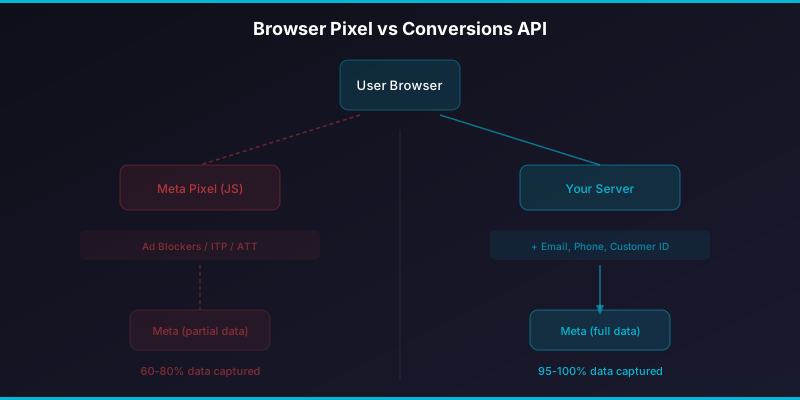
The key advantages are reliability and completeness. When a user completes a purchase on your website, that transaction is recorded in your backend system regardless of what the browser allows. Your server then sends this event to Meta with the associated user parameters, ensuring Meta receives the conversion data it needs to optimize your campaigns.
CAPI Setup Overview
Implementing the Conversions API involves establishing a server-side connection that sends events to Meta's graph API endpoint. There are several approaches depending on your technical capabilities and platform.
Direct API Integration
The most flexible approach involves your development team building a direct integration. Your server makes HTTP POST requests to Meta's Conversions API endpoint, sending event data in a structured JSON format. This gives you full control over what data is sent, when it is sent, and how it is deduplicated.
Platform Integrations
Shopify, WooCommerce, Magento, and other major platforms offer built-in CAPI integrations that require minimal technical setup. These handle the server-side event transmission automatically for standard e-commerce events. They are the fastest path to implementation but offer less customization.
Tag Management via Server-Side GTM
Google Tag Manager's server-side container can act as an intermediary, receiving events from your website and forwarding them to Meta's Conversions API. This approach offers a middle ground between ease of setup and customization flexibility.
Deduplication: The Critical Detail
When you run both the Meta Pixel (browser-side) and CAPI (server-side) simultaneously, which you should, the same conversion event may be reported twice. Deduplication prevents this double-counting by matching events from both sources and merging them into a single conversion.
Stop wasting ad budget
NovaStorm AI cuts Meta Ads CPA by 40% on average. Start free.
The deduplication mechanism relies on two fields: the event name and the event ID. Both the pixel and CAPI must send the same event ID for the same conversion event. When Meta receives both events, it recognizes the matching IDs and counts the conversion only once.
Incorrect deduplication is the most common CAPI implementation mistake. If event IDs do not match between pixel and CAPI events, you will see inflated conversion counts and your campaign optimization will suffer. Always verify deduplication in Events Manager after setup.
Improving Event Match Quality (EMQ)
Event Match Quality is Meta's score (1-10) that measures how well your event data can be matched to Meta user profiles. Higher EMQ means more of your conversions can be attributed to specific ad interactions, which directly improves campaign optimization.
Server-side tracking dramatically improves EMQ because you can send richer customer data parameters. While the browser pixel is limited to whatever data exists in the client context, your server has access to your full customer database.
| Parameter | EMQ Impact | Source |
|---|---|---|
| Email (hashed) | Very High | Customer account / order |
| Phone (hashed) | High | Customer account / order |
| First Name (hashed) | Moderate | Customer account |
| Last Name (hashed) | Moderate | Customer account |
| City | Low-Moderate | Shipping address |
| State | Low-Moderate | Shipping address |
| Zip Code | Low-Moderate | Shipping address |
| External ID | High | Your customer ID |
| fbp (browser ID) | High | First-party cookie |
| fbc (click ID) | Very High | URL parameter |
Aim for an EMQ score of 6 or above. The most impactful parameters to add are hashed email, hashed phone number, and the fbc click ID. These three alone can push most implementations above the 6.0 threshold.
Partner Integrations
Meta has expanded its CAPI partner ecosystem significantly. These partners simplify server-side tracking implementation and often provide additional features like enhanced data matching, automatic deduplication, and real-time monitoring.
- Shopify: Native CAPI integration with automatic event sending and deduplication.
- Google Tag Manager (Server-Side): Flexible event routing through a cloud-hosted container.
- Segment: Customer data platform that routes events to Meta alongside other destinations.
- Stape: Dedicated server-side tagging platform with Meta CAPI templates.
- Elevar: E-commerce-focused data layer and server-side tracking solution.
- Triple Whale: Attribution platform with built-in CAPI integration and first-party data collection.
Performance Impact of Better Tracking
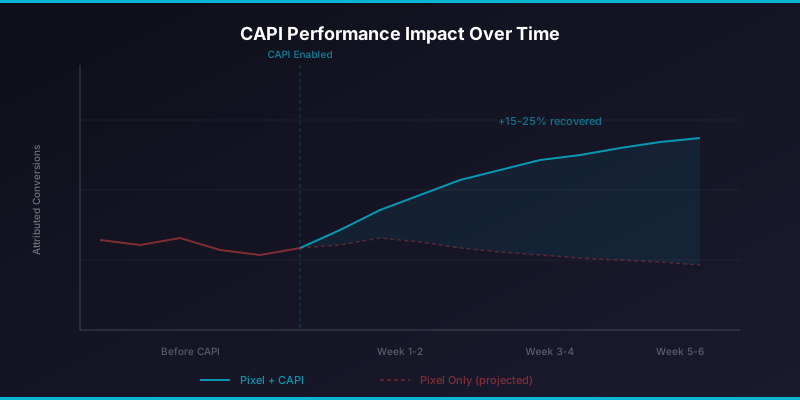
The performance improvements from server-side tracking are both direct and indirect. Directly, you recover previously invisible conversions, giving you a more accurate picture of campaign performance. Indirectly, the increased data volume and quality enable Meta's algorithm to optimize more effectively.
Advertisers implementing CAPI alongside the pixel typically see a 15-25% increase in attributed conversions simply from recovering events that browser tracking missed. More importantly, the improvement in data quality leads to better algorithmic optimization, often resulting in a 10-20% reduction in cost per acquisition within 4-6 weeks of implementation.
The compounding effect is significant. Better data leads to better targeting, which leads to better performance, which generates more conversion data, which further improves optimization. Server-side tracking initiates this virtuous cycle.
Advertisers who implement CAPI with EMQ scores above 6.0 report an average 18% improvement in ROAS compared to pixel-only tracking. The investment in server-side tracking pays for itself within the first month for most accounts.
Server-side tracking is not a trend or a temporary fix. It is the foundation of reliable advertising measurement in a privacy-first world. Every week you delay implementation is a week of degraded data quality, missed conversions, and suboptimal campaign performance. Whether you use a platform integration, a tag management solution, or a direct API build, getting CAPI running should be your highest priority technical investment for Meta Ads.
Novastorm AI automates Meta Ads routine — from monitoring to optimization. Learn more at novastorm.ai
Disclaimer: This article was generated with the assistance of AI and reviewed by the NovaStorm AI team. While we strive for accuracy, we recommend verifying specific data points and consulting official sources (linked where available) for critical business decisions.
Ready to automate your Meta Ads?
NovaStorm AI takes full responsibility for your campaigns — from monitoring to optimization.
Get Started FreeRelated Articles
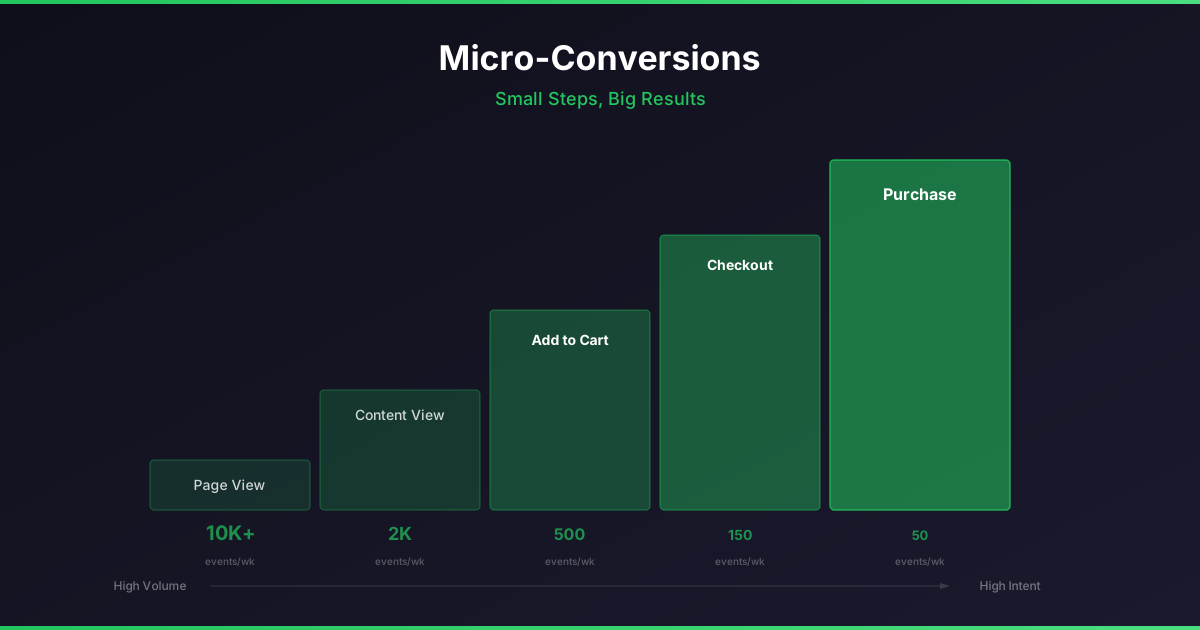
Micro-Conversions: Why Optimizing for Small Steps Beats Big Goals
Discover how optimizing for micro-conversions like add-to-cart and content views can improve your Meta Ads performance by giving the algorithm more data to work with.
Attribution Windows Explained: 1-Day Click vs 7-Day Click
Understand attribution windows in Meta Ads. Compare 1-day click vs 7-day click, learn how iOS 14.5 changed attribution, and choose the right window for your campaigns.

The Psychology of Color in Meta Ad Creative
Explore the psychology of color in Meta Ad creative. Learn how color associations, contrast, CTA button colors, and cultural meanings impact ad performance.