Triple Whale and Meta Ads: E-commerce Attribution Dashboard
Learn how Triple Whale improves Meta Ads attribution for e-commerce brands. First-party pixel tracking, server-side events, and real ROAS measurement explained.
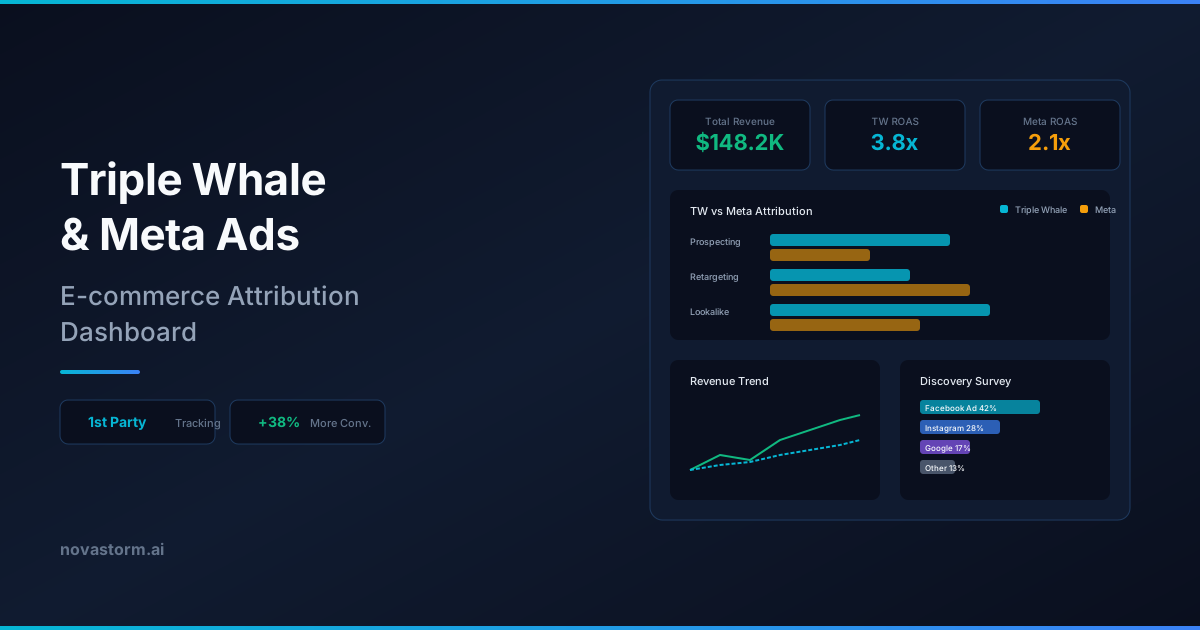
E-commerce brands spending on Meta Ads face a persistent challenge: attribution accuracy. After iOS 14.5 privacy changes disrupted cookie-based tracking, Meta Ads Manager frequently underreports conversions, inflates some metrics, and leaves media buyers guessing about true return on ad spend. Triple Whale Meta Ads attribution addresses this gap with first-party data collection that bypasses many of the limitations of third-party cookies.
Triple Whale has become one of the most popular analytics platforms for direct-to-consumer brands precisely because it was built for this post-privacy reality. By combining server-side tracking, first-party pixel data, and proprietary attribution models, it provides a clearer picture of which Meta Ads campaigns actually drive revenue. This guide explains how to set it up, interpret the data, and use it to make better budget decisions.
Why Standard Meta Ads Attribution Falls Short for E-commerce
Meta Ads relies on its own pixel and Conversions API to track user actions after clicking or viewing an ad. However, browser privacy restrictions, ad blockers, and cross-device behavior create significant gaps in this tracking. Studies have shown that Meta can underreport conversions by 20 to 40 percent for some e-commerce brands, particularly those with longer consideration cycles or high mobile-to-desktop cross-device rates.
This underreporting creates a dangerous feedback loop. When Meta cannot see conversions, its optimization algorithms receive incomplete signals, leading to suboptimal bidding and audience targeting. Media buyers who rely solely on Ads Manager data may pause campaigns that are actually profitable or scale campaigns that appear better than they are.
| Attribution Challenge | Impact on E-commerce | Triple Whale Solution |
|---|---|---|
| iOS opt-out tracking loss | 20-40% conversion underreporting | First-party pixel bypasses ATT restrictions |
| 7-day click attribution window | Misses longer purchase cycles | Configurable 7/14/28-day windows |
| Cross-device tracking gaps | Mobile browsing, desktop purchase unlinked | Server-side identity resolution |
| View-through over-attribution | Inflated assisted conversion counts | Click-only and blended models available |
| Ad blocker interference | Pixel fires blocked entirely | Server-side event tracking |
| Multi-touch complexity | No clarity on funnel influence | First-touch, last-touch, and linear models |
Setting Up Triple Whale Meta Ads Attribution
Getting started with Triple Whale requires connecting your Shopify store (or other e-commerce platform), installing the Triple Whale pixel, and linking your Meta Ads account. The onboarding wizard walks you through each step, but understanding the technical details helps you verify that data is flowing correctly.
- Create a Triple Whale account and connect your Shopify store via the app integration
- Install the Triple Whale pixel on your storefront by adding the script to your theme code or using the app embed
- Connect your Meta Ads account by authorizing Facebook Business Manager access
- Configure your attribution windows to match your typical purchase cycle (most brands start with 7-day click)
- Enable server-side tracking to capture events that browser-side pixels miss
- Wait 48 to 72 hours for sufficient data to accumulate before analyzing results
Install the Triple Whale pixel on every page of your store, not just the checkout. Full-funnel tracking captures browse behavior, add-to-cart events, and checkout initiations, giving the attribution model richer data to work with.
Understanding Triple Whale Attribution Models
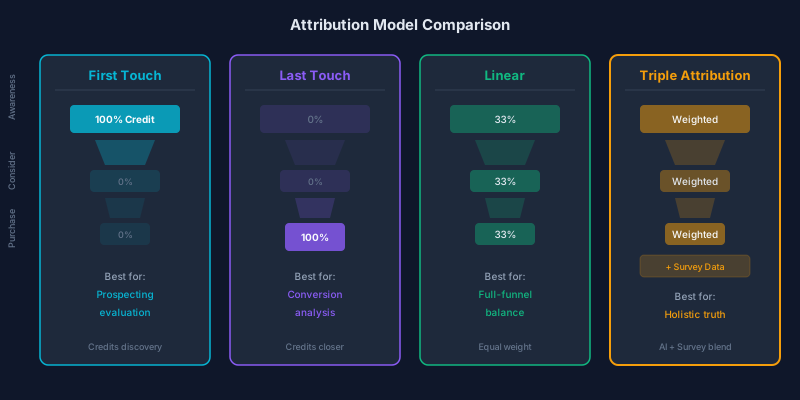
Triple Whale offers multiple attribution models, and choosing the right one depends on your business model and marketing mix. The platform's proprietary Triple Attribution model uses first-party data combined with post-purchase survey responses to create what many brands consider the most accurate picture of ad-driven revenue.
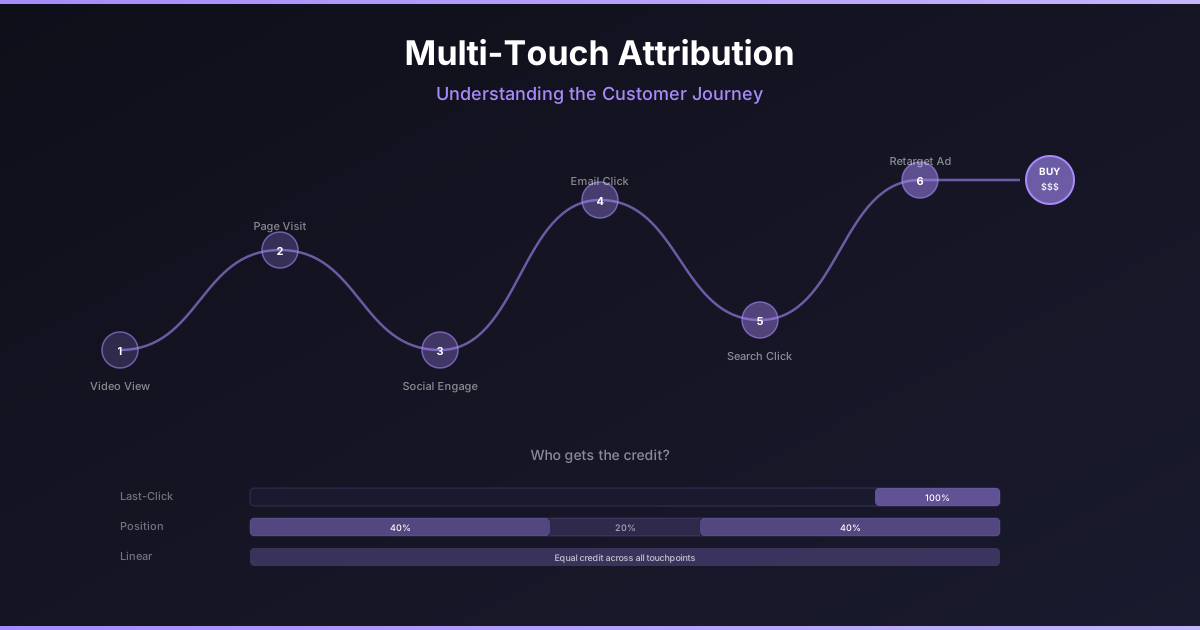
First-touch attribution credits the first ad interaction before a purchase. Last-touch credits the final interaction. Linear attribution distributes credit evenly across all touchpoints. The Triple Attribution model blends these approaches with survey data where customers self-report how they discovered the brand. This hybrid approach reduces the over-reliance on any single tracking method.
| Model | Best For | Limitation |
|---|---|---|
| First-touch | Prospecting campaign evaluation | Ignores retargeting influence |
| Last-touch | Bottom-funnel conversion analysis | Over-credits retargeting |
| Linear | Balanced full-funnel view | Dilutes strong touchpoint signals |
| Triple Attribution | Holistic performance truth | Requires survey data for full accuracy |
| Meta Ads default | Quick in-platform checks | Subject to privacy tracking gaps |
Stop wasting ad budget
NovaStorm AI cuts Meta Ads CPA by 40% on average. Start free.
The E-commerce Attribution Dashboard in Practice
The Triple Whale dashboard consolidates your Meta Ads performance alongside all other marketing channels into a single revenue-focused view. The Summary page shows total revenue, ad spend across all platforms, blended ROAS, and net profit in real time. Drilling into the Meta Ads section reveals campaign-level Triple Whale Meta Ads attribution data that often tells a different story than what Ads Manager reports.
One of the most valuable features is the ability to compare Meta Ads Manager reported ROAS against Triple Whale attributed ROAS side by side. Brands frequently discover that certain prospecting campaigns Meta reports as break-even are actually returning 3x or more when measured with first-party data. Conversely, some retargeting campaigns that look stellar in Ads Manager may be taking credit for conversions that would have happened organically.
Use the Creative Cockpit feature to analyze which ad creatives drive the highest Triple Whale-attributed ROAS. Since Triple Whale tracks the actual purchasing journey, its creative insights are less influenced by the optimization biases present in Meta's own reporting.
Budget Allocation Decisions Using Triple Whale Data
The ultimate value of Triple Whale Meta Ads attribution is better budget decisions. When you know which campaigns genuinely drive incremental revenue, you can confidently shift spend from underperforming campaigns to proven winners. The platform's profit tracking feature makes this even clearer by factoring in cost of goods sold, shipping costs, and platform fees alongside ad spend.
- Compare Meta-reported ROAS vs Triple Whale ROAS to identify misattributed campaigns
- Use the Affluencer Hub to measure influencer-driven purchases alongside paid ads
- Monitor blended ROAS (total revenue divided by total ad spend) as the north star metric
- Set up Slack or email alerts for campaigns that drop below your minimum ROAS threshold
- Review the post-purchase survey data monthly to validate attribution model accuracy
Common Setup Mistakes and How to Avoid Them
The most common mistake brands make with Triple Whale is comparing apples to oranges. Meta Ads Manager and Triple Whale use different attribution windows, different conversion counting methods, and different data sources. Expecting them to match exactly is unrealistic. Instead, use each as a complementary signal that informs a unified optimization strategy.
Another frequent issue is insufficient post-purchase survey response rates. The Triple Attribution model relies on customer-reported discovery channels, and low response rates reduce its accuracy. Optimize your survey placement, keep questions simple with one to two options, and ensure the survey appears immediately after purchase confirmation when engagement is highest.
For e-commerce brands investing significantly in Meta Ads, Triple Whale has become an essential layer in the analytics stack. It does not replace Meta Ads Manager, but it provides the independent verification and first-party attribution data needed to make confident scaling decisions in a privacy-first advertising landscape.

Novastorm AI automates Meta Ads routine — from monitoring to optimization. Learn more at novastorm.ai
Disclaimer: This article was generated with the assistance of AI and reviewed by the NovaStorm AI team. While we strive for accuracy, we recommend verifying specific data points and consulting official sources (linked where available) for critical business decisions.
Ready to automate your Meta Ads?
NovaStorm AI takes full responsibility for your campaigns — from monitoring to optimization.
Get Started FreeRelated Articles
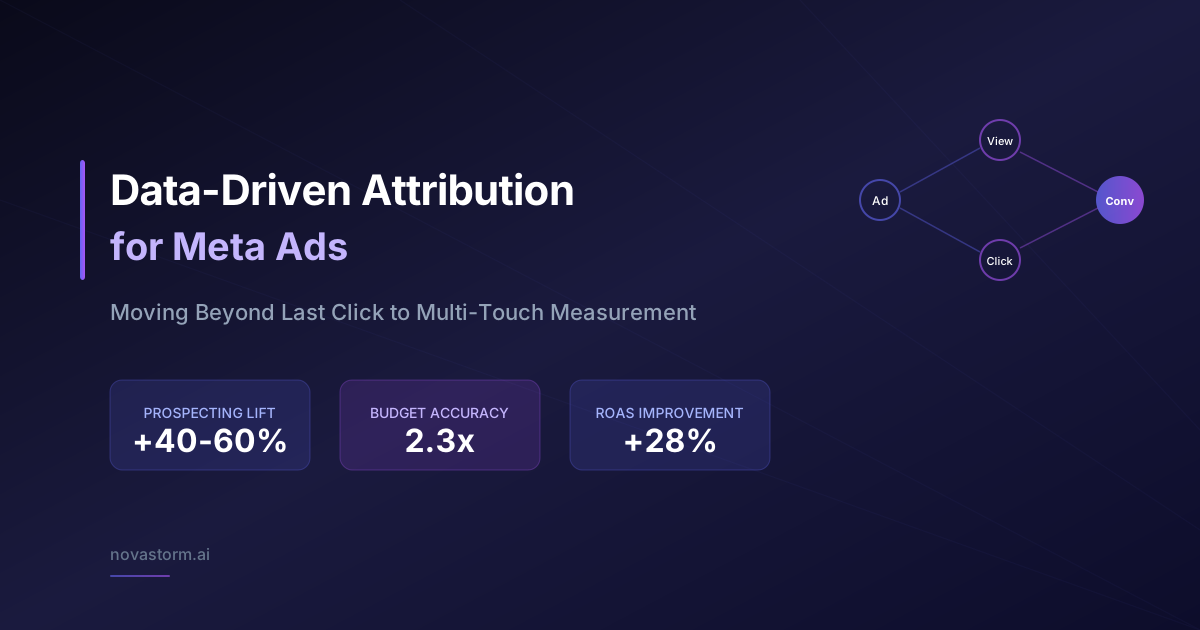
Data-Driven Attribution for Meta Ads: Moving Beyond Last Click
Learn how data-driven attribution for Meta Ads replaces outdated last-click models to reveal the true impact of every touchpoint in your customer journey.
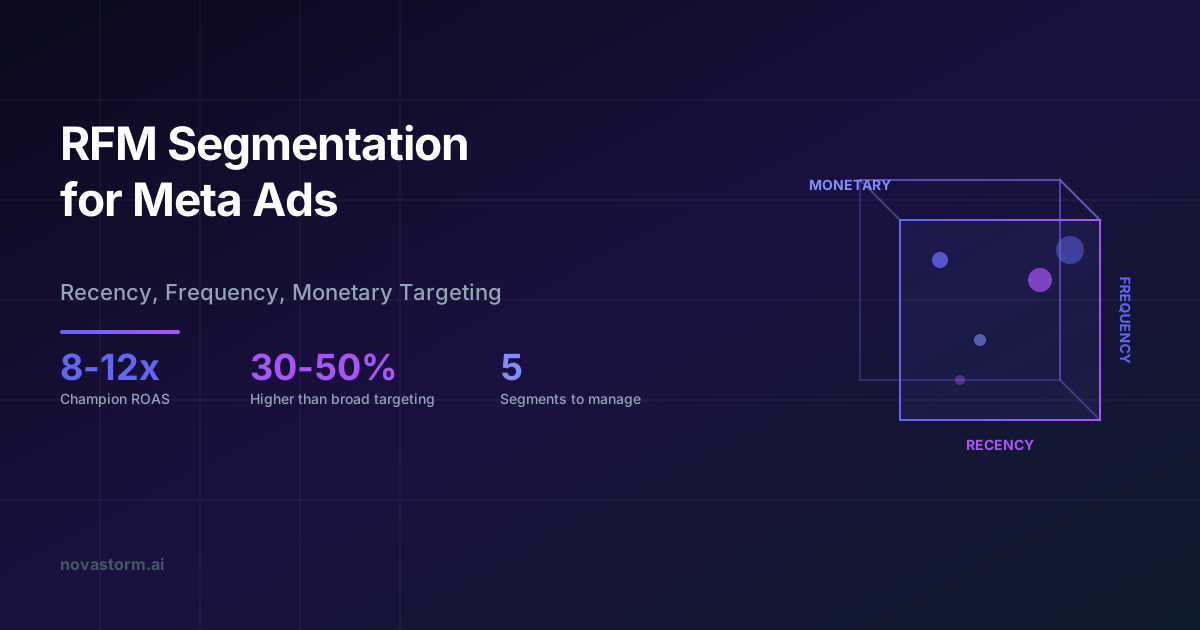
RFM Segmentation for Meta Ads: Recency, Frequency, Monetary Targeting
Learn how to apply RFM segmentation to your Meta Ads campaigns. Target audiences by recency, frequency, and monetary value to maximize ROAS and reduce wasted ad spend.
Multi-Touch Attribution: Understanding the Customer Journey in Meta Ads
Move beyond last-click attribution. Learn how multi-touch attribution models reveal the true impact of your Meta Ads across the entire customer journey.