RFM Segmentation for Meta Ads: Recency, Frequency, Monetary Targeting
Learn how to apply RFM segmentation to your Meta Ads campaigns. Target audiences by recency, frequency, and monetary value to maximize ROAS and reduce wasted ad spend.
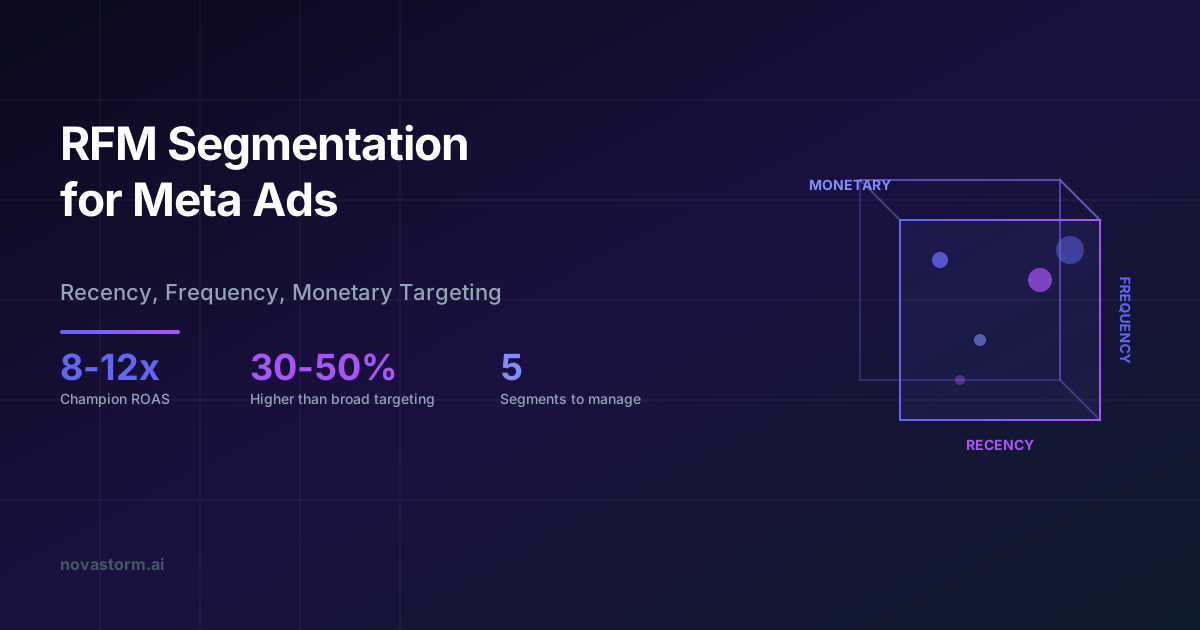
Most advertisers on Meta pour budget into broad audiences and hope for the best. But the highest-performing ecommerce brands approach targeting differently. They use RFM segmentation for Meta Ads to divide their customer base into actionable groups based on three dimensions: how recently a customer purchased, how often they buy, and how much they spend.
RFM segmentation Meta Ads strategies consistently outperform generic lookalike audiences because they align ad messaging with actual buyer behavior. Instead of treating all past customers the same, you deliver tailored creatives to your best buyers, your lapsed customers, and everyone in between.
What Is RFM Segmentation and Why It Matters for Meta Ads
RFM stands for Recency, Frequency, and Monetary value. It is a data-driven framework that scores each customer on three axes. Recency measures days since last purchase. Frequency counts total orders over a period. Monetary value sums total revenue from that customer.
When applied to Meta Ads, RFM segmentation transforms your Custom Audiences from flat lists into stratified groups. A customer who bought yesterday, buys monthly, and spends $200 per order deserves a fundamentally different ad than someone who bought once six months ago for $15.
| RFM Score | Customer Type | Meta Ads Strategy | Expected ROAS |
|---|---|---|---|
| High R, High F, High M | Champions | Loyalty rewards, upsell premium | 8-12x |
| High R, High F, Low M | Loyal bargain hunters | AOV-boosting bundles | 5-8x |
| High R, Low F, High M | New high-value | Retention sequences | 6-10x |
| Low R, High F, High M | At-risk champions | Win-back with urgency | 4-7x |
| Low R, Low F, Low M | Hibernating | Reactivation or exclude | 1-3x |
Building RFM Segments from Your Customer Data
Start by exporting your customer purchase history. You need three columns: customer identifier, purchase date, and order value. Most ecommerce platforms like Shopify, WooCommerce, or BigCommerce can export this data in CSV format.
Score each customer from 1 to 5 on each dimension. A customer in the top 20% for recency gets a 5. The bottom 20% gets a 1. Repeat for frequency and monetary value. This creates a three-digit score like 555 (best) or 111 (worst).
- Export purchase data with customer email, last order date, order count, and total spend
- Calculate recency as days since last purchase for each customer
- Rank customers into quintiles (1-5) for each R, F, and M dimension
- Combine scores to create segments like 555, 541, 312
- Group similar scores into named segments: Champions, Loyal, At-Risk, Lost
Uploading RFM Segments as Meta Custom Audiences
Once you have your RFM segments, create separate customer lists for each group. Upload them to Meta Ads Manager as Custom Audiences. The key to effective RFM segmentation Meta Ads campaigns is keeping these lists separate so you can tailor both messaging and bidding.
For your Champions segment (high scores across all three dimensions), create a dedicated Custom Audience. Then build a separate audience for At-Risk customers, another for Hibernating buyers, and so on. Meta typically matches 60-80% of your customer list depending on data quality.
Refresh your RFM segments weekly. Customer behavior shifts fast, and stale segments lead to misaligned messaging. Automate the upload process using Meta's Customer List API or a CDP integration.
Crafting Ad Creative for Each RFM Segment
The power of RFM segmentation lies in message-market fit. Your Champions already trust your brand. They do not need social proof or introductory offers. Instead, show them new arrivals, exclusive access, or premium product lines. These ads can afford higher price points because this audience has demonstrated willingness to spend.
Your At-Risk segment (formerly high-value customers who have not purchased recently) needs a different approach. Use urgency-driven creative: limited-time offers, reminders of what they are missing, or personalized recommendations based on past purchases.
Stop wasting ad budget
NovaStorm AI cuts Meta Ads CPA by 40% on average. Start free.
For Hibernating customers, test aggressive discounts or product reintroductions. If they do not respond after two touchpoints, consider excluding them entirely. Spending budget on unresponsive segments drains ROAS.
| Segment | Creative Angle | CTA | Offer Type |
|---|---|---|---|
| Champions (555) | New arrivals, VIP access | Shop the collection | Early access, no discount needed |
| Loyal (445, 545) | Bundle deals, loyalty perks | Unlock your reward | Points multiplier, free shipping |
| At-Risk (254, 253) | We miss you, comeback offer | Return and save | 15-25% discount with deadline |
| Hibernating (111, 112) | Remember us? Big savings inside | Reactivate now | 30%+ discount or free gift |
Budget Allocation Across RFM Tiers
Not all segments deserve equal budget. Allocate based on expected return. Champions and Loyal segments typically yield the highest ROAS, so they should receive 40-50% of your retargeting budget. At-Risk customers get 25-30% because win-back campaigns can recover significant lifetime value.
Hibernating segments should receive no more than 10-15% of budget. Test small and cut quickly if performance lags. The remaining budget goes to new customer acquisition using lookalikes built from your Champion segment.
Build Lookalike Audiences from your Champions segment only. A 1% lookalike based on your highest-RFM customers will outperform a lookalike built from all purchasers by 30-50% on average.
Measuring RFM Segmentation Performance on Meta
Track each RFM segment as a separate ad set or campaign. This gives you clean performance data by segment. Key metrics to monitor include ROAS by segment, cost per acquisition within each tier, and customer migration between segments over time.
The ultimate measure of RFM segmentation Meta Ads success is whether customers move up the scoring ladder. Are At-Risk buyers converting back to Active? Are one-time purchasers becoming Frequent buyers? If your segmented campaigns drive positive migration, your strategy is working.
- ROAS by RFM segment (Champions should exceed 8x)
- Cost per reactivation for At-Risk and Hibernating segments
- Segment migration rate: percentage of customers moving to higher tiers monthly
- Frequency lift: increase in purchase frequency after segmented ad exposure
- Incremental revenue attributable to RFM-targeted campaigns vs. broad retargeting
Common RFM Segmentation Mistakes to Avoid
The most frequent error is building segments once and never updating them. Customer behavior changes weekly. A Champion this month could be At-Risk next month. Automate your segmentation pipeline to refresh at least every seven days.
Another mistake is creating too many micro-segments. While a 5x5x5 grid produces 125 possible combinations, Meta needs audience sizes of at least 1,000 for effective delivery. Consolidate similar scores into 4-6 actionable groups.
Finally, do not ignore the interaction between RFM segmentation and Meta's own machine learning. Use Advantage+ placements but keep audience segmentation manual. Let Meta optimize delivery within your defined segments rather than overriding your targeting entirely.
RFM segmentation Meta Ads strategies represent one of the most reliable ways to improve paid social performance for ecommerce brands. By aligning your ad creative, budget, and bidding with actual customer value, you move beyond vanity metrics and drive measurable revenue growth.
Novastorm AI automates Meta Ads routine — from monitoring to optimization. Learn more at novastorm.ai
Disclaimer: This article was generated with the assistance of AI and reviewed by the NovaStorm AI team. While we strive for accuracy, we recommend verifying specific data points and consulting official sources (linked where available) for critical business decisions.
Ready to automate your Meta Ads?
NovaStorm AI takes full responsibility for your campaigns — from monitoring to optimization.
Get Started FreeRelated Articles
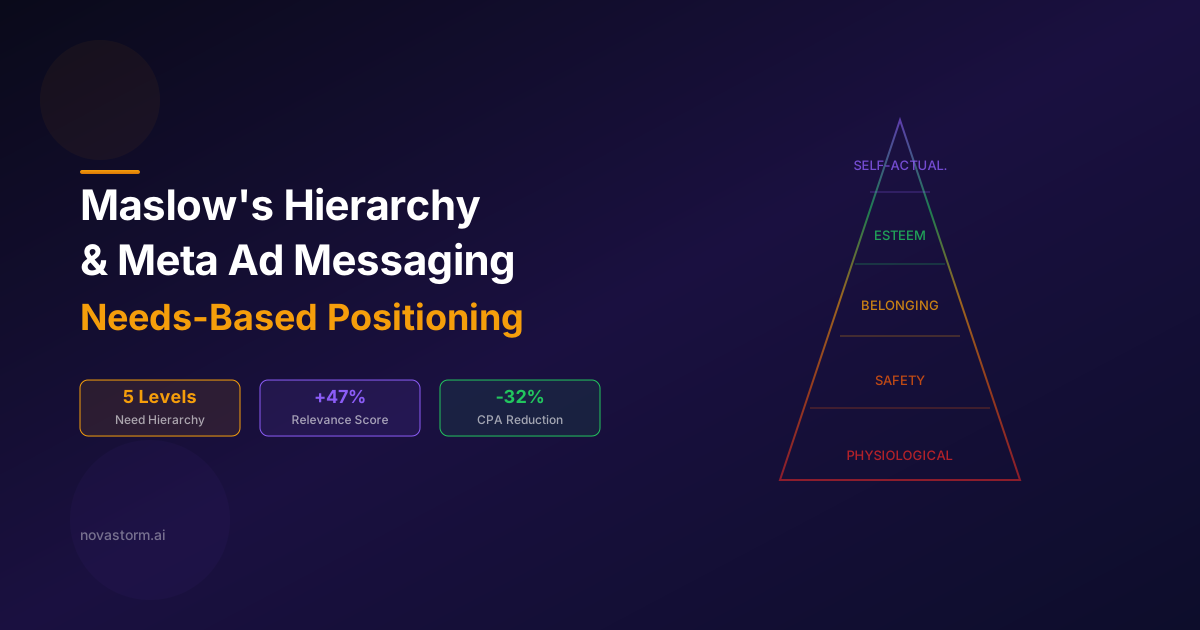
Maslow's Hierarchy and Meta Ad Messaging: Needs-Based Positioning
Discover how Maslow's hierarchy of needs transforms Meta ad messaging. Learn needs-based positioning strategies that align ad copy with audience motivations.
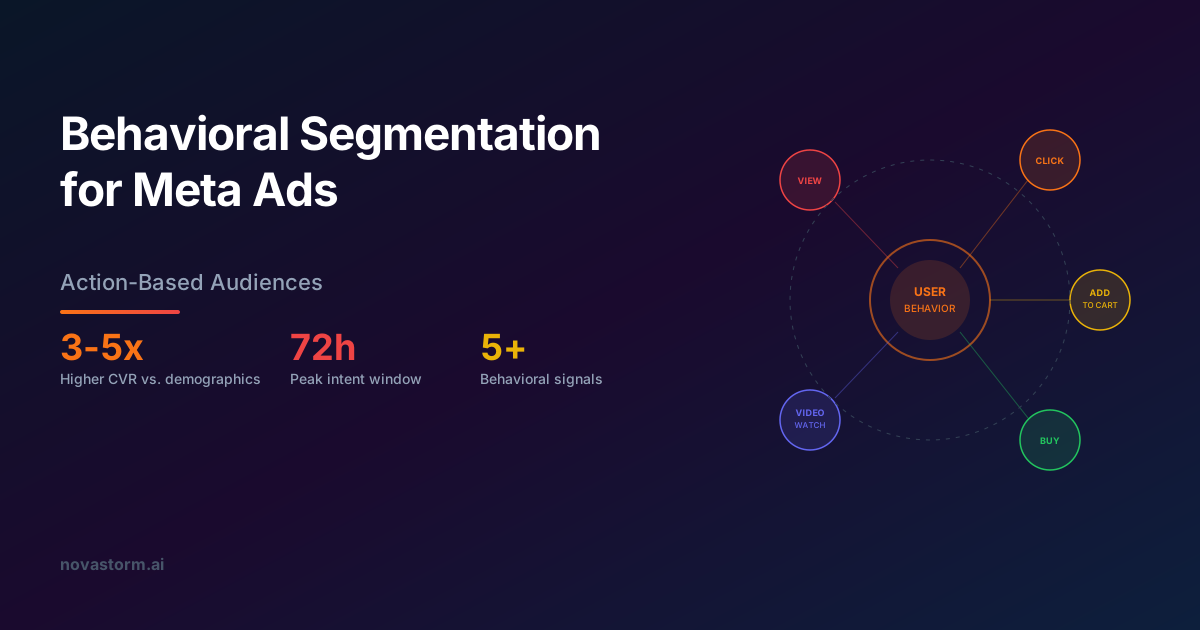
Behavioral Segmentation for Meta Ads: Action-Based Audiences
Master behavioral segmentation for Meta Ads. Build action-based audiences from website events, app activity, and engagement signals to drive higher conversion rates.
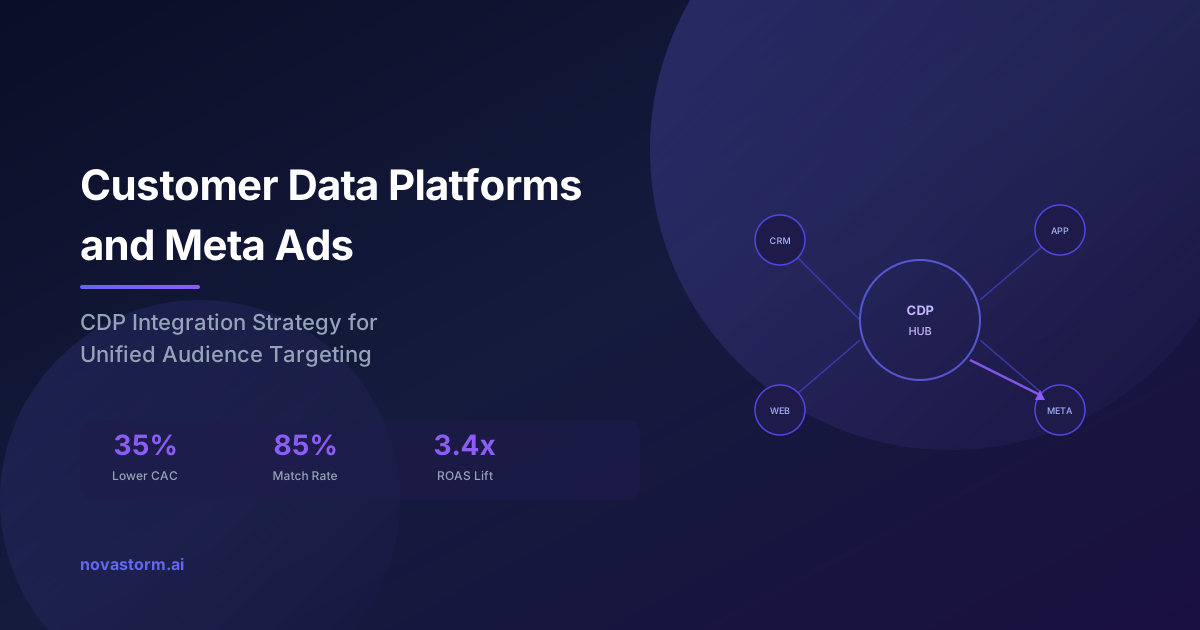
Customer Data Platforms and Meta Ads: CDP Integration Strategy
Learn how to integrate Customer Data Platforms with Meta Ads for unified audience targeting, real-time segmentation, and higher ROAS across campaigns.