Behavioral Segmentation for Meta Ads: Action-Based Audiences
Master behavioral segmentation for Meta Ads. Build action-based audiences from website events, app activity, and engagement signals to drive higher conversion rates.
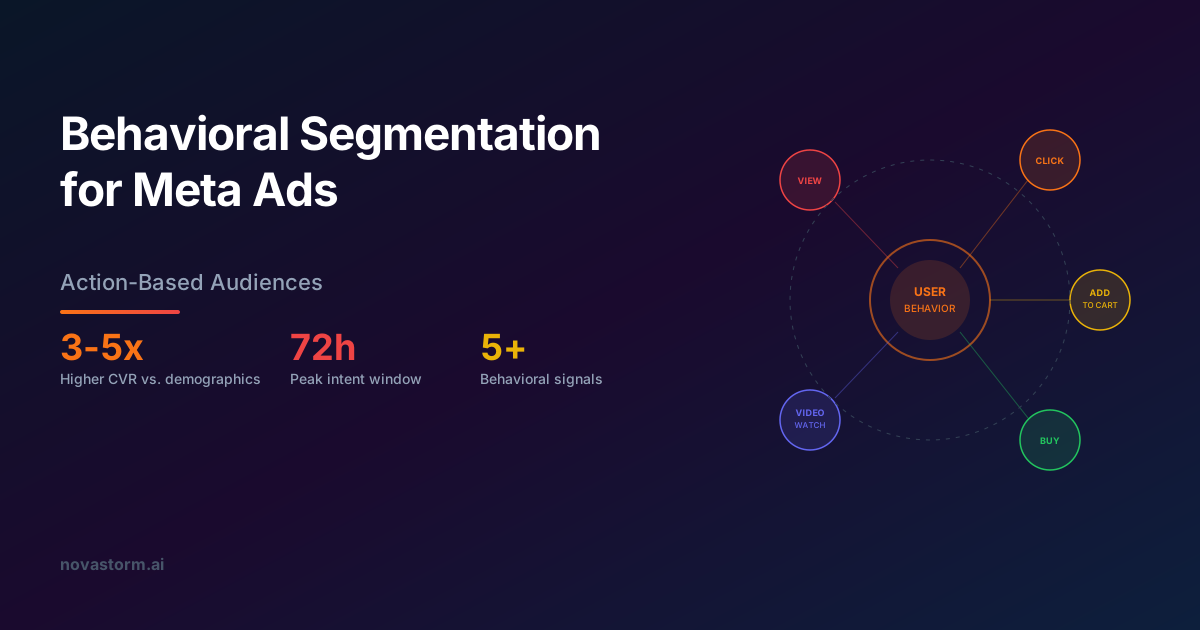
Demographics tell you who someone is. Behavioral segmentation tells you what they actually do. For Meta Ads, the distinction matters enormously. Two people with identical age, location, and income profiles can exhibit completely different purchasing behaviors. Behavioral segmentation for Meta Ads captures these differences by building audiences based on specific actions users take across your digital properties.
When you segment by behavior rather than demographics, you target intent. A user who viewed four product pages in the last 48 hours signals far more purchase readiness than a user who matches your ideal customer profile but has never visited your site. Behavioral segmentation Meta Ads strategies harness this intent data to deliver the right message at the right moment.
Understanding Behavioral Signals Available on Meta
Meta provides an extensive range of behavioral data points through its Pixel, Conversions API, and platform engagement tracking. These signals fall into three categories: on-site behavior tracked via the Meta Pixel, in-app behavior from the Meta SDK, and on-platform behavior from interactions with your Meta content.
Each behavior represents a different level of intent and requires a different advertising approach. The key to effective behavioral segmentation Meta Ads campaigns is mapping these signals to a clear intent hierarchy and adjusting your creative and bidding accordingly.
| Behavior Category | Signals | Intent Level | Audience Size |
|---|---|---|---|
| Page Engagement | Page views, time on site, scroll depth | Low-Medium | Large |
| Product Interaction | Product views, category browsing, search queries | Medium | Medium |
| Cart Activity | Add to cart, begin checkout, payment info added | High | Small-Medium |
| Purchase Behavior | Completed purchases, repeat orders, subscription | Highest | Small |
| Platform Engagement | Ad clicks, video views, form submits, page likes | Variable | Large |
Building Action-Based Custom Audiences
Start with your Meta Pixel events. Every standard and custom event fired on your website creates a potential audience segment. The most effective approach is to build audiences that represent specific stages of your customer journey, then exclude lower stages from higher-intent campaigns.
For example, create an audience of users who added items to their cart in the last 7 days but did not purchase. This is your high-intent abandoned cart segment. Separately, build an audience of users who viewed products but did not add to cart. These require different messaging, different offers, and different frequency caps.
- Map your customer journey from first touch to repeat purchase
- Identify the key Pixel events at each stage (PageView, ViewContent, AddToCart, InitiateCheckout, Purchase)
- Create Custom Audiences for each stage with appropriate lookback windows (7, 14, 30, 60, 90 days)
- Build exclusion logic so each audience represents only that stage (e.g., AddToCart minus Purchase)
- Set frequency caps appropriate to each behavior stage
Time-Window Strategies for Behavioral Audiences
The lookback window you set for behavioral audiences dramatically impacts performance. A 3-day cart abandoner is far more likely to convert than a 30-day cart abandoner. Structure your behavioral segmentation Meta Ads campaigns with layered time windows to capture this urgency difference.
Short windows (1-7 days) should receive higher bids and more aggressive offers. Medium windows (8-21 days) get moderate engagement with softer messaging. Long windows (22-60 days) serve as reengagement or brand reminder campaigns with minimal budget.
| Time Window | Behavior | Bid Strategy | Creative Approach |
|---|---|---|---|
| 0-3 days | Cart abandonment | Bid high, cap frequency at 3/day | Urgency + exact product reminder |
| 4-7 days | Product viewers | Moderate bid | Social proof + category showcase |
| 8-14 days | Site visitors | Standard bid | Value proposition + broader catalog |
| 15-30 days | Engagers | Conservative bid | Brand story + new arrivals |
| 31-60 days | Lapsed visitors | Low bid, test only | Reintroduction + strong incentive |
Combining Behavioral Segments with Platform Engagement
On-site behavior tells only part of the story. Meta also tracks how users interact with your content on the platform itself. Video viewers, ad engagers, Instagram profile visitors, and Facebook page fans all represent behavioral signals you can layer onto your targeting.
Stop wasting ad budget
NovaStorm AI cuts Meta Ads CPA by 40% on average. Start free.
Create hybrid audiences that combine on-site and on-platform behavior. A user who watched 75% of your video ad and then visited your product page within 48 hours shows compounding intent. Target this overlap segment with direct-response creative and higher bids.
Use Meta's AND/OR audience logic to create intersection segments. Target users who are BOTH in your 'video viewers 75%+ last 14 days' audience AND in your 'product page viewers last 14 days' audience. These intersection segments are small but convert at 3-5x the rate of single-signal audiences.
Behavioral Lookalike Audiences
Standard lookalikes built from all website visitors produce mediocre results. Behavioral segmentation transforms your lookalike strategy by using high-intent behavioral audiences as seed lists.
Build lookalikes from your most valuable behavioral segments: repeat purchasers, high-cart-value users, or users who completed your entire funnel within a single session. A 1% lookalike based on users who purchased within 24 hours of first site visit will find new customers with similar decisive buying behavior.
- Repeat purchasers (2+ orders in 60 days) as seed for highest-quality lookalike
- Single-session converters (viewed product and purchased same day) for impulse buyer lookalike
- High AOV purchasers (top 20% by order value) for premium customer acquisition
- Multi-category browsers (3+ categories in one session) for broad interest lookalike
- Email subscribers who also purchased for highest LTV lookalike
Measuring Behavioral Segmentation Effectiveness
Track conversion rates, ROAS, and cost per acquisition separately for each behavioral segment. The goal is to identify which behaviors are the strongest predictors of purchase and allocate budget accordingly.
Monitor the decay rate of each behavioral audience. Cart abandoners convert well in the first 72 hours but decay rapidly. Product viewers have a longer conversion window. Understanding these decay curves lets you optimize your time windows and budget distribution.
Set up custom columns in Meta Ads Manager to compare behavioral segments side by side. Track incremental lift by running conversion lift studies on your highest-spend behavioral audiences. This ensures you are measuring true incremental impact, not just last-click attribution.
Avoiding Common Behavioral Segmentation Pitfalls
Over-segmentation is the most common mistake. Creating 20 behavioral audiences with 500 users each gives Meta insufficient data for optimization. Aim for minimum audience sizes of 1,000 for retargeting and 10,000 for lookalike seeds.
Another pitfall is ignoring negative behaviors. Users who visit your returns page, spend excessive time on FAQ sections, or repeatedly view products without any cart activity may be signaling disinterest. Consider excluding these behavioral patterns from your high-bid campaigns.
Behavioral segmentation Meta Ads strategies work best when they evolve with your data. Review segment performance weekly, retire underperforming audiences, and continuously test new behavioral combinations. The advertisers who win are those who treat segmentation as a living system rather than a set-and-forget configuration.
Novastorm AI automates Meta Ads routine — from monitoring to optimization. Learn more at novastorm.ai
Disclaimer: This article was generated with the assistance of AI and reviewed by the NovaStorm AI team. While we strive for accuracy, we recommend verifying specific data points and consulting official sources (linked where available) for critical business decisions.
Ready to automate your Meta Ads?
NovaStorm AI takes full responsibility for your campaigns — from monitoring to optimization.
Get Started FreeRelated Articles
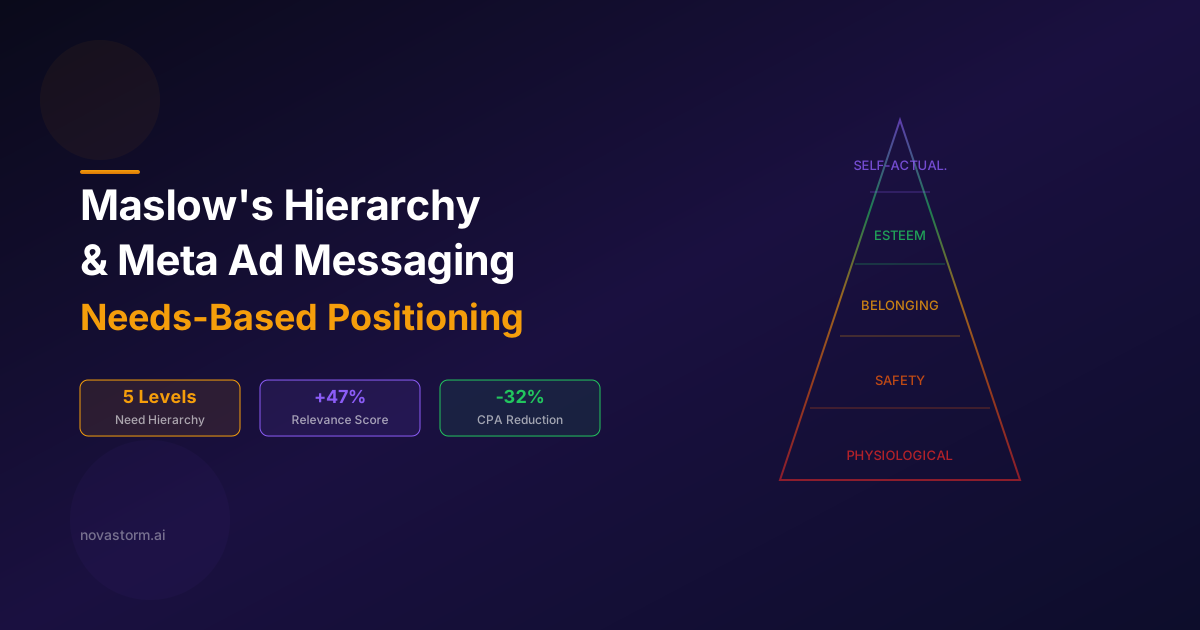
Maslow's Hierarchy and Meta Ad Messaging: Needs-Based Positioning
Discover how Maslow's hierarchy of needs transforms Meta ad messaging. Learn needs-based positioning strategies that align ad copy with audience motivations.
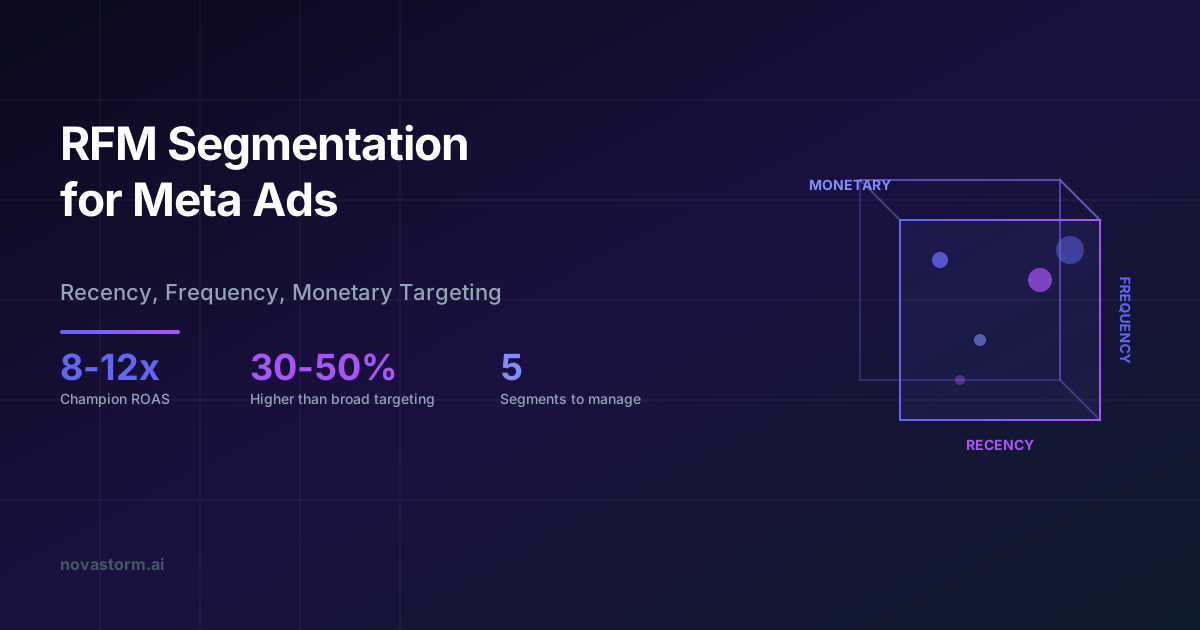
RFM Segmentation for Meta Ads: Recency, Frequency, Monetary Targeting
Learn how to apply RFM segmentation to your Meta Ads campaigns. Target audiences by recency, frequency, and monetary value to maximize ROAS and reduce wasted ad spend.

Above the Fold Optimization for Meta Ads Landing Pages
Master above the fold optimization for Meta Ads landing pages. Learn which elements to prioritize in the first viewport to maximize conversions from paid traffic.