Maslow's Hierarchy and Meta Ad Messaging: Needs-Based Positioning
Discover how Maslow's hierarchy of needs transforms Meta ad messaging. Learn needs-based positioning strategies that align ad copy with audience motivations.
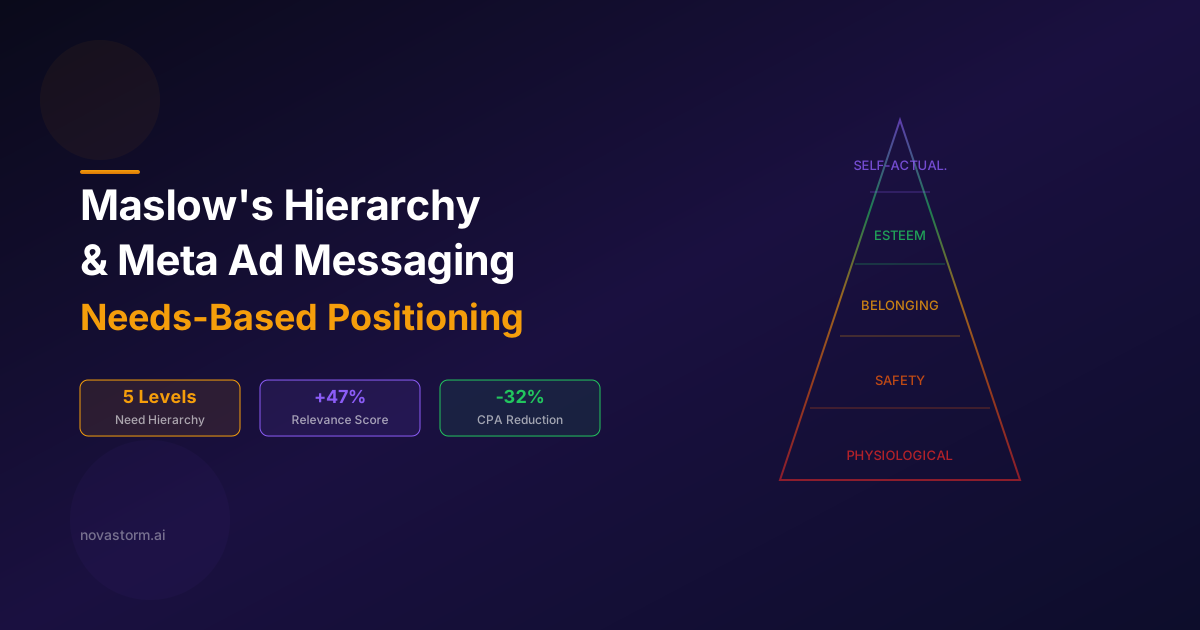
Every human decision is shaped by underlying needs. Abraham Maslow codified this insight in his famous hierarchy, a five-level pyramid that maps our motivations from basic survival to the pursuit of meaning. For advertisers on Meta platforms, understanding needs-based positioning in Meta ads is not optional. It is the difference between copy that converts and copy that gets scrolled past.
When your ad messaging speaks to the exact level of need your audience experiences right now, resistance drops. Relevance spikes. And your cost-per-acquisition falls. This article breaks down each level of Maslow's hierarchy and shows you how to deploy needs-based positioning in Meta ads that actually moves people to act.
The Five Levels of Maslow's Hierarchy in Advertising Context
Maslow's hierarchy is built on a simple premise: lower-level needs must be satisfied before higher-level needs become motivating. For Meta ad strategists, this means your audience is not a monolith. Some segments are driven by safety and security. Others are chasing belonging. The most affluent, established segments may respond only to self-actualization messaging.
| Need Level | Core Motivation | Ad Messaging Angle | Example CTA |
|---|---|---|---|
| Physiological | Survival, comfort, basic needs | Immediate relief, essential products | Get relief now |
| Safety | Security, stability, protection | Risk reduction, guarantees, insurance | Protect your family today |
| Belonging | Connection, community, love | Social proof, community, togetherness | Join 50,000+ members |
| Esteem | Achievement, status, recognition | Premium positioning, exclusivity | Elevate your brand |
| Self-Actualization | Growth, purpose, potential | Transformation, mastery, legacy | Become who you were meant to be |
Why Most Meta Ads Fail at Needs-Based Positioning
The majority of Meta advertisers default to a single messaging tier, usually esteem or belonging, regardless of their audience's actual psychological state. A financial services company running self-actualization messaging to an audience worried about paying rent is wasting every dollar of ad spend.
Needs-based positioning in Meta ads requires audience segmentation that goes beyond demographics. You must understand the psychological state of each segment. A 35-year-old professional with stable income responds differently than a 35-year-old professional who just lost a job. Same age. Same education. Completely different need level.
Audiences in lower need states (physiological, safety) respond to urgency and concrete benefits. Audiences in higher need states (esteem, self-actualization) respond to aspiration and identity-based messaging.
Mapping Audience Segments to Need Levels
The practical challenge is identifying which need level dominates each audience segment. Meta's targeting tools do not include a 'Maslow level' option. But you can infer psychological state from behavioral and contextual signals.
- Interest in budgeting apps, discount codes, and debt management signals safety-level needs
- Engagement with community groups, team sports, and social events signals belonging-level needs
- Interest in luxury brands, achievement content, and leadership topics signals esteem-level needs
- Engagement with personal development, meditation, and creative pursuits signals self-actualization needs
- Recent life events like moving, job change, or new parenthood shift need levels dramatically
Build Custom Audiences around these behavioral clusters. Then craft ad sets with messaging calibrated to the dominant need level of each cluster. This is where needs-based positioning in Meta ads becomes a concrete, executable strategy rather than an abstract theory.
Crafting Ad Copy for Each Need Level
Each level of the hierarchy demands a different copywriting approach. The tone, vocabulary, imagery, and call-to-action must all align with the underlying motivation.
Safety-Level Messaging
When your audience is concerned about security and stability, your ad must reduce perceived risk. Use language like 'guaranteed,' 'protected,' 'backed by,' and 'risk-free.' Feature testimonials from people who avoided negative outcomes. The visual language should convey stability: solid structures, calm colors, shields, and locks.
Stop wasting ad budget
NovaStorm AI cuts Meta Ads CPA by 40% on average. Start free.
Belonging-Level Messaging
Belonging-driven audiences want to see themselves reflected in your community. Use social proof heavily: member counts, user-generated content, group imagery. Words like 'together,' 'community,' 'join,' and 'belong' carry weight. Show diverse groups of people sharing experiences. The CTA should emphasize inclusion, not isolation.
Esteem and Self-Actualization Messaging
Higher-level needs respond to identity language. For esteem, use words that signal achievement and recognition: 'exclusive,' 'elite,' 'recognized,' 'leader.' For self-actualization, shift to transformation language: 'unlock,' 'become,' 'transcend,' 'create your legacy.' These audiences are less price-sensitive and more vision-sensitive.
Testing Needs-Based Positioning Across Ad Sets
The most effective implementation of needs-based positioning in Meta ads uses structured A/B testing across need levels. Create parallel ad sets targeting the same product but with messaging calibrated to different hierarchy levels. Then measure which resonates strongest with each audience segment.
| Test Variable | Variant A (Safety) | Variant B (Belonging) | Variant C (Esteem) |
|---|---|---|---|
| Headline | Protect Your Investment | Join Thousands Who Trust Us | The Premium Choice for Leaders |
| Body Copy | Risk-free guarantee, 100% refund | Our community of 50K+ shares tips daily | Recognized by industry experts worldwide |
| CTA | Secure Your Spot | Join the Community | Get Exclusive Access |
| Image Style | Shield, checkmark, lock icon | Group of people, community | Gold accents, premium aesthetic |
Run these variants simultaneously with equal budget allocation. After statistical significance is reached, you will see clear patterns. Some audiences cluster around safety messaging. Others around belonging. This data becomes the foundation of your ongoing needs-based positioning in Meta ads strategy.
Dynamic Creative and Need-Level Optimization
Meta's Dynamic Creative Optimization (DCO) can automate part of this process. By providing headline, body, and image variants aligned to different need levels, DCO will surface the highest-performing combination for each user. However, the quality of inputs determines the quality of outputs.
Structure your DCO components so that each variant set maps to a distinct need level. This prevents the algorithm from creating incoherent combinations like a self-actualization headline paired with a safety-level image. Coherence within each need tier is critical for ad performance.
When using DCO, group your creative elements by need level. Upload safety headlines with safety images, belonging headlines with belonging images. This ensures Meta's algorithm serves coherent, psychologically aligned ad experiences.
Measuring the Impact of Needs-Based Positioning
Standard metrics like CTR and CPA only tell part of the story. To measure the true impact of needs-based positioning in Meta ads, track engagement quality alongside volume. Safety-level messaging may generate fewer clicks but higher conversion rates. Self-actualization messaging may attract higher lifetime-value customers.
- Segment conversion data by ad set to identify which need level drives the most revenue per segment
- Track post-click behavior: do safety-motivated clicks spend more time on guarantee pages?
- Measure repeat purchase rates by need-level cohort to find highest LTV segments
- Monitor creative fatigue separately for each need level since different tiers burn out at different rates
- Use Meta's Conversion Lift studies to isolate incremental impact of needs-based messaging
The advertisers who win on Meta in 2026 are the ones who stop treating their audience as a single psychological entity. Maslow gave us the framework. Meta gives us the targeting tools. Needs-based positioning in Meta ads is the bridge between the two. Build your ad strategy around the needs your audience actually has, not the needs you wish they had, and watch your performance metrics respond accordingly.
Novastorm AI automates Meta Ads routine — from monitoring to optimization. Learn more at novastorm.ai
Disclaimer: This article was generated with the assistance of AI and reviewed by the NovaStorm AI team. While we strive for accuracy, we recommend verifying specific data points and consulting official sources (linked where available) for critical business decisions.
Ready to automate your Meta Ads?
NovaStorm AI takes full responsibility for your campaigns — from monitoring to optimization.
Get Started FreeRelated Articles
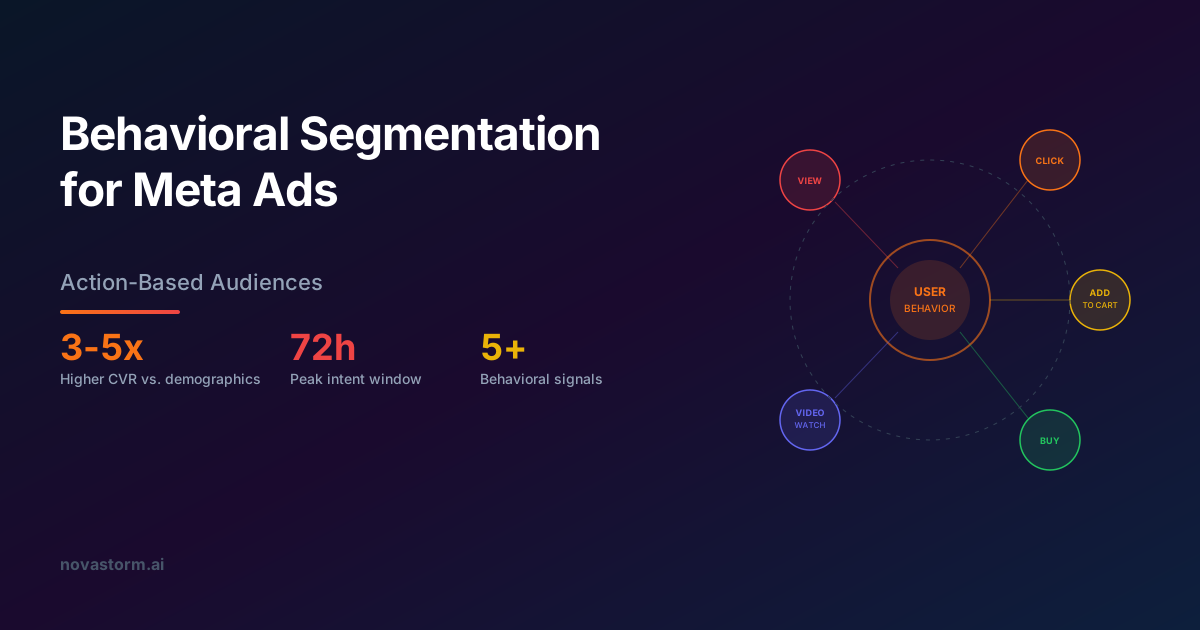
Behavioral Segmentation for Meta Ads: Action-Based Audiences
Master behavioral segmentation for Meta Ads. Build action-based audiences from website events, app activity, and engagement signals to drive higher conversion rates.
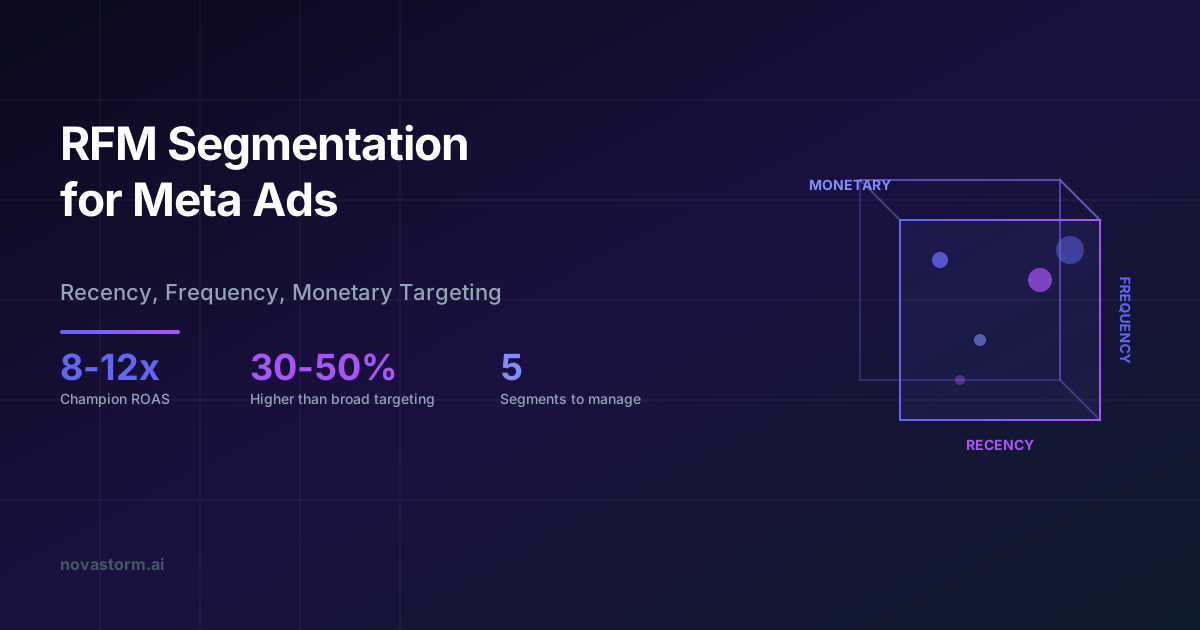
RFM Segmentation for Meta Ads: Recency, Frequency, Monetary Targeting
Learn how to apply RFM segmentation to your Meta Ads campaigns. Target audiences by recency, frequency, and monetary value to maximize ROAS and reduce wasted ad spend.
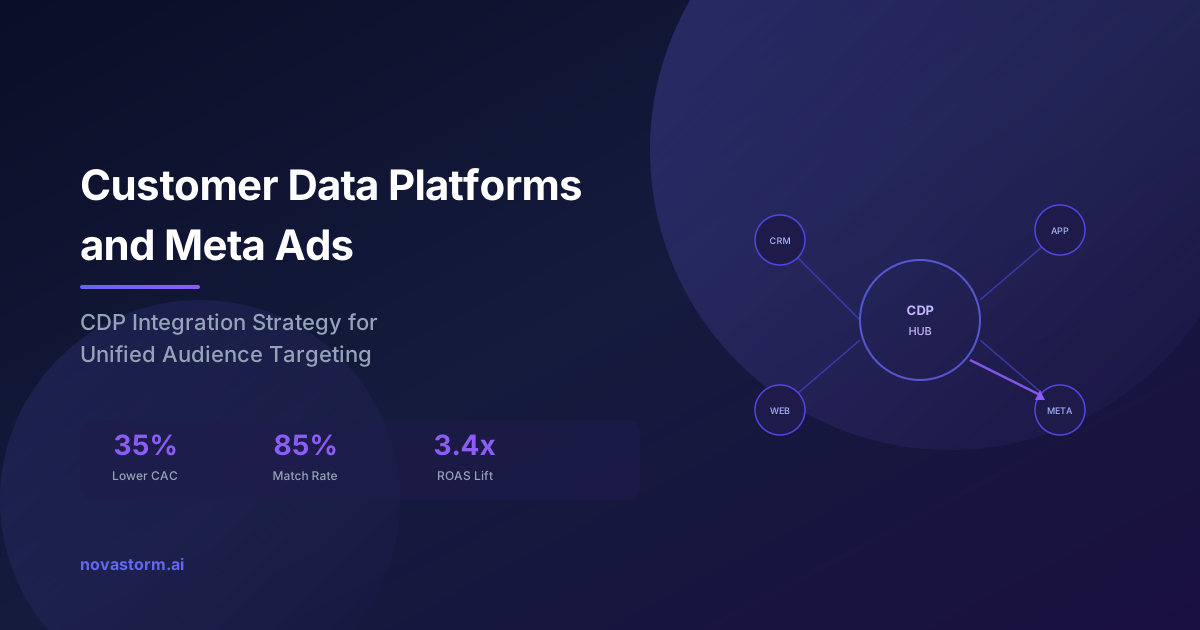
Customer Data Platforms and Meta Ads: CDP Integration Strategy
Learn how to integrate Customer Data Platforms with Meta Ads for unified audience targeting, real-time segmentation, and higher ROAS across campaigns.