Customer Data Platforms and Meta Ads: CDP Integration Strategy
Learn how to integrate Customer Data Platforms with Meta Ads for unified audience targeting, real-time segmentation, and higher ROAS across campaigns.
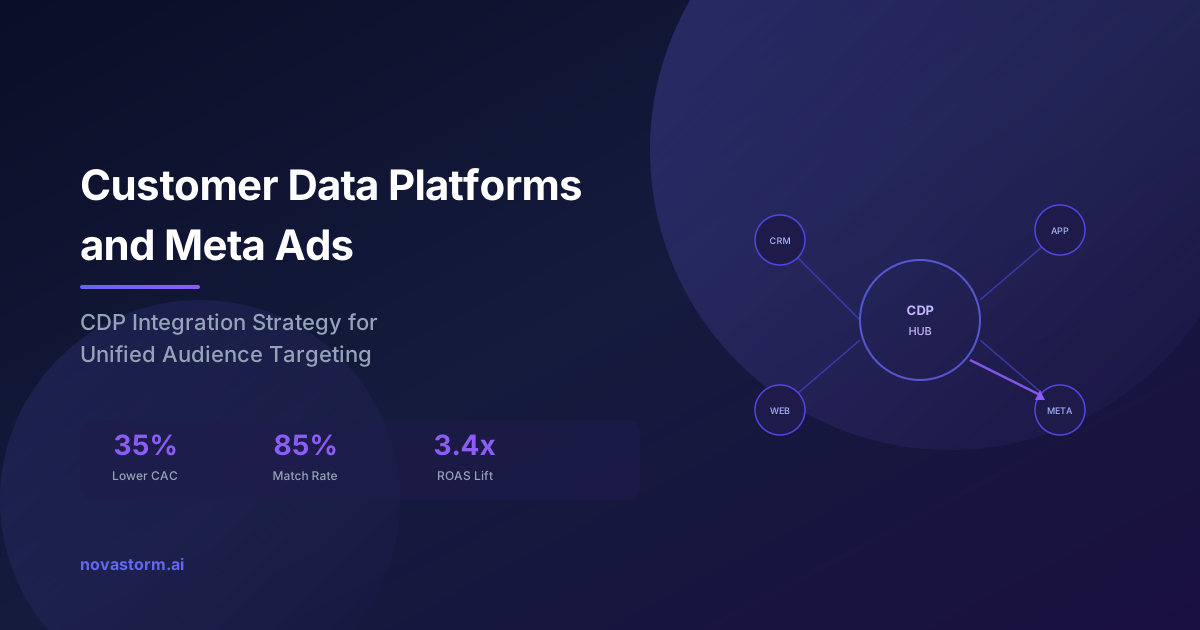
Customer Data Platforms have fundamentally changed how brands collect, unify, and activate their audience data. When paired with Meta Ads, a well-executed CDP integration Meta Ads strategy can transform fragmented customer records into precision-targeted campaigns that deliver measurable revenue growth.
The challenge most marketing teams face is clear: customer data lives in dozens of disconnected systems. Your CRM holds contact details, your e-commerce platform tracks purchases, your website captures behavioral signals, and your app logs engagement metrics. Without a unified view, Meta Ads campaigns rely on incomplete data and broad targeting that wastes budget.
What Is a Customer Data Platform and Why It Matters for Meta Ads
A Customer Data Platform is a centralized system that ingests data from every customer touchpoint, resolves identities across channels, and creates unified customer profiles. Unlike traditional data warehouses, CDPs are purpose-built for marketing activation, making them ideal partners for CDP integration Meta Ads workflows.
CDPs differ from Data Management Platforms in a critical way. DMPs primarily work with anonymous, cookie-based data that expires. CDPs build persistent, first-party profiles tied to real customer identities. In a post-cookie advertising landscape, this distinction is everything.
| Feature | CDP | DMP | CRM |
|---|---|---|---|
| Data Type | First-party, all sources | Third-party, cookie-based | First-party, manual entry |
| Identity Resolution | Cross-device, deterministic | Probabilistic matching | Email/phone only |
| Real-Time Activation | Yes | Limited | No |
| Meta Ads Sync | Native connectors | Declining support | Manual exports |
| Data Retention | Persistent profiles | 30-90 day cookies | Indefinite |
| Best For | Omnichannel targeting | Display advertising | Sales pipelines |
The Architecture of CDP-to-Meta Ads Data Flow
A robust CDP integration Meta Ads architecture follows a predictable pattern. Data flows from source systems into the CDP, where identity resolution merges fragmented records into unified profiles. Segmentation engines then build audiences based on behavioral, transactional, and demographic attributes.
These segments are pushed to Meta Ads via the Conversions API or Custom Audiences API. The connection is bidirectional: impression and conversion data from Meta flows back into the CDP, enriching profiles and closing the attribution loop.
- Data ingestion from all customer touchpoints (web, app, email, POS, support)
- Identity resolution that merges anonymous and known profiles
- Segment creation using behavioral triggers and predictive scores
- Audience activation via Meta Custom Audiences API
- Conversion feedback loop through Meta Conversions API
- Attribution modeling that ties ad spend to downstream revenue
Choosing the Right CDP for Meta Ads Integration
Not all CDPs offer equal Meta Ads connectivity. When evaluating platforms, prioritize native Meta integrations that support real-time audience syncing, server-side event forwarding, and automated segment refresh. The speed at which segments update directly impacts campaign performance.
| CDP Platform | Meta Ads Connector | Real-Time Sync | Identity Graph | Starting Price |
|---|---|---|---|---|
| Segment | Native, bidirectional | Yes | Advanced | $120/mo |
| mParticle | Native, server-side | Yes | Advanced | Enterprise |
| Tealium | Native, event-based | Yes | Advanced | Enterprise |
| Rudderstack | Open-source connector | Yes | Basic | Free tier |
| Bloomreach | Native, e-commerce focus | Yes | Advanced | Custom |
| Treasure Data | Native, enterprise | Near real-time | Advanced | Enterprise |
For most mid-market brands, Segment and Rudderstack offer the best balance of functionality and cost. Enterprise organizations with complex data governance requirements should evaluate Tealium and mParticle for their robust compliance frameworks.
Building High-Performance Audience Segments in Your CDP
The real power of CDP integration Meta Ads lies in segment sophistication. Instead of uploading static email lists, you can build dynamic audiences that update automatically as customer behavior changes. This means your Meta campaigns always target the most relevant users.
Start with your highest-value segments first. Brands that activate their top 20% customer segments through CDP-powered Meta campaigns typically see 3-4x higher ROAS compared to broad targeting approaches.
Effective CDP segments for Meta Ads combine multiple data dimensions. A segment like "purchased in last 90 days AND browsed category X in last 7 days AND has lifetime value above $500" performs dramatically better than a simple purchaser list.
Stop wasting ad budget
NovaStorm AI cuts Meta Ads CPA by 40% on average. Start free.
- Behavioral segments based on website and app engagement patterns
- Transactional segments using purchase frequency, recency, and monetary value
- Predictive segments leveraging churn risk and next-purchase probability scores
- Lifecycle segments aligned to customer journey stages
- Suppression segments that exclude recent converters or support-escalated customers
Implementing Server-Side Event Forwarding for Better Match Rates
One of the most impactful aspects of CDP integration Meta Ads is server-side event forwarding through the Conversions API. Browser-based tracking has become unreliable due to ad blockers, iOS privacy changes, and cookie restrictions. CDPs solve this by sending events server-to-server.
When your CDP forwards events through the Conversions API, match rates typically improve by 20-40%. This directly impacts campaign optimization because Meta's algorithm receives more complete conversion data to train on.
| Event Forwarding Method | Match Rate | Reliability | Setup Complexity |
|---|---|---|---|
| Browser Pixel Only | 40-60% | Declining | Low |
| CDP + Conversions API | 70-85% | High | Medium |
| CDP + CAPI + Pixel (Redundant) | 80-95% | Very High | Medium-High |
| CDP + Advanced Matching | 85-95% | Very High | High |
Configuring Event Deduplication
When running both pixel and server-side events, deduplication is essential. Use consistent event IDs across both channels. Your CDP should generate a unique event_id for each conversion and pass it through both the browser pixel and the Conversions API. Meta will deduplicate based on this ID.
Measuring the Impact of CDP-Powered Meta Campaigns
The value of CDP integration Meta Ads extends beyond targeting improvements. A comprehensive measurement framework should track match rate improvements, audience overlap reduction, conversion lift from better targeting, and incremental revenue attributed to CDP-powered segments.
Brands that implement full CDP-to-Meta integrations report an average 35% reduction in customer acquisition cost and a 28% increase in return on ad spend within the first 90 days of activation.
Build a dashboard that compares CDP-powered campaigns against your legacy targeting approach. Track cost per acquisition, return on ad spend, audience match rates, and conversion volume side by side. This gives you clear evidence of the integration's value.
Common CDP Integration Pitfalls and How to Avoid Them
Even well-planned CDP integration Meta Ads projects encounter obstacles. The most common failure point is poor identity resolution. If your CDP cannot accurately merge profiles across devices and channels, the audiences you send to Meta will contain duplicates and misattributed records.
- Sending segments that are too small for Meta to optimize against (minimum 1,000 matched users)
- Failing to refresh audiences frequently enough, causing stale targeting
- Not implementing proper consent management before syncing personal data
- Ignoring data quality issues that reduce match rates
- Over-segmenting audiences to the point where Meta cannot exit the learning phase
Address these issues proactively by establishing data quality monitoring, setting minimum segment size thresholds, and building automated refresh schedules that keep your Meta audiences current.
A well-executed CDP strategy transforms Meta Ads from a channel that targets demographics into one that targets individuals based on their complete relationship with your brand. The investment in infrastructure pays for itself through reduced waste, higher conversion rates, and a sustainable competitive advantage in audience intelligence.
Novastorm AI automates Meta Ads routine — from monitoring to optimization. Learn more at novastorm.ai
Disclaimer: This article was generated with the assistance of AI and reviewed by the NovaStorm AI team. While we strive for accuracy, we recommend verifying specific data points and consulting official sources (linked where available) for critical business decisions.
Ready to automate your Meta Ads?
NovaStorm AI takes full responsibility for your campaigns — from monitoring to optimization.
Get Started FreeRelated Articles
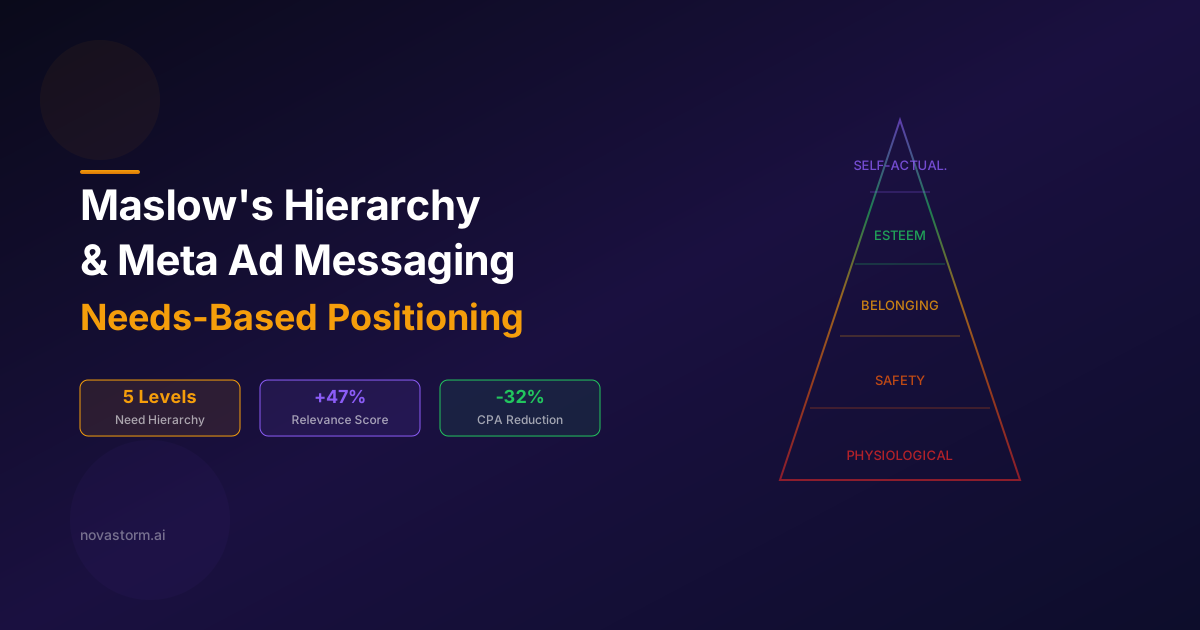
Maslow's Hierarchy and Meta Ad Messaging: Needs-Based Positioning
Discover how Maslow's hierarchy of needs transforms Meta ad messaging. Learn needs-based positioning strategies that align ad copy with audience motivations.
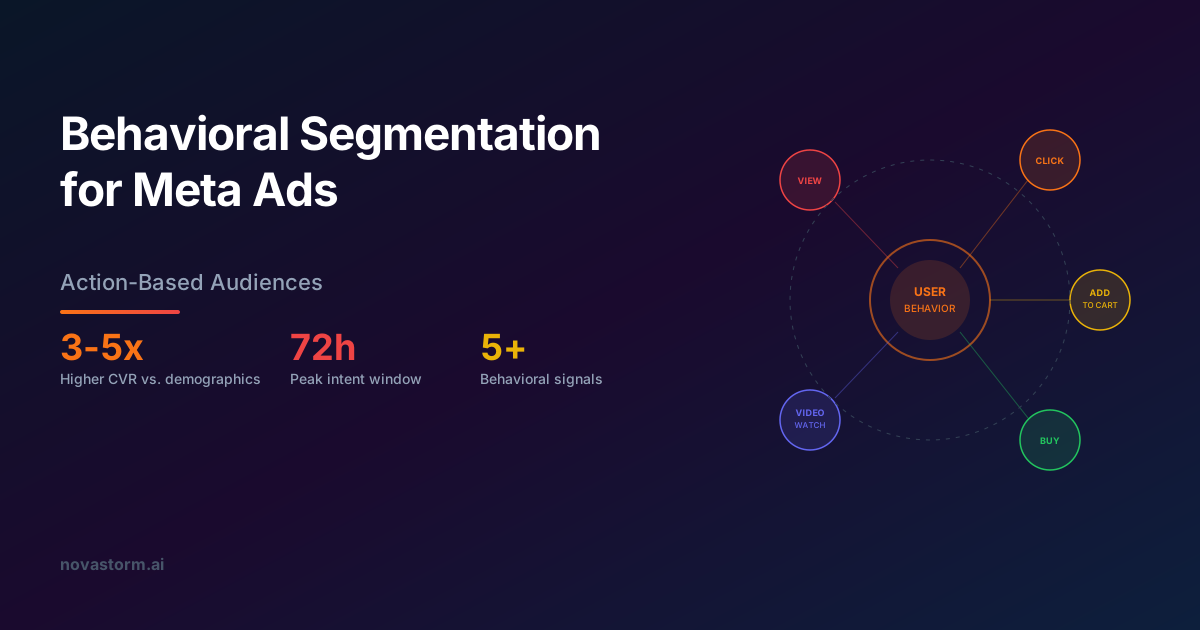
Behavioral Segmentation for Meta Ads: Action-Based Audiences
Master behavioral segmentation for Meta Ads. Build action-based audiences from website events, app activity, and engagement signals to drive higher conversion rates.
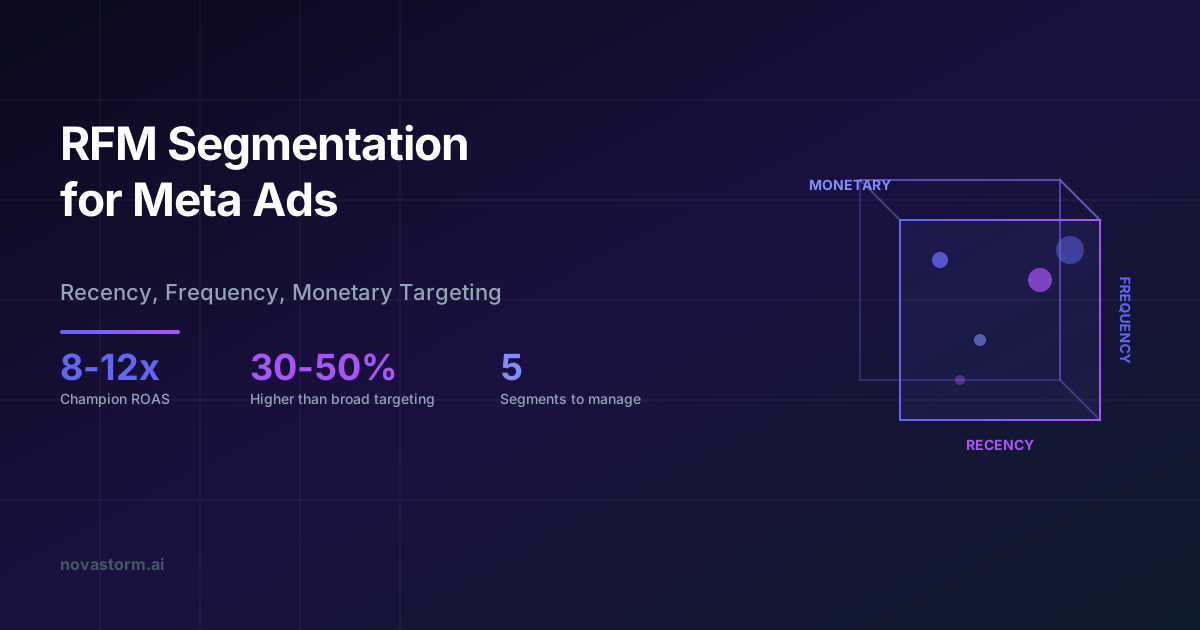
RFM Segmentation for Meta Ads: Recency, Frequency, Monetary Targeting
Learn how to apply RFM segmentation to your Meta Ads campaigns. Target audiences by recency, frequency, and monetary value to maximize ROAS and reduce wasted ad spend.