Data-Driven Attribution for Meta Ads: Moving Beyond Last Click
Learn how data-driven attribution for Meta Ads replaces outdated last-click models to reveal the true impact of every touchpoint in your customer journey.
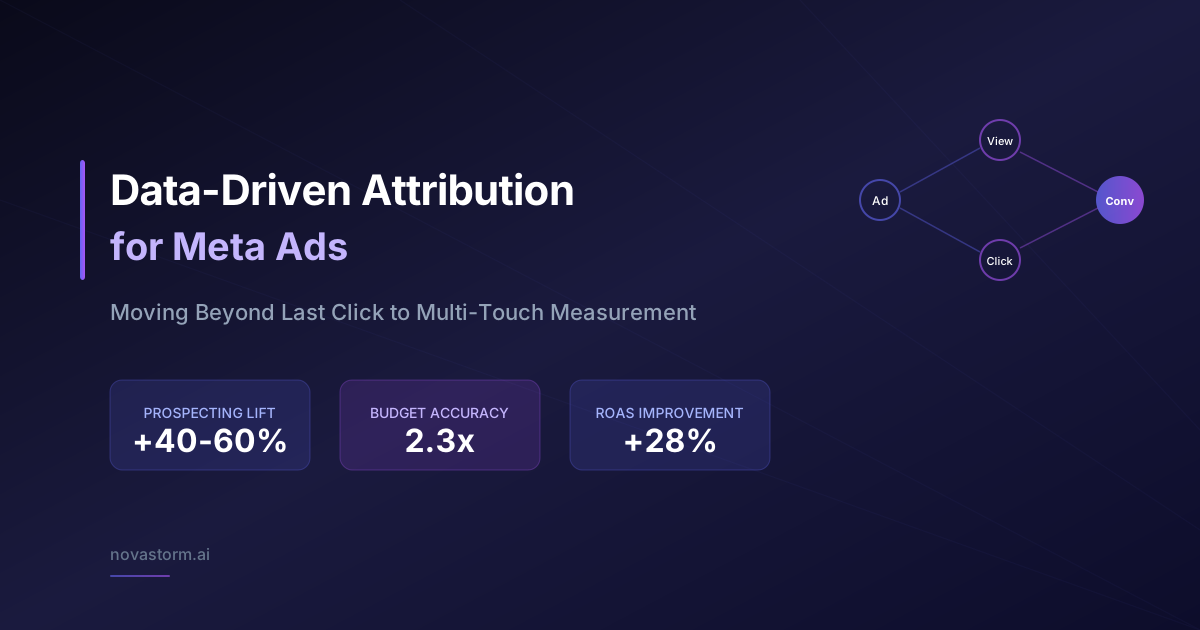
Most advertisers still rely on last-click attribution to judge the success of their Meta Ads campaigns. This approach credits the final interaction before a conversion, ignoring every prior touchpoint that guided the customer to that moment. If you are making budget decisions based on last-click data alone, you are almost certainly misallocating spend.
Data-driven attribution for Meta Ads offers a far more accurate picture. Instead of assigning all credit to a single touchpoint, it uses algorithmic models to distribute value across the entire customer journey. The result is smarter budgeting, better creative decisions, and higher return on ad spend.
Why Last-Click Attribution Fails Meta Advertisers
Last-click attribution was designed for a simpler digital landscape. When a customer sees a video ad on Instagram, engages with a carousel on Facebook, visits your site through organic search, and then converts after clicking a retargeting ad, last-click gives 100% of the credit to that final retargeting click.
This creates a dangerous feedback loop. Prospecting campaigns that generate initial awareness appear to deliver zero value, while retargeting campaigns that close the deal look like miracle workers. Over time, advertisers shift budget away from the top of the funnel, starving the very campaigns that feed their retargeting audiences.
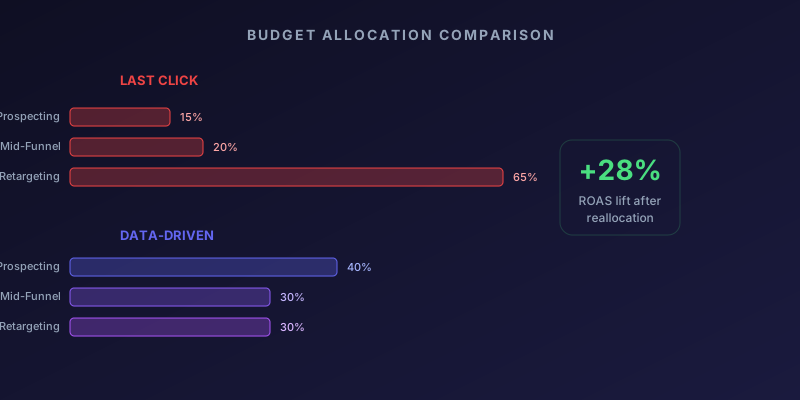
Advertisers using last-click attribution typically overvalue retargeting by 30-50% and undervalue prospecting by 40-60%, leading to systematic budget misallocation.
How Data-Driven Attribution for Meta Ads Works
Data-driven attribution for Meta Ads relies on statistical modeling rather than rigid rules. The system analyzes thousands of conversion paths, comparing journeys that led to conversions against those that did not. By identifying which touchpoints appear more frequently in successful paths, the model assigns proportional credit.
Meta's own attribution system uses machine learning to evaluate the incremental contribution of each ad interaction. This includes impressions, clicks, video views, and engagement events. The algorithm considers factors like ad format, placement, creative type, and time between interactions.
| Attribution Model | How Credit Is Assigned | Best Use Case |
|---|---|---|
| Last Click | 100% to final touchpoint | Simple direct-response funnels |
| First Click | 100% to first touchpoint | Brand awareness measurement |
| Linear | Equal split across all touchpoints | General multi-touch overview |
| Time Decay | More credit to recent touchpoints | Short purchase cycles |
| Data-Driven | Algorithmic credit based on impact | Complex multi-channel campaigns |
Setting Up Data-Driven Attribution in Your Meta Ads Account
Implementing data-driven attribution for Meta Ads requires a methodical approach. Begin with your Conversions API setup, as server-side event tracking provides more reliable data than pixel-only tracking. Accurate data is the foundation of any attribution model.
- Verify your Conversions API is sending all key events (Purchase, Add to Cart, Lead, Initiate Checkout)
- Configure your attribution settings in Events Manager to use 7-day click and 1-day view as your baseline
- Enable Advanced Matching to improve cross-device identity resolution
- Set up Meta's Attribution tool in Business Suite for multi-touch reporting
- Create comparison reports between last-click and data-driven models to quantify the difference
The minimum data threshold matters. Meta's data-driven model requires sufficient conversion volume to produce statistically significant results. Accounts with fewer than 300 monthly conversions may not generate reliable data-driven attribution insights.

Interpreting Data-Driven Attribution Reports
When you switch from last-click to data-driven attribution for Meta Ads, expect significant shifts in how campaigns appear to perform. Prospecting campaigns will typically show increased attributed conversions, while retargeting campaigns will show fewer. This does not mean retargeting stopped working. It means credit is now distributed more accurately.
Stop wasting ad budget
NovaStorm AI cuts Meta Ads CPA by 40% on average. Start free.
Focus on these metrics when analyzing data-driven attribution reports: assisted conversions, path length, and time lag. Assisted conversions reveal how often a campaign contributes to conversions without being the final touchpoint. Path length shows the average number of interactions before conversion. Time lag indicates how long the journey takes.
Key Metrics to Track
| Metric | What It Reveals | Action to Take |
|---|---|---|
| Assisted Conversion Rate | How often a campaign assists without closing | Increase budget for high-assist campaigns |
| Path Length | Number of touchpoints before conversion | Optimize creative for each funnel stage |
| Time to Conversion | Days between first touch and purchase | Align attribution windows accordingly |
| Cross-Device Conversions | Conversions spanning multiple devices | Invest in cross-device identity solutions |
| Incremental Lift | True incremental impact of each campaign | Use for final budget allocation decisions |
Common Pitfalls When Adopting Data-Driven Attribution
The transition to data-driven attribution for Meta Ads is not without challenges. One of the most common mistakes is making abrupt budget changes based on initial data-driven reports. Attribution models need time to stabilize, and early results can be misleading if your historical data is limited.
Another frequent error is ignoring offline touchpoints. If your business has phone calls, in-store visits, or sales team interactions, these need to be incorporated into your attribution model through offline conversion uploads. Without them, your data-driven model only captures part of the picture.
Run both last-click and data-driven attribution models in parallel for at least 30 days before making budget decisions. This gives you a clear comparison and prevents reactive budget shifts.
Budget Reallocation Based on Data-Driven Insights
Once your data-driven attribution for Meta Ads has accumulated sufficient data, use it to guide gradual budget shifts. Start by identifying campaigns with the largest discrepancy between last-click and data-driven credit. These represent your biggest opportunities for optimization.
A practical approach is the 70-20-10 reallocation framework. Shift 70% of your budget according to data-driven insights, keep 20% allocated based on strategic priorities that may not show in attribution data, and reserve 10% for testing new approaches that lack historical data.
- Increase prospecting budgets where data-driven attribution reveals undervalued awareness campaigns
- Reduce over-credited retargeting spend to its true incremental contribution level
- Reallocate savings to mid-funnel engagement campaigns that drive assisted conversions
- Test new creative formats in campaigns where data-driven attribution shows the highest per-touchpoint impact
The Future of Attribution in Meta Advertising
Data-driven attribution for Meta Ads will continue to evolve as privacy regulations reshape the digital advertising landscape. With iOS privacy changes and the deprecation of third-party cookies, algorithmic attribution models that rely on aggregated, privacy-compliant data will become the standard.
Meta is investing heavily in AI-powered attribution that works within privacy constraints. Aggregated Event Measurement, Conversions API Gateway, and advanced modeling techniques allow the platform to fill data gaps while respecting user privacy. Advertisers who adopt data-driven attribution today are positioning themselves for this future.
The shift from last-click to data-driven attribution is not optional for serious advertisers. It is a necessary evolution in how you measure, evaluate, and optimize your Meta Ads campaigns. The sooner you make the transition, the sooner your budget decisions will reflect reality rather than a simplified approximation of it.
Novastorm AI automates Meta Ads routine — from monitoring to optimization. Learn more at novastorm.ai
Disclaimer: This article was generated with the assistance of AI and reviewed by the NovaStorm AI team. While we strive for accuracy, we recommend verifying specific data points and consulting official sources (linked where available) for critical business decisions.
Ready to automate your Meta Ads?
NovaStorm AI takes full responsibility for your campaigns — from monitoring to optimization.
Get Started FreeRelated Articles
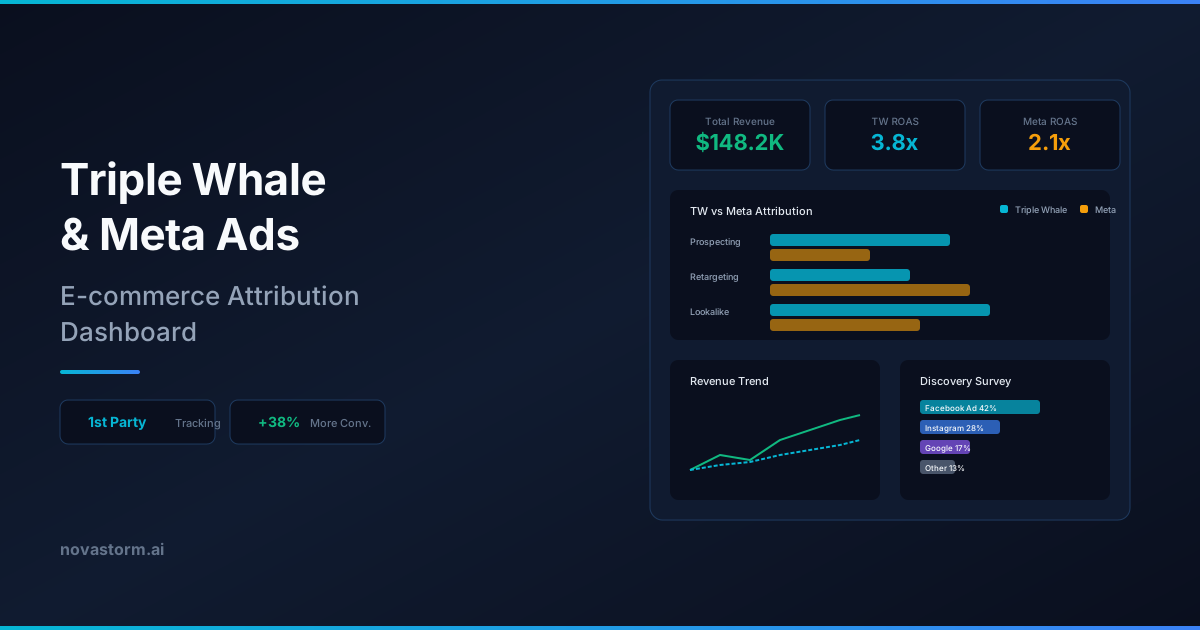
Triple Whale and Meta Ads: E-commerce Attribution Dashboard
Learn how Triple Whale improves Meta Ads attribution for e-commerce brands. First-party pixel tracking, server-side events, and real ROAS measurement explained.
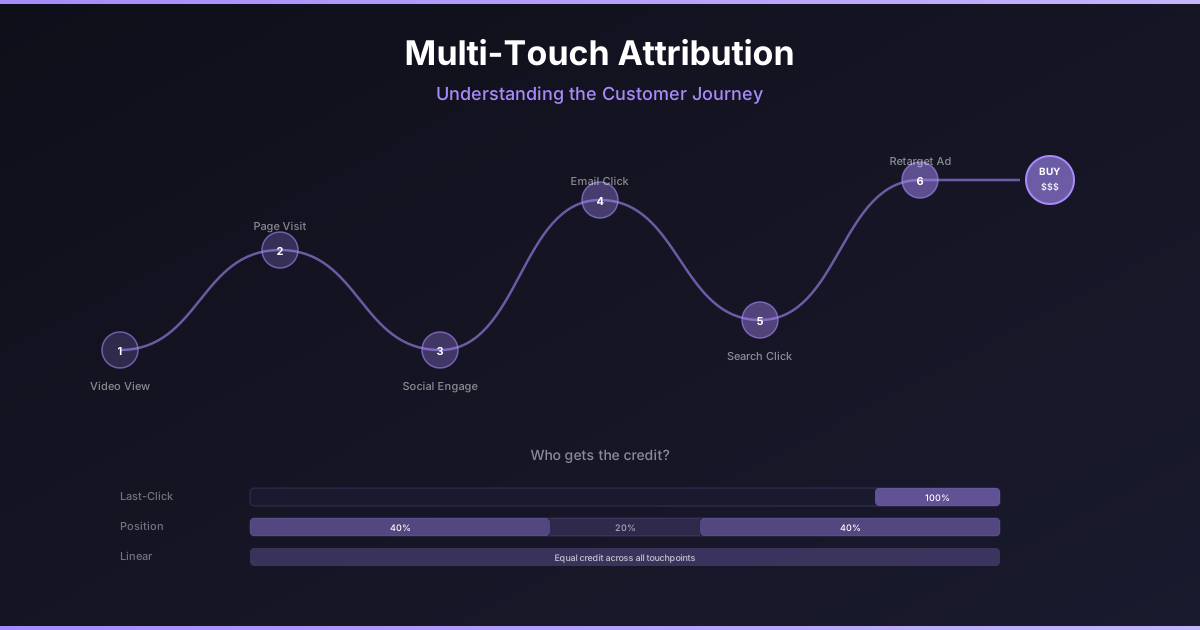
Multi-Touch Attribution: Understanding the Customer Journey in Meta Ads
Move beyond last-click attribution. Learn how multi-touch attribution models reveal the true impact of your Meta Ads across the entire customer journey.
Supermetrics for Meta Ads: Automated Reporting Setup Guide
Complete guide to setting up Supermetrics for Meta Ads automated reporting. Connect data sources, build templates, and schedule reports across multiple platforms.