Storytelling Arcs in Sequential Meta Ads: Three-Act Structure
Master the three-act structure for sequential Meta ads. Build storytelling arcs that guide prospects from awareness to conversion with narrative ad sequences.
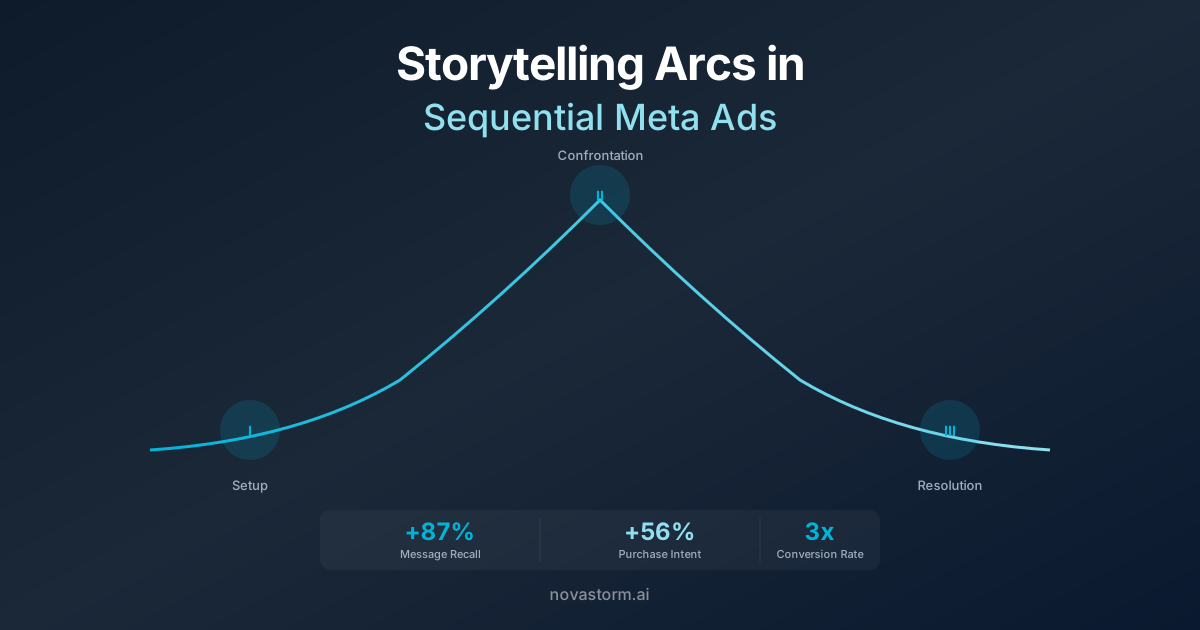
The average person sees between 6,000 and 10,000 ads per day. Most of them vanish from memory within seconds. But some ads — the ones that tell a story across multiple touchpoints — create lasting impressions that compound into conversions. This is the power of storytelling arcs in sequential Meta ads, and the three-act structure is the framework that makes it work.
Sequential advertising is not new. Television has used it for decades. But Meta's platform offers something television never could: precise audience targeting that ensures the same person sees Act One before Act Two before Act Three. When you combine ancient narrative principles with modern ad delivery, you create campaigns that feel less like advertising and more like entertainment.
Why Sequential Storytelling Outperforms Single-Touch Ads
Single-touch ads try to accomplish everything in one impression: introduce the problem, present the solution, build trust, and close the sale. That is an enormous amount of cognitive work to demand from someone who is scrolling past cat videos and vacation photos.
Storytelling arcs in sequential Meta ads distribute that cognitive load across multiple impressions. Each ad does one thing well instead of doing five things poorly. Meta's internal research shows that sequential ad campaigns deliver 87% higher message association and a 56% lift in purchase intent compared to non-sequential approaches.
Core Principle: Sequential storytelling works because the human brain is wired to seek narrative completion. Once someone has seen Act One, they have an unconscious desire to see how the story ends.
The Three-Act Framework for Meta Ad Sequences
The three-act structure has governed storytelling for over two thousand years, from Aristotle's Poetics to Hollywood blockbusters. It works because it mirrors how the human brain processes change: a beginning that establishes context, a middle that introduces conflict, and an end that resolves it.
When applied to storytelling arcs in sequential Meta ads, the three-act structure maps directly to the marketing funnel.
| Act | Narrative Role | Marketing Objective | Ad Format | Audience |
|---|---|---|---|---|
| Act I: Setup | Establish the world and problem | Awareness | Video (15-30s), Carousel | Broad / Lookalike |
| Act II: Confrontation | Deepen conflict, introduce solution | Consideration | Video (30-60s), Collection | Engaged viewers of Act I |
| Act III: Resolution | Deliver transformation | Conversion | Single image, DPA | Engaged viewers of Act II |
Act I: The Setup — Establishing the World
Every great story begins by establishing a world the audience recognizes. In advertising, this means reflecting the prospect's current reality back to them. Act I does not sell. It does not pitch. It simply says: we understand your world.
The most effective Act I ads in storytelling arcs in sequential Meta ads focus on the problem, not the product. A fitness brand might show the frustration of trying workout after workout with no results. A SaaS company might depict the chaos of managing spreadsheets across ten team members. The key is emotional resonance.
- Open with a relatable scene that mirrors the audience's daily experience
- Use visual storytelling — show, do not tell
- End with an implicit question or unresolved tension
- Keep it short: 15-30 seconds for video, 3-4 slides for carousel
- Optimize for reach and video views, not conversions
- Target broad or lookalike audiences to fill the top of your narrative funnel
Act II: The Confrontation — Raising the Stakes
Act II is where storytelling arcs in sequential Meta ads diverge from traditional advertising most dramatically. Instead of jumping straight to the product pitch, Act II deepens the conflict. It shows why the problem is worse than the audience initially thought and introduces the first glimpse of a solution.
This is the act where you build credibility. Testimonials, data points, behind-the-scenes content, and expert perspectives all belong here. The audience has already acknowledged the problem in Act I. Now they need to believe that a solution exists and that you are the one who can deliver it.
Stop wasting ad budget
NovaStorm AI cuts Meta Ads CPA by 40% on average. Start free.
The Midpoint Reversal
In screenwriting, the midpoint reversal is a moment that shifts the narrative from reactive to proactive. The hero stops running from the problem and starts pursuing the solution. In your ad sequence, this translates to a creative that shifts tone — from empathy to empowerment, from problem to possibility.
| Act II Element | Content Type | Emotional Target |
|---|---|---|
| Problem escalation | Stats, data visualization | Urgency |
| Social proof | Testimonials, case studies | Trust |
| Solution preview | Product demo, feature highlight | Hope |
| Midpoint reversal | Before/after, transformation | Empowerment |
Act III: The Resolution — Delivering the Transformation
By the time your audience reaches Act III, they have been on a journey. They recognized their problem. They saw it escalated. They glimpsed a solution. Now they need to see the resolution — and they need a clear path to be part of it.
Act III ads are where conversions happen. But because the narrative has done the heavy lifting, your Act III creative can be surprisingly simple. A clean product shot, a strong CTA, and a limited-time offer are often all you need. The story has already built the desire.
- Show the transformation: the after state that the product delivers
- Reference the journey: subtle callbacks to Act I and II build narrative coherence
- Present a clear, single CTA — do not split attention at this stage
- Use urgency tactfully: deadlines and scarcity work when trust has been established
- Retarget only those who engaged with Act I and II for maximum efficiency
Technical Setup: Building Sequences in Meta Ads Manager
The creative strategy is only half the equation. Storytelling arcs in sequential Meta ads require precise audience sequencing to ensure people see ads in the correct order.
- Use Custom Audiences based on video view percentages (25%, 50%, 75%) to gate progression
- Set frequency caps to prevent Act I fatigue before the audience moves forward
- Allow 2-5 days between acts for natural pacing — rushing the sequence kills immersion
- Exclude purchasers from all acts to prevent wasted spend
- Monitor drop-off rates between acts as your primary diagnostic metric
Measuring Narrative Performance
Standard ad metrics only tell part of the story when you are running sequential campaigns. You need narrative-specific KPIs that measure how well the story is progressing.
| Metric | What It Measures | Healthy Benchmark |
|---|---|---|
| Act I to Act II progression | Story engagement | >35% of Act I viewers |
| Act II to Act III progression | Narrative momentum | >25% of Act II viewers |
| Full-sequence conversion rate | End-to-end story impact | 2-4x single-touch rate |
| Time between acts | Pacing effectiveness | 2-5 days optimal |
| Act-specific CPM | Efficiency per stage | Decreasing from I to III |
When storytelling arcs in sequential Meta ads are executed correctly, each act builds on the last. The result is a compounding effect: every dollar spent on Act I increases the efficiency of Act II and Act III. Over time, your cost per acquisition drops not because you found a cheaper audience, but because you built a better story.
Managing these sequences manually — tracking audience progression, adjusting timing, monitoring drop-off rates — is where most advertisers falter. The creative vision is clear, but the operational execution requires constant attention. That is precisely where intelligent automation becomes not a luxury, but a necessity.
Novastorm AI automates Meta Ads routine — from monitoring to optimization. Learn more at novastorm.ai
Disclaimer: This article was generated with the assistance of AI and reviewed by the NovaStorm AI team. While we strive for accuracy, we recommend verifying specific data points and consulting official sources (linked where available) for critical business decisions.
Ready to automate your Meta Ads?
NovaStorm AI takes full responsibility for your campaigns — from monitoring to optimization.
Get Started FreeRelated Articles

Sequential Retargeting on Meta Ads: Storytelling Across Touchpoints
Master sequential retargeting on Meta Ads by telling compelling stories across touchpoints. Build narrative-driven campaigns that guide prospects to conversion.
The Elaboration Likelihood Model in Meta Ad Persuasion
Learn how the Elaboration Likelihood Model shapes Meta ad persuasion through central and peripheral routes. Build ads that persuade at every engagement level.
The Contrast Effect in Meta Ad Creative: Standing Out in the Feed
Learn how the contrast effect in Meta ad creative helps your ads stand out in crowded feeds. Proven psychology-backed strategies for higher CTR and engagement.