The Elaboration Likelihood Model in Meta Ad Persuasion
Learn how the Elaboration Likelihood Model shapes Meta ad persuasion through central and peripheral routes. Build ads that persuade at every engagement level.
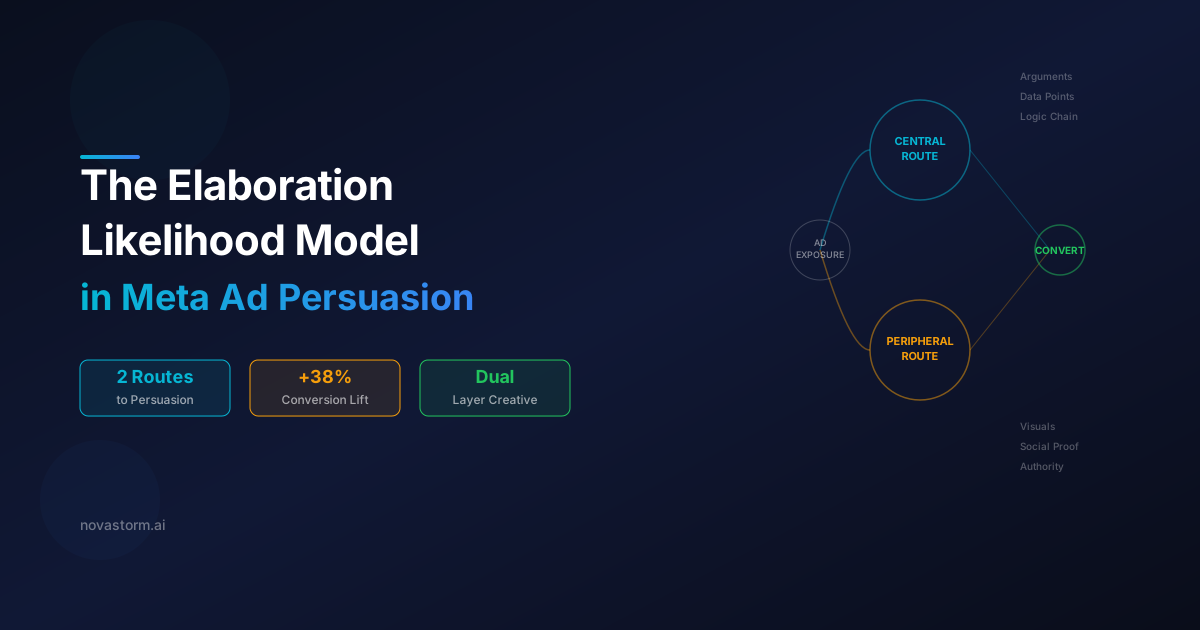
Not every person who sees your Meta ad will read the copy. Not every scroll will pause. The Elaboration Likelihood Model, developed by Petty and Cacioppo, explains why some audiences carefully evaluate your message while others make snap decisions based on surface cues. Understanding the Elaboration Likelihood Model Meta ads connection is the key to designing creative that persuades across both processing routes.
This model divides persuasion into two pathways: the central route, where people think deeply about your argument, and the peripheral route, where they rely on shortcuts like visual appeal, celebrity endorsement, or social proof numbers. Your Meta ad must work on both levels simultaneously because your audience includes both deep processors and quick scrollers.
Central vs Peripheral Processing in the Ad Feed
The Meta feed is a high-noise environment. Users scroll through dozens of posts per minute. Most content receives peripheral processing: a quick visual scan, a half-second emotional reaction, a decision to scroll or stop. Only when something triggers genuine interest does a user shift to central processing, actually reading your copy, evaluating your claims, and considering your offer.
| Dimension | Central Route | Peripheral Route |
|---|---|---|
| Processing Depth | High elaboration, careful analysis | Low elaboration, quick heuristics |
| What Persuades | Strong arguments, data, logic | Visual appeal, social proof, authority |
| Attitude Change | Durable, resistant to counter-arguments | Temporary, easily reversed |
| Audience State | High motivation, high ability | Low motivation or low ability |
| Ad Element Focus | Body copy, specifics, features | Image, headline, badges, counts |
The Elaboration Likelihood Model Meta ads framework demands that your creative contains both strong arguments for central processors and compelling peripheral cues for quick scrollers. Failing on either route means losing a segment of your potential converters.
Designing for the Central Route
Central route processing happens when users are both motivated and able to engage with your message. Motivation comes from personal relevance: the ad addresses a problem they actively face. Ability comes from clarity: the ad is easy to understand without excessive cognitive load.
To capture central processors in your Meta ads, your body copy must contain substantive, verifiable claims. Vague promises like 'amazing results' fail under scrutiny. Specific claims like 'reduced CPA by 34% across 200 accounts in Q4 2025' survive it. Central processors are your highest-value prospects. They convert deliberately and churn less.
- Lead with a specific, quantified benefit that addresses a known pain point
- Include data points or case study references that withstand evaluation
- Structure the argument logically: problem, mechanism, result, proof
- Avoid filler language that dilutes argument strength
- Place the strongest argument early in the copy since central processors read linearly
Designing for the Peripheral Route
Peripheral processing dominates the Meta feed. Most users are not in active buying mode. They are browsing, socializing, consuming entertainment. Your ad interrupts this flow. For these users, persuasion depends not on the strength of your argument but on the quality of your peripheral cues.
The Elaboration Likelihood Model Meta ads application for peripheral route design centers on six key cue categories: visual attractiveness, source credibility, social validation, scarcity signals, emotional resonance, and pattern disruption. Each cue operates below conscious evaluation, triggering a positive association without requiring deep thought.
Peripheral cues work because the brain uses heuristics to process information efficiently. A badge that says 'Trusted by 10,000+ businesses' triggers the 'social proof' heuristic without the user analyzing whether 10,000 is actually impressive for your category.
The Dual-Layer Creative Framework
Stop wasting ad budget
NovaStorm AI cuts Meta Ads CPA by 40% on average. Start free.
The most effective Meta ads contain both processing layers simultaneously. The image and headline serve peripheral processors. The body copy and landing page serve central processors. This dual-layer approach ensures your ad converts regardless of how deeply each individual engages.
| Ad Component | Peripheral Layer | Central Layer |
|---|---|---|
| Image | High contrast, emotional, pattern-breaking | Contains data visualization or proof element |
| Headline | Curiosity gap, power words, numbers | Specific benefit statement with qualifier |
| Body Copy | Short, scannable, emoji markers | Detailed argument with evidence chain |
| CTA | Action-oriented, urgency cue | Logical next step, low commitment framing |
| Social Proof | Star ratings, follower count visible | Detailed testimonial with name and context |
Audience Segmentation by Processing Tendency
Not all audiences process at the same depth. Industry professionals evaluating a B2B tool will use central processing. A consumer seeing a lifestyle product for the first time will use peripheral processing. Your Meta ad account should segment audiences by likely processing route and serve calibrated creative.
Retargeting audiences, people who have already visited your site, are primed for central processing. They have demonstrated interest and are more likely to read carefully. Prospecting audiences encountering your brand for the first time will default to peripheral processing. Structure your campaigns accordingly.
- Prospecting campaigns: emphasize peripheral cues like striking visuals and social proof badges
- Retargeting campaigns: emphasize central arguments like detailed ROI data and feature comparisons
- Lookalike audiences: blend both routes since processing tendency is unpredictable
- High-consideration products: lean central with data-rich carousel ads
- Impulse purchases: lean peripheral with emotion-driven single-image ads
Measuring Persuasion Route Effectiveness
You can infer which processing route drives your conversions by analyzing engagement patterns. Central route persuasion correlates with longer time-on-page, higher scroll depth, and lower bounce rates post-click. Peripheral route persuasion correlates with faster conversions, shorter sessions, and higher impulse purchase rates.
Track video view duration on video ads. Central processors watch longer. Track the ratio of clicks to body-copy expands. If users convert without expanding your copy, peripheral cues are doing the work. This data tells you where to invest your creative energy.
A/B test identical offers with different creative approaches. Version A: data-heavy, argument-focused copy with simple visuals. Version B: minimal copy with striking visuals and social proof badges. The performance gap reveals your audience's dominant processing route.
Common Mistakes in ELM-Based Ad Design
The biggest mistake is assuming your audience processes the way you do. Marketers, who spend all day thinking about their product, default to central route messaging. They write long, detailed copy because they find the details compelling. But their audience has not spent hours thinking about this product category.
Another common error is using peripheral cues that undermine central route credibility. Exaggerated claims, fake urgency, and stock-photo testimonials work briefly on peripheral processors but destroy trust with central processors. The Elaboration Likelihood Model Meta ads strategy must ensure peripheral and central layers are consistent.
Build every Meta ad with both doors open. Give the quick scroller a reason to feel good about clicking. Give the careful reader a reason to trust your offer. When your creative works on both processing routes simultaneously, your campaigns become resilient to audience variation and your Elaboration Likelihood Model Meta ads approach delivers consistent, scalable results.
Novastorm AI automates Meta Ads routine — from monitoring to optimization. Learn more at novastorm.ai
Disclaimer: This article was generated with the assistance of AI and reviewed by the NovaStorm AI team. While we strive for accuracy, we recommend verifying specific data points and consulting official sources (linked where available) for critical business decisions.
Ready to automate your Meta Ads?
NovaStorm AI takes full responsibility for your campaigns — from monitoring to optimization.
Get Started FreeRelated Articles
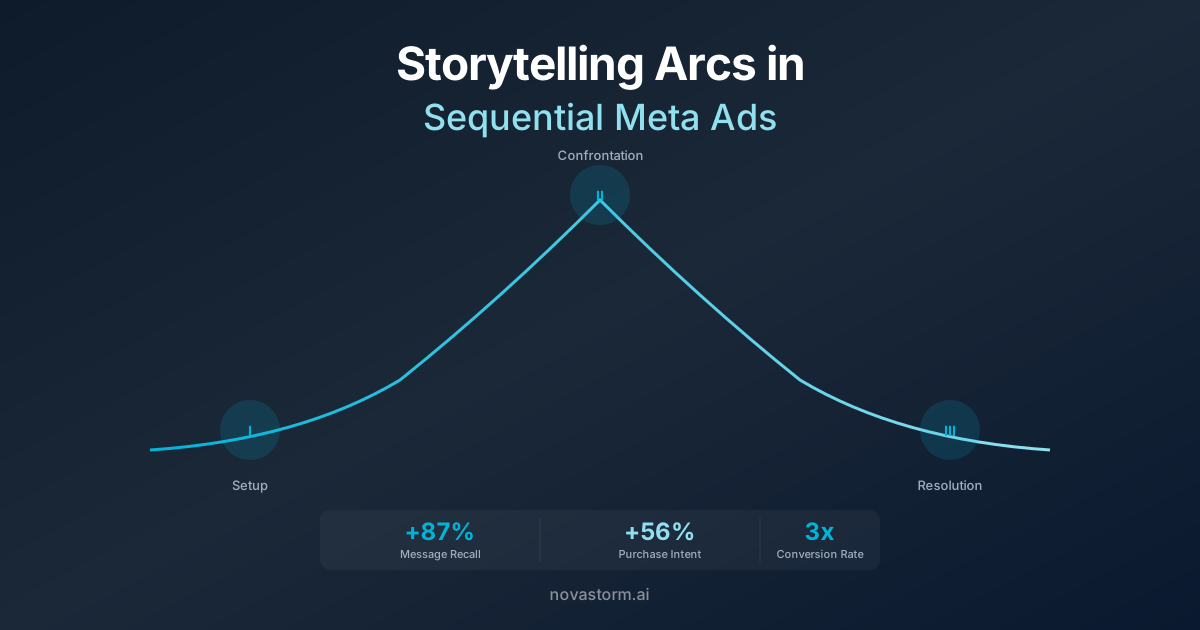
Storytelling Arcs in Sequential Meta Ads: Three-Act Structure
Master the three-act structure for sequential Meta ads. Build storytelling arcs that guide prospects from awareness to conversion with narrative ad sequences.
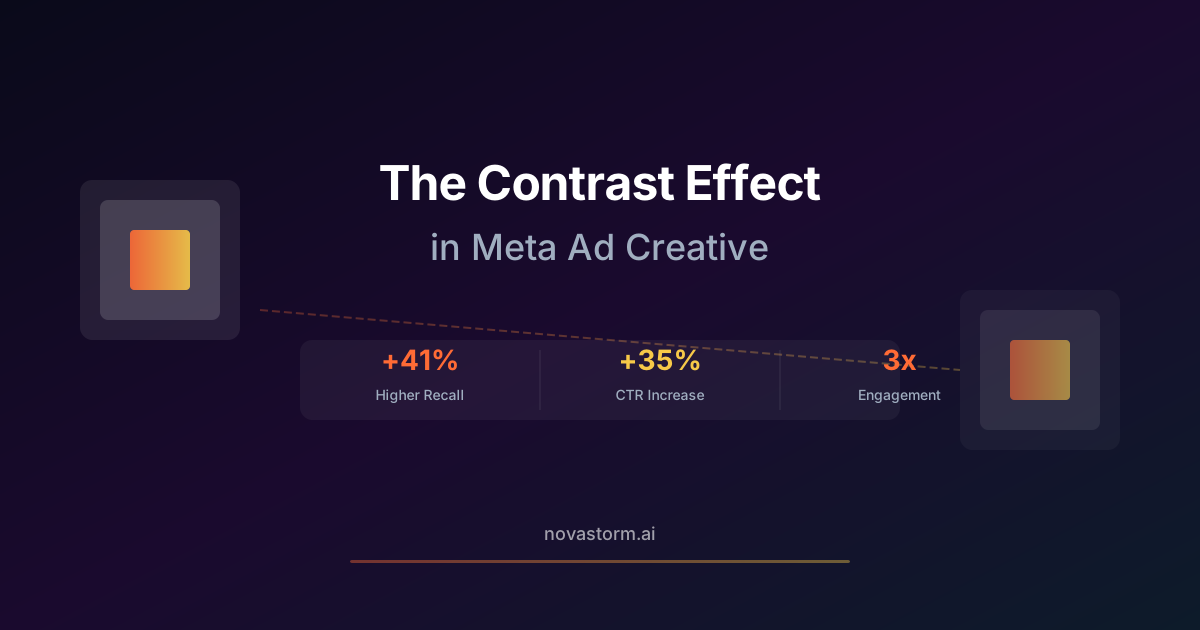
The Contrast Effect in Meta Ad Creative: Standing Out in the Feed
Learn how the contrast effect in Meta ad creative helps your ads stand out in crowded feeds. Proven psychology-backed strategies for higher CTR and engagement.
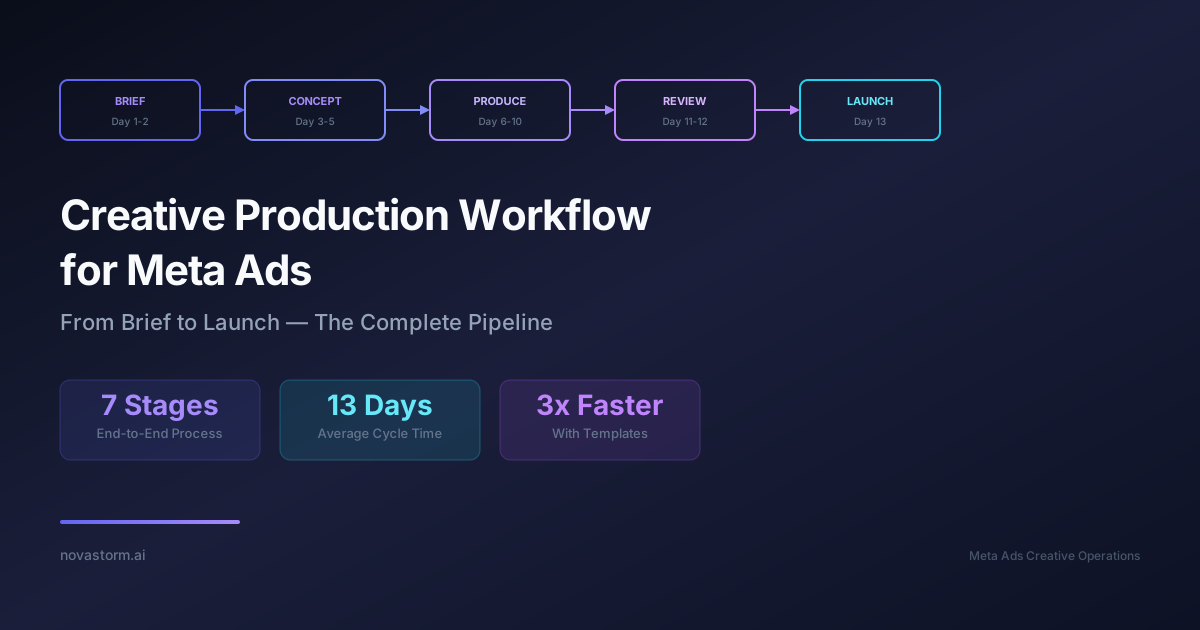
Creative Production Workflow for Meta Ads: From Brief to Launch
Master the creative production workflow for Meta Ads. Learn the step-by-step process from creative brief to ad launch that top-performing teams follow.