Sequential Retargeting on Meta Ads: Storytelling Across Touchpoints
Master sequential retargeting on Meta Ads by telling compelling stories across touchpoints. Build narrative-driven campaigns that guide prospects to conversion.

Every great brand has a story. But most retargeting campaigns strip that story away, replacing it with repetitive product shots and discount codes. Sequential retargeting on Meta Ads offers a different approach: the ability to unfold a narrative across multiple touchpoints, where each ad builds on the previous one and moves the prospect closer to conversion through the power of storytelling.
When you deploy sequential retargeting on Meta Ads effectively, you stop being the annoying brand that follows people around the internet. Instead, you become the compelling narrator guiding them through a journey they want to complete.
The Psychology Behind Sequential Storytelling
Humans are wired for stories. Neuroscience research shows that narrative content activates more brain regions than factual statements alone. When we hear a story, our brains release oxytocin, the chemical associated with trust and empathy. This is why sequential retargeting on Meta Ads works so powerfully when structured as a story rather than a series of disconnected pitches.
The Zeigarnik effect further explains the mechanism. People remember incomplete tasks and stories better than completed ones. When your first ad introduces a problem and promises a solution without fully delivering it, the viewer's brain creates an open loop. They are psychologically primed to pay attention to your next ad because their mind wants closure.
Brands using narrative-based sequential retargeting on Meta Ads report 35-45% higher recall rates compared to standard retargeting with repetitive messaging. The story structure creates mental hooks that static ads cannot match.
Designing Your Narrative Arc
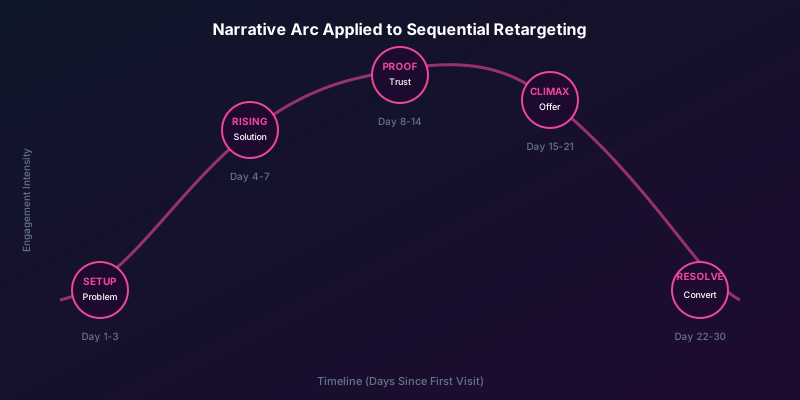
Every effective story follows a structure: setup, conflict, rising action, climax, and resolution. Your sequential retargeting on Meta Ads should mirror this arc. Each touchpoint represents a chapter, and each chapter has a specific role in advancing the narrative toward the conversion event.
| Chapter | Story Element | Ad Objective | Creative Approach |
|---|---|---|---|
| Chapter 1 | The Setup | Establish the problem | Problem-awareness video or carousel |
| Chapter 2 | Rising Action | Introduce the solution | Explainer or demo content |
| Chapter 3 | Social Proof | Build credibility | Testimonials and case studies |
| Chapter 4 | The Climax | Present the offer | Value proposition with CTA |
| Chapter 5 | Resolution | Drive conversion | Urgency-based final push |
The key principle is that each chapter must stand alone as a coherent message while also advancing the overarching story. Not every prospect will see all five chapters. Some will convert at chapter three. Others will need all five. Design each ad to work independently while contributing to the larger narrative.
Implementing Sequential Retargeting on Meta Ads
The technical implementation relies on custom audiences with time-based windows and exclusion logic. You need to create audience segments that correspond to each chapter and ensure that prospects only see ads appropriate to their current position in the story.
Audience Segmentation for Chapters
- Chapter 1 audience: All website visitors from the past 3 days who have not seen any retargeting ad
- Chapter 2 audience: Users who engaged with Chapter 1 ad (watched 50% or more of video, or clicked) within the past 7 days
- Chapter 3 audience: Users who engaged with Chapter 2 ad within the past 10 days, excluding converters
- Chapter 4 audience: Users who engaged with Chapter 3 ad within the past 14 days, excluding converters
- Chapter 5 audience: Users who saw Chapter 4 but did not convert within 21 days
Use Meta's engagement custom audiences to track ad interactions. Video view percentages, ad clicks, and post engagement all serve as progression triggers. The more specific your trigger events, the more precisely you can control the story flow.
Creative Frameworks for Each Touchpoint
Chapter one creative should lead with empathy. Identify the pain point your audience experiences and reflect it back to them. Use video where possible because it allows you to set an emotional tone that static images cannot. Keep the brand presence subtle at this stage. The focus is on the problem, not your product.
Stop wasting ad budget
NovaStorm AI cuts Meta Ads CPA by 40% on average. Start free.
Chapter two introduces your brand as the guide. Reference the problem from chapter one, then pivot to how your solution addresses it. This is where product demos, explainer videos, and benefit-focused carousels shine. The prospect now knows you understand their problem, so they are receptive to your solution.
Chapter three leverages social proof. Customer testimonials, before-and-after showcases, and results-driven case studies validate your claims. This chapter addresses the unspoken objection: does this actually work for people like me?
Chapters four and five close the loop. Present your specific offer with clear value articulation, then create urgency for those who still have not acted. The narrative resolution is the conversion itself, and your final ads should make that resolution feel inevitable and desirable.
Measuring Story Performance Across Touchpoints
Standard metrics only tell part of the story. When running sequential retargeting on Meta Ads, you need to track progression metrics that show how effectively prospects move through your narrative chapters.
| Metric | What It Measures | Target Benchmark |
|---|---|---|
| Chapter Completion Rate | % who advance to next chapter | 40-60% |
| Full Narrative Exposure | % who see all chapters | 15-25% |
| Story-Attributed Conversions | Conversions from full sequence | Track vs partial |
| Narrative Drop-Off Point | Where most users exit the story | Identify weakest chapter |
| Time to Conversion | Days from Chapter 1 to conversion | Compare to non-sequential |
Create a custom dashboard that tracks users through each chapter. Compare the conversion rate of users who completed the full narrative against those who only saw partial sequences. This data reveals whether your storytelling structure adds genuine value or whether certain chapters need revision.
Common Mistakes in Sequential Retargeting
- Making chapters too dependent on each other so standalone viewing makes no sense
- Using the same visual style for every chapter, making the sequence feel repetitive instead of progressive
- Setting time windows too tight, causing prospects to miss chapters entirely
- Neglecting frequency caps, which turns storytelling into harassment
- Failing to exclude converters from later chapters, wasting budget on already-won customers
Scaling Sequential Campaigns With Automation
Managing sequential retargeting on Meta Ads manually becomes overwhelming as you scale. Multiple audience segments, time-based triggers, creative rotations, and frequency caps create a web of interconnected settings that require constant attention.
AI-driven platforms can monitor the health of each chapter in your sequence, automatically adjusting budgets when drop-off rates spike, rotating underperforming creative, and rebalancing spend toward the chapters that drive the most progression. This lets you focus on crafting better stories while the system handles operational execution.
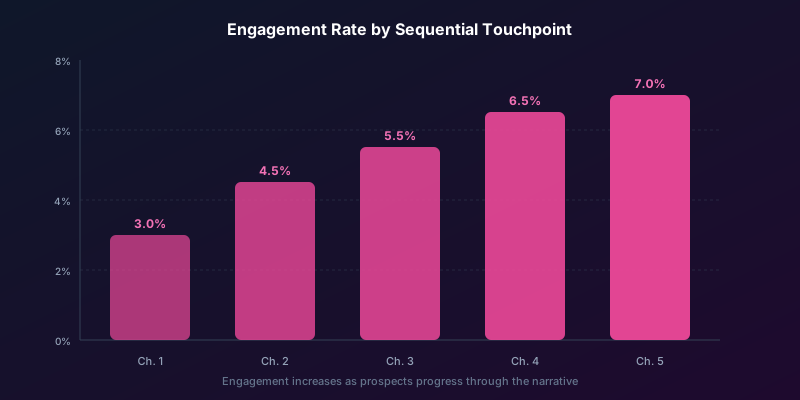
Sequential retargeting on Meta Ads transforms your campaigns from interruptions into experiences. When done right, prospects do not just tolerate your ads. They anticipate the next chapter. That shift in perception is what separates forgettable retargeting from campaigns that build lasting brand affinity and consistent conversions.
Novastorm AI automates Meta Ads routine — from monitoring to optimization. Learn more at novastorm.ai
Disclaimer: This article was generated with the assistance of AI and reviewed by the NovaStorm AI team. While we strive for accuracy, we recommend verifying specific data points and consulting official sources (linked where available) for critical business decisions.
Ready to automate your Meta Ads?
NovaStorm AI takes full responsibility for your campaigns — from monitoring to optimization.
Get Started FreeRelated Articles
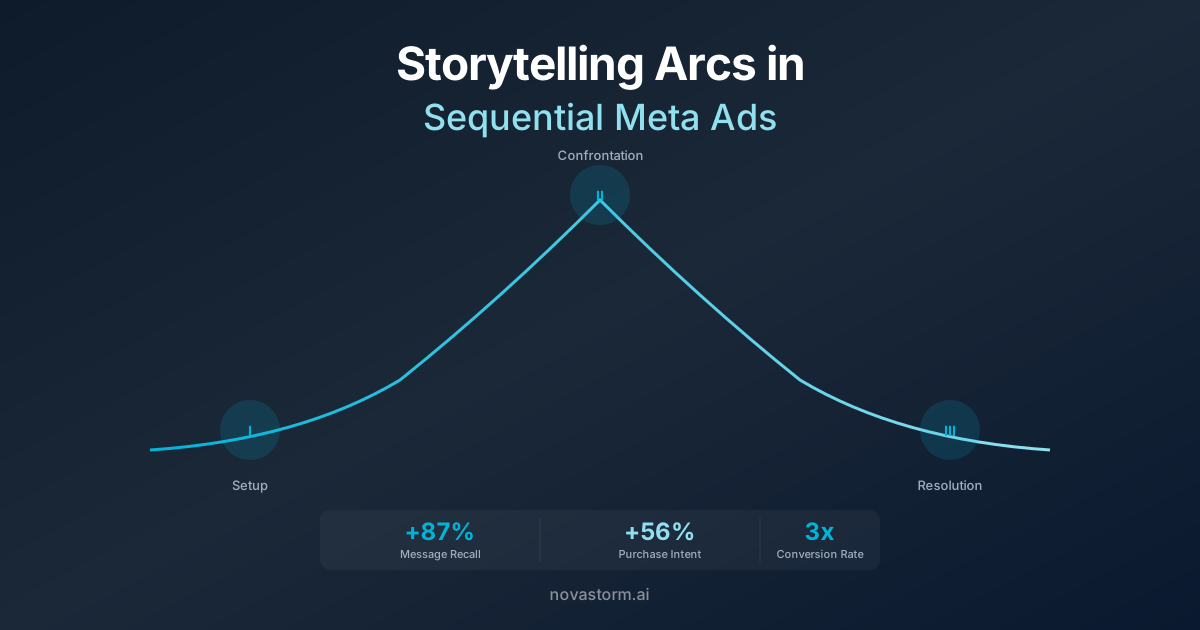
Storytelling Arcs in Sequential Meta Ads: Three-Act Structure
Master the three-act structure for sequential Meta ads. Build storytelling arcs that guide prospects from awareness to conversion with narrative ad sequences.
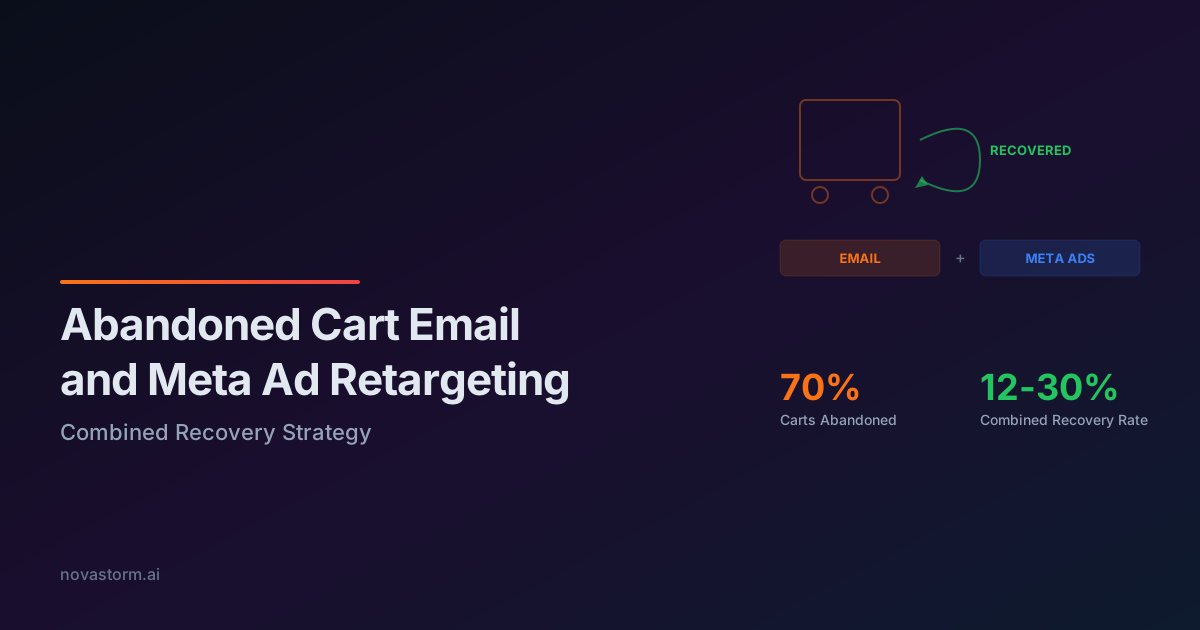
Abandoned Cart Email and Meta Ad Retargeting: Combined Recovery
Combine abandoned cart emails with Meta Ad retargeting to recover up to 30% of lost revenue. Build a multi-channel cart recovery system that converts.
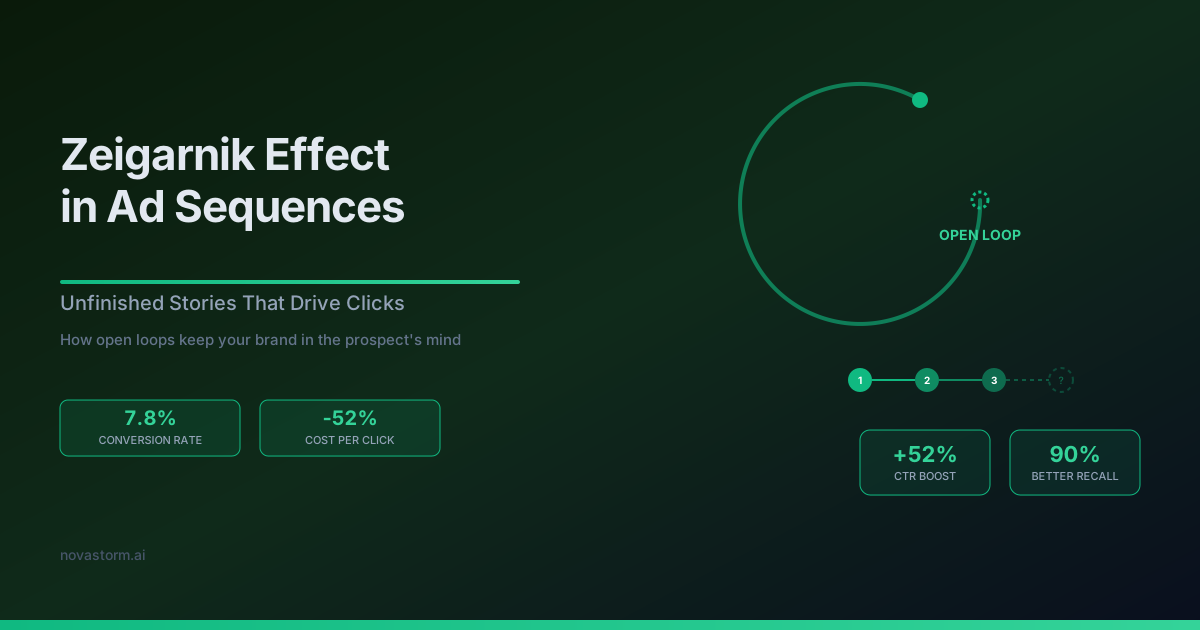
Zeigarnik Effect in Ad Sequences: Unfinished Stories That Drive Clicks
Use the Zeigarnik effect in ad sequences to create unfinished stories that keep audiences engaged. Learn how open loops boost Meta Ads click-through rates by 52%.