Abandoned Cart Email and Meta Ad Retargeting: Combined Recovery
Combine abandoned cart emails with Meta Ad retargeting to recover up to 30% of lost revenue. Build a multi-channel cart recovery system that converts.
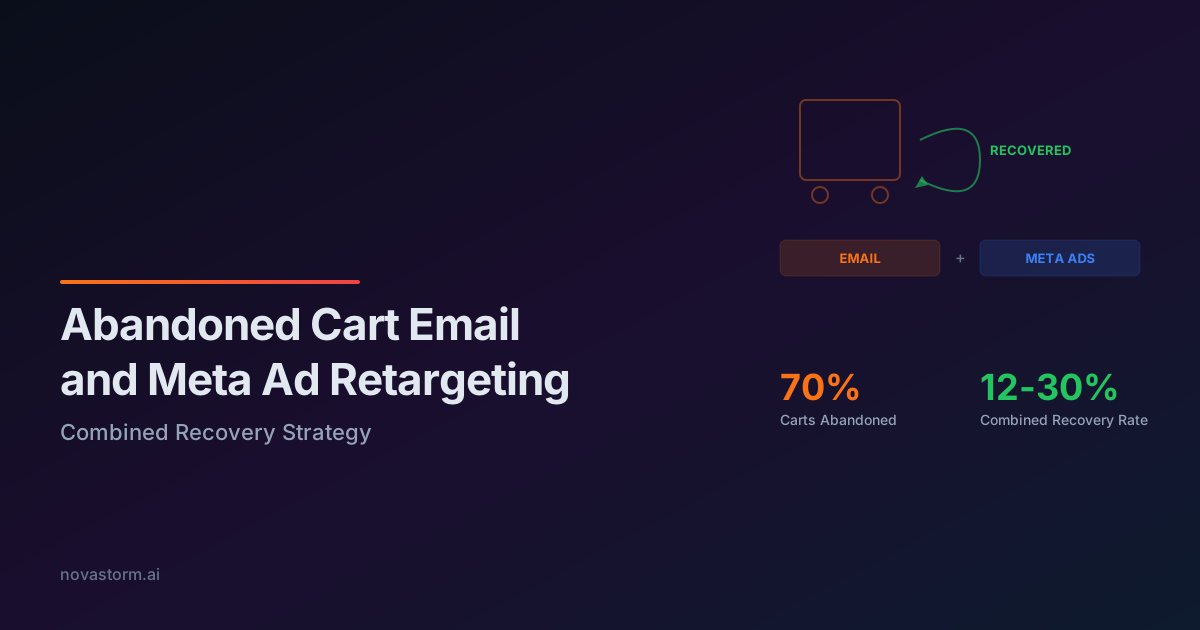
Nearly 70% of online shopping carts are abandoned before checkout. That represents an enormous volume of expressed purchase intent that evaporates at the final step. While abandoned cart emails are a proven recovery tool, they only reach subscribers with known email addresses. Abandoned cart email Meta Ad retargeting extends your recovery reach to every visitor who added items to their cart, regardless of whether you have their contact information.
The most effective cart recovery strategies deploy both channels in a coordinated sequence. Email handles the direct, personal outreach to known contacts. Meta Ads catch the anonymous abandoners who never provided an email address. Together, they create a multi-touchpoint recovery system that captures revenue neither channel could recover alone.
The Cart Abandonment Recovery Gap
Standard abandoned cart email sequences recover between 5% and 15% of abandoned carts. That is a meaningful number, but it leaves the vast majority of potential revenue on the table. The limitation is simple: you can only email people whose addresses you have collected. For most ecommerce stores, that means 20-40% of abandoners are unreachable through email alone.
Abandoned cart email Meta Ad retargeting closes this gap. The Meta Pixel tracks cart additions regardless of login status, enabling you to serve targeted ads to abandoners who never shared their email. This expands your addressable recovery audience by 60-80%, dramatically increasing total recovered revenue.
| Recovery Channel | Reach | Avg. Recovery Rate | Time to Convert | Cost |
|---|---|---|---|---|
| Email Only | 20-40% of abandoners | 5-15% | 1-24 hours | Very Low |
| Meta Ads Only | 60-80% of abandoners | 3-8% | 1-7 days | Medium |
| Combined Email + Meta | 85-95% of abandoners | 12-30% | 1-48 hours | Low-Medium |
| Email + Meta + SMS | 90-98% of abandoners | 15-35% | 1-72 hours | Medium |
Building the Combined Recovery Sequence
The timing and sequencing of your combined recovery system determines its effectiveness. Email and Meta Ads should not fire simultaneously with identical messages. Instead, they should complement each other with staggered timing and differentiated creative approaches.
- Hour 1: First abandoned cart email with product reminder and direct checkout link
- Hour 2-4: Meta retargeting ad launches showing abandoned products with social proof
- Hour 24: Second email with urgency element (limited stock, price lock expiring)
- Hour 24-48: Meta ad creative shifts to incentive-based (free shipping, small discount)
- Hour 72: Final email with last-chance messaging and stronger incentive
- Day 4-7: Meta carousel ad featuring abandoned items plus related recommendations
- Day 7+: Suppress recovered customers, shift remaining to general retargeting
Use frequency capping on your Meta retargeting ads to prevent ad fatigue. Three to five impressions per day is the sweet spot for abandoned cart email Meta Ad retargeting campaigns. Higher frequency leads to negative brand perception without improving conversion rates.
Meta Ad Creative for Cart Recovery
Dynamic Product Ads are the foundation of effective abandoned cart Meta Ad retargeting. These ads automatically pull in the exact products the user added to their cart, creating highly personalized creative at scale. The familiarity of seeing their specific items in the ad serves as a powerful conversion trigger.
Layer your dynamic product ads with persuasion elements that address the most common abandonment reasons. Include trust signals like money-back guarantees, highlight shipping speed and cost, and show ratings and reviews. These elements address objections that the initial product page failed to overcome.
| Creative Element | Impact on Recovery Rate | Best Placement |
|---|---|---|
| Dynamic product images | +15-25% | Primary creative |
| Customer reviews/ratings | +10-20% | Ad copy or overlay |
| Free shipping offer | +20-35% | Headline |
| Urgency countdown | +8-15% | Ad copy |
| Discount code | +25-40% | Delayed (48h+ only) |
| Social proof numbers | +5-12% | Description text |
Stop wasting ad budget
NovaStorm AI cuts Meta Ads CPA by 40% on average. Start free.
Coordinating Email and Ad Messaging
The biggest mistake in combined recovery campaigns is treating email and Meta Ads as independent channels with duplicate messaging. When a customer sees the exact same offer in both their inbox and their feed, the second touchpoint adds zero incremental value. Each channel should communicate a different persuasion angle.
Your email sequence should focus on personal, direct communication: product details, checkout convenience, and customer service availability. Your abandoned cart email Meta Ad retargeting should focus on social validation: customer reviews, popularity signals, and lifestyle imagery showing the product in use.
Never offer discounts in the first touchpoint of either channel. Leading with discounts trains customers to abandon carts intentionally to receive promotions. Reserve incentives for the 48-hour mark when non-incentive approaches have been exhausted.
Audience Segmentation for Recovery Campaigns
Not all cart abandoners deserve the same recovery effort. A first-time visitor who added a single low-value item requires different treatment than a returning customer who abandoned a high-value cart. Segment your recovery audiences by cart value, customer status, and abandonment stage.
High-value carts warrant more aggressive recovery spending. Set your abandoned cart email Meta Ad retargeting bid higher for carts exceeding your average order value. These users have demonstrated strong purchase intent with significant basket sizes, making them worth a higher cost per recovered conversion.
- Cart value tiers: adjust ad spend and discount levels based on basket size
- New vs. returning customers: returning customers need reminders, not persuasion
- Abandonment stage: product page vs. cart vs. checkout abandoners convert differently
- Product category: high-consideration items need longer recovery windows
- Traffic source: paid traffic abandoners may need different messaging than organic
Measuring Combined Recovery Performance
Attribution in multi-channel recovery campaigns is inherently complex. When a customer receives an email, sees a retargeting ad, and then returns to complete their purchase by typing in your URL directly, which channel gets credit? The answer matters because it determines where you allocate budget.
Implement incremental lift testing to measure the true impact of your abandoned cart email Meta Ad retargeting. Hold out a random subset of abandoners from Meta retargeting while continuing to email them. Compare recovery rates between the exposed and holdout groups to calculate the incremental revenue attributable to the ad channel specifically.
Novastorm AI tracks your abandoned cart email Meta Ad retargeting campaigns with cross-channel attribution, identifying the true incremental value of each touchpoint. Automated monitoring flags when recovery rates decline, creative fatigues, or frequency caps need adjustment.
The combination of abandoned cart email and Meta Ad retargeting is not merely additive; it is multiplicative. Each channel reinforces the other, creating a recovery system where the sum significantly exceeds the parts. Brands implementing coordinated recovery report total recovery rates two to three times higher than single-channel approaches, making this one of the highest-ROI strategies available in ecommerce marketing.
Novastorm AI automates Meta Ads routine — from monitoring to optimization. Learn more at novastorm.ai
Disclaimer: This article was generated with the assistance of AI and reviewed by the NovaStorm AI team. While we strive for accuracy, we recommend verifying specific data points and consulting official sources (linked where available) for critical business decisions.
Ready to automate your Meta Ads?
NovaStorm AI takes full responsibility for your campaigns — from monitoring to optimization.
Get Started FreeRelated Articles
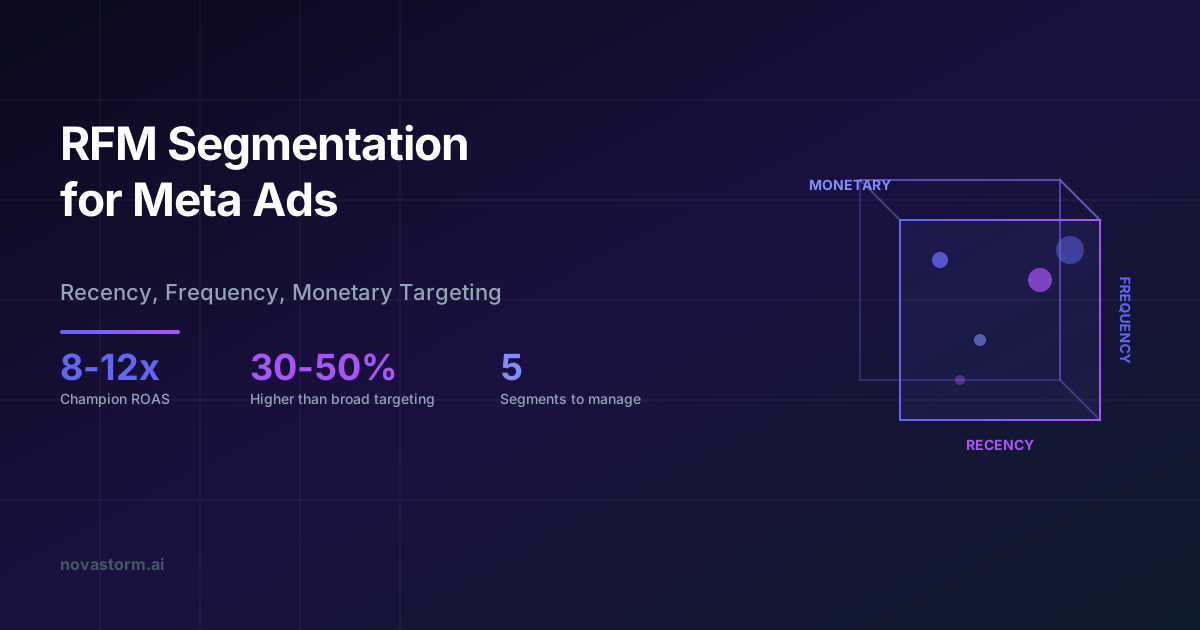
RFM Segmentation for Meta Ads: Recency, Frequency, Monetary Targeting
Learn how to apply RFM segmentation to your Meta Ads campaigns. Target audiences by recency, frequency, and monetary value to maximize ROAS and reduce wasted ad spend.
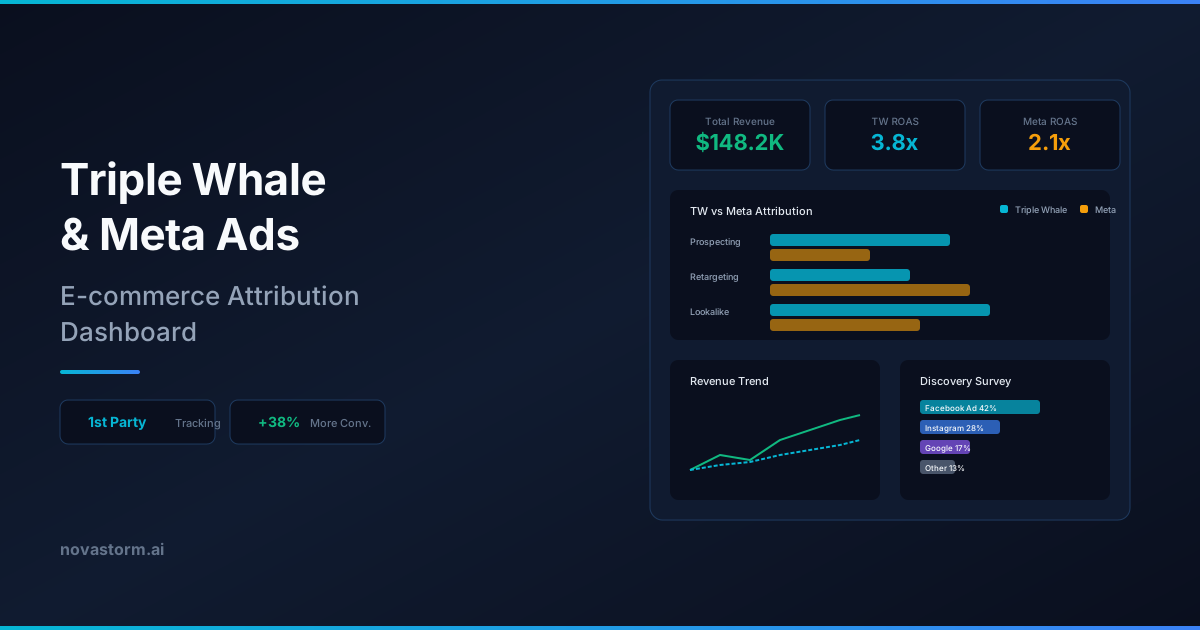
Triple Whale and Meta Ads: E-commerce Attribution Dashboard
Learn how Triple Whale improves Meta Ads attribution for e-commerce brands. First-party pixel tracking, server-side events, and real ROAS measurement explained.
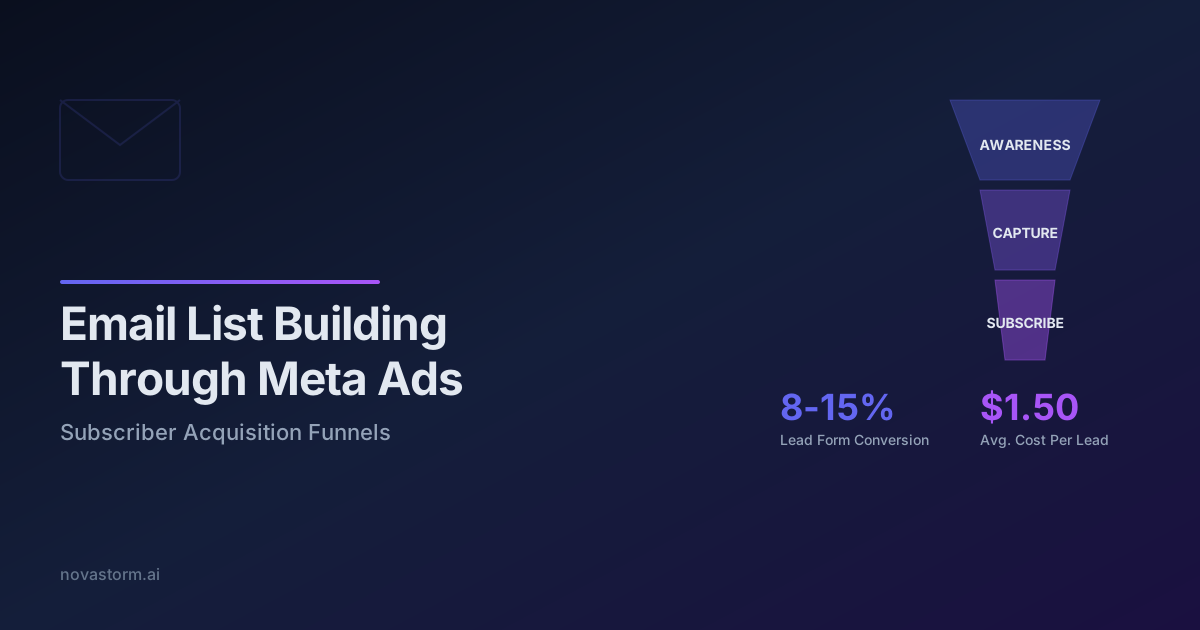
Email List Building Through Meta Ads: Subscriber Acquisition Funnels
Learn how to build high-quality email lists using Meta Ads subscriber acquisition funnels. Reduce cost per lead and grow engaged audiences with proven strategies.