Negative Signals: Teaching the Algorithm What to Avoid
Understand how negative signals affect your Meta Ads performance. Learn how hiding ads, negative reactions, and poor quality scores impact delivery and what to do about it.

Every interaction with your Meta Ads sends a signal to the algorithm — and negative signals are far more powerful than positive ones. When users hide your ad, report it, or leave angry reactions, the algorithm learns that your content is unwelcome. Understanding how negative signals work in Meta Ads and actively managing them is critical for maintaining delivery, controlling costs, and protecting your account health.
How Negative Feedback Works in Meta Ads
Meta tracks multiple types of negative feedback. The most impactful is when a user hides your ad — clicking the three dots and selecting 'Hide ad' or 'Report ad.' This tells Meta explicitly that the content was unwanted. Other negative signals include angry reactions, negative comments, unusually high bounce rates from your landing page, and repeated impressions without engagement.
Each negative signal reduces your ad's quality score internally. While Meta does not expose a single quality number, the relevance diagnostics reflect this sentiment. Ads with high negative feedback get lower quality rankings, which increases costs and reduces delivery over time.
| Signal Type | Severity | How Meta Detects It |
|---|---|---|
| Hide ad | High | User clicks 'Hide ad' in dropdown |
| Report ad | Very High | User reports as spam/misleading/offensive |
| Angry reaction | Medium | User selects angry emoji reaction |
| Negative comment | Medium | Sentiment analysis of comment text |
| Quick bounce | Low-Medium | User returns to Facebook within seconds |
| No engagement after repeat views | Low | Frequency builds without interactions |

The Cost of Negative Reactions
Negative feedback creates a downward spiral. As your quality score drops, Meta charges you more to show the same ad to the same audience. Higher costs mean your budget reaches fewer people. Fewer people means less data for the algorithm to optimize, which further degrades performance.
In extreme cases, ads with very high negative feedback rates can be disapproved entirely or trigger account-level restrictions. Meta monitors the ratio of positive to negative signals — a small number of hides relative to millions of impressions is normal, but a spike in negative feedback is a red flag.
If more than 1 percent of people who see your ad hide it, you have a significant problem. Normal hide rates are well below 0.5 percent. Monitor this metric in Ads Manager under performance columns.
Creative Adjustments to Reduce Negative Signals
Most negative feedback stems from a mismatch between the ad and the audience. The ad either shows content that is irrelevant, makes promises that feel misleading, or appears too frequently. Addressing these root causes is more effective than any surface-level fix.
- Avoid clickbait or sensationalized claims that set unrealistic expectations.
- Ensure your landing page delivers exactly what the ad promises.
- Set frequency caps to prevent ad fatigue — 3 impressions per week per person is a reasonable starting point.
- Use clear, honest imagery that accurately represents your product or service.
- Test different tones — aggressive sales language generates more negative reactions than educational content.
- Exclude existing customers from prospecting campaigns to avoid annoying people who already purchased.
Stop wasting ad budget
NovaStorm AI cuts Meta Ads CPA by 40% on average. Start free.
Audience Refinement: Reaching the Right People
The most common source of negative signals is showing ads to people who have no interest in what you offer. Broad targeting casts a wide net, but it inevitably reaches people who find your ads irrelevant. Refining your audience reduces negative feedback because the people seeing your ads are more likely to be genuinely interested.
Use exclusion audiences aggressively. Exclude past purchasers from acquisition campaigns, exclude people who have hidden your ads before, and exclude demographics that your data shows never convert. Each exclusion reduces wasted impressions and potential negative signals.
Comment Management: The Overlooked Signal Source
Ad comments are visible to everyone who sees your ad. Negative comments — complaints, accusations, or warnings from unhappy customers — influence how other viewers perceive your ad. Meta's algorithm also monitors comment sentiment as a quality signal.
- Monitor comments on all active ads daily.
- Respond professionally to complaints — acknowledge the issue and offer to help.
- Hide comments that are abusive, contain misinformation, or violate community standards.
- Do not delete genuine criticism — it looks suspicious and can provoke more negative reactions.
- Use positive comments to your advantage by pinning the best ones to the top.

Quality Score Impact on Delivery and Costs
Meta's ad auction considers three factors: your bid, estimated action rates, and ad quality. Negative signals directly reduce ad quality, which means you need to bid higher to win the same auctions. Over time, this quality penalty compounds — each incremental increase in negative feedback raises your costs further.
Think of your ad quality score as a bank account. Every positive interaction makes a deposit. Every negative signal makes a withdrawal. Keep the balance positive and your costs stay low. Let it go negative and everything becomes more expensive.
Managing negative signals is not about suppressing criticism — it is about creating ads that genuinely serve the people who see them. When your targeting is precise, your creative is honest, your landing page delivers, and your comment section is managed, negative signals naturally stay low. The algorithm rewards this discipline with better delivery, lower costs, and more consistent performance.
Novastorm AI automates Meta Ads routine — from monitoring to optimization. Learn more at novastorm.ai
Disclaimer: This article was generated with the assistance of AI and reviewed by the NovaStorm AI team. While we strive for accuracy, we recommend verifying specific data points and consulting official sources (linked where available) for critical business decisions.
Ready to automate your Meta Ads?
NovaStorm AI takes full responsibility for your campaigns — from monitoring to optimization.
Get Started FreeRelated Articles
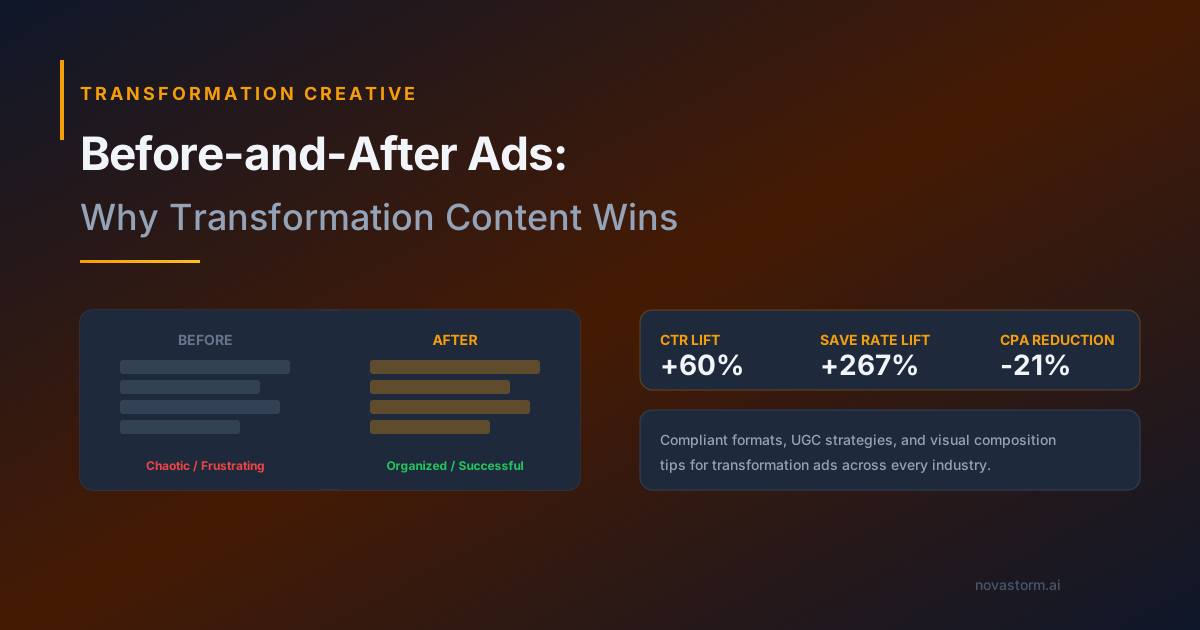
Before-and-After Ads: Why Transformation Content Wins on Meta
Learn why before-and-after ads drive the highest engagement on Meta. Compliant formats, visual composition tips, and industry examples that convert.
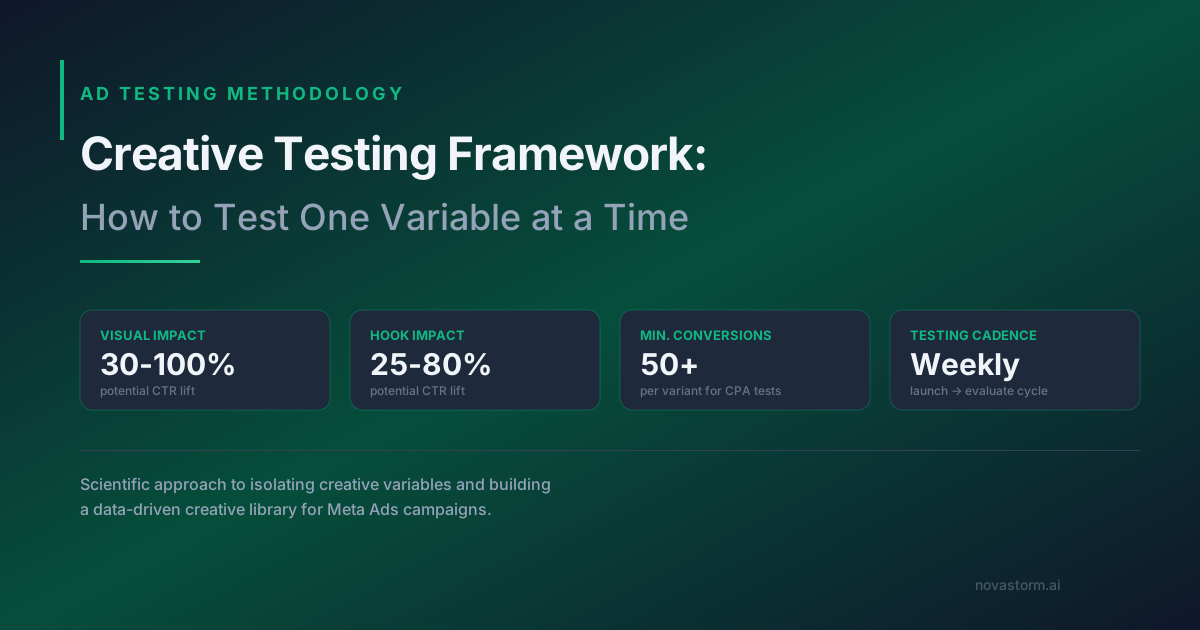
Creative Testing Framework: How to Test One Variable at a Time
Build a scientific creative testing framework for Meta Ads. Learn to isolate variables, reach statistical significance, and build a winning creative library.
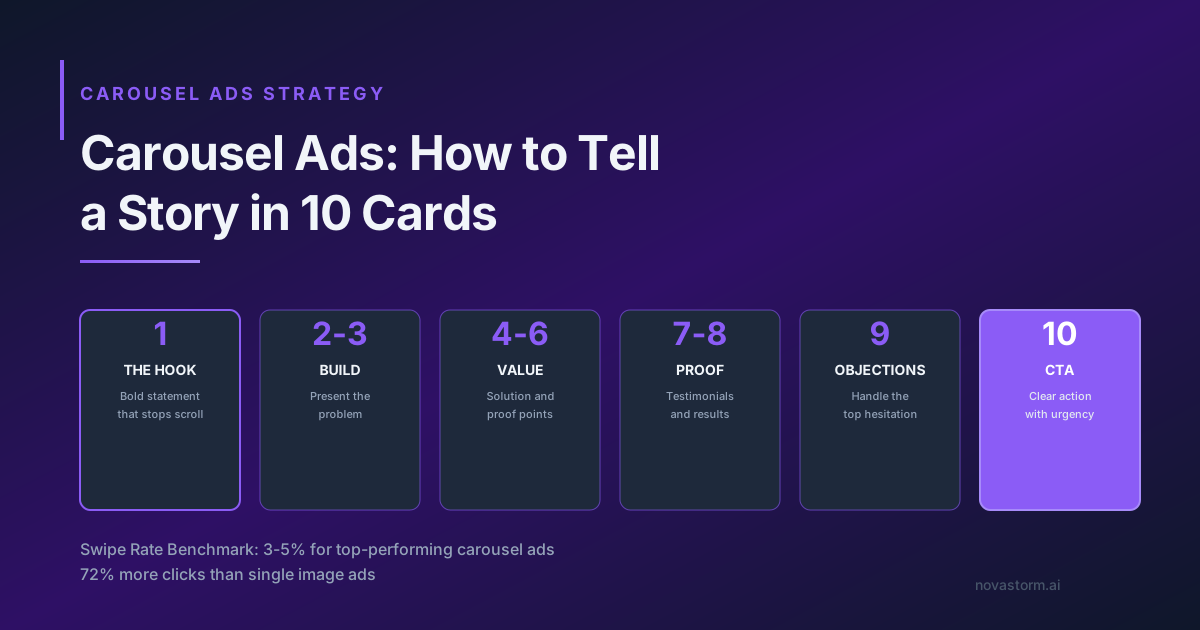
Carousel Ads: How to Tell a Story in 10 Cards
Master carousel ads on Meta with proven storytelling techniques. Learn card sequencing, swipe rate benchmarks, and structures that drive engagement.