Carousel Ads: How to Tell a Story in 10 Cards
Master carousel ads on Meta with proven storytelling techniques. Learn card sequencing, swipe rate benchmarks, and structures that drive engagement.
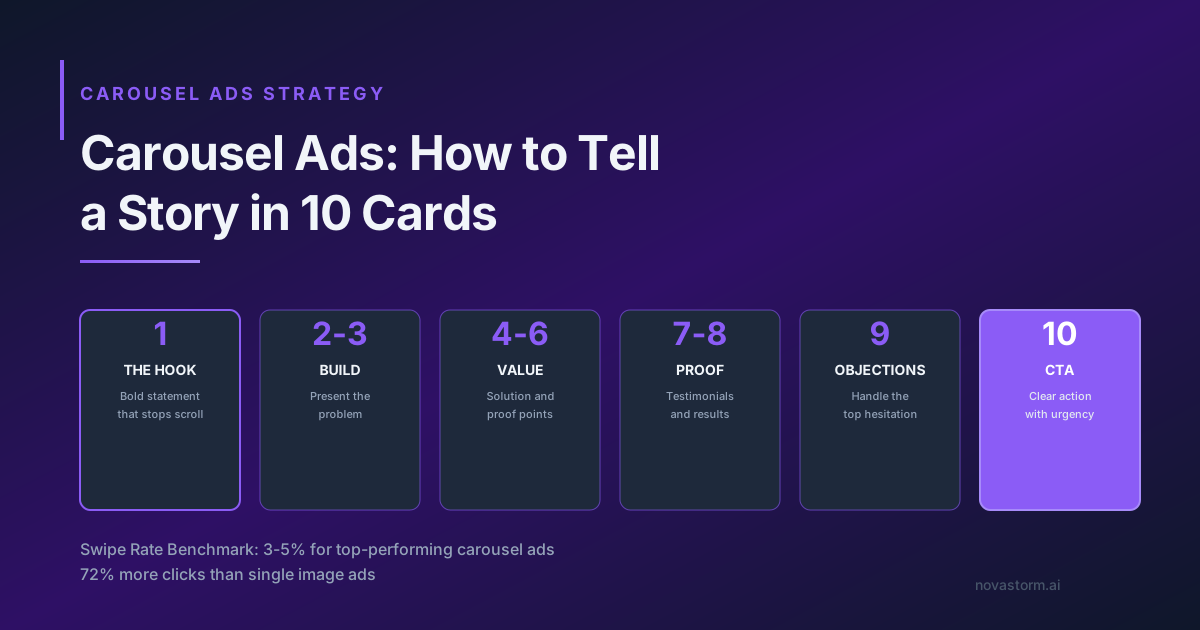
Carousel Ads Storytelling: Why Sequential Cards Outperform Single Images
Carousel ads storytelling is one of the most underused techniques in Meta advertising. While most advertisers treat each card as an isolated product slot, top performers use the 10-card format to build narratives that pull users through a complete journey from curiosity to conversion.
Data from Meta shows carousel ads can deliver 30-50% lower cost per conversion compared to single image ads when structured correctly. The key is understanding that carousels are not just multi-image galleries. They are sequential storytelling devices.
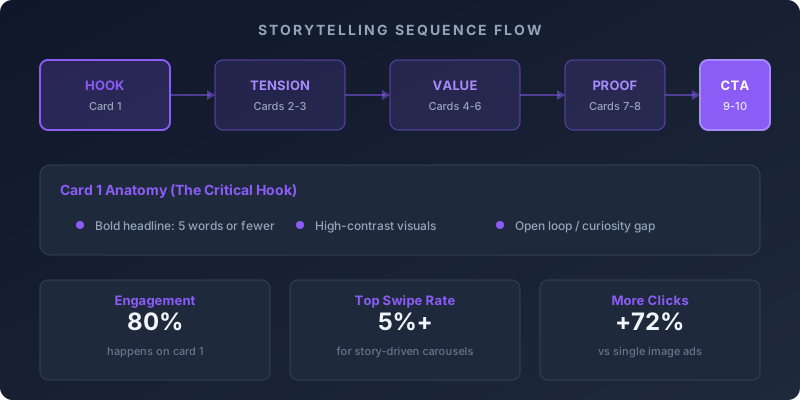
How to Structure a Carousel Ad for Maximum Swipe Rate
The average swipe rate for carousel ads on Meta sits between 1.5-3.5%. Top-performing carousels break 5%. The difference comes down to structure. Every card must create a reason to see the next one.
The first card carries 80% of the weight. If it fails to hook, no one sees cards 2 through 10. Treat card one as a headline, not a product image. It should pose a question, make a bold statement, or present a visual that demands context.
- Card 1: The hook. Bold statement, question, or curiosity gap
- Cards 2-3: Build tension. Present the problem or opportunity
- Cards 4-6: Deliver value. Show the solution, proof, or process
- Cards 7-8: Social proof. Testimonials, results, or case studies
- Card 9: Handle objections. Address the biggest hesitation
- Card 10: Call to action. Clear next step with urgency
Add a visual arrow or "swipe" indicator on each card. This simple addition can increase swipe rates by 15-20% because many users do not realize carousel ads are swipeable.
Product Showcase vs Educational Carousel Formats
There are two dominant carousel formats, and they serve very different objectives. Product showcase carousels display multiple items from a catalog. Educational carousels teach something valuable. Both work, but for different audiences and funnel stages.
Product showcase carousels work best for retargeting and bottom-funnel campaigns. Users already know the brand and want to browse options. Each card features one product with price, a brief description, and a direct link to the product page.
Educational carousels dominate top-of-funnel. They deliver genuine value through tips, statistics, or step-by-step guides. Users save and share these carousels, extending organic reach far beyond the paid audience. Educational carousels often see 3-5x more saves than product-focused ones.
| Format | Best For | Avg Swipe Rate | Avg CPA |
|---|---|---|---|
| Product Showcase | Retargeting, BOFU | 1.5-2.5% | $15-22 |
| Educational | Prospecting, TOFU | 3.0-5.0% | $25-35 |
| Storytelling | Brand, MOFU | 2.5-4.0% | $20-30 |
| Testimonial | Social proof, MOFU | 2.0-3.5% | $18-28 |
| Before/After | Transformation, TOFU | 3.5-5.5% | $22-32 |
Why the First Card Makes or Breaks Your Carousel Ad
Meta reports that 70% of carousel ad engagement happens on the first card. If your opening image or text fails to spark curiosity, the remaining cards are invisible. This means your first card must work on two levels: it needs to stand alone as an engaging ad and simultaneously tease what comes next.
High-performing first cards share common traits. They use contrasting colors that pop in the feed. They feature a short, bold headline of five words or fewer. They create an open loop: a question unanswered, a list begun but not finished, or a transformation only half revealed.
Stop wasting ad budget
NovaStorm AI cuts Meta Ads CPA by 40% on average. Start free.
Test your first card as a standalone single image ad. If it performs well on its own, it will be an excellent carousel opener. If it flops alone, it will drag down the entire carousel.
Placing a CTA on Every Carousel Card for Higher Conversions
One mistake advertisers make is saving the call to action for the last card. Most users will never reach card 10. Each card should include a subtle CTA that works for wherever the user is in the sequence.
Early cards can use soft CTAs like "Swipe to see more" or "Keep reading." Middle cards can introduce the offer with "See how it works." Later cards escalate to direct CTAs like "Shop now" or "Get started today." This graduated approach respects the user's journey while maximizing conversion opportunities.
- Cards 1-2: Engagement CTA (Swipe, Learn more)
- Cards 3-5: Curiosity CTA (See the results, Discover how)
- Cards 6-8: Soft conversion CTA (Try free, See pricing)
- Cards 9-10: Hard conversion CTA (Buy now, Sign up, Get started)
Meta allows you to set individual destination URLs for each card. Use this feature strategically. Send early-card clicks to educational content or blog posts. Route later-card clicks to product pages or sign-up forms. Match the landing page to the intent level of each card position.
Carousel vs Single Image Ad Performance Benchmarks
The data consistently shows carousels outperform single images on engagement metrics. Carousel ads generate 72% more clicks than single image ads according to Meta's internal research. They also deliver higher relevance scores because the interactive format increases dwell time.
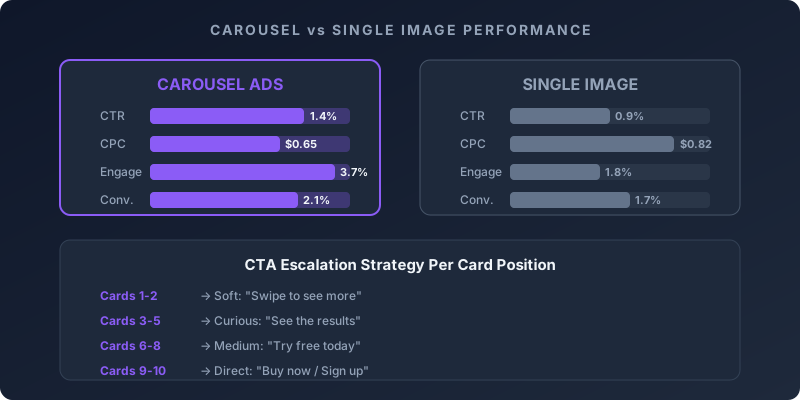
However, carousels require more creative effort and do not always win on every metric. Single image ads can achieve lower CPMs because they load faster and work better in certain placements like the right column on desktop. The right choice depends on your specific campaign objective.
| Metric | Carousel | Single Image | Difference |
|---|---|---|---|
| Click-Through Rate | 1.4% | 0.9% | +56% |
| Cost Per Click | $0.65 | $0.82 | -21% |
| Engagement Rate | 3.7% | 1.8% | +106% |
| CPM | $11.50 | $9.20 | +25% |
| Conversion Rate | 2.1% | 1.7% | +24% |
Building Your Carousel Ad Creative Workflow
Efficient carousel production starts with templates. Design a master template with consistent branding: same font, color palette, and layout grid across all 10 cards. Then swap content for each new campaign. This approach cuts production time from hours to minutes.
Batch your carousel creation. Instead of building one carousel at a time, create 3-5 variations in a single session. Vary the hook on card one, the proof elements in the middle, and the CTA on the final card. Test these variations against each other to identify winning patterns for your audience.
Use consistent visual transitions between cards. A continuous background image split across cards, a progress bar, or numbered steps all create visual continuity that encourages swiping.
Carousel ads reward preparation and testing. Start with the storytelling framework outlined above, build your first carousel, measure swipe rates and conversion data, then iterate. Over time, you will develop a library of proven card sequences that you can remix for any campaign.
Novastorm AI automates Meta Ads routine — from monitoring to optimization. Learn more at novastorm.ai
Disclaimer: This article was generated with the assistance of AI and reviewed by the NovaStorm AI team. While we strive for accuracy, we recommend verifying specific data points and consulting official sources (linked where available) for critical business decisions.
Ready to automate your Meta Ads?
NovaStorm AI takes full responsibility for your campaigns — from monitoring to optimization.
Get Started FreeRelated Articles
Static vs Video Ads on Meta: When to Use Each Format
Compare static vs video ads on Meta. Learn when each format wins based on CTR, CPA, ROAS data and how to allocate budget between formats effectively.

Negative Signals: Teaching the Algorithm What to Avoid
Understand how negative signals affect your Meta Ads performance. Learn how hiding ads, negative reactions, and poor quality scores impact delivery and what to do about it.
Before-and-After Ads: Why Transformation Content Wins on Meta
Learn why before-and-after ads drive the highest engagement on Meta. Compliant formats, visual composition tips, and industry examples that convert.