Before-and-After Ads: Why Transformation Content Wins on Meta
Learn why before-and-after ads drive the highest engagement on Meta. Compliant formats, visual composition tips, and industry examples that convert.
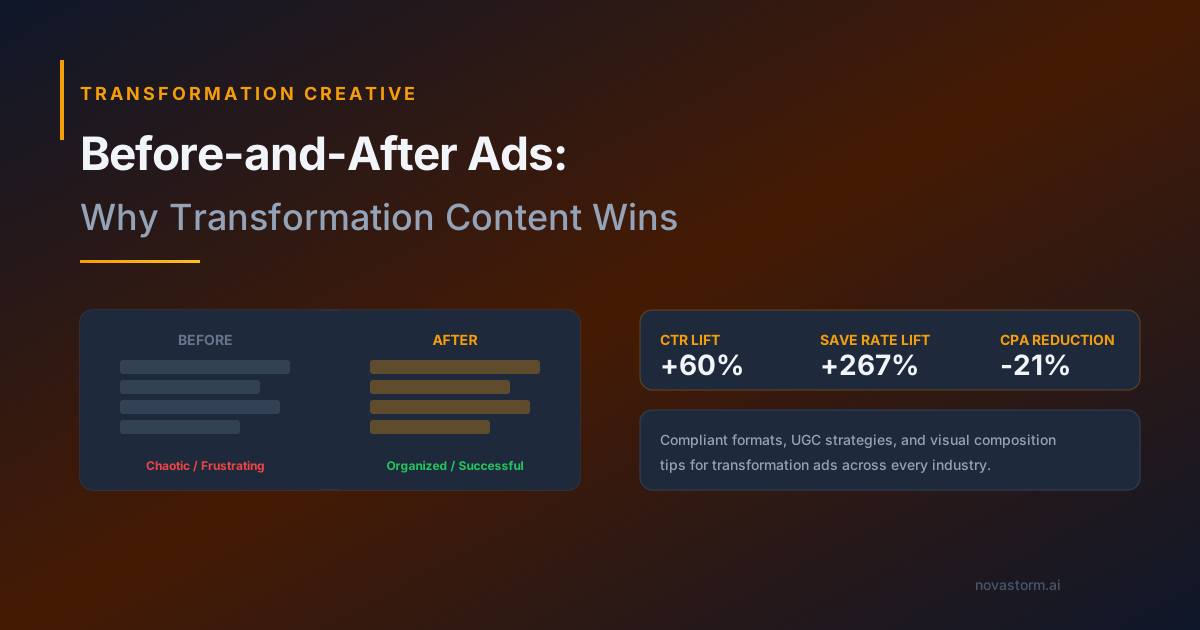
Why Before-and-After Ads Trigger Higher Engagement on Meta
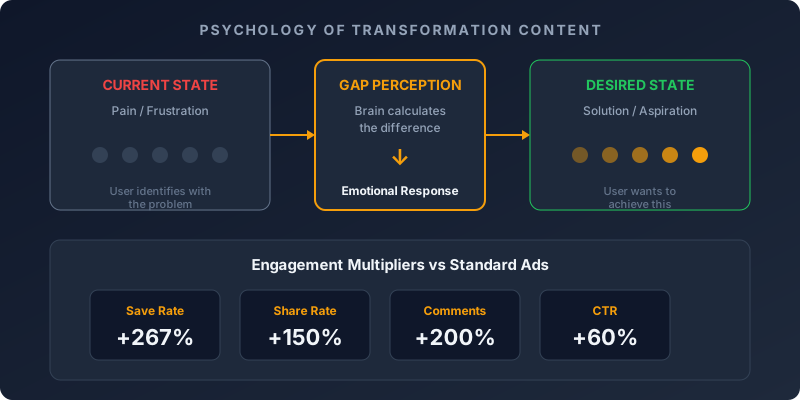
Before-and-after ads consistently rank among the highest-performing creative formats on Meta. The psychology is straightforward: humans are wired to notice change. When we see a transformation, our brains automatically calculate the gap between the two states, creating an emotional response that static product images rarely achieve.
Data from multiple ad accounts shows that transformation content generates 2-4x higher save rates and 40-60% higher share rates compared to standard product images. These engagement signals feed Meta's algorithm, earning lower CPMs and broader reach.
Meta Policies on Before-and-After Ad Content
Meta has strict policies around before-and-after imagery, particularly in health, fitness, and beauty verticals. Understanding these rules is essential because a policy violation can result in ad rejection, account restrictions, or permanent bans.
The core rule is simple: you cannot imply that a product will produce specific physical results using before-and-after imagery. This means side-by-side weight loss photos, skin transformation close-ups, or any content suggesting guaranteed physical outcomes is prohibited.
Never use before-and-after images that suggest unrealistic body transformation, imply guaranteed results, or focus on close-up body parts. Meta's automated review flags these patterns aggressively.
However, there are compliant ways to show transformation. You can show product results (clean room vs messy room, organized dashboard vs chaotic spreadsheet), lifestyle improvements (stressed vs relaxed scenarios), and process transformations (manual workflow vs automated workflow). The key distinction is showing the outcome of using a product or service without making medical or physical claims about the person.
Compliant Before-and-After Formats That Pass Review
Smart advertisers have developed several formats that leverage transformation psychology while staying within Meta's guidelines. These formats focus on situations, environments, and results rather than personal physical changes.
- Environment transformation: messy desk to organized workspace, cluttered inbox to empty inbox
- Dashboard or metrics transformation: poor results to strong results using screenshots
- Process transformation: manual 10-step process vs simple 2-step automated flow
- Timeline transformation: showing progress over time with dated milestones
- Testimonial-led transformation: customer telling their story in their own words (UGC)
- Side-by-side comparison: your product vs the old way of doing things
The testimonial approach is particularly powerful because the transformation narrative comes from a real person sharing their experience. This shifts the content from a claim made by the advertiser to a story told by a customer, which Meta treats differently in its review process.
Industry Examples of Transformation Ads That Convert
Transformation content works across virtually every industry when framed correctly. The key is identifying the transformation your product enables and visualizing it in a way that resonates emotionally.
| Industry | Before State | After State | Visual Format |
|---|---|---|---|
| SaaS / Software | Cluttered spreadsheet chaos | Clean dashboard with insights | Split-screen screenshot |
| Home Services | Overgrown, neglected yard | Manicured landscape | Slider image or carousel |
| E-commerce | Problem scenario (stain, mess) | Clean, solved scenario | Video with time-lapse |
| Education | Confused, overwhelmed learner | Confident, skilled professional | UGC testimonial video |
| Beauty | Morning routine frustration | Quick, effortless result | Sped-up process video |
| Fitness | Low energy, unmotivated | Active, enjoying workout | Lifestyle imagery (not body) |
Stop wasting ad budget
NovaStorm AI cuts Meta Ads CPA by 40% on average. Start free.
Notice that the fitness and beauty examples avoid showing body-specific before-and-after comparisons. Instead, they focus on the emotional and lifestyle transformation. This approach is both compliant and often more effective because it speaks to the aspirational outcome rather than a physical measurement.
Visual Composition Tips for Before-and-After Creatives
The visual layout of your transformation content dramatically affects its impact. Poor composition can make a compelling transformation look unconvincing, while strong composition can make a subtle change feel dramatic.
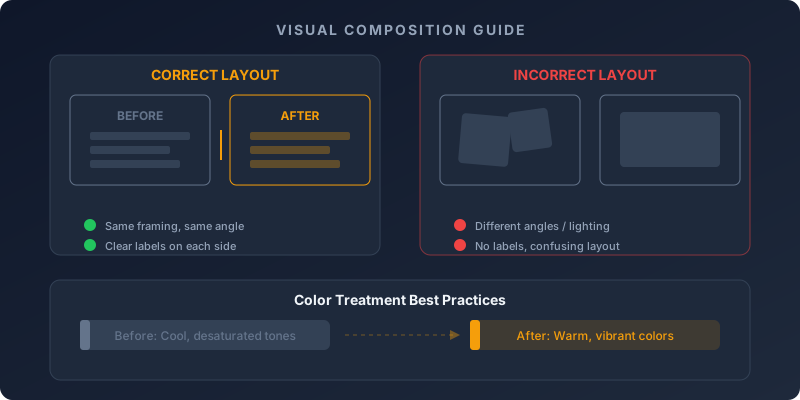
- Use identical framing for both states. Same angle, same lighting, same distance. The only difference should be the transformation itself.
- Apply color psychology. Use cooler, desaturated tones for the 'before' state and warm, vibrant colors for the 'after' state.
- Label clearly. Add 'Before' and 'After' text overlays so the comparison is immediately obvious even at small mobile sizes.
- Place the 'after' state on the right or below. Western readers naturally scan left-to-right, top-to-bottom. The positive outcome should be where their eye lands last.
- Use a divider line or slider visual between the two states to create a clear separation.
- Keep backgrounds simple. Busy backgrounds distract from the transformation and reduce impact.
UGC Transformation Content for Authentic Ad Creative
User-generated content featuring real transformations is the most effective format in this category. When a real customer shows their journey, it combines the power of social proof with the emotional pull of transformation storytelling.
UGC transformation content typically follows a three-act structure. Act one: the creator describes their problem or frustration. Act two: they introduce how they discovered the solution. Act three: they show the result and describe how it changed their situation. This narrative arc mirrors classic storytelling and holds attention longer than polished brand content.
Brief your UGC creators with specific instructions about showing the transformation process, not just the end result. Process-focused content builds more credibility and performs 30-40% better than outcome-only content.
When sourcing UGC transformation content, look for creators who naturally match your target audience demographics. Authenticity matters more than production quality. A genuine video shot on an iPhone outperforms a scripted transformation video with studio lighting in almost every test.
Performance Benchmarks for Transformation Ad Creatives
Transformation content outperforms standard creative across nearly every metric, but the magnitude depends on your industry and audience. Here are representative benchmarks based on aggregated data across verticals.
| Metric | Standard Creative | Transformation Creative | Lift |
|---|---|---|---|
| CTR | 1.0% | 1.6% | +60% |
| Save Rate | 0.3% | 1.1% | +267% |
| Share Rate | 0.2% | 0.5% | +150% |
| Comment Rate | 0.1% | 0.3% | +200% |
| CPA | $28 | $22 | -21% |
| Ad Recall Lift | 8% | 14% | +75% |
The save and share metrics deserve special attention. When users save or share your ad, they extend its reach organically. This creates a compounding effect where your paid impressions generate free additional exposure. Transformation content excels here because people share aspirational content with friends who share similar goals.
Before-and-after content is not a trend. It is a fundamental format rooted in human psychology. Master the compliant approaches, invest in UGC, and apply the visual composition principles above. Your transformation ads will consistently outperform standard creative when executed with care and authenticity.
Novastorm AI automates Meta Ads routine — from monitoring to optimization. Learn more at novastorm.ai
Disclaimer: This article was generated with the assistance of AI and reviewed by the NovaStorm AI team. While we strive for accuracy, we recommend verifying specific data points and consulting official sources (linked where available) for critical business decisions.
Ready to automate your Meta Ads?
NovaStorm AI takes full responsibility for your campaigns — from monitoring to optimization.
Get Started FreeRelated Articles

Negative Signals: Teaching the Algorithm What to Avoid
Understand how negative signals affect your Meta Ads performance. Learn how hiding ads, negative reactions, and poor quality scores impact delivery and what to do about it.
Creative Testing Framework: How to Test One Variable at a Time
Build a scientific creative testing framework for Meta Ads. Learn to isolate variables, reach statistical significance, and build a winning creative library.
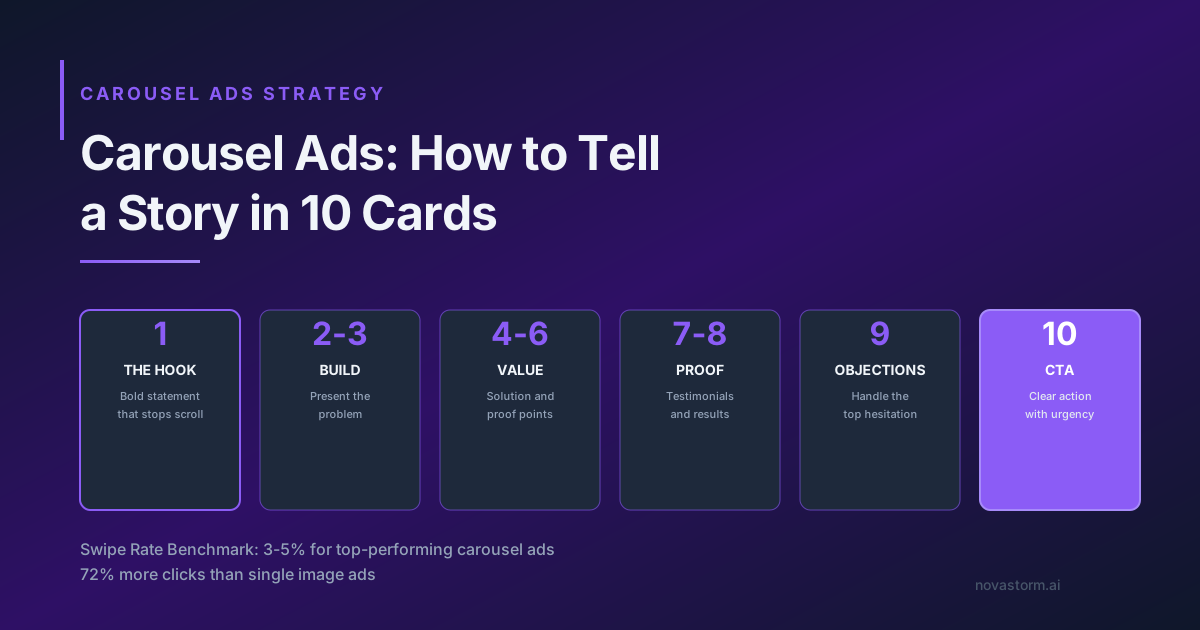
Carousel Ads: How to Tell a Story in 10 Cards
Master carousel ads on Meta with proven storytelling techniques. Learn card sequencing, swipe rate benchmarks, and structures that drive engagement.