Landing Page Optimization for Meta Ads Traffic
Optimize your landing pages for Meta Ads traffic. Learn how page speed, mobile-first design, message match, and form optimization reduce CPA and boost conversions.
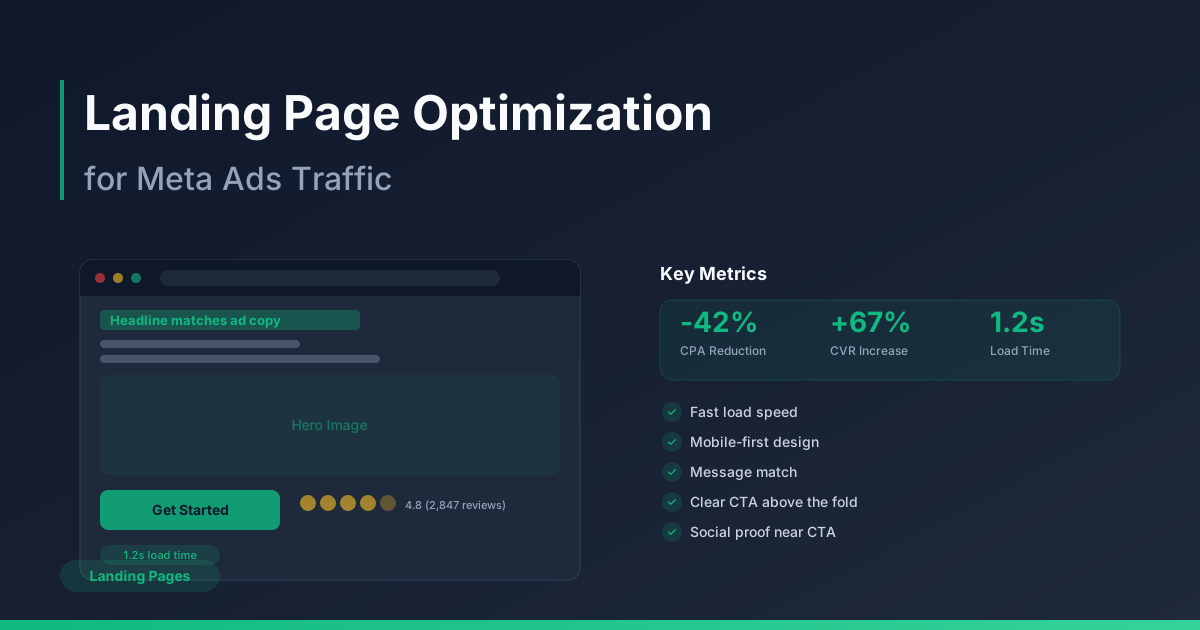
Landing page optimization for Meta Ads traffic is one of the most overlooked levers in digital advertising. Advertisers spend hours perfecting ad creative and targeting, then send clicks to pages that load slowly, confuse visitors, or fail to match the ad's promise. The result is wasted spend and inflated CPAs. Fixing the post-click experience often delivers bigger improvements than any in-platform optimization.
Page Load Speed: The Silent CPA Killer
Every additional second of load time costs you conversions. Research consistently shows that pages loading in 1-2 seconds convert at roughly double the rate of pages loading in 5 seconds. For Meta Ads traffic — where users are casually browsing and easily distracted — speed is even more critical.
Meta's algorithm also factors in landing page experience when determining ad quality. Slow pages lead to higher bounce rates, which signal to the algorithm that your ad is not delivering value. This can increase your costs over time as the algorithm deprioritizes your ads.
| Load Time | Expected Bounce Rate | Conversion Impact |
|---|---|---|
| 1-2 seconds | ~26% | Baseline (optimal) |
| 3 seconds | ~32% | -10 to -15% |
| 5 seconds | ~38% | -25 to -35% |
| 7+ seconds | ~50%+ | -50%+ loss |
| 10+ seconds | ~60%+ | Most traffic lost |
Use Google PageSpeed Insights and test your landing page on a real mobile device over a cellular connection. Desktop testing on fast Wi-Fi gives a misleading picture of what your actual visitors experience.
Mobile-First Design: Where 90% of Your Traffic Lands
The vast majority of Meta Ads traffic comes from mobile devices. Yet many advertisers design landing pages on desktop screens and treat mobile as an afterthought. This approach guarantees a poor experience for most visitors.
Mobile-first means designing for the smallest screen first, then scaling up. Key elements include thumb-friendly buttons at least 44 pixels tall, single-column layouts, readable font sizes of 16 pixels minimum, and no horizontal scrolling. Every interaction should be achievable with one hand.
- Use single-column layouts — multi-column designs break on small screens.
- Make CTA buttons at least 44px tall and full-width on mobile.
- Set body text to 16px minimum to prevent browser auto-zoom on iOS.
- Eliminate pop-ups or make them easily dismissable on mobile.
- Test on actual devices, not just browser dev tools.
Message Match: Continuity from Ad to Landing Page
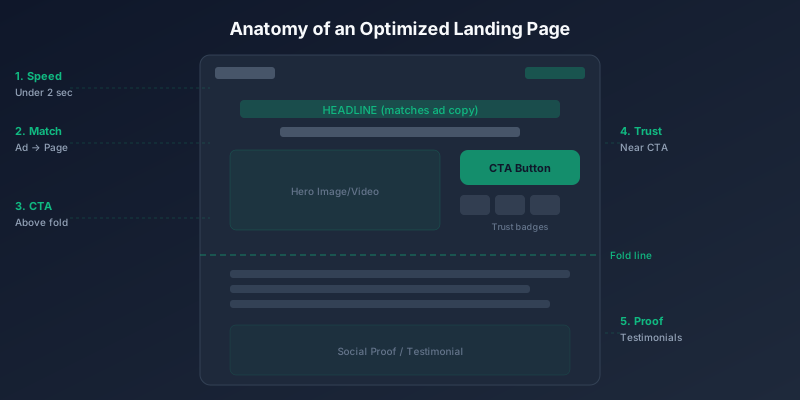
Message match means your landing page headline, imagery, and offer directly mirror what the ad promised. When someone clicks an ad about a 30 percent discount on running shoes and lands on a generic homepage, the disconnect creates friction that kills conversions.
Strong message match includes visual continuity (similar colors, images, and branding), headline continuity (the landing page headline echoes the ad headline), and offer continuity (the specific promotion or value proposition from the ad is immediately visible on the page).
Sending Meta Ads traffic to your homepage instead of a dedicated landing page is one of the most common and costly mistakes. Homepages serve many purposes; landing pages serve one. Build specific pages for specific campaigns.
Above the Fold: Win or Lose in 3 Seconds
Stop wasting ad budget
NovaStorm AI cuts Meta Ads CPA by 40% on average. Start free.
Visitors decide whether to stay or leave within the first 3 seconds. Everything above the fold — the content visible without scrolling — must communicate your value proposition clearly. This means a compelling headline, a supporting subheadline, a relevant hero image or video, and a visible call to action.
Avoid cluttering above the fold with navigation menus, multiple offers, or excessive text. The goal is clarity, not comprehensiveness. Below the fold is for supporting details; above the fold is for the core message.
Form Optimization: Reduce Friction at the Conversion Point
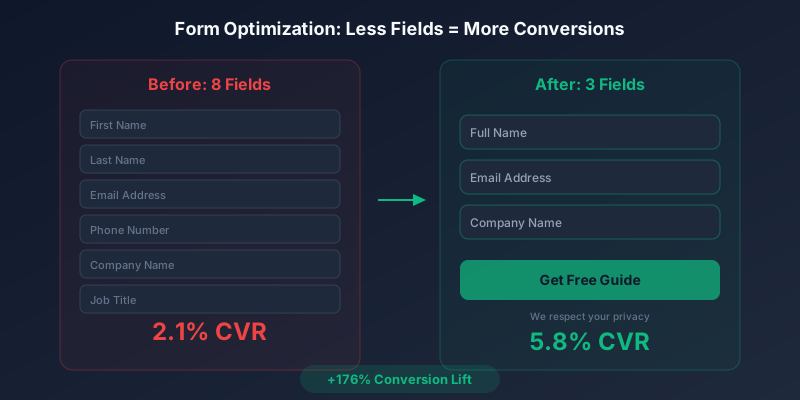
If your landing page uses a form, every additional field reduces completion rates. The rule of thumb is to ask only for information you absolutely need at this stage. Name and email is usually sufficient for lead generation. Additional data can be collected later in the funnel.
- Reduce fields to the absolute minimum — 3 fields maximum for top-of-funnel offers.
- Use autofill-friendly field names so browsers can auto-populate.
- Add inline validation so users see errors immediately, not after submission.
- Place the form above the fold or use a sticky CTA that scrolls with the user.
- Show a clear privacy statement near the submit button.
Social Proof Placement: Build Trust Quickly
Meta Ads traffic often consists of people encountering your brand for the first time. Social proof — testimonials, reviews, trust badges, and client logos — bridges the trust gap. Place your strongest social proof element near the CTA to reinforce the conversion decision at the critical moment.
Effective social proof includes specific results with numbers, real names and photos, logos of recognizable brands you have worked with, star ratings from verified platforms, and user-generated content. Generic statements like 'trusted by thousands' are weak compared to 'used by 2,847 marketing teams.'
A/B Testing Landing Pages
Just as you test ad creative, you should test landing pages. Small changes to headlines, CTAs, hero images, and form layouts can produce significant conversion rate improvements. Use tools like Google Optimize or dedicated landing page platforms that support built-in testing.
Heatmap Insights
Install a heatmap tool like Hotjar or Microsoft Clarity on your landing pages. Heatmaps reveal where users click, how far they scroll, and where they drop off. This data tells you what is working and what is being ignored, guiding your optimization priorities with evidence rather than assumptions.
The best ad in the world cannot compensate for a poor landing page. Invest equal effort into your post-click experience and your pre-click creative — together they determine your true cost per acquisition.
Landing page optimization is not a one-time project. It is a continuous cycle of measurement, hypothesis, testing, and refinement. Start with speed, ensure mobile-first design, nail your message match, simplify your forms, and let heatmap data guide your next improvement. The compounding effect of these optimizations over time can transform your Meta Ads economics.
Novastorm AI automates Meta Ads routine — from monitoring to optimization. Learn more at novastorm.ai
Disclaimer: This article was generated with the assistance of AI and reviewed by the NovaStorm AI team. While we strive for accuracy, we recommend verifying specific data points and consulting official sources (linked where available) for critical business decisions.
Ready to automate your Meta Ads?
NovaStorm AI takes full responsibility for your campaigns — from monitoring to optimization.
Get Started FreeRelated Articles
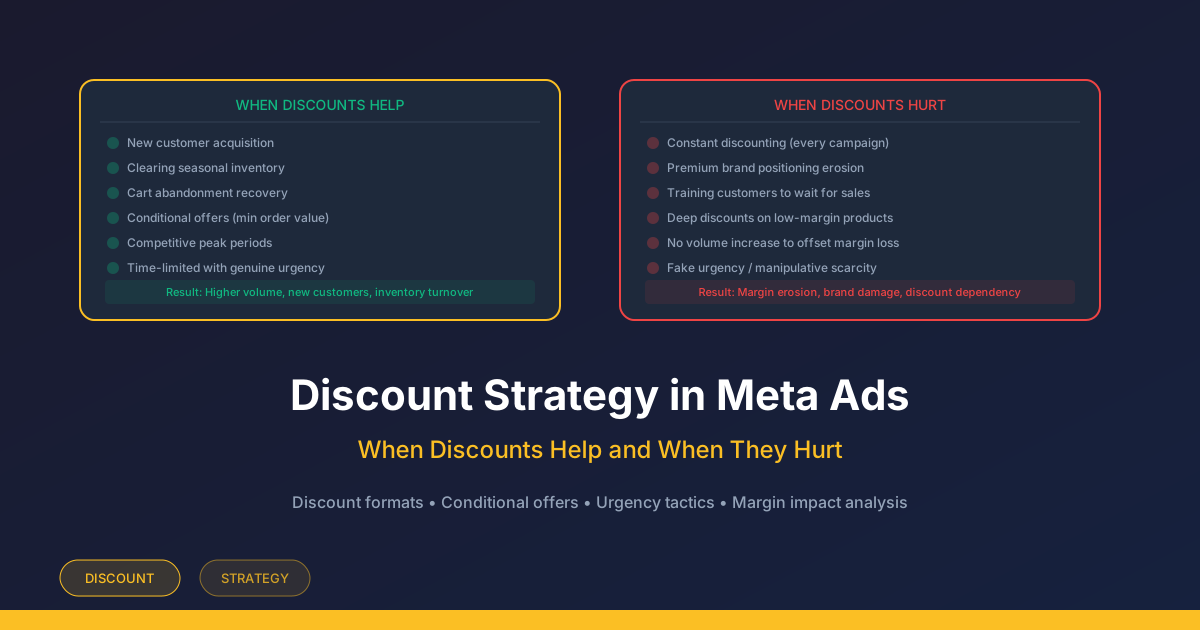
Discount Strategy in Meta Ads: When Discounts Help and When They Hurt
Learn when discounts boost Meta Ads performance and when they erode margins. Percentage vs dollar off, conditional offers, urgency tactics, and premium positioning.
Cart Abandonment Retargeting: How to Recover Lost Revenue on Meta
Master cart abandonment retargeting on Meta. Learn optimal retargeting windows, creative strategies, frequency limits, and multi-touch sequences to recover lost revenue.
Social Proof in Ads: How Reviews and Testimonials Boost Meta Ad Performance
Learn how social proof in ads like reviews, testimonials, and trust signals can dramatically improve your Meta ad click-through rates and conversions.