Hook Rate: The 3-Second Rule That Determines Ad Success
Master hook rate to win in Meta Ads. Learn why the first 3 seconds determine ad success, benchmark rates by industry, and 7 hook formulas that drive results.
What Hook Rate Is and Why It Predicts Ad Performance
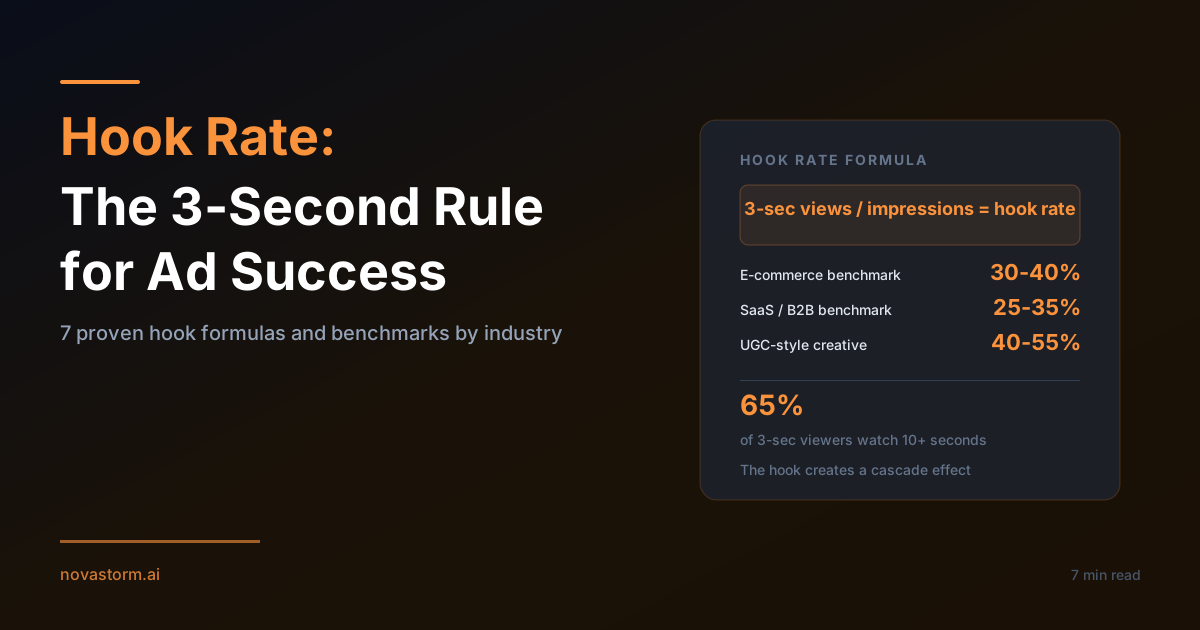
Hook rate is the percentage of people who watch at least 3 seconds of your video ad out of total impressions. It is calculated as 3-second video views divided by impressions. This single metric is the most reliable early indicator of whether a video ad will succeed or fail on Meta.
The reason hook rate matters so much is simple: if people do not stop scrolling in the first 3 seconds, everything else in your ad is irrelevant. Your carefully crafted sales message, your testimonial segment, your call to action: none of it reaches anyone who scrolled past.
Meta's algorithm also uses hook rate as a signal of creative quality. Ads with higher hook rates receive more favorable delivery because Meta interprets the attention as a positive user experience signal. Better hook rates lead to lower CPMs, which compounds into better overall cost efficiency.
Why the First 3 Seconds of Your Video Ad Matter Most
Users on Facebook and Instagram scroll at an average speed that gives your ad roughly 1.5 to 3 seconds of passive attention before they decide to keep scrolling or stop. This is not a conscious decision. It is a reflex. Your opening frame must interrupt that reflex.
Think of the first 3 seconds as the headline of your video. Just as a written headline earns the click, your video hook earns the view. Without that view, there is no awareness, no consideration, and no conversion. The hook is the gateway to everything.
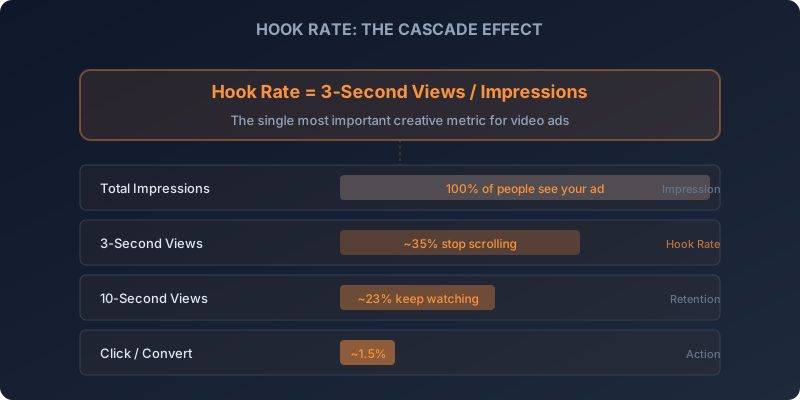
Research from Meta shows that 65% of people who watch the first 3 seconds will watch at least 10 seconds. And people who watch 10+ seconds are significantly more likely to take action. The hook creates a cascade effect that drives all downstream metrics.
Benchmark Hook Rates by Industry and Ad Type
Hook rate benchmarks vary significantly by industry, ad format, and creative type. Knowing what "good" looks like for your vertical helps you evaluate your ads objectively rather than comparing against irrelevant standards.
| Industry / Format | Below Average | Average | Good | Excellent |
|---|---|---|---|---|
| E-commerce (product) | Under 20% | 20-30% | 30-40% | 40%+ |
| SaaS / B2B | Under 15% | 15-25% | 25-35% | 35%+ |
| DTC / Beauty | Under 25% | 25-35% | 35-45% | 45%+ |
| Fitness / Health | Under 25% | 25-35% | 35-50% | 50%+ |
| Finance / Insurance | Under 12% | 12-20% | 20-30% | 30%+ |
| UGC-style creative | Under 30% | 30-40% | 40-55% | 55%+ |
| Polished brand video | Under 15% | 15-25% | 25-35% | 35%+ |
UGC-style content consistently achieves higher hook rates than polished brand videos. The native, authentic look triggers less ad avoidance behavior because it blends with organic content in the feed.
Seven Hook Formulas That Stop the Scroll
After analyzing thousands of high-performing Meta Ads, patterns emerge in what makes hooks work. Here are seven proven hook formulas you can adapt for any product or service.
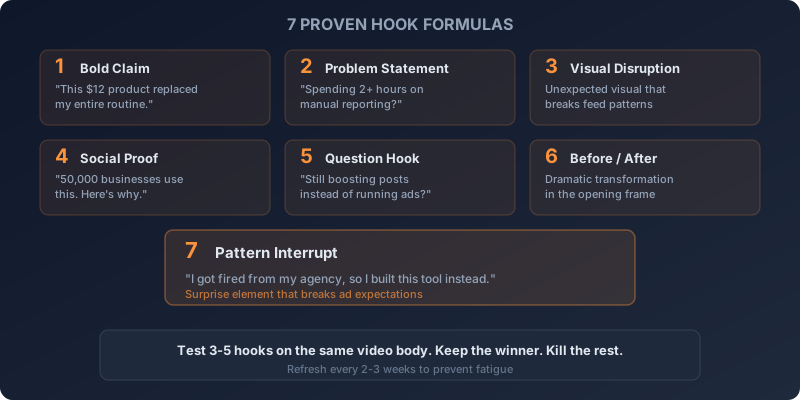
1. The Bold Claim Hook
Open with a statement so bold it demands attention. "This $12 product replaced my entire skincare routine." The claim creates curiosity that can only be satisfied by watching. Make sure you can back it up later in the video.
2. The Problem Statement Hook
Lead with a pain point your audience instantly recognizes. "If you spend more than 2 hours a day on manual reporting, this is for you." When people see their own problem reflected back at them, they stop scrolling.
3. The Visual Disruption Hook
Use an unexpected visual that breaks the feed pattern. A product transformation, a surprising color contrast, or an unusual camera angle. The visual registers before the message does, and that split-second of cognitive disruption earns you the 3 seconds.
4. The Social Proof Hook
Stop wasting ad budget
NovaStorm AI cuts Meta Ads CPA by 40% on average. Start free.
Open with credibility. "Over 50,000 businesses use this" or "Rated 4.9 stars by 12,000 customers." Numbers create instant authority and signal that the product is worth paying attention to.
5. The Question Hook
Ask a question your target audience cannot ignore. "Are you still boosting posts instead of running real ads?" Questions activate the brain's need to answer, creating a micro-commitment to keep watching.
6. The Before/After Hook
Show a dramatic transformation in the first frame. Side-by-side comparisons, process reveals, or state changes. The gap between before and after creates curiosity about how the transformation happened.
7. The Pattern Interrupt Hook
Start with something unexpected that does not match what people expect from an ad. A person mid-conversation, a zoom into a texture, or an oddly specific scenario. "I got fired from my marketing agency, so I built this tool instead." The surprise element is what earns the watch.
How to Test Hooks Systematically
Testing hooks requires isolating the variable. The most effective approach is to keep the body and CTA of your video identical while changing only the first 3-5 seconds. This gives you a clean comparison of hook performance.
- Create 3-5 versions of the same video with different hooks
- Keep the body content and CTA identical across all versions
- Run all variations in the same ad set with equal budget allocation
- Measure hook rate (3-sec views / impressions) after 2,000+ impressions each
- Kill variations with hook rates below your industry benchmark
- Scale the top 1-2 performers and create new hook variations based on winners
- Repeat the testing cycle every 2-3 weeks to combat creative fatigue
You can also test hooks cheaply by posting them as organic Reels or Stories first. The ones that generate the most views and engagement in the first hour are your best candidates for paid promotion.
Hook Rate vs Overall CTR: Understanding the Relationship
Hook rate and click-through rate measure different things, but they are closely related. Hook rate measures attention (did they stop scrolling?). CTR measures action (did they click?). A high hook rate with a low CTR means your hook is engaging but your message or CTA is weak.
Conversely, you cannot have a high CTR without a reasonable hook rate. People cannot click on an ad they never watched. This is why optimizing hooks first is the correct sequence. Fix the attention problem before optimizing the conversion problem.
| Scenario | Hook Rate | CTR | Diagnosis | Fix |
|---|---|---|---|---|
| Strong hook, weak body | High (35%+) | Low (under 0.8%) | Attention captured but not converted | Improve mid-video message and CTA |
| Weak hook, irrelevant | Low (under 15%) | Low | Nobody watching | Completely new hook creative |
| Strong hook, strong CTA | High (35%+) | High (1.5%+) | Winning creative | Scale and iterate |
| Average hook, decent CTA | Medium (20-30%) | Medium (0.8-1.2%) | Room for improvement | Test new hooks on same body |
Key Takeaways for Mastering Hook Rate
Hook rate is the single most important creative metric for video ads on Meta. It determines whether your ad gets seen, how efficiently it delivers, and how much you pay per result. Treating the first 3 seconds as the most important part of your creative is not an exaggeration. It is simply how the platform works.
- Hook rate equals 3-second video views divided by impressions.
- Aim for 30%+ hook rate for most e-commerce and DTC verticals.
- Use proven formulas: bold claims, problem statements, visual disruption, social proof.
- Test hooks systematically by changing only the first 3-5 seconds.
- UGC-style content consistently achieves higher hook rates than polished brand videos.
- Fix hooks before optimizing CTR. Attention precedes action.
- Refresh hooks every 2-3 weeks to combat creative fatigue.
Every time you create a new ad, ask yourself one question before anything else: will this make someone stop scrolling in 3 seconds? If the answer is not a confident yes, go back to the drawing board. The hook is everything.
Novastorm AI automates Meta Ads routine — from monitoring to optimization. Learn more at novastorm.ai
Disclaimer: This article was generated with the assistance of AI and reviewed by the NovaStorm AI team. While we strive for accuracy, we recommend verifying specific data points and consulting official sources (linked where available) for critical business decisions.
Ready to automate your Meta Ads?
NovaStorm AI takes full responsibility for your campaigns — from monitoring to optimization.
Get Started FreeRelated Articles
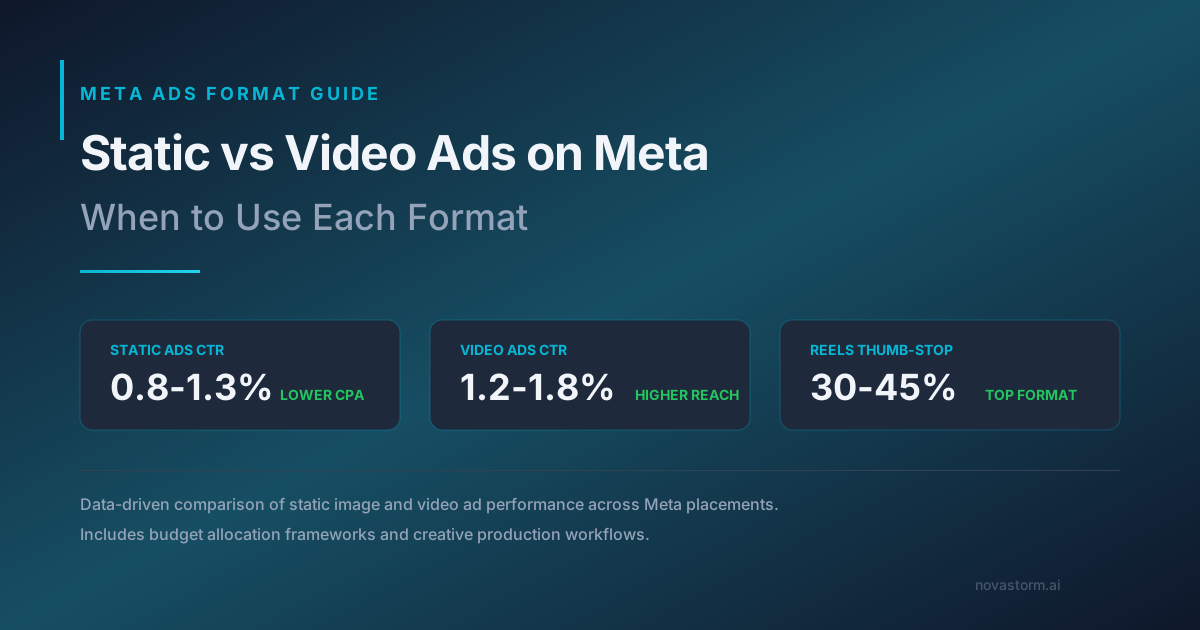
Static vs Video Ads on Meta: When to Use Each Format
Compare static vs video ads on Meta. Learn when each format wins based on CTR, CPA, ROAS data and how to allocate budget between formats effectively.

Negative Signals: Teaching the Algorithm What to Avoid
Understand how negative signals affect your Meta Ads performance. Learn how hiding ads, negative reactions, and poor quality scores impact delivery and what to do about it.
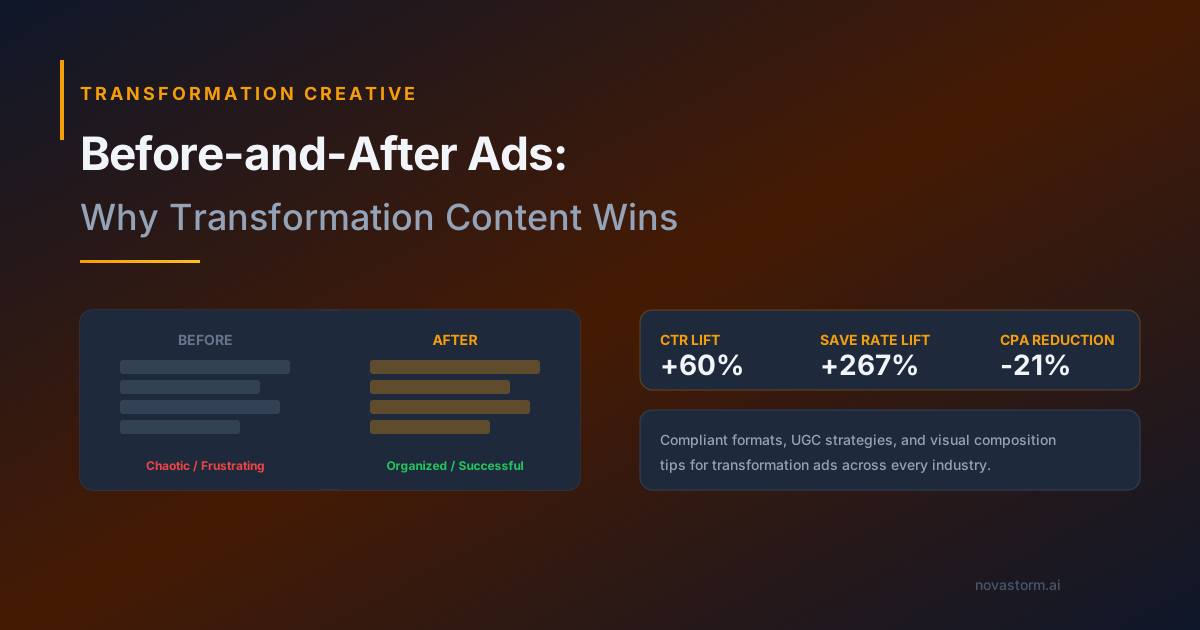
Before-and-After Ads: Why Transformation Content Wins on Meta
Learn why before-and-after ads drive the highest engagement on Meta. Compliant formats, visual composition tips, and industry examples that convert.