Building a DTC Brand Identity Through Meta Ad Creative
Discover how to build a strong DTC brand identity through Meta ad creative. Learn visual systems, messaging frameworks, and consistency strategies that convert.

In a crowded marketplace where consumers scroll past hundreds of ads daily, your DTC brand identity Meta ad creative is often the first and only touchpoint with potential customers. The brands that win attention and loyalty are those that build a distinctive, cohesive visual and verbal identity across every ad they run. Your Meta ads are not just a performance channel — they are your brand-building engine.
Strong DTC brand identity Meta ad creative goes beyond slapping a logo on a product photo. It encompasses a complete visual system, a consistent voice, and a strategic approach to how your brand shows up in every placement across Facebook and Instagram. This article breaks down the exact frameworks successful DTC brands use to build identity through advertising.
Why Brand Identity Matters More Than Ever in Meta Ads
Meta's advertising ecosystem has become intensely competitive. Average CPMs have increased by forty percent over the past three years, and consumer attention spans continue to shrink. In this environment, brands with strong identity enjoy significant advantages: higher click-through rates, lower cost per acquisition, and stronger customer lifetime value.
When your DTC brand identity Meta ad creative is consistent and recognizable, something powerful happens. Consumers begin to recognize your brand before they consciously process the ad content. This pre-attentive recognition lowers the psychological barrier to engagement and builds cumulative trust across multiple exposures.
| Brand Identity Element | Impact on Performance | Benchmark Improvement |
|---|---|---|
| Consistent color palette | Increases ad recall by 80% | +35% brand recognition |
| Distinctive typography | Improves scroll-stopping power | +22% thumb-stop rate |
| Unified tone of voice | Builds trust and familiarity | +28% engagement rate |
| Signature visual motifs | Creates pattern recognition | +40% aided recall |
| Cohesive campaign themes | Strengthens purchase intent | +18% conversion rate |
The Five Pillars of DTC Brand Identity in Ad Creative
Building DTC brand identity Meta ad creative requires a systematic approach across five core pillars. Each pillar reinforces the others, creating a compounding effect that strengthens your brand presence over time.
Pillar One: Visual Identity System
Your visual identity system is the foundation of everything. This includes your color palette, typography choices, photography style, graphic elements, and layout templates. The most effective DTC brands on Meta create a visual system that is instantly recognizable even without a logo present.
- Define a primary palette of 2-3 colors and a secondary palette of 2-3 supporting colors
- Choose one headline font and one body font that reflect your brand personality
- Establish a photography style guide covering lighting, composition, and color grading
- Create graphic elements like borders, overlays, or patterns unique to your brand
- Design template frameworks for different ad formats that maintain visual consistency
Pillar Two: Brand Voice and Messaging Architecture
Your brand voice is how your personality comes through in written and spoken communication. It determines whether your ads feel premium, playful, authoritative, or approachable. The key is defining specific voice attributes and applying them consistently across all DTC brand identity Meta ad creative.
Create a messaging hierarchy that prioritizes your key value propositions. Every ad should communicate one primary message supported by secondary proof points. Avoid the temptation to communicate everything in a single ad — clarity beats comprehensiveness.
Creating a Brand Style Guide for Meta Ad Production
A brand style guide specifically designed for Meta ad production is essential for maintaining DTC brand identity Meta ad creative consistency at scale. This document should be practical and actionable, not a theoretical branding exercise.
Stop wasting ad budget
NovaStorm AI cuts Meta Ads CPA by 40% on average. Start free.
| Style Guide Section | What to Include | Why It Matters |
|---|---|---|
| Color specifications | Hex codes, RGB values, approved color combinations | Ensures visual consistency across all creative |
| Typography rules | Font families, sizes, weights, line spacing | Creates recognizable text hierarchy |
| Image guidelines | Photo styles, banned imagery, editing presets | Maintains visual quality standards |
| Layout templates | Grid systems, safe zones, logo placement | Speeds up production while staying on-brand |
| Copy framework | Tone guidelines, headline formulas, CTA library | Keeps messaging aligned with brand voice |
| Video standards | Intro/outro templates, music style, pacing | Ensures video content feels cohesive |
Your Meta ad style guide should be a living document. Update it quarterly based on performance data — the creative elements that drive the best results should become core to your brand identity, while underperforming elements should be evolved.
Balancing Brand Consistency With Creative Testing
One of the biggest challenges in building DTC brand identity Meta ad creative is maintaining brand consistency while testing aggressively. High-growth DTC brands test dozens of new creatives every month, and each one needs to feel on-brand while being sufficiently different to generate meaningful test results.
The solution is to define which brand elements are fixed and which are flexible. Fixed elements are your non-negotiable brand signatures — color palette, logo placement, and core typography. Flexible elements are the variables you test — messaging angles, image styles, layout variations, and content formats.
- Establish brand constants that appear in every creative without exception
- Define a testing framework that varies one element at a time within brand parameters
- Create three to five creative templates that all feel on-brand but serve different purposes
- Review test results through a brand-building lens — winning creatives should strengthen identity
- Retire creatives that perform well but dilute brand perception over time
Platform-Specific Brand Adaptation for Meta Placements
Meta serves ads across multiple placements — Facebook Feed, Instagram Feed, Stories, Reels, Audience Network, and Messenger. Each placement has different dimensions, user behaviors, and content expectations. Your DTC brand identity Meta ad creative must adapt to each while maintaining recognizability.
The most effective approach is to design your core brand system for a square format first, then adapt to vertical and horizontal variations. This ensures your brand elements work at every aspect ratio. Pay special attention to Stories and Reels, where full-screen vertical formats require different compositional approaches.
| Placement | Aspect Ratio | Key Brand Adaptation | Priority Level |
|---|---|---|---|
| Facebook Feed | 1:1 or 4:5 | Full brand treatment with all identity elements | High |
| Instagram Feed | 1:1 or 4:5 | Elevated visual quality, lifestyle-focused | High |
| Stories | 9:16 | Simplified layout, larger text, motion | Medium-High |
| Reels | 9:16 | Native-feeling, subtle branding, authentic | High |
| Right Column | 1:1 | Minimal text, strong visual impact | Low |
| Audience Network | Various | Core brand colors and logo only | Low |
Measuring Brand Identity Impact on Ad Performance
Building DTC brand identity Meta ad creative is not just an aesthetic exercise — it directly impacts your bottom line. However, measuring brand impact requires looking beyond standard performance metrics to understand how identity strength correlates with business outcomes.
- Track brand search volume trends as a proxy for overall brand awareness growth
- Monitor ad recall lift through Meta's brand lift study tools
- Compare conversion rates between brand-consistent and off-brand creative variants
- Measure returning visitor rates and direct traffic as indicators of brand recognition
- Analyze customer survey data on brand perception and attribute association
- Review cost per acquisition trends over time — strong brands see declining CPAs
DTC brands with strong, consistent identity across their Meta ad creative typically see a 15-25% lower cost per acquisition compared to brands with inconsistent creative. The compounding effect of brand recognition means your ad efficiency improves over time rather than degrading.
Building DTC brand identity Meta ad creative is a long-term investment that pays compounding returns. The brands that commit to visual and verbal consistency across their advertising build the kind of recognition that lowers acquisition costs and strengthens customer loyalty. Start with a clear brand system, maintain consistency through disciplined creative production, and let your identity become your competitive advantage.
Novastorm AI automates Meta Ads routine — from monitoring to optimization. Learn more at novastorm.ai
Disclaimer: This article was generated with the assistance of AI and reviewed by the NovaStorm AI team. While we strive for accuracy, we recommend verifying specific data points and consulting official sources (linked where available) for critical business decisions.
Ready to automate your Meta Ads?
NovaStorm AI takes full responsibility for your campaigns — from monitoring to optimization.
Get Started FreeRelated Articles

DTC vs Wholesale: How Meta Ads Strategy Differs by Channel
Understand the key differences in Meta Ads strategy for DTC versus wholesale channels. Learn targeting, creative, and budget approaches for each distribution model.

DTC Brand Growth With Meta Ads: From Zero to Million in Revenue
Learn how DTC brands scale from zero to million-dollar revenue using Meta Ads. Proven frameworks, budget allocation strategies, and real growth benchmarks inside.
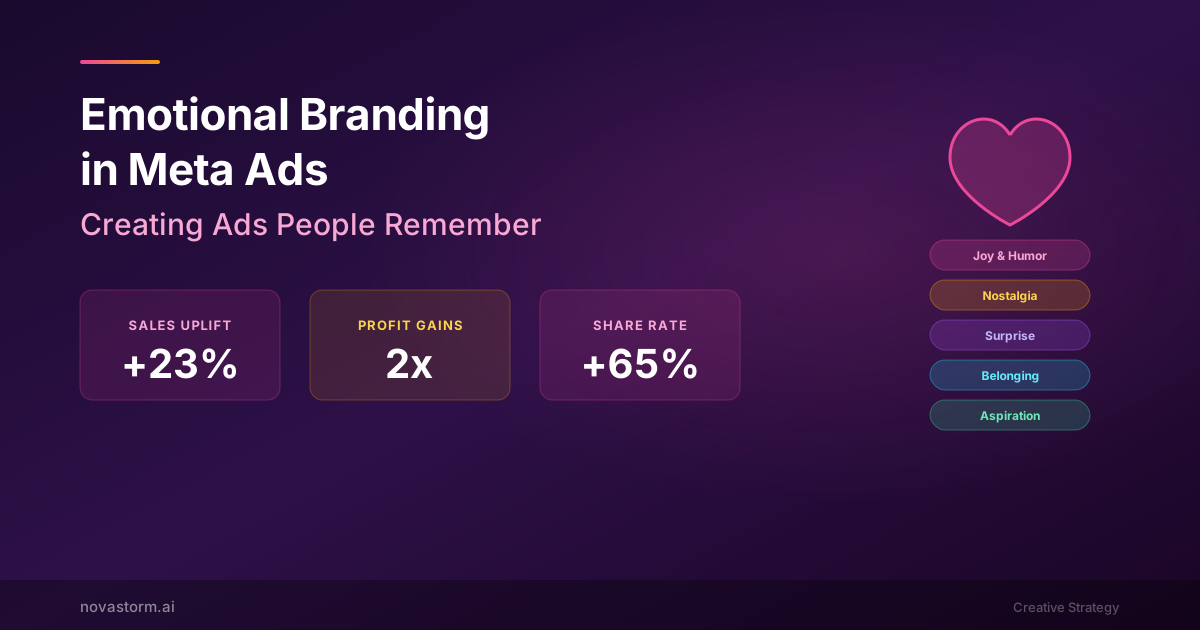
Emotional Branding in Meta Ads: Creating Ads People Remember
Learn how emotional branding in Meta Ads drives recall, engagement, and conversions. Discover emotional triggers, creative frameworks, and measurement tactics.