Emotional Branding in Meta Ads: Creating Ads People Remember
Learn how emotional branding in Meta Ads drives recall, engagement, and conversions. Discover emotional triggers, creative frameworks, and measurement tactics.
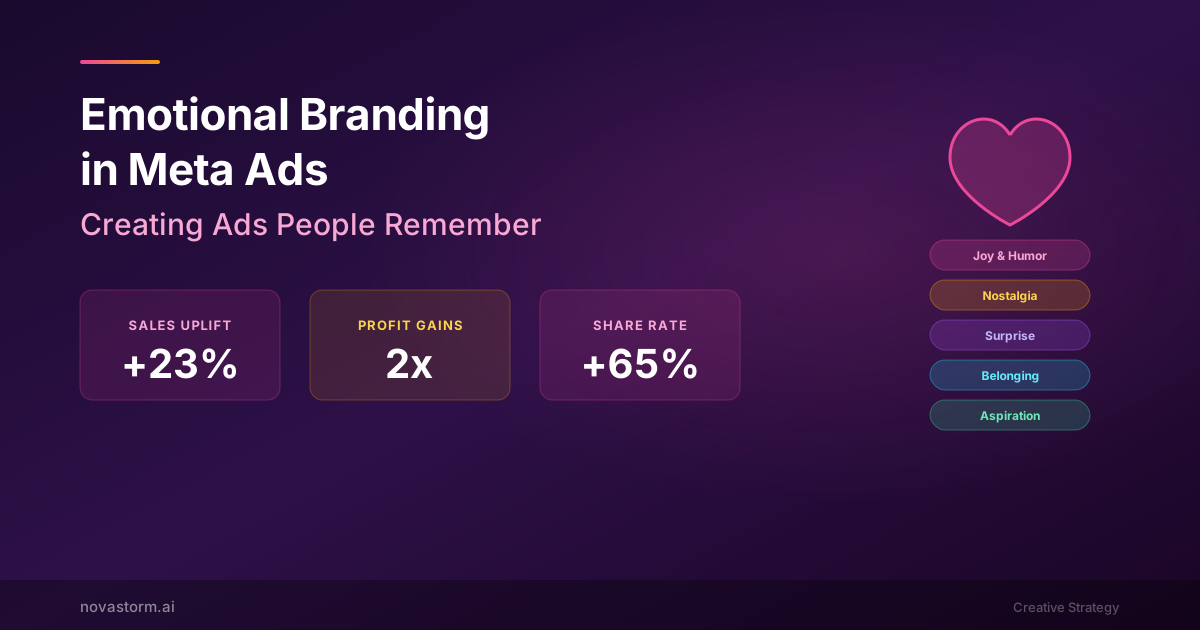
People do not remember ads. They remember how ads made them feel. Emotional branding in Meta Ads is the practice of designing advertising that connects with audiences on a psychological level, creating lasting impressions that rational messaging alone cannot achieve.
In a feed dominated by product shots and discount codes, the brands that earn attention and retention are the ones that make people feel something. Research from Nielsen shows that ads with above-average emotional response generate 23% more sales than average ads. On Meta, where scroll speed is measured in milliseconds, emotion is your most powerful stopping mechanism.
The Science Behind Emotional Branding in Meta Ads
Neuroscience research confirms that emotional memories are encoded differently than rational ones. The amygdala tags emotionally charged experiences for priority storage, making them easier to recall later. This is why you remember a commercial that made you laugh or cry years ago but cannot recall a product spec sheet you read yesterday.
Emotional branding in Meta Ads leverages this biological wiring. When your ad triggers an emotional response, the viewer's brain creates a stronger associative link between the emotion and your brand. This link activates during purchase decisions, often unconsciously, tipping the balance in your favor.
The Institute of Practitioners in Advertising (IPA) analyzed 1,400 campaigns and found that purely emotional campaigns were nearly twice as likely to generate large profit gains compared to purely rational campaigns.
The Six Core Emotional Triggers for Meta Ads
Not all emotions are equal in advertising. Some drive sharing and engagement while others drive purchase intent. Understanding which emotional triggers align with your brand goals is essential for effective emotional branding in Meta Ads.
| Emotion | Behavioral Effect | Best Format | Use Case |
|---|---|---|---|
| Joy / Humor | Sharing, positive brand association | Short-form video, Reels | Brand awareness, virality |
| Nostalgia | Trust, warmth, loyalty | Carousel, story-driven video | Retention, heritage brands |
| Surprise | Attention, curiosity | Interactive, AR, Reels | Product launches, pattern interrupt |
| Belonging | Community, identity | UGC, testimonials | Lifestyle brands, subscriptions |
| Aspiration | Desire, motivation | High-production video | Premium products, personal growth |
| Empathy | Connection, trust | Documentary-style video | Healthcare, social impact, NGOs |
Creative Frameworks for Emotionally Resonant Ads
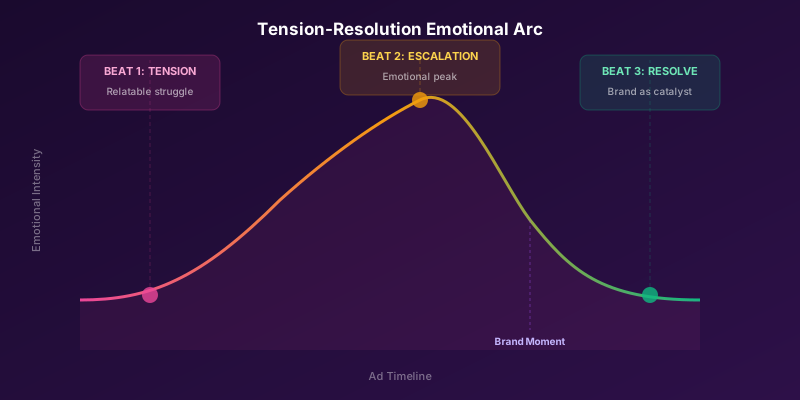
Emotion in advertising does not happen by accident. It requires deliberate creative frameworks that structure the emotional journey within the constraints of a Meta ad format. The most effective framework for emotional branding in Meta Ads is the tension-resolution arc.
The tension-resolution arc works in three beats. Beat one establishes a relatable tension or problem that the viewer recognizes from their own life. Beat two intensifies the emotional stakes. Beat three resolves the tension with your brand as the catalyst for resolution. Even in a 15-second Reel, this arc creates an emotional narrative that sticks.
- Open with a human moment, not a product shot — show the struggle or desire
- Build emotional tension through pacing, music, and facial expressions
- Introduce your brand as the bridge between the problem and the resolution
- Close with the emotional payoff — relief, joy, pride, or belonging
- End on brand recall: logo, tagline, or distinctive brand asset in the final frame
Platform-Specific Emotional Tactics
Stop wasting ad budget
NovaStorm AI cuts Meta Ads CPA by 40% on average. Start free.
Meta's ad ecosystem spans Feed, Stories, Reels, and Messenger, each with different attention dynamics and emotional receptiveness. Your emotional branding strategy must adapt to the context in which the viewer encounters your ad.
| Placement | Attention Window | Emotional Strategy | Creative Approach |
|---|---|---|---|
| Feed | 1-3 seconds to hook | Bold emotional opening | Strong visual + text overlay |
| Stories | 5-15 seconds total | Intimate, personal | First-person, raw, authentic |
| Reels | 3-30 seconds | Entertainment-led | Trend-driven, humor, surprise |
| In-Stream | 5-sec skip window | Immediate impact | Start with climax, not buildup |
| Messenger | Conversational | One-to-one connection | Personalized, empathetic tone |
The key insight is that emotional intensity must match the placement. Stories allow for vulnerability and intimacy. Reels reward humor and surprise. Feed requires stopping power through dramatic emotional contrast. The same emotional message delivered in the wrong format falls flat.
Measuring Emotional Impact in Meta Campaigns
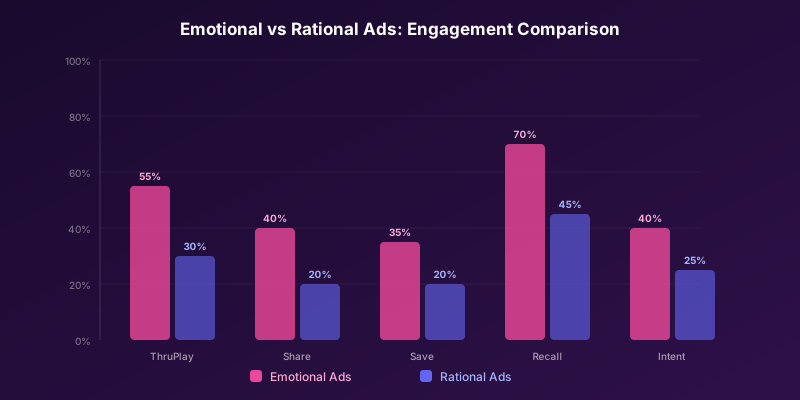
The challenge with emotional branding in Meta Ads is measurement. Emotions do not fit neatly into last-click attribution models. However, several proxy metrics can help you gauge whether your emotional creative is working.
- Video watch time and ThruPlay rate: emotional ads hold attention longer
- Save rate: people save content that resonates emotionally
- Share rate: the strongest signal of emotional impact
- Comment sentiment: qualitative evidence of emotional connection
- Ad recall lift: via brand lift studies, the gold standard for measuring memorability
- Branded search volume: downstream signal that emotional advertising is creating mental availability
Common Emotional Branding Mistakes on Meta
Attempting emotional branding without strategic grounding leads to ads that feel manipulative, forced, or disconnected from the brand. The most common mistake is emotional bait-and-switch: creating an emotional story that has no genuine connection to the product or brand promise.
- Forcing emotion that does not align with your brand personality
- Using sad or sentimental tones for brands that should feel energetic
- Emotional stories where the brand feels inserted rather than integral
- Ignoring cultural sensitivity when deploying emotional content globally
- Over-relying on stock footage instead of authentic human moments
- Neglecting sound design, which carries 50%+ of emotional weight in video
Building an Emotional Brand Asset Library
The most emotionally powerful brands on Meta are not reinventing their emotional approach with every campaign. They build a library of distinctive emotional brand assets: a consistent color palette that evokes a specific mood, a signature sound or jingle, recurring characters or brand ambassadors, and a visual style that is instantly recognizable.
Byron Sharp's research on distinctive brand assets applies directly to emotional branding in Meta Ads. Your emotional tone is itself a brand asset. When someone feels a specific emotion and associates it with your brand across multiple touchpoints, you have created an emotional shortcut that competitors cannot replicate.
Build a creative testing calendar that systematically explores different emotional angles while maintaining brand consistency. Test one variable at a time: the emotional trigger, the narrative structure, the music, or the visual tone. Over time, you will identify the emotional frequencies that resonate most powerfully with your specific audience, building a playbook that makes every future campaign more effective.
Novastorm AI automates Meta Ads routine — from monitoring to optimization. Learn more at novastorm.ai
Disclaimer: This article was generated with the assistance of AI and reviewed by the NovaStorm AI team. While we strive for accuracy, we recommend verifying specific data points and consulting official sources (linked where available) for critical business decisions.
Ready to automate your Meta Ads?
NovaStorm AI takes full responsibility for your campaigns — from monitoring to optimization.
Get Started FreeRelated Articles
Building a DTC Brand Identity Through Meta Ad Creative
Discover how to build a strong DTC brand identity through Meta ad creative. Learn visual systems, messaging frameworks, and consistency strategies that convert.
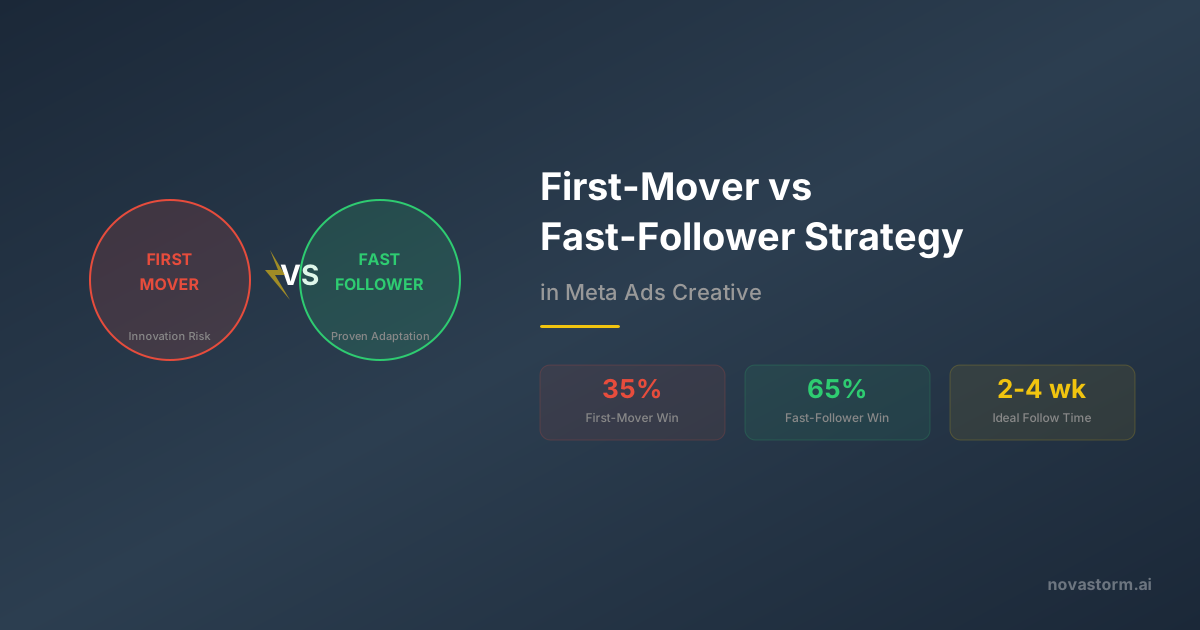
First-Mover vs Fast-Follower Strategy in Meta Ads Creative
Should you innovate or adapt in Meta Ads creative? Compare first-mover vs fast-follower strategies with data on win rates, timing, and when to use each approach.
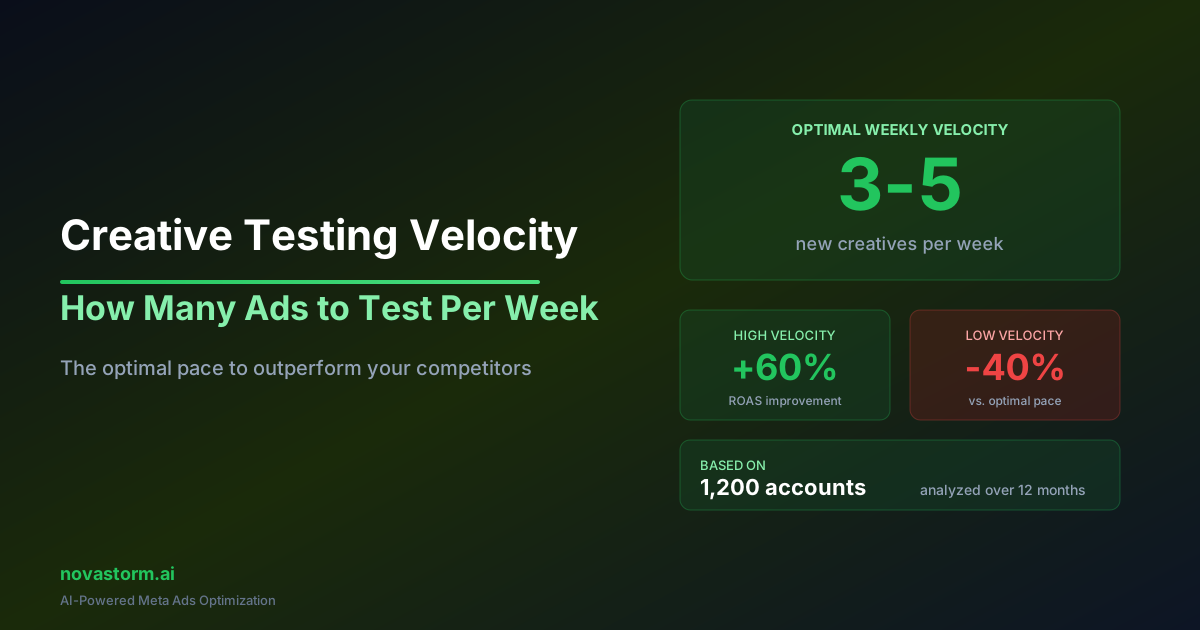
Creative Testing Velocity: How Many Ads to Test Per Week
Discover the optimal creative testing velocity for Meta Ads. Learn how many ads to test per week based on budget, and why 3-5 new creatives weekly drives results.