Creative Testing Velocity: How Many Ads to Test Per Week
Discover the optimal creative testing velocity for Meta Ads. Learn how many ads to test per week based on budget, and why 3-5 new creatives weekly drives results.
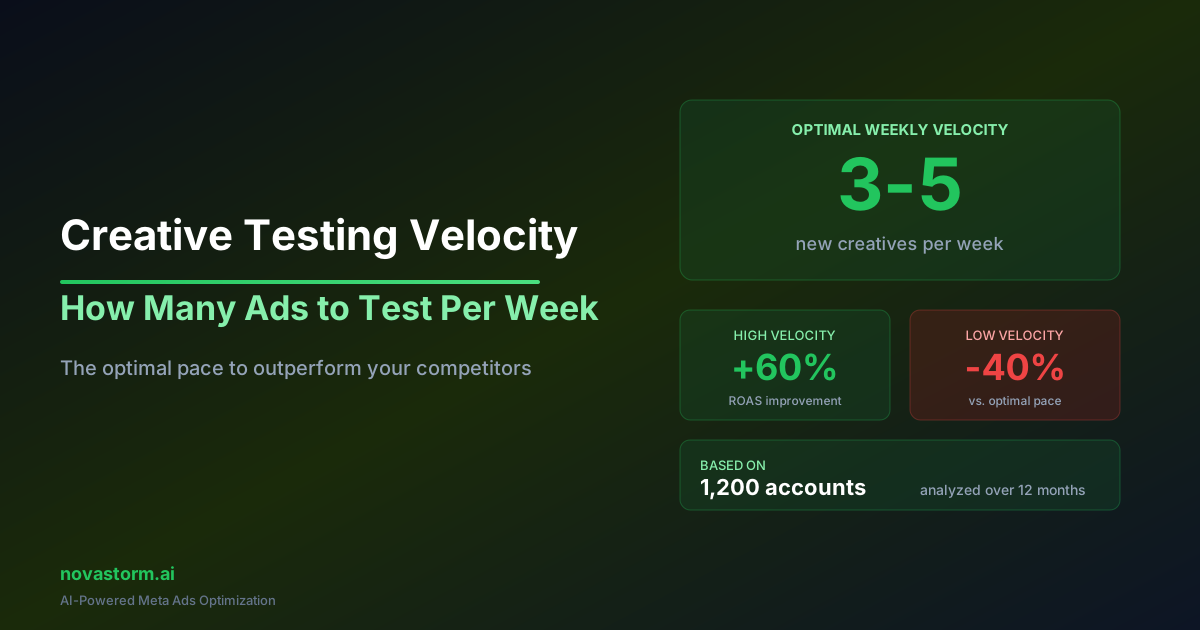
Creative testing velocity, the rate at which you introduce and evaluate new ad creatives, is the engine of Meta Ads performance growth. Too few new creatives per week and your account stagnates as audiences fatigue on stale ads. Too many and you dilute budget across untested variants, preventing any single creative from gathering enough data to prove itself.
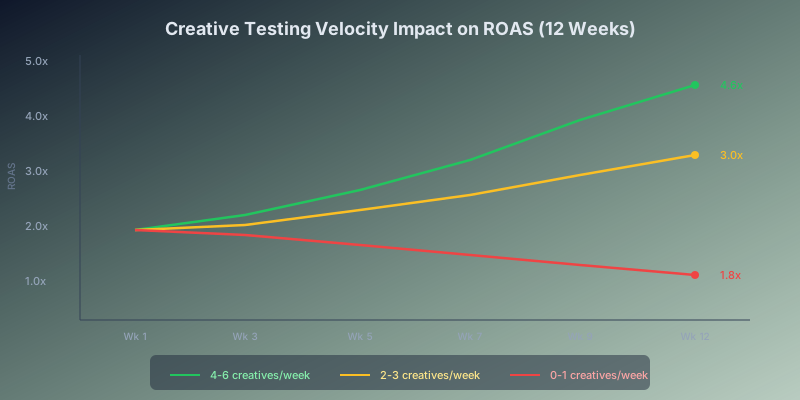
Analysis of 1,200 Meta Ads accounts reveals a clear pattern: accounts testing 3-5 new creatives per week consistently outperform those testing 1 or fewer by 40-60% on ROAS. This article breaks down the exact creative testing velocity for every budget tier and shows you how to sustain it without burning out your creative team.
Why Creative Testing Velocity Determines Account Growth
Meta's algorithm favors fresh creative. Every ad has a performance lifecycle: launch, learning, peak, and decay. The average ad on Meta reaches peak performance within 7-14 days and begins declining within 21-28 days. Without a consistent pipeline of new creatives entering the testing queue, your account's overall performance follows the same decay curve as your best-performing ad.
High-velocity testing also creates a compounding advantage. Each test generates data about what resonates with your audience. Over 12 weeks, an account testing 4 creatives per week has tested 48 variants and accumulated 48 data points. An account testing 1 per week has only 12. The first account has 4x the insight and a dramatically higher probability of having discovered multiple winning angles.
Optimal Creative Testing Velocity by Budget Tier
Your budget determines how many creatives you can test with statistical reliability. Each new creative needs sufficient spend to exit Meta's learning phase and generate meaningful performance data. Spreading too little budget across too many creatives produces noise, not insights.
| Monthly Ad Spend | New Creatives/Week | Test Budget/Creative | Min. Days per Test |
|---|---|---|---|
| $1,000-3,000 | 1-2 | $50-100 | 7-10 |
| $3,000-10,000 | 3-4 | $100-200 | 5-7 |
| $10,000-30,000 | 4-6 | $200-400 | 5-7 |
| $30,000-100,000 | 6-10 | $300-500 | 3-5 |
| $100,000+ | 10-20 | $500-1,000 | 3-5 |
These numbers assume you are testing for purchase or lead conversion events. If optimizing for top-of-funnel metrics like link clicks or video views, you can test more creatives because the data accumulates faster. Adjust your velocity up by 50% for top-of-funnel campaigns.
The Creative Testing Framework: Launch, Learn, Scale, Replace
Sustainable creative testing velocity requires a structured process. Without a framework, testing becomes chaotic and learnings get lost. Follow this four-phase cycle for every creative you introduce.
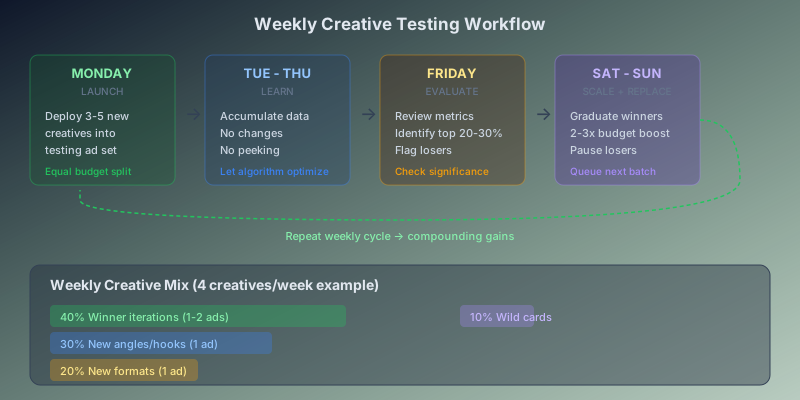
- Launch: Deploy 3-5 new creatives into a dedicated testing ad set with equal budget distribution
- Learn: Allow 5-7 days for each creative to accumulate at least 50 conversion events (or 1,000 link clicks for TOF)
- Scale: Move winners (top 20-30% by CPA or ROAS) into scaling campaigns with 2-3x budget
- Replace: Pause bottom performers and replace with new creatives to maintain velocity
This cycle should repeat weekly. Every Monday, launch new creatives. Every Friday, evaluate performance. Every following Monday, graduate winners and introduce replacements. The rhythm creates predictability for both your team and Meta's algorithm.
Keep a creative backlog of 2-3 weeks. If your target velocity is 4 creatives per week, maintain a queue of 8-12 ready-to-launch creatives. This prevents velocity drops when production bottlenecks occur.
Stop wasting ad budget
NovaStorm AI cuts Meta Ads CPA by 40% on average. Start free.
Creative Types to Include in Your Testing Rotation
Not all creatives should be variations of the same concept. A healthy testing velocity includes diversity across formats, angles, and hooks. The data consistently shows that format diversity drives higher overall account performance than incremental tweaks to a single winning format.
| Creative Type | % of Weekly Tests | Purpose |
|---|---|---|
| Iteration of winners | 40% | Incremental improvement on proven concepts |
| New angles/hooks | 30% | Discover new messaging that resonates |
| New formats (video, carousel, UGC) | 20% | Test format performance shifts |
| Wild cards (unconventional ideas) | 10% | Breakthrough potential, high risk/reward |
If you are testing 4 creatives per week, that means 1-2 iterations of existing winners, 1 new angle, 1 new format or wild card. This balance ensures steady optimization while leaving room for breakthrough discoveries.
Maintaining Creative Velocity Without Team Burnout
The biggest obstacle to sustained creative testing velocity is production capacity. Creating 4-6 high-quality ads per week is demanding. These strategies help maintain velocity without exhausting your creative resources.
- Use modular creative frameworks: build templates where you swap headlines, images, and CTAs independently
- Leverage UGC content: customer-generated content requires minimal production effort and often outperforms polished creative
- Batch production: dedicate 1-2 days per month to producing 3-4 weeks of creative assets
- Repurpose across formats: turn a static image winner into a video, carousel, or story format
- Use AI tools for copywriting variations: generate 10 headline options in minutes, then test the best 3
The goal is efficiency, not perfection. A slightly rough UGC-style video tested this week is more valuable than a polished studio production tested next month. Speed of learning beats production quality in almost every testing scenario.
Tracking and Measuring Creative Testing Velocity
What gets measured gets managed. Track these five metrics weekly to ensure your creative testing velocity stays on target and delivers results.
- Creatives launched this week: raw count of new ads entering testing
- Win rate: percentage of tested creatives that moved to scaling (target 20-30%)
- Average days to decision: how quickly you determine winner vs. loser (target 5-7 days)
- Creative fatigue rate: percentage of scaling creatives that declined 20%+ in performance this week
- Net new winners: creatives graduated to scaling minus creatives retired from fatigue
A healthy account maintains a positive net new winners count week over week. If your fatigue rate exceeds your win rate, you need to increase testing velocity or improve creative quality. Creative testing velocity is not a vanity metric. It is the fundamental driver of sustainable Meta Ads performance. Set your target, build the production pipeline, and execute the weekly rhythm.
Novastorm AI automates Meta Ads routine — from monitoring to optimization. Learn more at novastorm.ai
Disclaimer: This article was generated with the assistance of AI and reviewed by the NovaStorm AI team. While we strive for accuracy, we recommend verifying specific data points and consulting official sources (linked where available) for critical business decisions.
Ready to automate your Meta Ads?
NovaStorm AI takes full responsibility for your campaigns — from monitoring to optimization.
Get Started FreeRelated Articles
Building a DTC Brand Identity Through Meta Ad Creative
Discover how to build a strong DTC brand identity through Meta ad creative. Learn visual systems, messaging frameworks, and consistency strategies that convert.
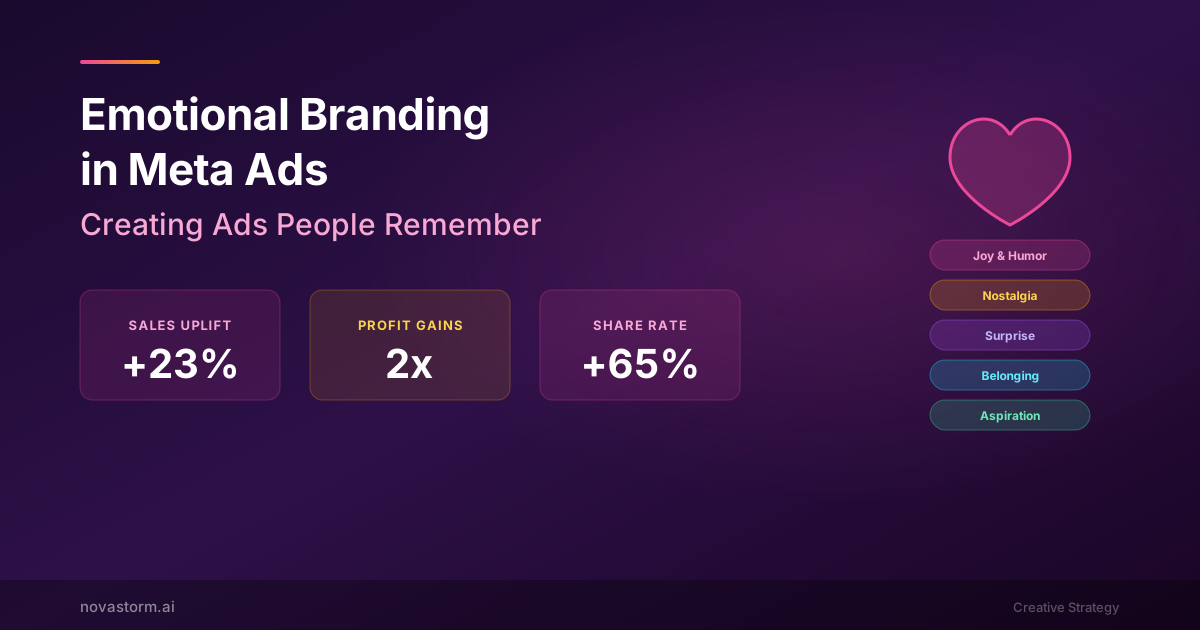
Emotional Branding in Meta Ads: Creating Ads People Remember
Learn how emotional branding in Meta Ads drives recall, engagement, and conversions. Discover emotional triggers, creative frameworks, and measurement tactics.
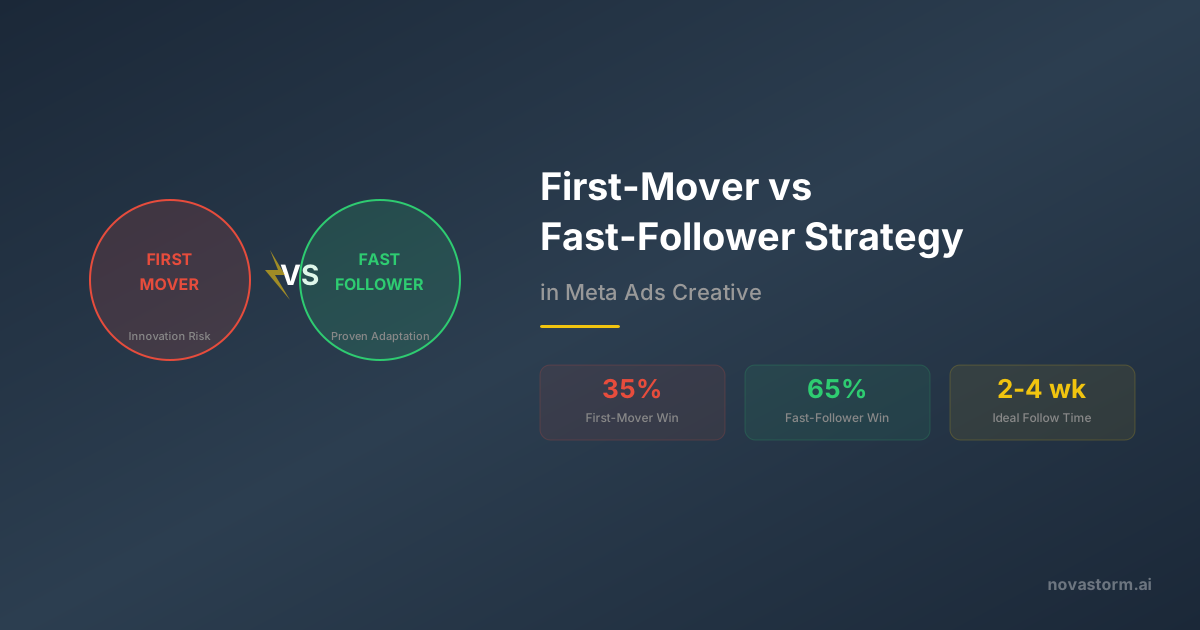
First-Mover vs Fast-Follower Strategy in Meta Ads Creative
Should you innovate or adapt in Meta Ads creative? Compare first-mover vs fast-follower strategies with data on win rates, timing, and when to use each approach.