DTC vs Wholesale: How Meta Ads Strategy Differs by Channel
Understand the key differences in Meta Ads strategy for DTC versus wholesale channels. Learn targeting, creative, and budget approaches for each distribution model.
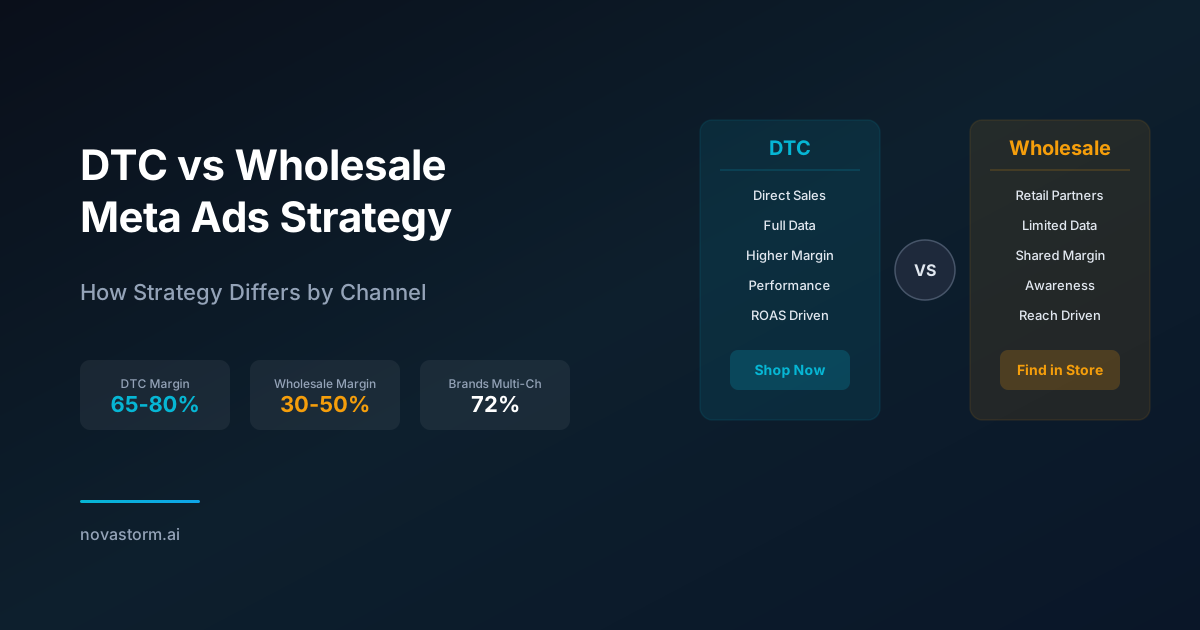
Most brands today operate across multiple distribution channels, selling both directly to consumers through their own website and through wholesale retail partners. The challenge is that DTC vs wholesale Meta Ads strategy requires fundamentally different approaches to targeting, creative, measurement, and budget allocation. Running the same campaigns for both channels is one of the most expensive mistakes a multi-channel brand can make.
Understanding how DTC vs wholesale Meta Ads strategy differs allows brands to maximize the return from every advertising dollar regardless of where the final transaction occurs. This guide provides a comprehensive breakdown of how to tailor your Meta advertising approach to each distribution channel.
Fundamental Differences Between DTC and Wholesale Advertising Goals
Before diving into tactical differences, it is essential to understand that DTC and wholesale channels have fundamentally different business objectives for Meta advertising. DTC campaigns aim to drive direct purchases on your own website, giving you full control over the customer journey and data. Wholesale campaigns aim to build brand awareness and purchase intent that translates to sales at retail locations.
| Dimension | DTC Channel | Wholesale Channel |
|---|---|---|
| Primary Goal | Direct online purchases | Brand awareness and retail sell-through |
| Conversion Tracking | Full pixel and CAPI data | Limited — relies on lift studies and proxies |
| Customer Data | Owns first-party data | Retailer owns transaction data |
| Pricing Control | Full margin ownership | Shared margins with retail partners |
| Creative Focus | Product benefits and direct CTA | Brand story and retail availability |
| Attribution | Measurable ROAS | Estimated incremental impact |
| Budget Flexibility | Performance-based scaling | Fixed awareness budgets |
These fundamental differences mean that your DTC vs wholesale Meta Ads strategy must be built on different foundations from the ground up. Trying to force a DTC performance framework onto wholesale advertising — or vice versa — leads to misaligned expectations and wasted spend.
Targeting Strategy: DTC vs Wholesale on Meta
Audience targeting is where the DTC vs wholesale Meta Ads strategy divergence begins. DTC campaigns benefit from precise, purchase-optimized targeting that Meta's algorithm excels at. Wholesale campaigns require broader reach-based targeting that builds awareness across a wider population.
DTC Targeting Approach
- Optimize for purchase events using your website pixel data
- Build lookalike audiences from your highest-value customers
- Use Advantage+ Shopping campaigns for automated prospecting
- Layer interest targeting for new product category launches
- Retarget website visitors, cart abandoners, and past purchasers
Wholesale Targeting Approach
- Optimize for reach, video views, or brand awareness objectives
- Target broad demographics aligned with retail partner customer profiles
- Use geographic targeting around retail partner store locations
- Build audiences based on retail category interests and shopping behaviors
- Exclude existing DTC customers to avoid channel cannibalization
Creative Strategy Differences Across Channels
The creative approach in your DTC vs wholesale Meta Ads strategy should reflect the different customer journeys each channel serves. DTC creative drives immediate action — add to cart, purchase now, claim offer. Wholesale creative builds brand desire and educates consumers about where to find your product.
| Creative Element | DTC Approach | Wholesale Approach |
|---|---|---|
| Call to Action | Shop Now, Add to Cart, Get 20% Off | Find in Stores, Available at [Retailer] |
| Messaging Focus | Product features, pricing, promotions | Brand story, lifestyle, category authority |
| Social Proof | Customer reviews, UGC, testimonials | Press mentions, awards, influencer endorsements |
| Visual Style | Product-centric, benefit-driven | Lifestyle-focused, aspirational |
| Video Content | Product demos, unboxing, how-to | Brand films, behind-the-scenes, category education |
| Urgency Elements | Limited offers, countdown timers | Seasonal relevance, new launch announcements |
When running both DTC and wholesale campaigns simultaneously, create a clear creative production workflow that distinguishes between the two. Use separate creative briefs, approval processes, and asset libraries to prevent channel-inappropriate creative from going live.
Budget Allocation Between DTC and Wholesale Campaigns
Stop wasting ad budget
NovaStorm AI cuts Meta Ads CPA by 40% on average. Start free.
Budget allocation in a DTC vs wholesale Meta Ads strategy depends heavily on your revenue split between channels, margin structure, and growth priorities. Brands that generate higher margins from DTC typically allocate more budget to direct campaigns, while brands with strong wholesale partnerships invest more in awareness-driving campaigns.
A common framework allocates budget proportionally to gross profit contribution from each channel, with an adjustment factor for strategic growth priorities. If DTC represents forty percent of gross profit but is your priority growth channel, you might allocate fifty to sixty percent of Meta budget to DTC campaigns.
| Brand Profile | DTC Budget Share | Wholesale Budget Share | Rationale |
|---|---|---|---|
| DTC-first, early wholesale | 70-80% | 20-30% | Protect DTC engine, build wholesale awareness |
| Balanced multi-channel | 50-60% | 40-50% | Optimize both channels proportionally |
| Wholesale-first, growing DTC | 30-40% | 60-70% | Support retail partners, test DTC growth |
| Legacy wholesale, DTC pivot | 40-50% | 50-60% | Gradually shift budget as DTC scales |
Measurement and Attribution Challenges
Perhaps the most significant difference in DTC vs wholesale Meta Ads strategy is how you measure success. DTC measurement is relatively straightforward — pixel events, Conversions API data, and platform-reported ROAS give you a clear picture of campaign performance. Wholesale measurement is fundamentally harder.
For wholesale campaigns, you cannot directly attribute Meta ad exposure to in-store purchases. Instead, you rely on proxy metrics and statistical methods to estimate the impact of your advertising on retail sales.
- Use Meta brand lift studies to measure awareness and purchase intent gains
- Correlate regional ad spend with retail sales data from partner reports
- Track store locator clicks and directions requests as conversion proxies
- Monitor branded search volume in markets where wholesale campaigns run
- Run geo-matched experiments — advertise in some markets and hold out others
- Request retailer POS data to build post-campaign sales lift analyses
Avoiding Channel Cannibalization With Meta Ads
One of the biggest risks in running both DTC and wholesale campaigns is channel cannibalization — where your advertising for one channel steals sales from the other rather than generating incremental revenue. This is especially common when DTC promotions run simultaneously with wholesale availability.
Running deep DTC discounts while your product is available at full retail price through wholesale partners can damage retailer relationships and erode brand value. Coordinate promotional calendars across channels and use audience exclusions to minimize overlap.
- Maintain audience exclusion lists between DTC and wholesale campaigns
- Coordinate promotional timing to avoid conflicting offers across channels
- Use DTC-exclusive products or bundles that do not compete with wholesale SKUs
- Communicate channel strategy to retail partners to maintain trust
- Monitor cross-channel sales data for signs of cannibalization patterns
- Test incremental lift of each channel independently before scaling
Building an Integrated Multi-Channel Meta Ads Strategy
The most successful multi-channel brands do not view DTC vs wholesale Meta Ads strategy as an either-or proposition. Instead, they build an integrated approach where awareness campaigns benefit both channels, and performance campaigns drive direct revenue while supporting overall brand health.
Start by mapping the complete customer journey across both channels. Identify where Meta advertising plays a role at each stage and design campaigns that complement rather than compete with each other. The goal is a unified brand presence that drives growth across all distribution points.
Whether you are primarily DTC or primarily wholesale, understanding the strategic differences allows you to make smarter allocation decisions and build campaigns that serve each channel's unique needs. The brands that master multi-channel advertising on Meta create a competitive advantage that is difficult to replicate.
Novastorm AI automates Meta Ads routine — from monitoring to optimization. Learn more at novastorm.ai
Disclaimer: This article was generated with the assistance of AI and reviewed by the NovaStorm AI team. While we strive for accuracy, we recommend verifying specific data points and consulting official sources (linked where available) for critical business decisions.
Ready to automate your Meta Ads?
NovaStorm AI takes full responsibility for your campaigns — from monitoring to optimization.
Get Started FreeRelated Articles
Building a DTC Brand Identity Through Meta Ad Creative
Discover how to build a strong DTC brand identity through Meta ad creative. Learn visual systems, messaging frameworks, and consistency strategies that convert.
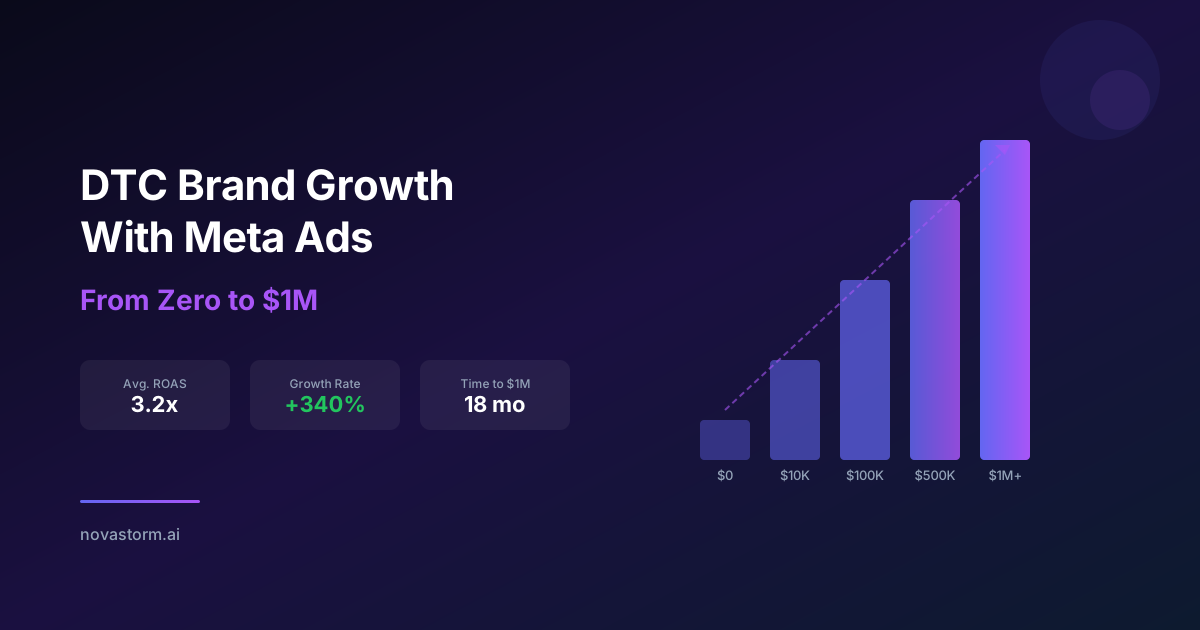
DTC Brand Growth With Meta Ads: From Zero to Million in Revenue
Learn how DTC brands scale from zero to million-dollar revenue using Meta Ads. Proven frameworks, budget allocation strategies, and real growth benchmarks inside.
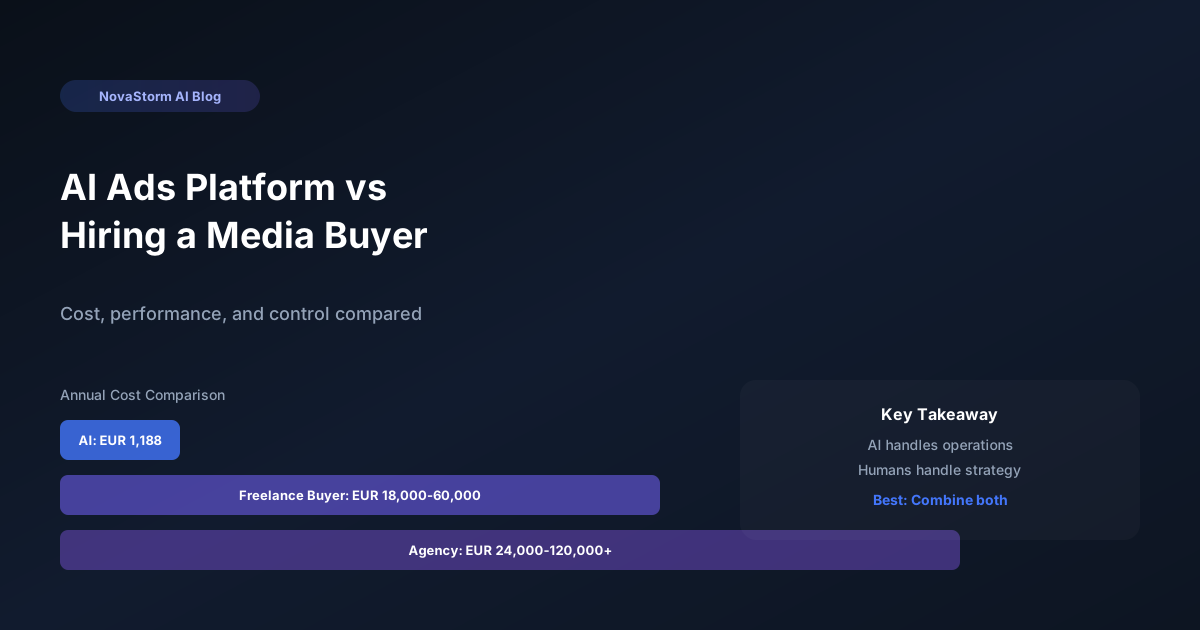
AI Ads Platform vs Hiring a Media Buyer: Cost, Performance, and Control Compared
Should you hire a media buyer or use an AI platform for Meta Ads? Comparing costs, performance, control, and scalability to help you decide.