B2B Retargeting Strategies on Meta Ads
Master B2B retargeting strategies on Meta Ads with segmented audiences, sequential messaging, and pipeline-driven optimization. Reduce cost per SQL by 40-60%.
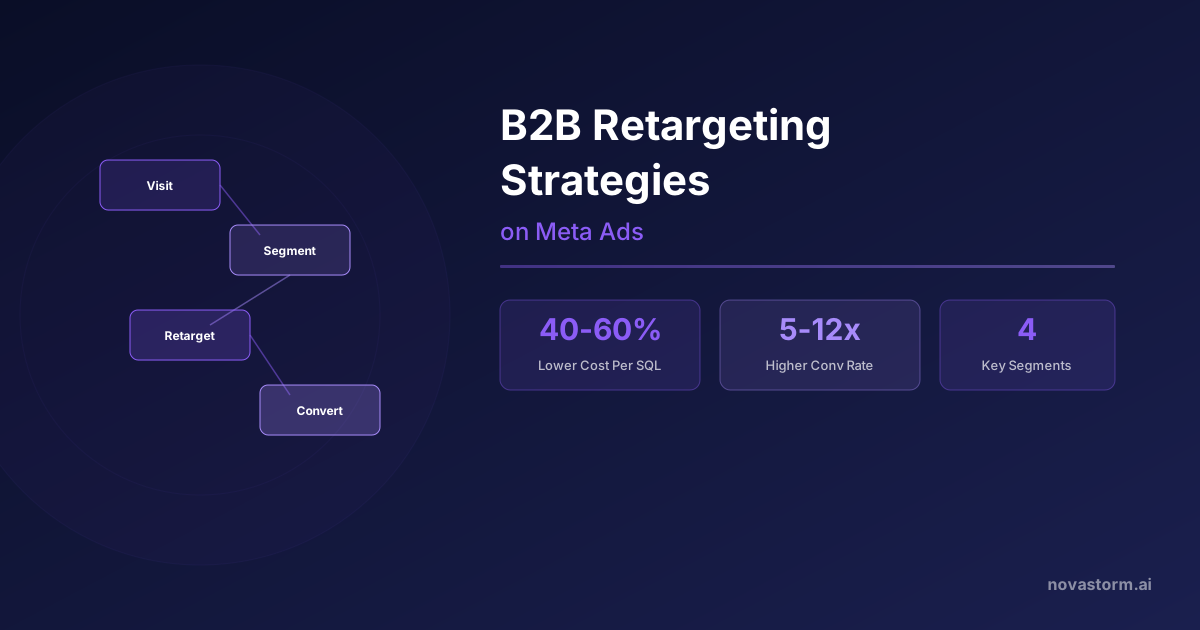
B2B retargeting strategies on Meta Ads are the highest-ROI campaigns in most demand generation portfolios. While prospecting campaigns introduce your brand to new audiences, retargeting converts that initial interest into pipeline. Companies running structured B2B retargeting on Meta report 40-60% lower cost per SQL compared to prospecting-only approaches, making retargeting the engine that drives efficient revenue growth.
The challenge with B2B retargeting is that generic "everyone who visited the website" audiences waste budget on unqualified traffic. The solution is segmentation: dividing your retargeting pool into behavioral cohorts and delivering tailored messaging to each one based on their demonstrated intent level.
Building Segmented B2B Retargeting Audiences
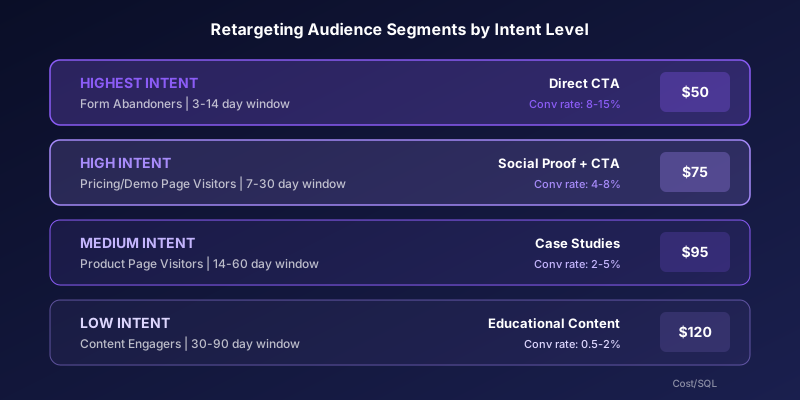
Effective B2B retargeting strategies require at least four audience segments, each representing a different stage of buyer intent. The foundational segments are content engagers, product page visitors, high-intent visitors (pricing, demo, or contact pages), and abandoned form starters. Each segment receives different creative, offers, and frequency caps.
| Segment | Definition | Window | Priority |
|---|---|---|---|
| Content Engagers | Blog readers, video viewers, social engagers | 30-90 days | Low intent |
| Product Visitors | Visited product or feature pages | 14-60 days | Medium intent |
| High-Intent Visitors | Viewed pricing, demo, or contact pages | 7-30 days | High intent |
| Form Abandoners | Started but did not complete a form | 3-14 days | Highest intent |
| Existing Leads | CRM contacts not yet converted | Ongoing | Variable intent |
Create these segments using Meta Custom Audiences built from Pixel events and URL-based rules. For the CRM segment, upload your lead database as a Customer List and exclude anyone who has already converted. Remember to exclude overlapping segments to avoid serving the wrong message to high-intent prospects.
Sequential Messaging for B2B Retargeting Strategies
Sequential messaging delivers a planned series of ads that guide prospects through the decision process. Rather than showing the same ad repeatedly, each exposure advances the narrative. A typical B2B sequence moves from educational content to social proof to product demonstration to direct conversion ask over 3-5 touchpoints.
Implement sequencing by creating separate ad sets for each message stage and using exclusion audiences. For example, Ad Set 2 targets people who saw Ad Set 1 impressions but excludes those who already converted. This approach prevents message repetition and ensures prospects see the right content at the right time.
- Stage 1 (Days 1-7): Educational content related to their viewed topic
- Stage 2 (Days 7-14): Customer testimonial or case study with specific results
- Stage 3 (Days 14-21): Product demo video or feature walkthrough
- Stage 4 (Days 21-30): Direct conversion CTA with urgency element
- Always exclude converters from all retargeting sequences
Creative Strategy by Retargeting Segment
Content engagers respond best to additional educational content that deepens their understanding. Serve them related blog posts, guides, or short video explainers. The goal is to move them from casual interest to active evaluation. Avoid hard sells at this stage as they have not yet demonstrated purchase intent.
High-intent visitors and form abandoners require direct, action-oriented creative. Use customer logos, specific ROI statistics, and clear CTAs like "Schedule your demo" or "Start free trial." Address common objections in the ad copy: pricing transparency, implementation timeline, or integration capabilities. These audiences convert at 5-12x the rate of cold audiences.
Stop wasting ad budget
NovaStorm AI cuts Meta Ads CPA by 40% on average. Start free.
For form abandoners, test ads that acknowledge their previous visit: "Still evaluating [category]? Here is what 500+ companies discovered after switching." This personalized approach increases CTR by 35-50% compared to generic retargeting ads.
Frequency Management in B2B Retargeting
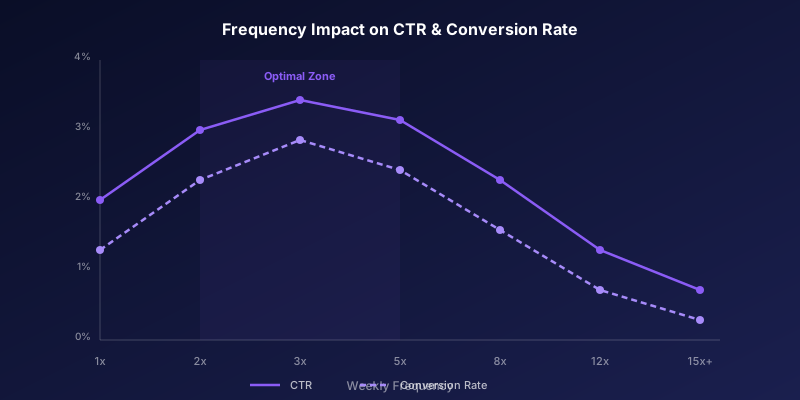
B2B retargeting pools are typically small, ranging from 5,000 to 50,000 users. Without careful frequency management, prospects see the same ads dozens of times, creating fatigue and negative brand perception. Set frequency caps at 3-5 impressions per week per segment and rotate creative every 2-3 weeks.
Monitor frequency at the ad set level rather than the campaign level to catch segments that are burning through their audience too quickly. When frequency exceeds 6-8 per week, reduce budget or expand the audience window. Fresh creative is the most effective frequency management tool because a new ad resets perceived repetition.
Cross-Device and Cross-Platform Retargeting
B2B prospects research on multiple devices and platforms. A prospect might click a LinkedIn ad on their laptop, visit your site on mobile during lunch, and return on desktop the next day. Meta's cross-device identity graph connects these touchpoints, ensuring your retargeting reaches the same person regardless of device.
Extend your retargeting beyond the Meta ecosystem by syncing audiences across channels. Upload Meta Custom Audiences to Google Ads for display retargeting, and use CRM-based retargeting on LinkedIn for high-value segments. This omnichannel approach increases touchpoint coverage by 60-80% and accelerates deal velocity.
Measuring B2B Retargeting Performance
The primary KPI for B2B retargeting is cost per SQL, not cost per click or cost per lead. Track the full journey from retargeting impression to form submission to sales qualification using UTM parameters and CRM integration. Upload offline conversion events to Meta monthly to enable algorithmic optimization for downstream outcomes.
| Metric | Benchmark | Action If Below |
|---|---|---|
| CTR | 1.5 - 3.0% | Refresh creative, test new formats |
| Cost Per Lead | $15 - $40 | Narrow audience, improve landing page |
| Lead-to-SQL Rate | 20 - 35% | Add qualifying questions, refine segments |
| Cost Per SQL | $50 - $120 | Shift budget to higher-intent segments |
| Frequency | 3 - 5/week | Rotate creative, adjust budgets |
Novastorm AI monitors your B2B retargeting campaigns in real time, alerting you when frequency exceeds thresholds, CPL spikes, or creative fatigue sets in. Automated recommendations help you reallocate budget to the highest-performing segments instantly.
Novastorm AI automates Meta Ads routine — from monitoring to optimization. Learn more at novastorm.ai
Disclaimer: This article was generated with the assistance of AI and reviewed by the NovaStorm AI team. While we strive for accuracy, we recommend verifying specific data points and consulting official sources (linked where available) for critical business decisions.
Ready to automate your Meta Ads?
NovaStorm AI takes full responsibility for your campaigns — from monitoring to optimization.
Get Started FreeRelated Articles

Dynamic Retargeting for Non-E-commerce Businesses on Meta
Discover how non-e-commerce businesses can use dynamic retargeting on Meta to personalize ads for services, SaaS, and lead-gen without a product catalog.
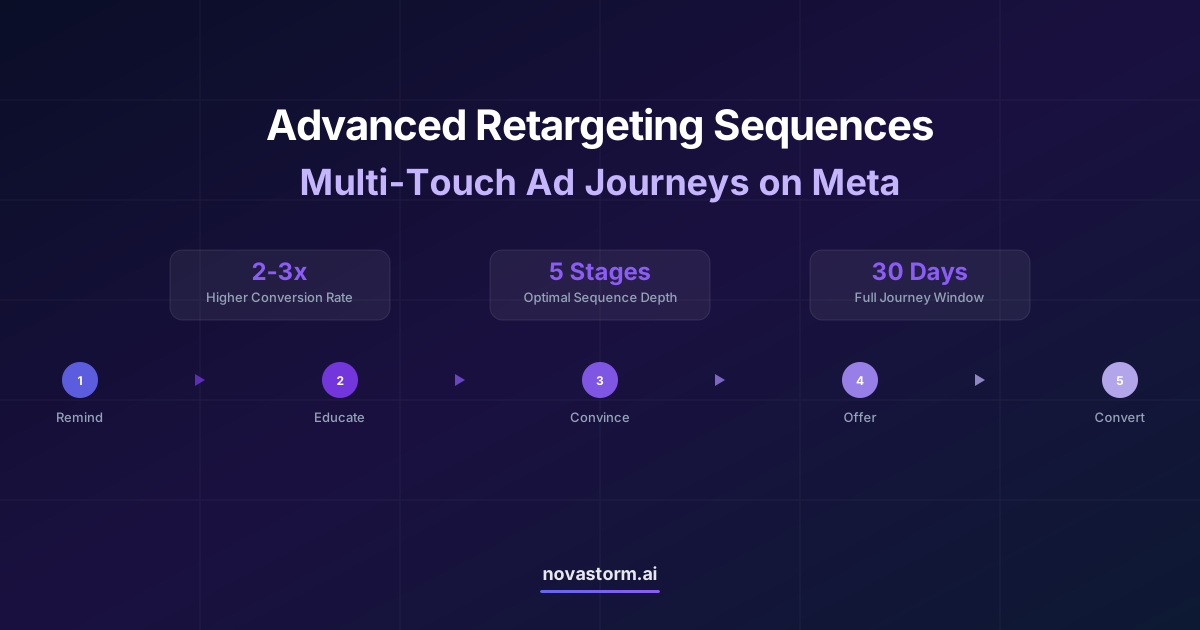
Advanced Retargeting Sequences on Meta: Multi-Touch Ad Journeys
Learn how to build advanced retargeting sequences on Meta Ads that guide prospects through multi-touch journeys. Increase conversions with sequenced ad strategies.
Sales and Marketing Alignment Through Meta Lead Ads
Learn how sales marketing alignment Meta Lead Ads strategies bridge the gap between teams, improve lead quality, and drive revenue growth in B2B organizations.