Advanced Retargeting Sequences on Meta: Multi-Touch Ad Journeys
Learn how to build advanced retargeting sequences on Meta Ads that guide prospects through multi-touch journeys. Increase conversions with sequenced ad strategies.
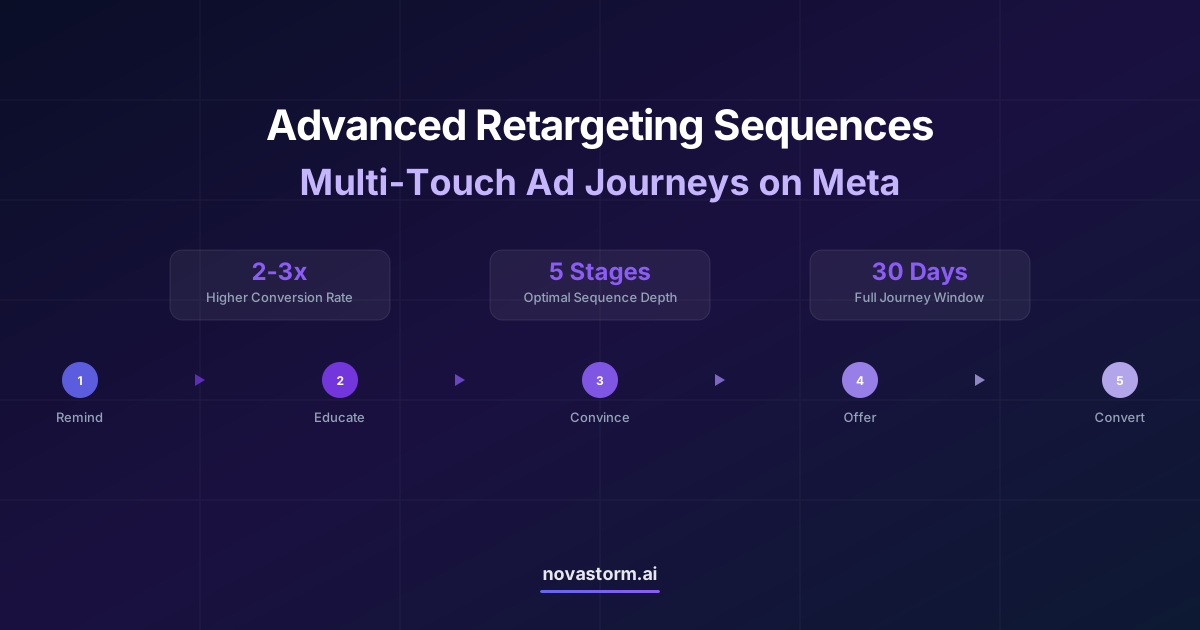
Most advertisers treat retargeting as a single step: someone visits your site, and you show them an ad. But modern buyers rarely convert on one impression. They need multiple touches, each building on the last. Advanced retargeting sequences on Meta let you orchestrate these multi-touch ad journeys with precision, delivering the right message at exactly the right stage of the decision process.
If you have been running flat retargeting campaigns with a single ad set and hoping for results, you are leaving conversions on the table. Retargeting sequences on Meta transform scattered impressions into a deliberate progression that moves prospects from awareness to action.
Why Single-Touch Retargeting Falls Short
Standard retargeting treats every visitor the same. Whether someone spent three seconds on your homepage or twenty minutes reading your pricing page, they see the same generic ad. This approach ignores the fundamental reality that different engagement levels signal different levels of intent.
Research consistently shows that conversion rates increase with each sequential touchpoint. A prospect who has seen three tailored messages converts at two to three times the rate of someone who has only seen one. Retargeting sequences on Meta allow you to capitalize on this by structuring your campaigns as a deliberate multi-touch journey.
| Touchpoint | Objective | Ad Format | Expected CTR |
|---|---|---|---|
| Touch 1 (Day 1-3) | Re-engage and remind | Video or carousel | 1.2-1.8% |
| Touch 2 (Day 4-7) | Educate and build trust | Testimonial or case study | 1.5-2.2% |
| Touch 3 (Day 8-14) | Overcome objections | Comparison or FAQ ad | 1.8-2.5% |
| Touch 4 (Day 15-21) | Drive action with urgency | Offer or limited-time CTA | 2.2-3.5% |
| Touch 5 (Day 22-30) | Final push or sunset | Last chance or alternative offer | 1.5-2.8% |
Architecting Your Retargeting Sequences on Meta
Building effective retargeting sequences on Meta requires a layered approach. You need to segment audiences by engagement depth, assign each segment to a stage in your sequence, and create tailored creative for every touchpoint. Here is the structural framework.
Step 1: Define Your Engagement Tiers
Start by categorizing site visitors into tiers based on their behavior. Use Meta Pixel events, time on site, and pages viewed to create distinct audience pools. A visitor who viewed a product page signals higher intent than someone who bounced from the homepage.
- Tier 1: Homepage visitors with less than 15 seconds on site
- Tier 2: Content or category page viewers with 15-60 seconds engagement
- Tier 3: Product or pricing page viewers who stayed over 60 seconds
- Tier 4: Add-to-cart or form-start users who did not complete
- Tier 5: Repeat visitors with multiple sessions in 7 days
Step 2: Map the Sequence Timeline
Each tier enters its own retargeting sequence at a different intensity. High-intent users get accelerated sequences with shorter intervals between touches. Low-intent users receive a slower nurturing sequence designed to build familiarity before pushing for conversion.
Use Meta custom audiences with time-window exclusions to control progression. For example, create an audience of visitors from the last 3 days, then exclude them from the 4-7 day audience, and so on. This ensures each person sees only the ads appropriate to their stage.
Building Multi-Touch Ad Journeys in Ads Manager
Inside Meta Ads Manager, you implement retargeting sequences by creating separate campaigns or ad sets for each stage. Each ad set targets a specific time window and uses exclusion audiences to prevent overlap.
Use campaign budget optimization at the campaign level but set minimum spend thresholds for later-stage ad sets. Meta's algorithm tends to favor broader audiences, so without minimums, your deeper-funnel retargeting sequences may get starved of budget.
Structure your campaigns with clear naming conventions that reflect the sequence stage. Something like 'RT-Stage2-Day4to7-Testimonial' makes it easy to monitor performance across your multi-touch journey without confusion.
Creative Strategy for Each Touch
The creative is where retargeting sequences on Meta succeed or fail. Each touchpoint must feel like a natural next step, not a repetitive nag. Here is how to approach the creative for each stage of your multi-touch ad journey.
Stop wasting ad budget
NovaStorm AI cuts Meta Ads CPA by 40% on average. Start free.
Touch one should focus on recognition and relevance. Use dynamic product ads or personalized messaging that references what the user viewed. The goal is to remind them you exist and reignite the interest that brought them to your site.
Touch two shifts to education. Share a customer testimonial, a brief case study, or a benefit-focused explainer. This builds credibility and addresses the implicit question: why should I trust this brand?
Touch three tackles objections directly. Use comparison ads, FAQ-style creative, or guarantee messaging. By this point, the prospect knows you and has some trust. Now remove the barriers that prevent them from committing.
Touches four and five drive urgency and provide a final offer. Limited-time discounts, free shipping thresholds, or bonus bundles give the prospect a reason to act now rather than later.
Frequency Management in Retargeting Sequences
One of the biggest risks with multi-touch retargeting is ad fatigue. Showing too many ads too quickly damages brand perception and wastes budget. Retargeting sequences on Meta must include careful frequency management.
| Sequence Stage | Recommended Daily Frequency | Weekly Cap |
|---|---|---|
| Stage 1 (Awareness) | 1-2 impressions | 7-10 |
| Stage 2 (Education) | 1-2 impressions | 5-8 |
| Stage 3 (Objection handling) | 1 impression | 4-6 |
| Stage 4 (Urgency/Offer) | 1-2 impressions | 5-7 |
| Stage 5 (Final push) | 1 impression | 3-5 |
Monitor frequency metrics at the ad set level. When frequency exceeds your caps, pause the ad set or rotate in fresh creative. High frequency with declining CTR is a clear signal that the audience has fatigued on your current message.
Measuring Multi-Touch Journey Performance
Standard last-click attribution misses the value of earlier touchpoints in your sequence. To properly evaluate retargeting sequences on Meta, you need to analyze performance across the entire journey, not just the final converting ad.
- Track assisted conversions by enabling Meta's attribution window settings for 7-day click and 1-day view
- Compare conversion rates for users who completed all sequence stages versus those who skipped stages
- Measure incremental lift by running holdout tests that exclude a portion of your retargeting audience
- Calculate the blended cost per acquisition across all sequence stages combined
- Monitor drop-off rates between stages to identify where your journey loses prospects
Use Meta's conversion lift studies when available. They provide the most rigorous measurement of whether your retargeting sequences are driving true incremental conversions or simply capturing people who would have converted anyway.
Automating Sequence Management With AI
Managing retargeting sequences on Meta manually is labor-intensive. Each audience window, exclusion rule, and creative rotation requires constant monitoring. As your sequences grow more sophisticated, the operational burden scales rapidly.
AI-powered platforms can automate much of this complexity. They monitor frequency, rotate creative when fatigue sets in, adjust budgets across sequence stages based on real-time performance, and flag when specific touchpoints underperform. This frees you to focus on strategy and creative development rather than campaign plumbing.
The advertisers who win with multi-touch ad journeys are those who combine thoughtful sequence design with automated execution. Build the strategy yourself, then let automation handle the ongoing optimization that keeps every touchpoint performing at its peak.

Start by implementing a simple three-stage sequence. Once you see results, expand to five or more stages with increasingly personalized creative. The data from your initial sequence will reveal exactly where prospects need more convincing and where your messaging already resonates.
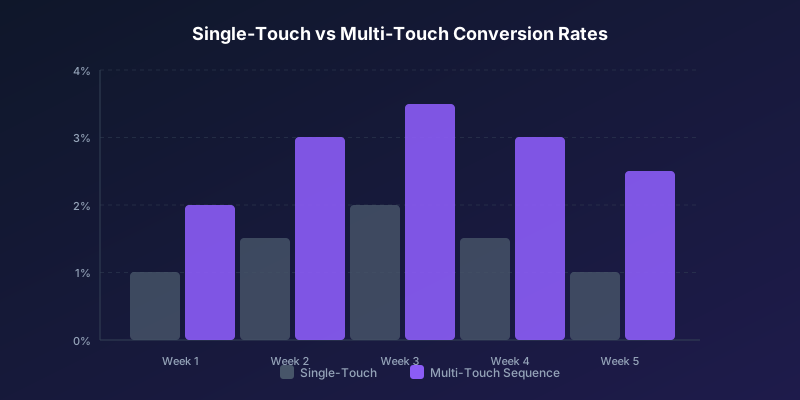
Novastorm AI automates Meta Ads routine — from monitoring to optimization. Learn more at novastorm.ai
Disclaimer: This article was generated with the assistance of AI and reviewed by the NovaStorm AI team. While we strive for accuracy, we recommend verifying specific data points and consulting official sources (linked where available) for critical business decisions.
Ready to automate your Meta Ads?
NovaStorm AI takes full responsibility for your campaigns — from monitoring to optimization.
Get Started FreeRelated Articles
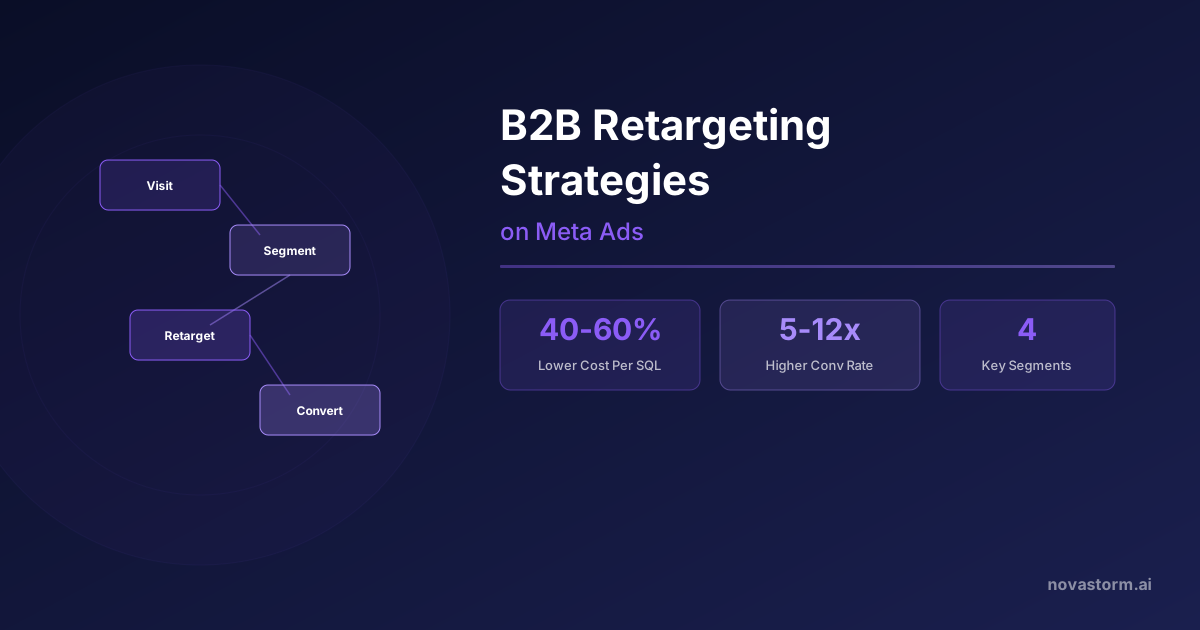
B2B Retargeting Strategies on Meta Ads
Master B2B retargeting strategies on Meta Ads with segmented audiences, sequential messaging, and pipeline-driven optimization. Reduce cost per SQL by 40-60%.
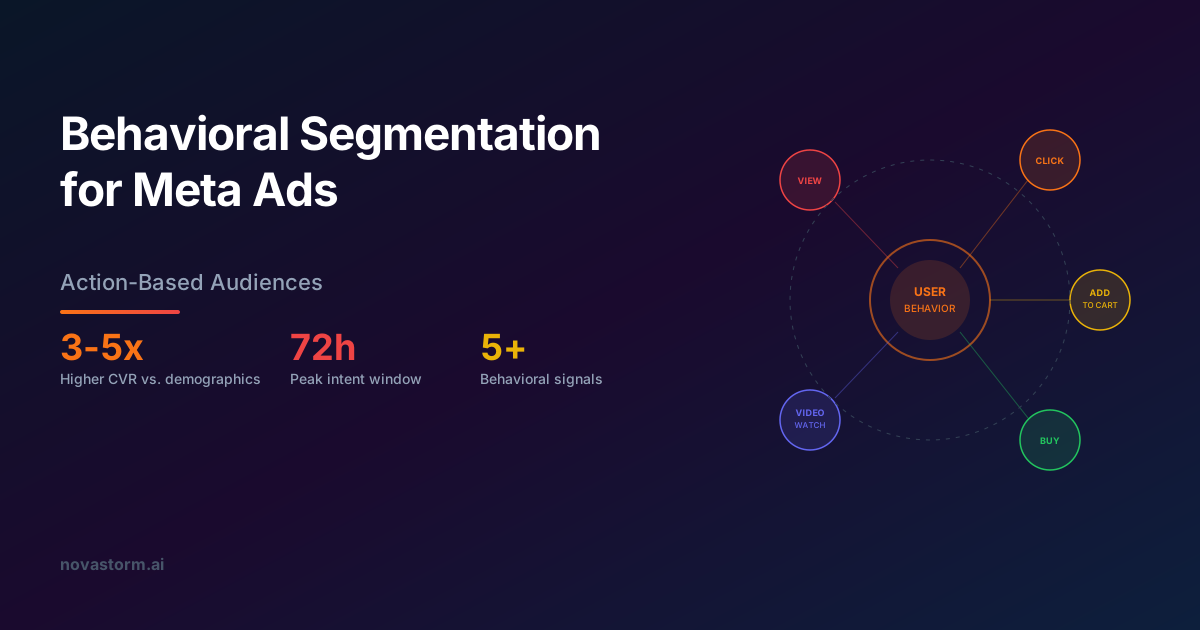
Behavioral Segmentation for Meta Ads: Action-Based Audiences
Master behavioral segmentation for Meta Ads. Build action-based audiences from website events, app activity, and engagement signals to drive higher conversion rates.

Above the Fold Optimization for Meta Ads Landing Pages
Master above the fold optimization for Meta Ads landing pages. Learn which elements to prioritize in the first viewport to maximize conversions from paid traffic.