Sales and Marketing Alignment Through Meta Lead Ads
Learn how sales marketing alignment Meta Lead Ads strategies bridge the gap between teams, improve lead quality, and drive revenue growth in B2B organizations.
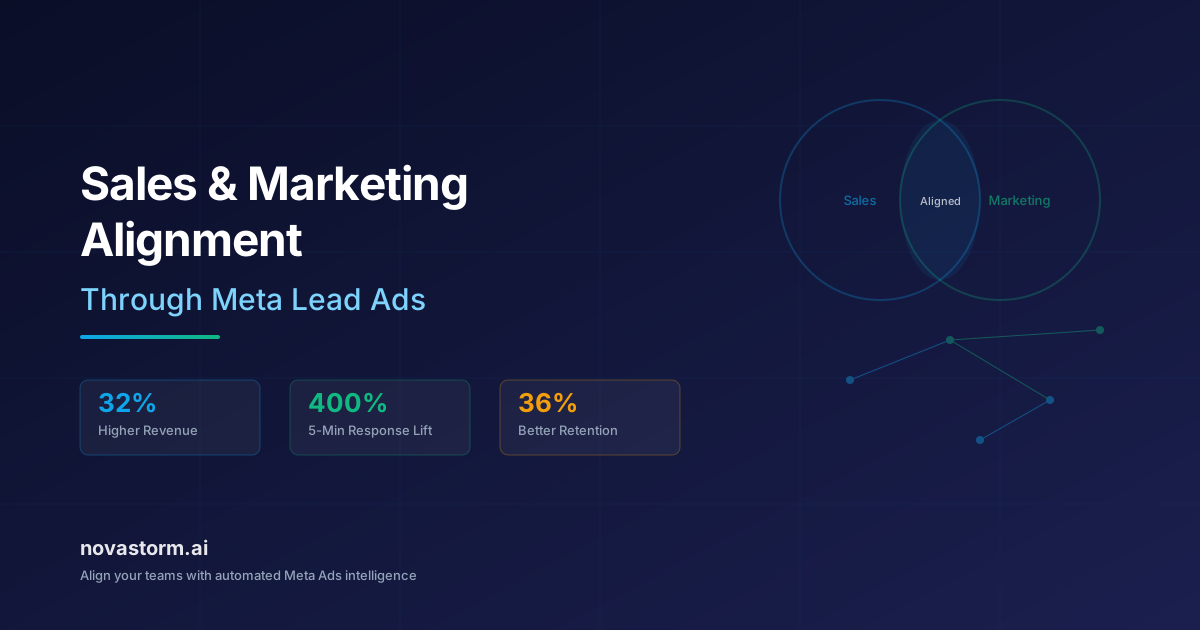
Sales marketing alignment Meta Lead Ads represents one of the most powerful combinations in modern B2B growth strategy. When sales and marketing teams operate in silos, lead quality suffers, conversion rates drop, and revenue targets become moving goalposts. Meta Lead Ads provide a shared infrastructure that both teams can build around, creating a unified approach to lead generation that eliminates the finger-pointing and data gaps that plague most organizations.
Research from Forrester shows that aligned sales and marketing teams achieve 32% higher revenue growth and 36% higher customer retention. Yet only 8% of B2B companies report truly integrated sales and marketing operations. Meta Lead Ads offer a practical path to closing this gap because they generate structured lead data that both teams can act on immediately.
Why Sales Marketing Alignment Meta Lead Ads Matter for B2B
The traditional B2B lead generation workflow creates a natural fracture point between sales and marketing. Marketing generates leads through various channels, passes them to sales, and then loses visibility into what happens next. Sales receives leads of varying quality with no context about the prospect's engagement history or intent signals.
Meta Lead Ads change this dynamic by creating a structured data capture point that both teams design together. When sales and marketing collaborate on form field selection, qualification questions, and follow-up sequences, the lead handoff becomes seamless rather than adversarial.
| Misalignment Symptom | Impact | Lead Ads Solution |
|---|---|---|
| Marketing measures MQLs, sales measures revenue | Conflicting success metrics | Shared conversion tracking from form to close |
| Sales rejects 60%+ of marketing leads | Wasted ad spend and lost trust | Pre-qualification questions in Instant Forms |
| No feedback loop on lead quality | Marketing optimizes for volume over quality | CRM-connected closed-loop reporting |
| Different definitions of 'qualified lead' | Pipeline contamination | Agreed-upon form fields that match ICP criteria |
| Slow lead follow-up (48+ hours) | Lead decay and lost opportunities | Instant CRM routing with automated alerts |
Building the Shared Lead Definition Framework
Alignment starts with a single, shared definition of what constitutes a qualified lead. Before launching any Meta Lead Ad campaign, sales and marketing must agree on the exact criteria that separate a marketing-qualified lead from a sales-qualified lead. This agreement should be codified in the Instant Form itself.
The most effective approach involves sales leaders identifying the three to five questions they ask in the first 90 seconds of a discovery call. These questions become conditional fields in the Meta Instant Form. When a prospect answers these questions before a sales rep ever makes contact, the qualification process accelerates dramatically.
- Identify the top 5 disqualification reasons from the past quarter's lost opportunities
- Convert each disqualification reason into a form question with structured answers
- Set threshold values that auto-route leads to different follow-up sequences
- Map form responses to CRM fields so sales sees qualification data instantly
- Review and adjust qualification criteria monthly based on closed-won analysis
Designing Meta Lead Ad Forms for Sales Enablement
The Instant Form is where alignment becomes tangible. Every field serves dual purposes: it qualifies the lead for marketing scoring and arms the sales rep with actionable intelligence. A well-designed form reduces discovery call time by 40-60% because the prospect has already provided key information.
Conditional logic in Meta Instant Forms allows you to create branching qualification paths. A prospect who selects 'Enterprise (1000+ employees)' sees different follow-up questions than one who selects 'Small Business (1-50 employees).' This segmentation happens at the point of capture, not days later in a marketing automation platform.
Companies that use conditional logic in Meta Instant Forms report 28% higher lead-to-opportunity conversion rates compared to static forms. The key is mapping conditional paths to your sales team's actual qualification framework.
Creating the Feedback Loop Between Sales and Meta Campaigns
Stop wasting ad budget
NovaStorm AI cuts Meta Ads CPA by 40% on average. Start free.
Alignment is not a one-time setup; it requires a continuous feedback loop. Sales outcomes must flow back into Meta's optimization algorithm so the platform learns which types of leads actually convert to revenue, not just which ones submit forms.
This feedback loop operates through Meta's Conversions API. When a lead progresses through your pipeline stages, from MQL to SQL to opportunity to closed-won, each stage transition should fire an event back to Meta. This allows the algorithm to optimize for downstream outcomes rather than top-of-funnel volume.
Weekly alignment meetings between sales and marketing should review three metrics: lead volume by qualification tier, speed-to-contact by lead source, and stage progression rates by campaign. This cadence ensures both teams stay synchronized on what is working and what needs adjustment.
SLA Framework for Lead Follow-Up
Speed-to-lead is the single most important factor in Meta Lead Ad conversion. Studies consistently show that contacting a lead within five minutes of form submission increases qualification rates by 400% compared to a 30-minute response time. The SLA framework creates accountability on both sides.
| Lead Tier | Response SLA | Marketing Responsibility | Sales Responsibility |
|---|---|---|---|
| Tier 1 (High Intent) | < 5 minutes | Instant CRM routing + Slack alert | Live call within SLA window |
| Tier 2 (Medium Intent) | < 30 minutes | Automated nurture email + CRM entry | Personalized outreach within SLA |
| Tier 3 (Low Intent) | < 24 hours | Drip sequence enrollment | Follow-up after nurture engagement |
| Disqualified | N/A | Exclusion audience + retargeting pool | No action required |
Measuring Alignment Success Beyond Lead Volume
True alignment metrics go far beyond the number of leads generated. The metrics that matter track the entire journey from ad impression to closed revenue. Both teams should be measured on shared KPIs that incentivize collaboration rather than siloed performance.
- Lead acceptance rate: percentage of marketing leads that sales accepts as qualified
- Speed-to-contact: average time between form submission and first sales touchpoint
- Stage velocity: time spent in each pipeline stage by lead source
- Cost per qualified opportunity: ad spend divided by opportunities created, not leads generated
- Closed-won attribution: revenue directly traceable to Meta Lead Ad campaigns
- Sales satisfaction score: quarterly survey on lead quality perception
Automating Alignment with Technology
Manual alignment processes break down at scale. When you are running multiple Meta Lead Ad campaigns across different segments, geographies, and products, the coordination complexity overwhelms human processes. Automation tools bridge this gap by enforcing SLAs, routing leads intelligently, and surfacing alignment gaps in real time.
Platforms like Novastorm AI automate the monitoring layer that keeps sales and marketing synchronized. Automated alerts flag when lead quality metrics deviate from benchmarks, when response times exceed SLAs, or when campaign performance shifts in ways that affect downstream conversion. This continuous monitoring replaces the weekly alignment meeting with real-time visibility.
The organizations that win with Meta Lead Ads are those where sales and marketing operate as a single revenue team. Shared definitions, shared data, shared metrics, and shared accountability transform Meta Lead Ads from a marketing tactic into a revenue engine. The technology exists to make this alignment seamless; the only barrier is organizational willingness to break down the silos.
Novastorm AI automates Meta Ads routine — from monitoring to optimization. Learn more at novastorm.ai
Disclaimer: This article was generated with the assistance of AI and reviewed by the NovaStorm AI team. While we strive for accuracy, we recommend verifying specific data points and consulting official sources (linked where available) for critical business decisions.
Ready to automate your Meta Ads?
NovaStorm AI takes full responsibility for your campaigns — from monitoring to optimization.
Get Started FreeRelated Articles

Dynamic Retargeting for Non-E-commerce Businesses on Meta
Discover how non-e-commerce businesses can use dynamic retargeting on Meta to personalize ads for services, SaaS, and lead-gen without a product catalog.
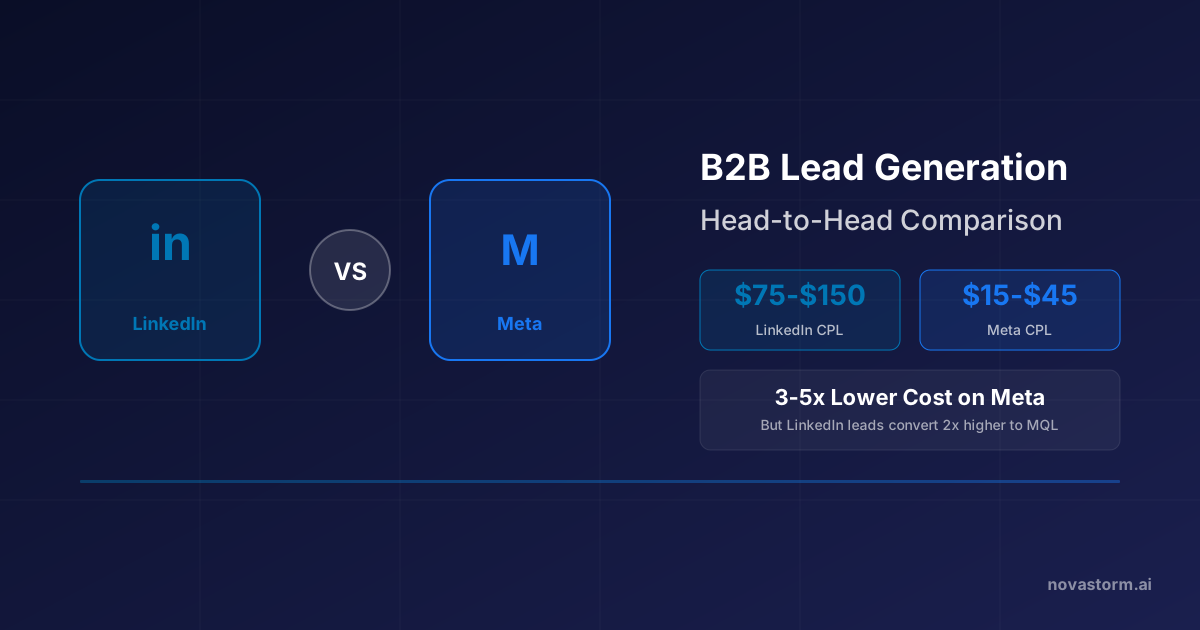
LinkedIn vs Meta for B2B Lead Generation: Head-to-Head Comparison
LinkedIn vs Meta for B2B lead generation compared across CPL, targeting, volume, and conversion rates. Data-driven breakdown to optimize your B2B ad spend.

Accounting Firm Ads on Meta: Professional Services Lead Generation
Learn how to generate qualified leads for your accounting firm using Meta ads. Strategies for targeting, seasonal campaigns, and professional services marketing.