LinkedIn vs Meta for B2B Lead Generation: Head-to-Head Comparison
LinkedIn vs Meta for B2B lead generation compared across CPL, targeting, volume, and conversion rates. Data-driven breakdown to optimize your B2B ad spend.
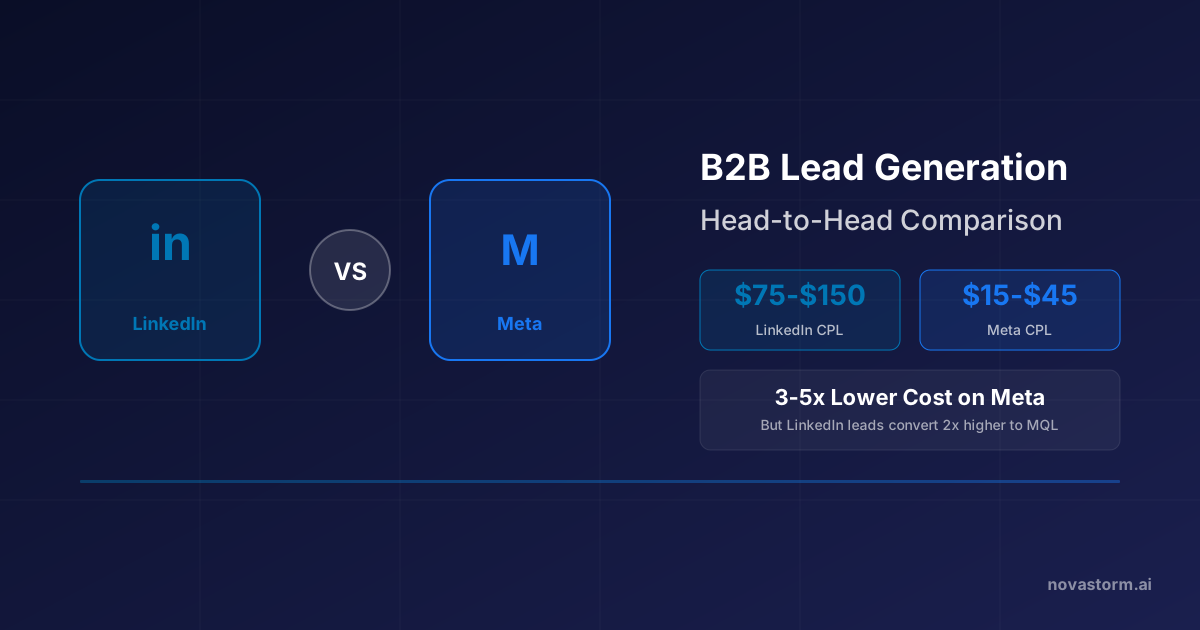
Choosing between LinkedIn and Meta for B2B lead generation is one of the most consequential decisions a demand-gen team can make. Both platforms reach professional audiences, yet they differ dramatically in cost, targeting precision, and lead volume. In this head-to-head comparison, we break down every metric that matters so you can allocate budget with confidence.
The short answer is that neither platform is universally better. LinkedIn excels at reaching named accounts and senior decision-makers, while Meta delivers significantly higher volume at a fraction of the cost per lead. The right choice depends on your average contract value, sales cycle length, and internal capacity to qualify leads.
Cost Per Lead: LinkedIn vs Meta for B2B Lead Generation
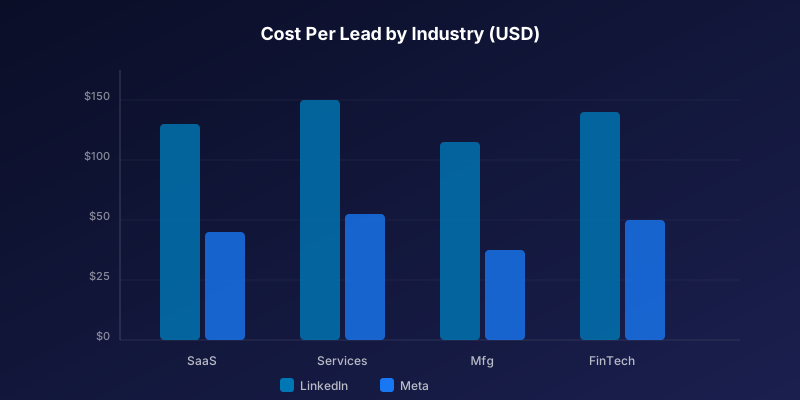
Cost per lead is the metric most teams evaluate first, and the gap between platforms is substantial. Across our client portfolio, LinkedIn CPLs for B2B campaigns average $75-$150, while Meta CPLs for comparable audiences land between $15-$45. That 3-5x difference is consistent across industries including SaaS, professional services, and manufacturing.
However, raw CPL tells only part of the story. LinkedIn leads often arrive with verified job titles and company data, reducing qualification effort downstream. Meta leads require more aggressive filtering and scoring before they reach sales.
| Metric | LinkedIn Ads | Meta Ads |
|---|---|---|
| Average CPL (B2B) | $75 - $150 | $15 - $45 |
| Lead Volume per $1,000 | 7 - 13 leads | 22 - 67 leads |
| Lead-to-MQL Rate | 35% - 50% | 12% - 25% |
| MQL-to-SQL Rate | 20% - 30% | 10% - 18% |
| Average CPC | $8 - $14 | $1.50 - $4 |
Targeting Capabilities Compared
LinkedIn provides unmatched professional targeting. You can filter by job title, seniority, company size, industry, skills, and even specific companies via Matched Audiences. For account-based marketing, this granularity is irreplaceable.
Meta compensates with behavioral and interest-based targeting combined with powerful Lookalike audiences. While you cannot target "VP of Engineering at companies with 500+ employees" directly, you can build Lookalike audiences from your CRM data that approximate this profile with surprising accuracy.
- LinkedIn: Job title, seniority, company size, industry, skills, specific accounts
- Meta: Interests, behaviors, Lookalikes from CRM, Custom Audiences from website traffic
- LinkedIn: First-party professional data (verified by users)
- Meta: Inferred professional attributes from behavioral signals
- LinkedIn: Account lists for ABM campaigns
- Meta: Broad reach with algorithmic optimization via Advantage+ targeting
Lead Quality and Sales Acceptance
Lead quality is where LinkedIn traditionally dominates. Sales teams report 35-50% of LinkedIn leads meet MQL criteria, compared to 12-25% for Meta leads. This gap narrows considerably when Meta campaigns use well-designed qualification questions in Lead Ads or route traffic to gated landing pages with progressive profiling.
One strategy that closes the quality gap is running Meta lead campaigns with conditional logic forms. Adding 2-3 qualifying questions such as company size and budget timeline filters out unqualified prospects before they reach your CRM. Teams implementing this approach report MQL rates of 20-30% from Meta, approaching LinkedIn territory.
Pro tip: Use Meta Lead Ads with conditional logic to add qualifying questions. This can increase your MQL rate from 15% to 28% while only reducing volume by 20-25%.
Scale and Audience Size
Stop wasting ad budget
NovaStorm AI cuts Meta Ads CPA by 40% on average. Start free.
Meta reaches 3.05 billion monthly active users globally, dwarfing LinkedIn's 1 billion members. For B2B campaigns, this translates to dramatically larger addressable audiences. A SaaS company targeting mid-market IT decision-makers might find 200,000 reachable users on LinkedIn versus 2-3 million potential matches on Meta.
This scale advantage matters most for top-of-funnel awareness and retargeting pool creation. Meta's larger audience also means campaigns maintain performance longer before creative fatigue sets in, typically 4-6 weeks versus 2-3 weeks on LinkedIn.
Creative Format Advantages
Meta offers a wider range of ad formats including Reels, Stories, carousel, collection, and instant experience ads. These formats enable richer storytelling and interactive content. LinkedIn counters with formats designed for professional contexts: Document Ads, Conversation Ads, and InMail messages that feel native to the business environment.
Video performance differs significantly between platforms. Short-form video (15-30 seconds) outperforms on Meta, while longer-form thought leadership content (60-90 seconds) drives better engagement on LinkedIn. Planning creative production around these preferences maximizes return on both platforms.
The Hybrid Approach: Using Both Platforms
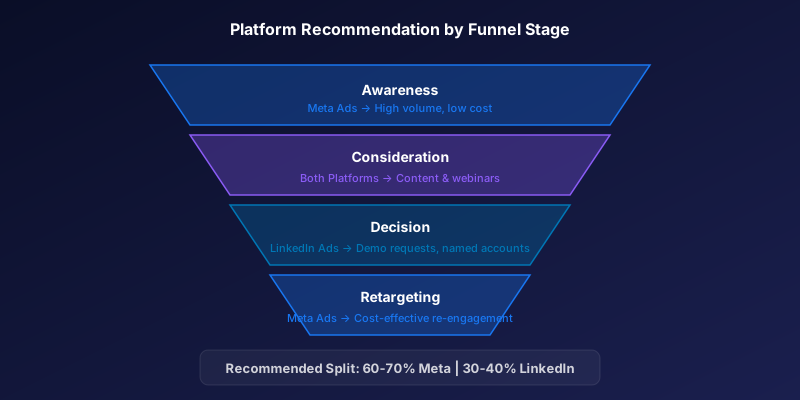
The highest-performing B2B programs in our portfolio use both platforms strategically. Meta handles top-of-funnel awareness and retargeting at scale, generating high lead volume at low cost. LinkedIn targets high-value accounts and decision-makers for bottom-of-funnel conversion. This dual approach reduces blended CPL by 30-40% compared to LinkedIn-only strategies while maintaining lead quality.
| Funnel Stage | Recommended Platform | Primary Objective |
|---|---|---|
| Awareness | Meta Ads | Brand reach and video views at scale |
| Consideration | Both | Content downloads and webinar registrations |
| Decision | LinkedIn Ads | Demo requests from named accounts |
| Retargeting | Meta Ads | Re-engage website visitors cost-effectively |
| ABM | LinkedIn Ads | Target specific companies and titles |
Budget allocation for hybrid strategies typically follows a 60/40 or 70/30 split favoring Meta for volume, with LinkedIn reserved for high-intent campaigns and strategic accounts. Monitoring blended cost per SQL rather than platform-level CPL ensures optimization decisions reflect true business impact.
Measurement and Attribution
LinkedIn's conversion tracking integrates natively with most CRM platforms, making it easier to trace leads through the pipeline. Meta's Conversions API (CAPI) requires more setup but provides robust server-side tracking that survives browser privacy restrictions. Both platforms support offline conversion uploads, which is essential for B2B cycles lasting weeks or months.
For accurate comparison, implement UTM parameters consistently across both platforms and track pipeline metrics in your CRM rather than relying solely on platform-reported conversions. This unified view prevents misleading comparisons driven by different attribution windows.
Automate your cross-platform B2B lead tracking with Novastorm AI. Our platform unifies Meta and LinkedIn campaign data, calculates blended CPL and cost-per-SQL, and flags underperforming campaigns in real time.
Novastorm AI automates Meta Ads routine — from monitoring to optimization. Learn more at novastorm.ai
Disclaimer: This article was generated with the assistance of AI and reviewed by the NovaStorm AI team. While we strive for accuracy, we recommend verifying specific data points and consulting official sources (linked where available) for critical business decisions.
Ready to automate your Meta Ads?
NovaStorm AI takes full responsibility for your campaigns — from monitoring to optimization.
Get Started FreeRelated Articles
Sales and Marketing Alignment Through Meta Lead Ads
Learn how sales marketing alignment Meta Lead Ads strategies bridge the gap between teams, improve lead quality, and drive revenue growth in B2B organizations.

Dynamic Retargeting for Non-E-commerce Businesses on Meta
Discover how non-e-commerce businesses can use dynamic retargeting on Meta to personalize ads for services, SaaS, and lead-gen without a product catalog.

Accounting Firm Ads on Meta: Professional Services Lead Generation
Learn how to generate qualified leads for your accounting firm using Meta ads. Strategies for targeting, seasonal campaigns, and professional services marketing.