Automated Creative Testing Frameworks for Meta Ads at Scale
Build an automated creative testing framework for Meta Ads that tests 50+ variants monthly. Structured systems boost winning creative rates by 3x at scale.
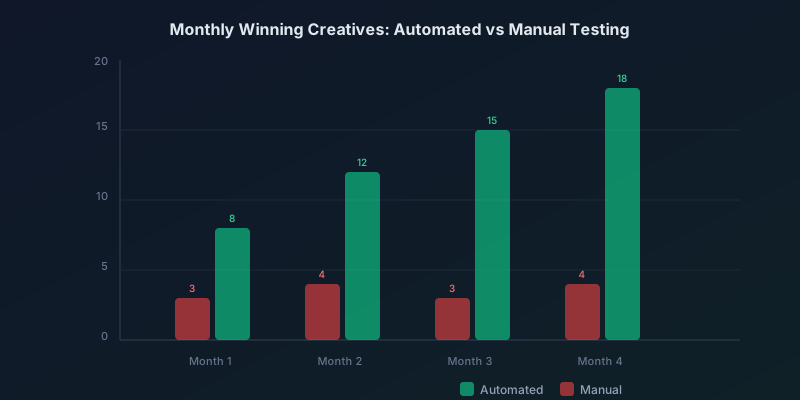
Automated creative testing is the backbone of every high-performing Meta Ads account in 2026. With creative fatigue cycles shrinking from 14 days to just 5-7 days, advertisers who rely on manual, ad-hoc testing simply cannot keep pace. The brands dominating their verticals have built systematic automated creative testing frameworks that evaluate 50-100 ad variants per month without drowning their teams in manual work.
The numbers tell the story: accounts running structured testing frameworks identify winning creatives 3x faster and maintain 40% lower CPAs over time compared to those testing sporadically. Building this system is not optional; it is a competitive necessity.
The Anatomy of an Automated Creative Testing Framework
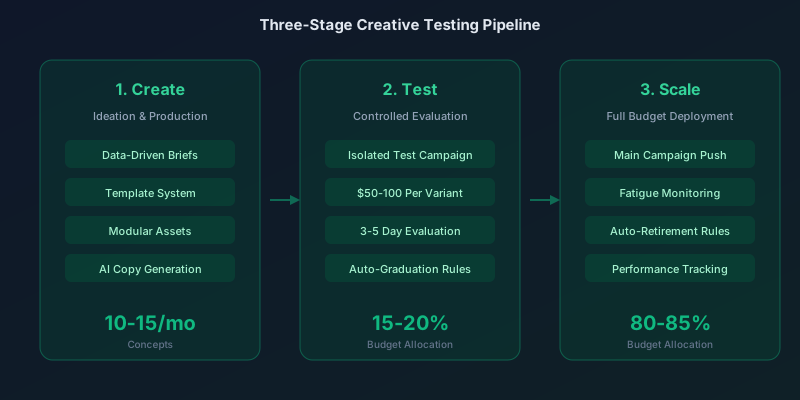
A proper testing framework operates as a three-stage pipeline: creation, testing, and scaling. Each stage has distinct rules, budgets, and success criteria that work together as a continuous system.
| Stage | Purpose | Budget Allocation | Duration | Success Metric |
|---|---|---|---|---|
| Stage 1: Ideation | Generate creative hypotheses from data | 0% (pre-production) | Ongoing | 10-15 concepts/month |
| Stage 2: Testing | Evaluate creative variants in controlled conditions | 15-20% of total budget | 3-5 days per batch | Statistical significance reached |
| Stage 3: Scaling | Push winners into main campaigns at full budget | 80-85% of total budget | Until fatigue signals | CPA within 20% of target |
The testing stage is where automation delivers its greatest value. Instead of manually launching test campaigns, setting budgets, monitoring performance, and making graduation decisions, automated systems handle every step based on predefined rules.
Setting Up Your Automated Creative Testing System
Building the framework requires configuring four core components: a testing campaign structure, graduation criteria, retirement rules, and a creative production pipeline that feeds the system consistently.
- Create a dedicated testing campaign with CBO and broad targeting to isolate creative performance
- Set a fixed test budget per creative variant: typically $50-100 over 3-5 days
- Define graduation thresholds: CTR above 1.5%, CPA below 120% of account average, and 1,000+ impressions minimum
- Establish retirement triggers: frequency above 3.0, CPM increase of 30%+, or CTR decline of 25% from peak
- Build a creative brief template that standardizes the testing variables (hook, format, CTA, visual style)
- Schedule weekly creative launches (every Monday) to maintain a consistent testing cadence
Pro tip: Use Dynamic Creative (DCO) for initial element testing (headlines, images, CTAs), then graduate the winning combinations into standard ads for scaling. DCO is excellent for identifying winning elements but less effective for scaling due to limited control over spend allocation.
Testing Variables That Move the Needle
Not all creative variables have equal impact on performance. Research across 10,000+ Meta ad tests reveals a clear hierarchy of impact.
| Variable | Avg Impact on CTR | Avg Impact on CPA | Test Priority |
|---|---|---|---|
| Opening hook (first 3 seconds) | +45-80% | -25-40% | Highest |
| Visual format (video vs static vs carousel) | +30-60% | -20-35% | High |
| Value proposition messaging | +20-40% | -15-30% | High |
| Call-to-action phrasing | +10-25% | -8-15% | Medium |
| Color palette and visual style | +5-15% | -5-10% | Lower |
| Ad copy length | +5-12% | -3-8% | Lower |
Focus your testing resources on the top three variables first. A new opening hook on an existing winning ad can deliver more impact than creating an entirely new ad from scratch. This insight alone can 3x your testing throughput.
Stop wasting ad budget
NovaStorm AI cuts Meta Ads CPA by 40% on average. Start free.
Automating the Graduation and Retirement Process
The most time-consuming part of manual creative testing is the daily monitoring and decision-making about which ads to scale and which to kill. Automating these decisions based on clear rules eliminates bias and ensures consistency.
Graduation rules should fire automatically once an ad variant meets all threshold criteria simultaneously. Common graduation triggers include: CPA at or below target for 3 consecutive days, minimum 1,500 impressions delivered, and CTR in the top 30% of tested variants within the same batch.
Warning: Never graduate a creative based on fewer than 1,000 impressions or less than 48 hours of data. Early performance often does not reflect true steady-state performance. Ads that look like winners on day one have a 35% chance of becoming losers by day five.
Scaling Your Creative Production Pipeline
The framework is only as good as the creative flowing into it. Building a sustainable production pipeline means balancing quality with volume, leveraging templates, and creating modular assets that multiply output.
- Create 5-7 master templates that can be quickly adapted with new hooks, visuals, or copy
- Use AI tools for initial copy generation, then have a human editor refine tone and accuracy
- Build a swipe file of competitor ads and high-performing organic content for inspiration
- Develop a visual asset library with pre-approved brand elements for rapid assembly
- Implement a creative scoring system that tracks lifetime performance metrics per concept type
Measuring Framework Performance Over Time
Track your testing framework's health using meta-metrics that evaluate the system itself, not just individual ads. Key framework KPIs include: creative win rate (percentage of tested variants that graduate), time-to-winner (days from launch to graduation), and creative diversity score (number of distinct concept types in active rotation).
Sources & Further Reading: Meta Business Help Center — Dynamic Creative — official guide to Meta's automated creative testing. Social Media Examiner — How to Test Facebook Ad Creative — expert walkthrough of creative testing methods. HubSpot — Facebook Ad Examples & Best Practices — creative benchmarks and high-performing ad analysis.
Data insight: Top-performing accounts maintain a creative win rate of 15-25%, meaning 1 in 4-7 tested variants graduates to scaling. If your win rate is above 30%, your tests are too conservative. If below 10%, your creative briefs need refinement.
The automated creative testing framework transforms ad creative from an unpredictable art into a measurable, scalable process. The investment in building the system pays for itself within the first month through faster winner identification and reduced creative waste.
Novastorm AI automates Meta Ads routine — from monitoring to optimization. Learn more at novastorm.ai
Disclaimer: This article was generated with the assistance of AI and reviewed by the NovaStorm AI team. While we strive for accuracy, we recommend verifying specific data points and consulting official sources (linked where available) for critical business decisions.
Ready to automate your Meta Ads?
NovaStorm AI takes full responsibility for your campaigns — from monitoring to optimization.
Get Started FreeRelated Articles
The Future of Meta Ads: AI, Privacy, and Automation Trends
Explore the future of Meta Ads shaped by AI automation, evolving privacy regulations, and machine learning. Discover key trends redefining paid social in 2026.
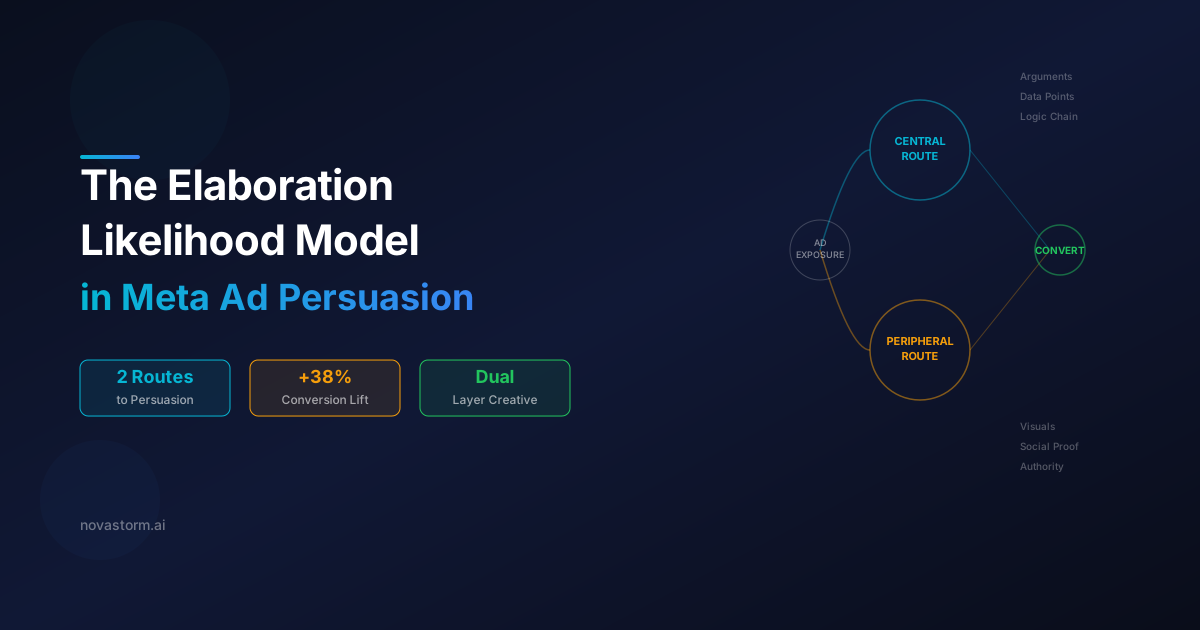
The Elaboration Likelihood Model in Meta Ad Persuasion
Learn how the Elaboration Likelihood Model shapes Meta ad persuasion through central and peripheral routes. Build ads that persuade at every engagement level.
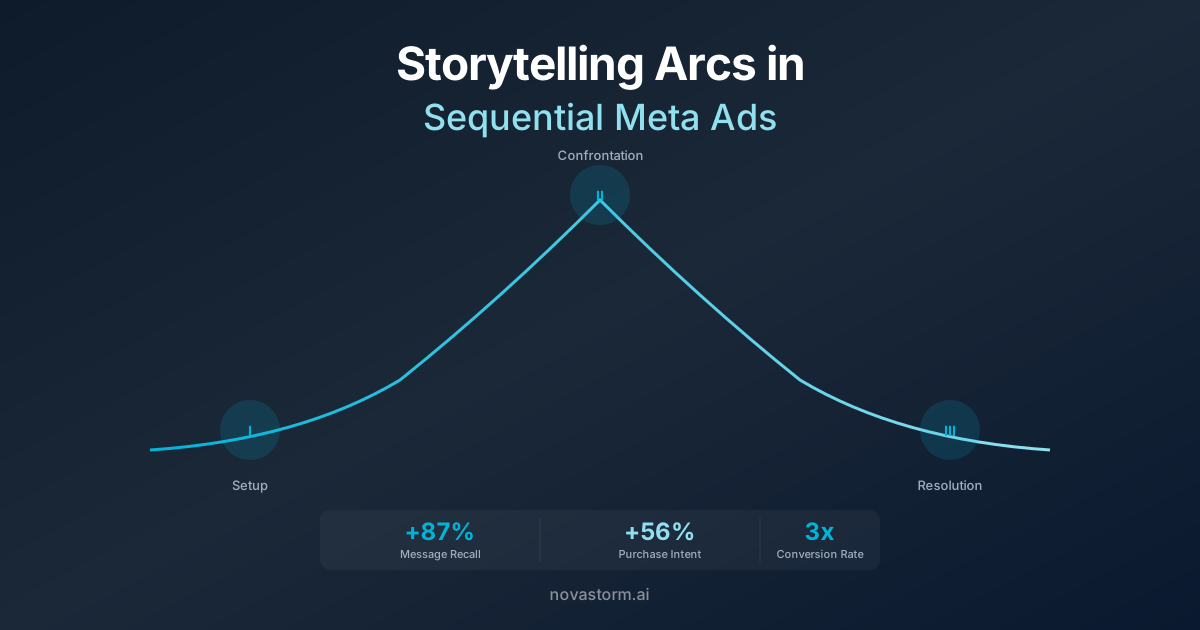
Storytelling Arcs in Sequential Meta Ads: Three-Act Structure
Master the three-act structure for sequential Meta ads. Build storytelling arcs that guide prospects from awareness to conversion with narrative ad sequences.