Tiered Pricing in Meta Ads: Good-Better-Best Frameworks
Master tiered pricing in Meta Ads using the good-better-best framework. Learn how to present multiple price points that guide customers to your ideal tier.

When you present a single price, you give customers a binary decision: buy or leave. Tiered pricing in Meta Ads transforms this into a choice between options — and when people choose between options rather than deciding whether to buy, conversion rates climb significantly.
The good-better-best framework is the most proven approach to tiered pricing in Meta Ads. By offering three price points with escalating value, you anchor perception, guide decision-making, and capture customers at multiple budget levels — all within a single ad.
Why Tiered Pricing in Meta Ads Outperforms Single-Price Offers
Single-price ads force a yes-or-no decision. Tiered pricing shifts the question from "should I buy?" to "which one should I buy?" This cognitive reframe is supported by decades of behavioral research — choice architecture fundamentally changes purchase behavior.
The middle tier in a three-tier structure consistently captures 50-60% of purchases, a phenomenon known as the "compromise effect." Customers instinctively avoid the cheapest option (perceived as inferior) and the most expensive (perceived as unnecessary), settling on the middle ground.
Companies that implement tiered pricing in Meta Ads report 22-35% higher average revenue per customer compared to single-tier campaigns, because the middle tier is typically priced higher than what a single offer would be.
Designing the Good-Better-Best Structure
The three tiers must be designed strategically. The "good" tier serves as an entry point and anchor. The "better" tier is where you want most customers to land. The "best" tier makes the middle tier look reasonable and captures high-value buyers.
| Tier | Purpose | Pricing Strategy | Feature Set |
|---|---|---|---|
| Good (Basic) | Entry point, price anchor | Cover costs, minimal margin | Core features only — functional minimum |
| Better (Standard) | Target tier for most customers | Healthy margin, clear value gap from Good | Core + popular features, best value signal |
| Best (Premium) | Anchor for Better, capture power users | High margin, aspirational pricing | All features + exclusives, VIP elements |
The price gaps between tiers are critical. The jump from Good to Better should feel like an easy upgrade — typically 40-60% more. The jump from Better to Best should be larger — 80-120% more — making Better feel like the obvious sweet spot.
Presenting Three Tiers in Meta Ad Formats
The challenge of tiered pricing in Meta Ads is communicating three options in a format designed for simplicity. You need creative formats that present all tiers clearly without overwhelming the viewer.
- Carousel format: One card per tier, with the middle card slightly highlighted or marked 'Most Popular'
- Single image: Three columns in a pricing table graphic, middle tier visually emphasized
- Video: Quick walkthrough of each tier, spending most time on the target tier
- Collection ad: Landing experience with all three tiers expandable
- Lead ad: Form that lets users select their preferred tier before submitting
The carousel format is the most effective for tiered pricing in Meta Ads because it gives each tier its own visual space while maintaining the comparison context. Place the "Better" tier in the first card position — it gets the most views and sets the anchor.
Stop wasting ad budget
NovaStorm AI cuts Meta Ads CPA by 40% on average. Start free.
The Decoy Effect: Making the Middle Tier Irresistible
The decoy effect occurs when the "Good" tier is designed to make the "Better" tier look like exceptional value. By carefully limiting the Good tier's features, you create a perception that upgrading to Better is a no-brainer.
For example, if your Better tier costs $49/month with 10 features and your Good tier costs $39/month with only 3 features, the $10 difference for 7 additional features makes Better feel like a steal. The Good tier exists not to sell — but to sell the Better tier.
Label your middle tier 'Most Popular' or 'Best Value' in your ad creative. This social proof indicator nudges undecided customers toward the tier you want them to choose, reinforcing the compromise effect.
Targeting Different Tiers to Different Audiences
Advanced implementations of tiered pricing in Meta Ads serve different tier emphases to different audience segments. Price-sensitive prospecting audiences see the Good tier emphasized. Retargeting audiences see the Better tier. High-value lookalikes see the Best tier.
| Audience Segment | Lead Tier | Ad Angle | CTA |
|---|---|---|---|
| Cold - price sensitive | Good | Affordable entry point | Start for just $29/mo |
| Cold - value driven | Better | Best value, most popular | Get the most popular plan |
| Warm - engaged visitors | Better | Smart choice for results | Upgrade your results |
| Hot - cart abandoners | Their viewed tier | Finish what you started | Complete your purchase |
| Existing customers | Best | Premium upgrade path | Unlock all features |
Measuring Tier Distribution and Optimizing
Once your tiered pricing in Meta Ads is live, track the distribution of purchases across tiers. The ideal split is approximately 20% Good, 55% Better, and 25% Best. If your distribution skews toward Good, your Better tier needs more value or Better needs better visibility.
- Track purchase distribution across all three tiers weekly
- If Good captures more than 30%, widen the value gap between Good and Better
- If Best captures less than 15%, ensure it is visible and aspirational
- A/B test tier names — 'Pro' vs 'Standard' vs 'Plus' can shift perception
- Test price points within each tier: $29/$49/$99 vs $39/$59/$119
- Monitor customer satisfaction by tier to catch quality-expectation mismatches
Tiered pricing in Meta Ads is not about offering discounts or overwhelming customers with options. It is about structuring choice in a way that feels empowering. When customers select from thoughtfully designed tiers, they feel in control of their purchase — and that sense of agency converts at rates that single-price offers simply cannot match.


Novastorm AI automates Meta Ads routine — from monitoring to optimization. Learn more at novastorm.ai
Disclaimer: This article was generated with the assistance of AI and reviewed by the NovaStorm AI team. While we strive for accuracy, we recommend verifying specific data points and consulting official sources (linked where available) for critical business decisions.
Ready to automate your Meta Ads?
NovaStorm AI takes full responsibility for your campaigns — from monitoring to optimization.
Get Started FreeRelated Articles
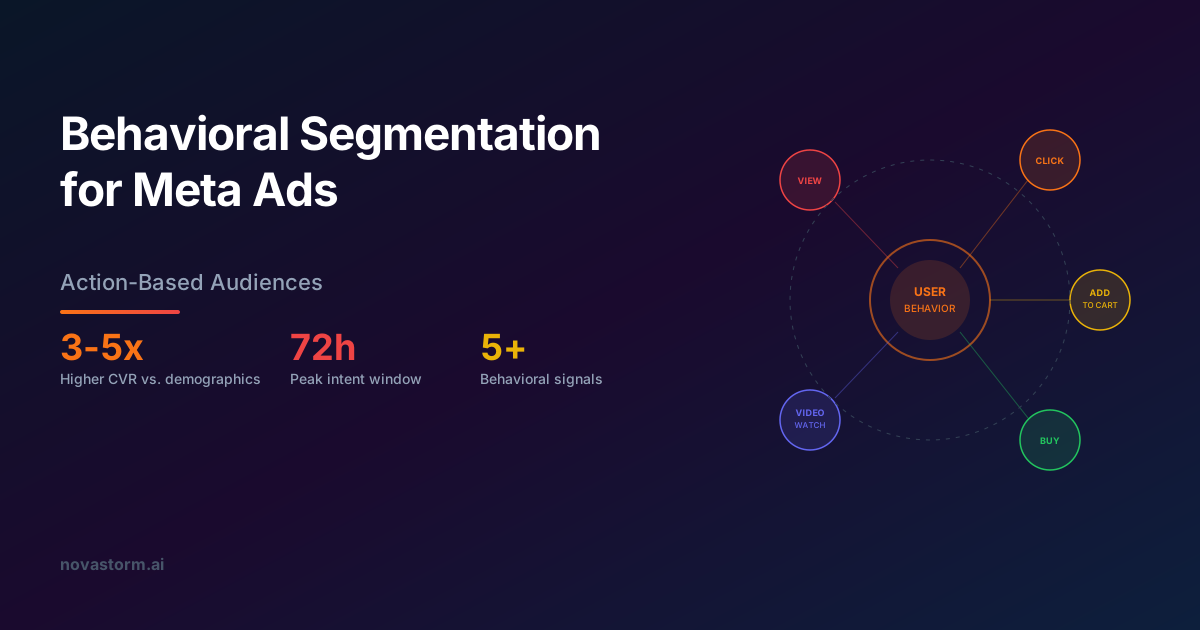
Behavioral Segmentation for Meta Ads: Action-Based Audiences
Master behavioral segmentation for Meta Ads. Build action-based audiences from website events, app activity, and engagement signals to drive higher conversion rates.

Above the Fold Optimization for Meta Ads Landing Pages
Master above the fold optimization for Meta Ads landing pages. Learn which elements to prioritize in the first viewport to maximize conversions from paid traffic.
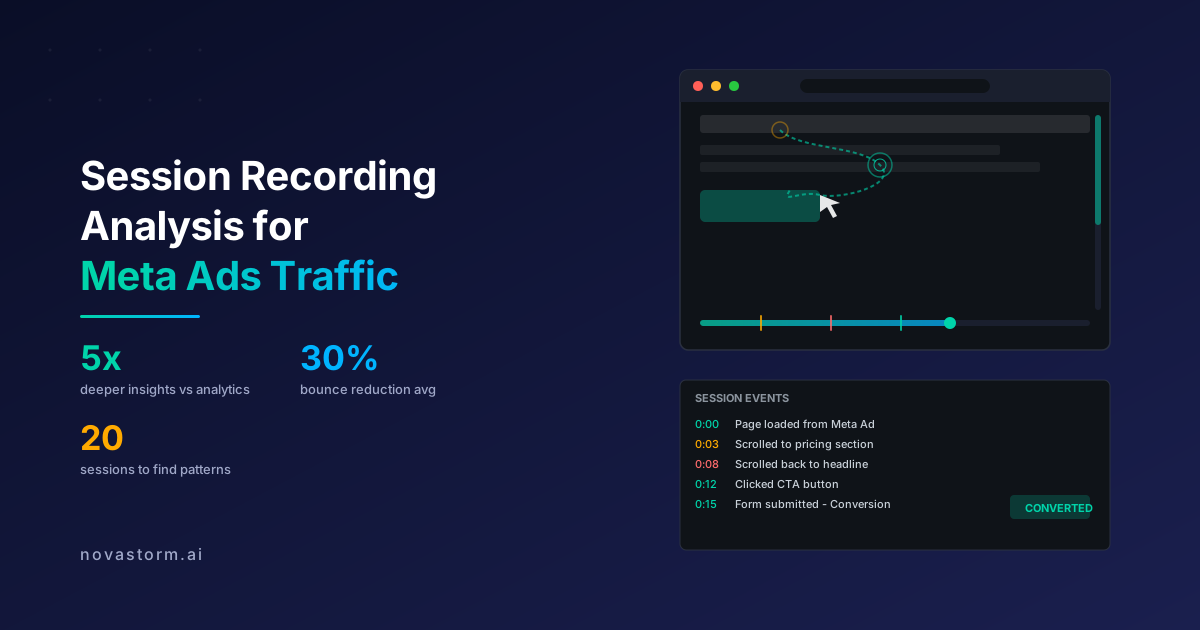
Session Recording Analysis for Meta Ads Traffic: User Behavior Insights
Learn how session recording analysis reveals why Meta Ads visitors convert or bounce. Discover behavioral patterns and optimization strategies for paid traffic.