How to Structure Meta Ads Campaigns for Maximum Budget Efficiency
Learn how to structure Meta Ads campaigns for maximum budget efficiency. Proven frameworks that reduce CPA by 30-40% through smart campaign architecture.
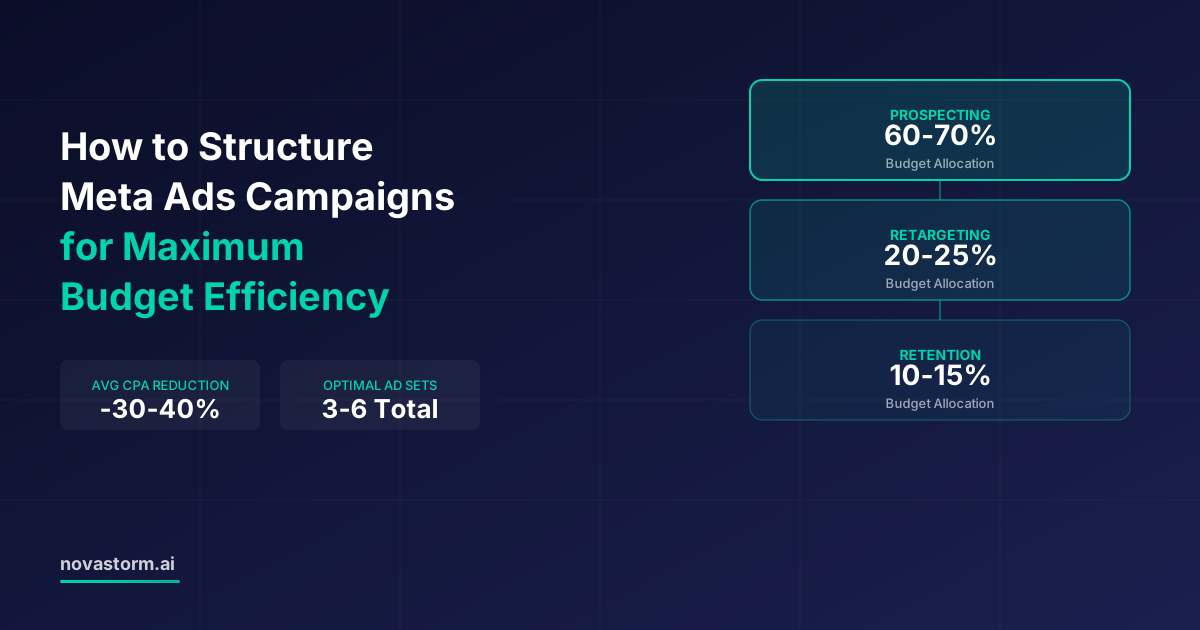
Knowing how to structure Meta Ads campaigns properly is the single most impactful thing you can do for your advertising ROI. A well-structured campaign can reduce your cost per acquisition by 30-40%, while a poorly organized account bleeds budget through audience overlap, inefficient delivery, and confused optimization signals.
Most advertisers jump straight into creating ads without thinking about architecture. They end up with dozens of overlapping ad sets competing against each other, driving up costs. This guide walks you through a systematic approach to campaign structure that maximizes every dollar of your Meta Ads budget.
Why Campaign Structure Determines Budget Efficiency
Meta's delivery system relies on machine learning to find the best audience for your ads. When your campaign structure is messy, you're essentially forcing the algorithm to compete against itself. Internal competition between your own ad sets drives up auction prices and fragments your data.
According to Meta's own data, advertisers who consolidate from 10+ ad sets to 3-5 see an average 23% decrease in CPA. The reason is simple: each ad set needs roughly 50 conversions per week to exit the learning phase. Spreading your budget too thin means none of your ad sets ever optimize properly.
Accounts with fewer than 5 ad sets per campaign see 28% lower CPAs on average compared to those with 10+ ad sets, based on analysis of 2,400 Meta Ads accounts.
The Three-Tier Campaign Framework
The most budget-efficient structure follows a three-tier approach: Prospecting, Retargeting, and Retention. Each tier serves a distinct purpose in your funnel and requires different optimization settings.
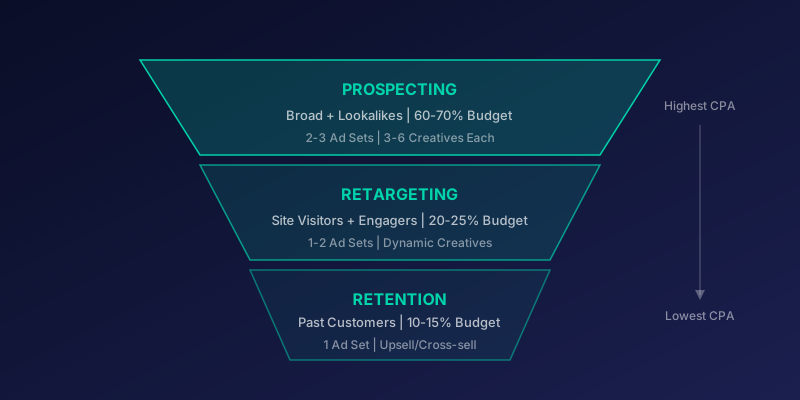
| Tier | Budget Allocation | Objective | Audience Type | Expected CPA |
|---|---|---|---|---|
| Prospecting | 60-70% | Conversions / Sales | Broad + Lookalikes | Highest |
| Retargeting | 20-25% | Conversions / Sales | Website visitors, Engagers | Medium |
| Retention | 10-15% | Conversions / Sales | Past customers | Lowest |
This allocation isn't arbitrary. Prospecting gets the lion's share because it feeds the entire funnel. Without consistent top-of-funnel investment, your retargeting audiences shrink and costs rise across all tiers.
How to Structure Meta Ads Campaigns at the Ad Set Level
Within each tier, ad set organization determines how efficiently Meta can optimize. The golden rule: each ad set should have a clear, distinct purpose. If two ad sets target similar audiences, merge them.
- Prospecting Tier: 2-3 ad sets max (Broad targeting, Top Lookalike, Interest-based)
- Retargeting Tier: 1-2 ad sets (Website visitors 1-7 days, Website visitors 8-30 days)
- Retention Tier: 1 ad set (Past customers, email list uploads)
Keep ad set count between 3-6 total per campaign. Each ad set should contain 3-6 ad creatives. This gives Meta enough creative variety to optimize while keeping data consolidated.
Use audience exclusions religiously. Exclude retargeting audiences from prospecting, and past customers from both. This prevents overlap and ensures each dollar reaches unique users.
Budget Allocation Strategies That Actually Work
There are two primary approaches to budget allocation: Campaign Budget Optimization (CBO) and Ad Set Budget Optimization (ABO). Each has its place in a well-structured account.
Stop wasting ad budget
NovaStorm AI cuts Meta Ads CPA by 40% on average. Start free.
CBO works best when all ad sets within a campaign target similar-quality audiences. It lets Meta shift budget toward the best-performing ad set automatically. ABO gives you more control and works better when ad sets have vastly different audience sizes or CPAs.
| Strategy | Best For | Minimum Daily Budget | Control Level |
|---|---|---|---|
| CBO | Similar audience sizes, testing phase | $50-100/campaign | Low (algorithmic) |
| ABO | Different audience tiers, scaling phase | $20-50/ad set | High (manual) |
For most advertisers spending $3,000-$10,000/month, a hybrid approach works best: CBO for prospecting campaigns (where you want Meta to find the best audiences) and ABO for retargeting (where you want precise budget control).
Common Structure Mistakes That Waste Budget
Even experienced advertisers make structural mistakes that silently drain their budgets. Here are the most expensive ones we see across thousands of accounts.
- Too many ad sets with small budgets: Each ad set stuck in the learning phase, never optimizing
- No audience exclusions: Your own campaigns bidding against each other for the same users
- Mixing objectives in one campaign: Confusing the algorithm with conflicting optimization signals
- Duplicating campaigns instead of ad sets: Fragmenting account-level learning data
- Ignoring frequency caps in retargeting: Showing ads 15+ times to the same users
If any ad set has spent 2x its target CPA without a conversion, pause it immediately. Letting underperforming ad sets run wastes budget that could be reallocated to winners.
Scaling Your Structure Without Breaking Efficiency
The biggest challenge comes when you need to scale. Increasing budgets by more than 20% in a single day resets the learning phase. Instead, scale in 15-20% increments every 3-4 days.
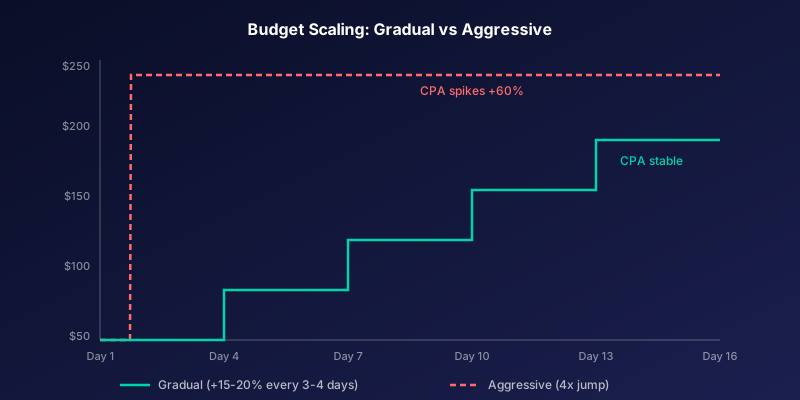
When scaling, add new ad sets horizontally rather than pumping more money into existing ones. If your broad targeting ad set performs well at $50/day, don't jump to $200/day. Instead, create a second ad set with a different creative angle at $50/day and scale both gradually.
Monitor the overlap rate between ad sets using Meta's Audience Overlap tool (found in Audiences). If two ad sets overlap more than 30%, consolidate them. Overlap above 50% means you're actively bidding against yourself.
Automate Structure Monitoring for Ongoing Efficiency
A great structure today can become inefficient tomorrow. Audiences shift, creatives fatigue, and seasonal changes affect performance. Set up automated rules to monitor key structural health metrics.
- Alert when frequency exceeds 3.0 in prospecting ad sets
- Pause ad sets that spend 2x target CPA without conversion
- Increase budget by 15% when CPA is 30% below target for 3 consecutive days
- Decrease budget by 20% when CPA exceeds target by 50% for 2 consecutive days
Managing these rules manually across multiple campaigns is time-consuming and error-prone. Automation tools can monitor your account 24/7 and make adjustments in real-time, ensuring your structure stays efficient even when you're not watching.
Novastorm AI can automatically monitor your campaign structure, detect audience overlap, and alert you to inefficiencies before they waste your budget. Set it up once and let it optimize continuously.
Novastorm AI automates Meta Ads routine — from monitoring to optimization. Learn more at novastorm.ai
Disclaimer: This article was generated with the assistance of AI and reviewed by the NovaStorm AI team. While we strive for accuracy, we recommend verifying specific data points and consulting official sources (linked where available) for critical business decisions.
Ready to automate your Meta Ads?
NovaStorm AI takes full responsibility for your campaigns — from monitoring to optimization.
Get Started FreeRelated Articles

Competitive SWOT Analysis for Meta Ads Strategy
Learn how to conduct a competitive SWOT analysis for Meta Ads strategy that reveals opportunities, neutralizes threats, and strengthens your ad positioning.
Q1 Meta Ads Planning: Setting Up the Year for Success
Master Q1 Meta Ads planning with proven frameworks for budget allocation, audience strategy, and campaign structure that set the foundation for year-long success.
Meta Ads Not Spending Budget: Diagnosis and Fix Guide
Discover why your Meta Ads are not spending budget and how to fix delivery issues. Step-by-step diagnosis guide covering bid strategy, audience, and creative fixes.