Q1 Meta Ads Planning: Setting Up the Year for Success
Master Q1 Meta Ads planning with proven frameworks for budget allocation, audience strategy, and campaign structure that set the foundation for year-long success.
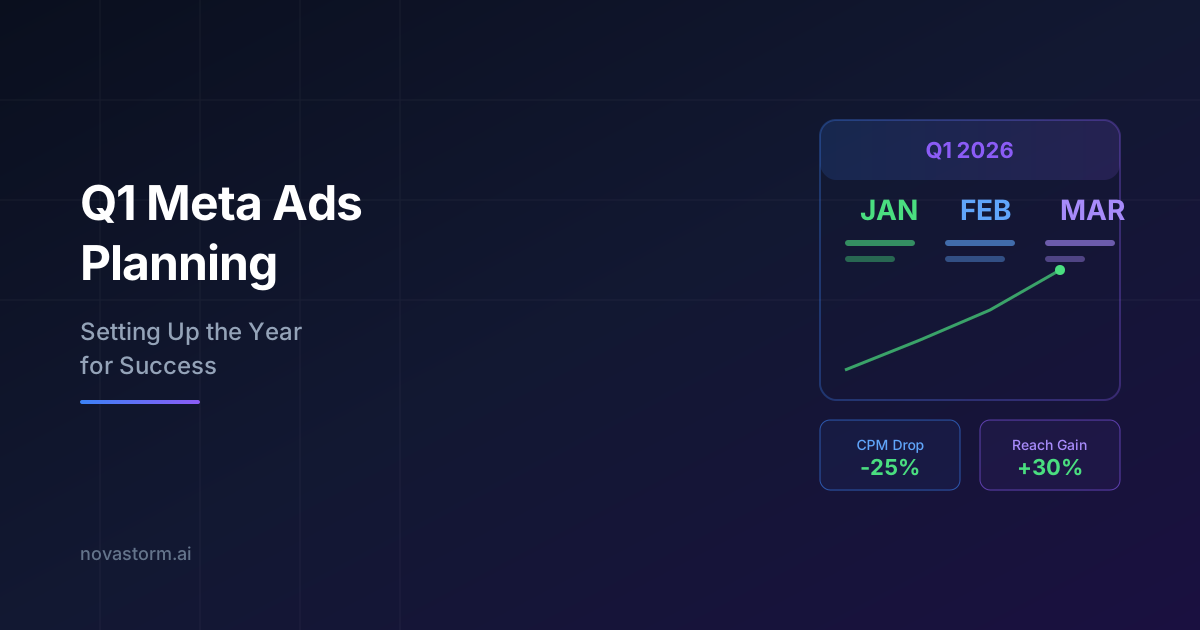
The first quarter sets the tone for your entire Meta Ads performance. Brands that invest in structured Q1 Meta Ads planning consistently outperform those that carry over last year's campaigns without adjustment. Whether you are managing six figures in annual ad spend or scaling past seven, the strategic decisions you make in January through March ripple through every subsequent quarter.
Yet many advertisers treat Q1 as a recovery period after the holiday rush. They pause campaigns, reduce budgets, and wait for demand to return organically. This reactive approach wastes critical learning time and surrenders competitive advantage to brands that plan proactively.
Why Q1 Meta Ads Planning Matters More Than You Think
Q1 Meta Ads planning is not simply about setting budgets and launching campaigns. It is a strategic exercise that aligns your advertising with broader business objectives, seasonal trends, and competitive dynamics. The Meta Ads auction resets in behavior during Q1 as holiday advertisers exit the marketplace, creating a window of lower CPMs and reduced competition.
According to industry benchmarks, CPMs on Meta platforms typically drop 15-30% in January compared to December peaks. Advertisers who capitalize on this window build audience pools and generate conversion data at a fraction of the Q4 cost. This data then fuels smarter optimization for the rest of the year.
| Q1 Metric | Typical Change vs Q4 | Strategic Implication |
|---|---|---|
| CPM | -15% to -30% | Acquire audiences at lower cost |
| CTR | +5% to +12% | Less ad fatigue, fresher audiences |
| CPA | -10% to -25% | Test new funnels affordably |
| ROAS | Varies | Benchmark before peak seasons |
| Reach | +20% to +35% | Broader audience exploration |
Building Your Q1 Meta Ads Planning Framework
A robust Q1 Meta Ads planning framework starts with a retrospective analysis of the previous year. Pull performance data from all four quarters, identify your top-performing campaigns, audiences, and creatives, and document what drove results versus what underperformed.
- Audit Q4 performance data and extract key learnings
- Review annual business goals and translate them into advertising KPIs
- Map the Q1 calendar for seasonal events, product launches, and promotions
- Allocate budget across prospecting, retargeting, and retention campaigns
- Define testing hypotheses for creative, audience, and placement strategies
- Set up measurement infrastructure including conversion tracking and attribution
- Build a creative production pipeline with deadlines and approval workflows
Budget Allocation Strategy for Q1
Budget allocation in Q1 should reflect the unique opportunity the quarter presents. With lower auction costs, this is the ideal time to invest in top-of-funnel prospecting and audience testing. A common mistake is cutting Q1 budgets simply because revenue expectations are lower than Q4.
Instead, think of Q1 spend as an investment in data and audience building. The lookalike audiences, engagement custom audiences, and pixel data you generate in Q1 become the foundation for high-performing campaigns in Q2 and beyond.
| Campaign Type | Q1 Budget Share | Objective |
|---|---|---|
| Prospecting | 45-55% | Build new audience pools at low CPMs |
| Retargeting | 25-30% | Convert Q4 window shoppers |
| Retention | 10-15% | Reactivate past customers |
| Testing | 10-15% | Validate new creative and audience hypotheses |
Audience Strategy: Resetting and Expanding
Q1 is the optimal time to refresh your audience strategy. Holiday audiences are saturated and fatigued. New year mindsets shift consumer behavior, creating opportunities to reach people with different messaging angles. Your Q1 Meta Ads planning should include a thorough audience audit.
Start by evaluating the health of your existing custom audiences. Check frequency metrics from Q4 campaigns. Any audience that saw your ads more than eight times likely needs a rest period or fresh creative. Then explore new interest-based audiences aligned with Q1 consumer behavior.
Stop wasting ad budget
NovaStorm AI cuts Meta Ads CPA by 40% on average. Start free.
Create a 'New Year Intent' audience by combining interest targeting with behavioral signals. People actively searching for solutions in January have higher purchase intent than passive browsers. Layer life event targeting with interest categories for precise Q1 prospecting.
Creative Planning and Production Pipeline
Creative fatigue is one of the biggest threats to Q1 performance. If you are running the same ads from Q4 into the new year, expect declining engagement and rising costs. Your Q1 Meta Ads planning must include a dedicated creative refresh strategy.
Map out the creative assets you need for the entire quarter. Include variations for different funnel stages, audience segments, and placements. Meta's algorithm performs best when it has multiple creative options to test and optimize across placements.
- Develop 3-5 new creative concepts per campaign for the first month
- Create platform-specific formats: Reels, Stories, Feed, and Instant Experience
- Build a UGC collection pipeline for authentic social proof content
- Design seasonal messaging that aligns with Q1 themes without being cliche
- Prepare dynamic creative elements for automated testing at scale
Measurement and Attribution Setup
Before launching any Q1 campaigns, verify your measurement infrastructure. The start of a new year is the perfect time to audit your Meta Pixel, Conversions API, and attribution settings. Broken tracking that went unnoticed during the holiday rush can silently drain your budget.
Review your conversion events hierarchy. Ensure standard events are firing correctly, custom conversions are properly configured, and your attribution window aligns with your actual sales cycle. Many advertisers discover significant tracking gaps during Q1 audits that, once fixed, immediately improve reported performance.
- Test all pixel events using Meta Events Manager diagnostics
- Verify Conversions API server-side tracking is sending deduplicated events
- Review attribution settings and align with your customer journey length
- Set up offline conversion imports if applicable to your business
- Configure custom reporting dashboards for Q1-specific KPIs
Week-by-Week Q1 Execution Timeline
Structure your Q1 Meta Ads planning into a phased execution timeline. This prevents the common trap of trying to launch everything simultaneously and allows for data-driven iteration throughout the quarter.
| Week | Focus Area | Key Actions |
|---|---|---|
| Weeks 1-2 | Audit and Setup | Review Q4 data, fix tracking, refresh audiences |
| Weeks 3-4 | Foundation Launch | Launch core prospecting and retargeting campaigns |
| Weeks 5-6 | Testing Phase | Introduce creative tests and audience experiments |
| Weeks 7-8 | Optimization | Scale winners, pause underperformers, refine targeting |
| Weeks 9-10 | Scaling | Increase budget on proven campaigns, expand audiences |
| Weeks 11-12 | Q2 Preparation | Document learnings, plan Q2 transitions, brief creative |
Each phase builds on the previous one. Resist the urge to jump straight to scaling without adequate testing and optimization. The patience you exercise in weeks one through six pays dividends in weeks seven through twelve and beyond.
Automate your Q1 monitoring with rule-based alerts for key metrics. Set thresholds for CPA, ROAS, and frequency so you can react quickly when campaigns need attention rather than discovering issues during weekly reviews.
Successful Q1 Meta Ads planning transforms the traditionally slow first quarter into a strategic advantage. By approaching the quarter with a clear framework, disciplined budget allocation, fresh creative, and robust measurement, you build the foundation for sustained advertising performance throughout the year. Start planning early, execute methodically, and let the data guide your decisions.
Novastorm AI automates Meta Ads routine — from monitoring to optimization. Learn more at novastorm.ai
Disclaimer: This article was generated with the assistance of AI and reviewed by the NovaStorm AI team. While we strive for accuracy, we recommend verifying specific data points and consulting official sources (linked where available) for critical business decisions.
Ready to automate your Meta Ads?
NovaStorm AI takes full responsibility for your campaigns — from monitoring to optimization.
Get Started FreeRelated Articles

Competitive SWOT Analysis for Meta Ads Strategy
Learn how to conduct a competitive SWOT analysis for Meta Ads strategy that reveals opportunities, neutralizes threats, and strengthens your ad positioning.
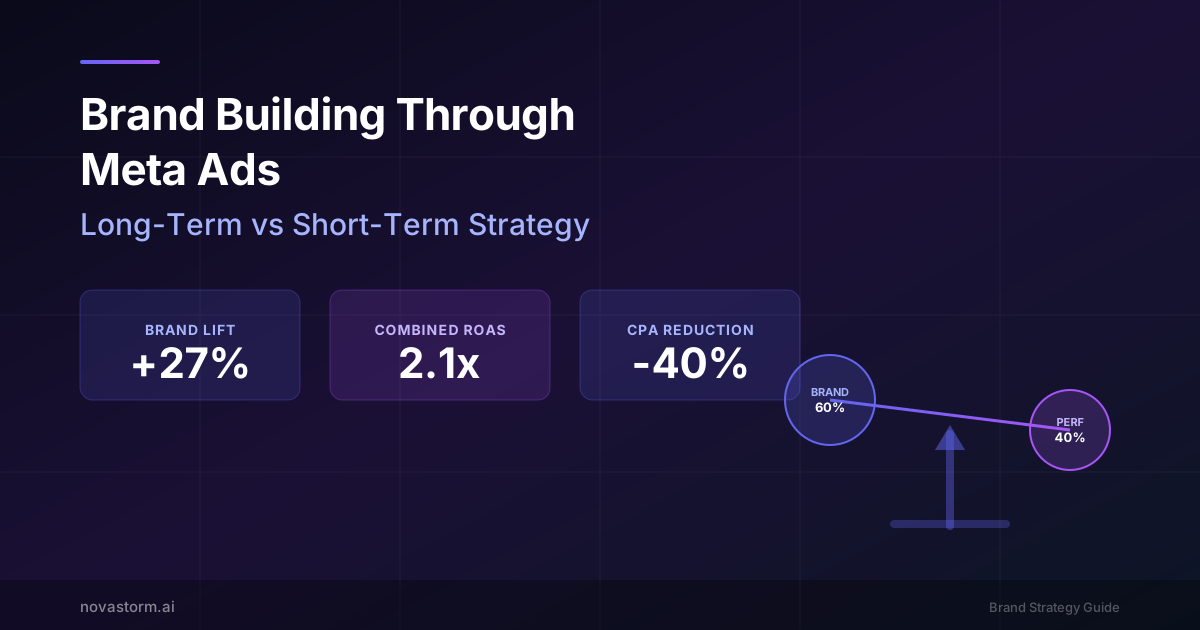
Brand Building Through Meta Ads: Long-Term vs Short-Term Strategy
Learn how to balance long-term brand building with short-term performance in Meta Ads. Discover strategies, budget splits, and KPIs for sustainable growth.
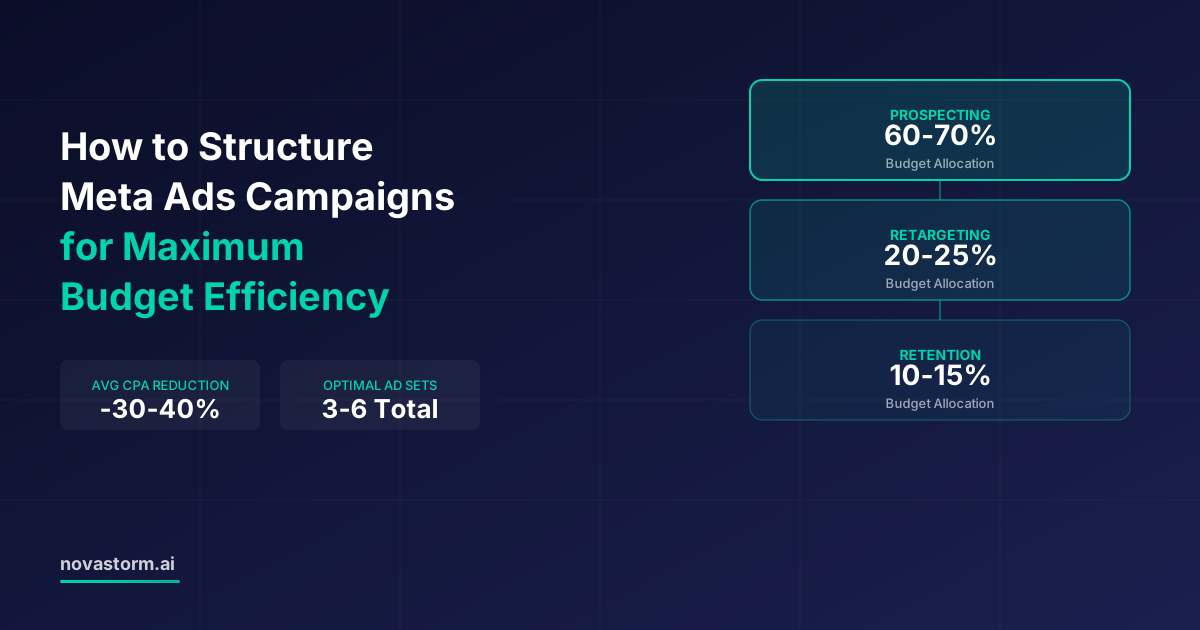
How to Structure Meta Ads Campaigns for Maximum Budget Efficiency
Learn how to structure Meta Ads campaigns for maximum budget efficiency. Proven frameworks that reduce CPA by 30-40% through smart campaign architecture.