Brand Building Through Meta Ads: Long-Term vs Short-Term Strategy
Learn how to balance long-term brand building with short-term performance in Meta Ads. Discover strategies, budget splits, and KPIs for sustainable growth.
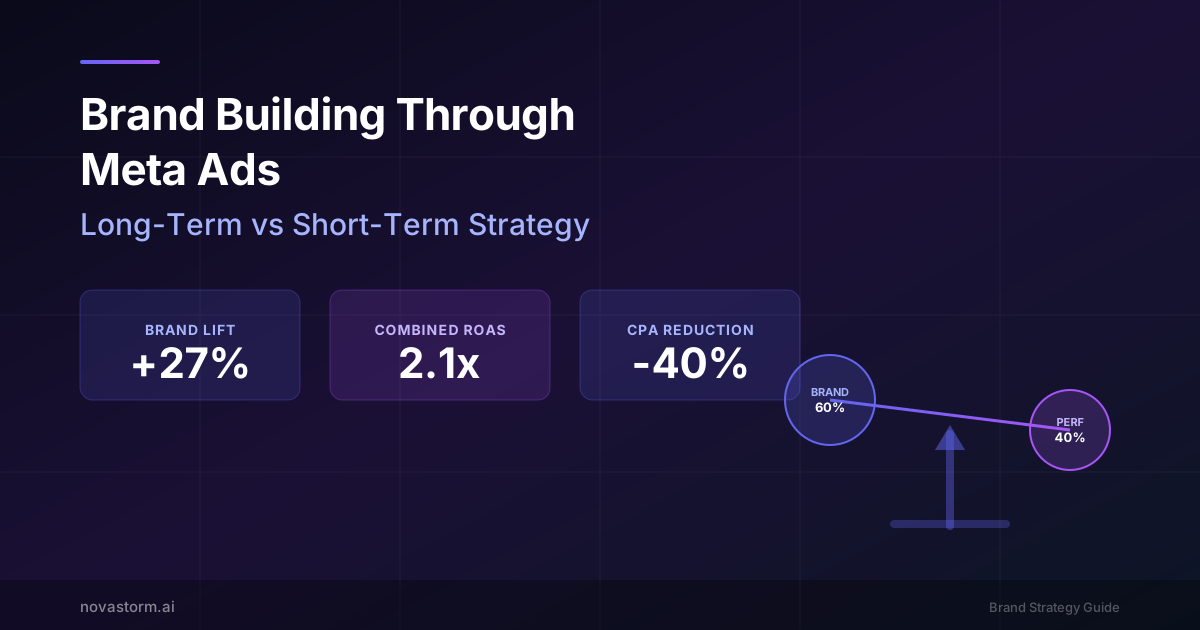
Most advertisers on Meta treat their campaigns as either brand awareness plays or direct-response machines. The reality is far more nuanced. Brand building through Meta Ads requires a deliberate blend of long-term equity creation and short-term conversion capture that compounds over time.
The brands that dominate their categories on Meta understand something critical: every dollar spent on performance today is amplified by every dollar invested in brand yesterday. This article breaks down how to architect a strategy that serves both timelines without sacrificing either.
Why Brand Building Through Meta Ads Matters More Than Ever
Rising CPMs, increased competition, and audience fatigue have made pure performance campaigns more expensive year over year. Brands that invest in recognition and trust see 20-40% lower CPAs compared to unknown competitors bidding on the same audiences.
Brand building through Meta Ads is not about vanity metrics. It is about creating a mental shortcut in your audience's mind so that when they encounter your conversion ad, the decision is already half made. Meta's own research confirms that brand campaigns lift conversion rates by an average of 27% across verticals.
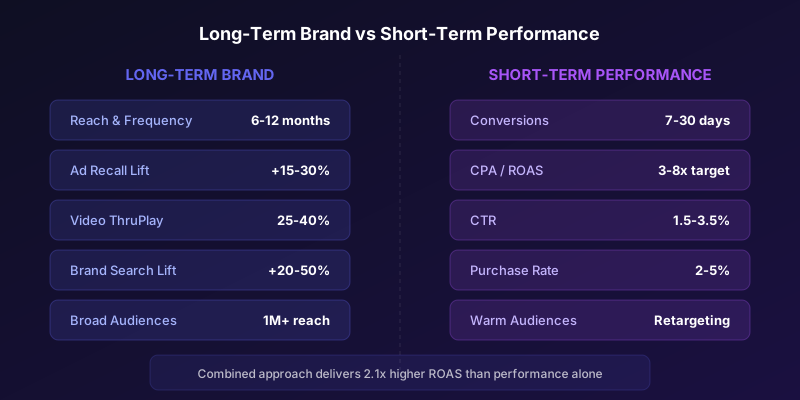
According to Meta's 2025 Brand Lift benchmarks, advertisers running combined brand and performance campaigns achieve 2.1x higher ROAS than those running performance campaigns alone.
Long-Term Strategy: Building Equity Over Months
Long-term brand building through Meta Ads focuses on reach, frequency, and emotional resonance. The objective is not immediate clicks but lasting impressions that shape perception over 6-12 months.
Key elements of a long-term Meta Ads brand strategy include broad targeting to maximize unique reach, video-first creative that tells your brand story, consistent visual identity across every touchpoint, and frequency caps that prevent fatigue while maintaining recall.
- Reach and Frequency campaigns with 2-4 weekly impressions per user
- 15-30 second video ads optimized for ThruPlay
- Brand awareness objective with attention-based optimization
- Sequential storytelling across 3-5 ad sets
- Broad audiences (1M+) to maximize penetration
Short-Term Strategy: Capturing Demand Now
Short-term Meta Ads campaigns focus on conversion, lead generation, and immediate revenue. These campaigns leverage existing demand and brand recognition to drive measurable outcomes within days or weeks.
The most effective short-term campaigns target warm audiences, use direct-response creative with clear CTAs, and optimize for bottom-funnel events like purchases or qualified leads. Without brand awareness behind them, these campaigns fight an uphill battle against audience skepticism.
The Optimal Budget Split Between Brand and Performance
Research from the Ehrenberg-Bass Institute and Meta's own case studies converge on a similar conclusion: the ideal split between brand and performance spending depends on your category and growth stage, but a 60/40 rule provides a strong starting point.
| Growth Stage | Brand Budget % | Performance Budget % | Primary Goal |
|---|---|---|---|
| Launch (0-6 months) | 70% | 30% | Awareness and positioning |
| Growth (6-18 months) | 60% | 40% | Reach + conversions |
| Maturity (18+ months) | 50% | 50% | Retention + acquisition |
| Market Leader | 40% | 60% | Defend share + maximize revenue |
| Relaunch/Pivot | 65% | 35% | Reposition + re-engage |
Stop wasting ad budget
NovaStorm AI cuts Meta Ads CPA by 40% on average. Start free.
These ratios are not rigid prescriptions. Seasonal brands may shift heavily toward performance during peak buying periods and toward brand during off-season months. The key is maintaining a minimum baseline of brand investment even during performance-heavy periods.
KPIs That Bridge Both Strategies
One of the biggest mistakes advertisers make is evaluating brand and performance campaigns with the same metrics. Brand building through Meta Ads requires its own measurement framework that connects to business outcomes without demanding immediate ROAS.
| Metric | Brand Campaign | Performance Campaign |
|---|---|---|
| Primary KPI | Ad recall lift | CPA / ROAS |
| Secondary KPI | Reach / frequency | Conversion rate |
| Creative metric | ThruPlay rate | CTR |
| Audience metric | Brand search volume | Purchase frequency |
| Time horizon | 3-6 months | 7-30 days |
| Attribution | Incrementality tests | Last-click + view-through |
The bridge metric that connects both worlds is branded search volume. When your brand campaigns are working, you will see organic and paid search queries for your brand name increase. This is the clearest signal that top-of-funnel investment is converting into bottom-funnel demand.
Building a Unified Campaign Architecture
Rather than treating brand and performance as separate silos, the most sophisticated advertisers build a unified campaign architecture where each layer feeds the next. Brand campaigns generate awareness, mid-funnel campaigns nurture consideration, and conversion campaigns close the sale.
- Layer 1 — Brand Reach: Broad video campaigns targeting new audiences with brand story content
- Layer 2 — Engagement: Retarget video viewers with product education and social proof
- Layer 3 — Consideration: Dynamic product ads and testimonial carousels to warm audiences
- Layer 4 — Conversion: Offer-driven ads with urgency to audiences who have engaged multiple times
- Layer 5 — Retention: Post-purchase brand reinforcement and cross-sell campaigns
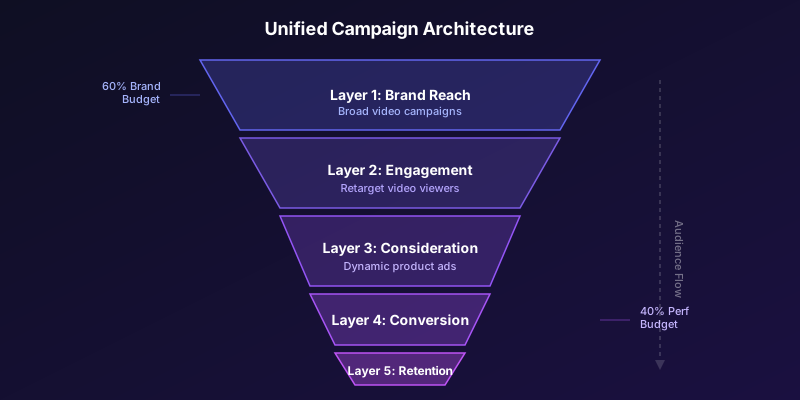
This architecture ensures that your brand investment directly feeds your performance pipeline. Every person who watches your brand video becomes a warm prospect for your conversion campaigns, reducing CPA and increasing lifetime value.
Common Mistakes in Brand vs Performance Balance
The most frequent error is cutting brand spend during downturns. When revenue pressure increases, marketing teams slash awareness budgets to fund more conversion campaigns. This creates a vicious cycle: fewer people know your brand, so conversion costs rise, which triggers more cuts to brand spending.
- Mistake: Evaluating brand campaigns on ROAS within 7 days
- Mistake: Running brand and performance in completely separate accounts
- Mistake: Using the same creative for brand awareness and direct response
- Mistake: Ignoring frequency management in long-running brand campaigns
- Mistake: Cutting brand spend entirely during peak performance seasons
Brand building through Meta Ads is a compounding investment. The brands that maintain consistent awareness spending through economic cycles emerge stronger because their competitors retreated. When the market recovers, they capture disproportionate demand at lower costs.
The most effective approach is to treat brand and performance as two sides of the same engine. Long-term brand investment lowers the cost and increases the effectiveness of short-term performance campaigns. Automate the monitoring of both layers to ensure neither is neglected during budget shifts or seasonal changes.
Novastorm AI automates Meta Ads routine — from monitoring to optimization. Learn more at novastorm.ai
Disclaimer: This article was generated with the assistance of AI and reviewed by the NovaStorm AI team. While we strive for accuracy, we recommend verifying specific data points and consulting official sources (linked where available) for critical business decisions.
Ready to automate your Meta Ads?
NovaStorm AI takes full responsibility for your campaigns — from monitoring to optimization.
Get Started FreeRelated Articles

Competitive SWOT Analysis for Meta Ads Strategy
Learn how to conduct a competitive SWOT analysis for Meta Ads strategy that reveals opportunities, neutralizes threats, and strengthens your ad positioning.
Q1 Meta Ads Planning: Setting Up the Year for Success
Master Q1 Meta Ads planning with proven frameworks for budget allocation, audience strategy, and campaign structure that set the foundation for year-long success.
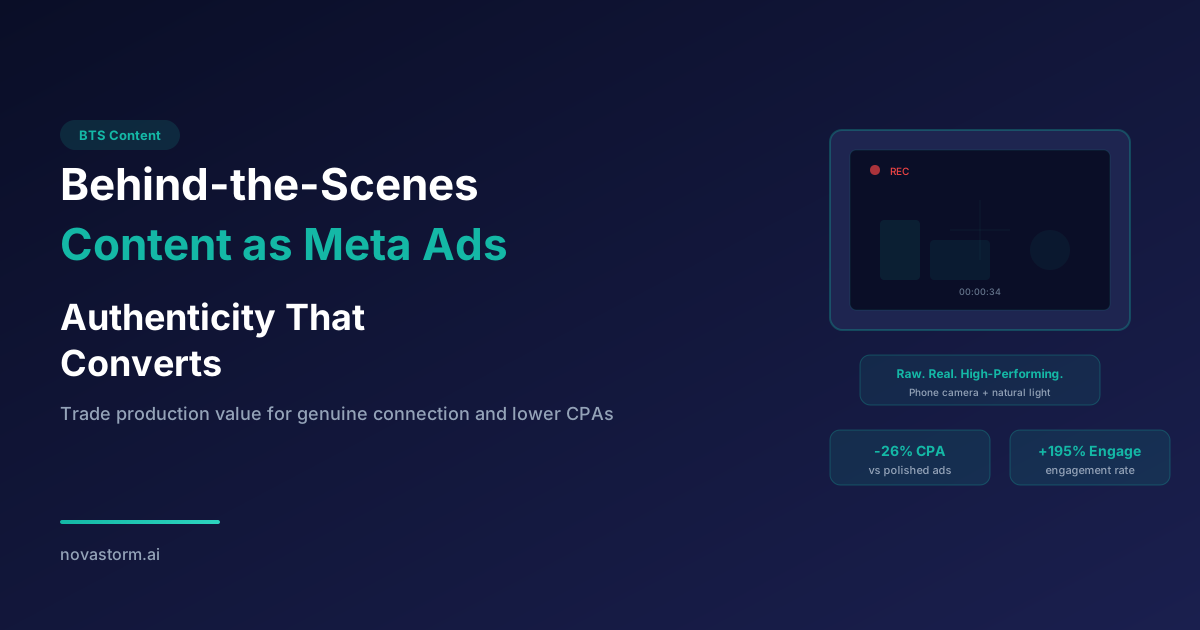
Behind-the-Scenes Content as Meta Ads: Authenticity That Converts
Behind-the-scenes content as Meta ads delivers 26% lower CPAs and 3x engagement by leveraging authenticity. Learn the formats, filming tips, and scaling strategies.